Richibi’s Weblog

Just another WordPress.com weblog

Category: in search of God/dess

Études – Debussy / Rachmaninov

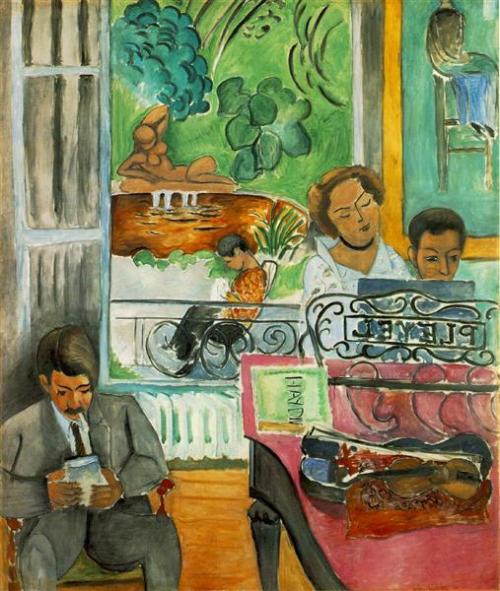
he-music-lesson-1917.jpg!Large.jpg
 

  “The Music Lesson (1917) 


          Henri Matisse


              _________


here are two sets of contemporary 

études


      the first, Book 2 of Debussy’s 
          Études pour piano 
            published in 1915


       the second, Rachmaninov’s
           Études-tableaux“, Opus 39,
            of 1917


note the similarities

note the differences


R ! chard

psst: I found Rachmaninov to be still
          caught  up in the Romantic
          Period – identifiable melodies,
          less eccentric tonalities – the
          better to, still, pull at your
          heartstrings, Debussy, is more
          clinical, cerebral, pointing the
          way towards, I think, jazz

          but you tell

Études – Chopin /Debussy

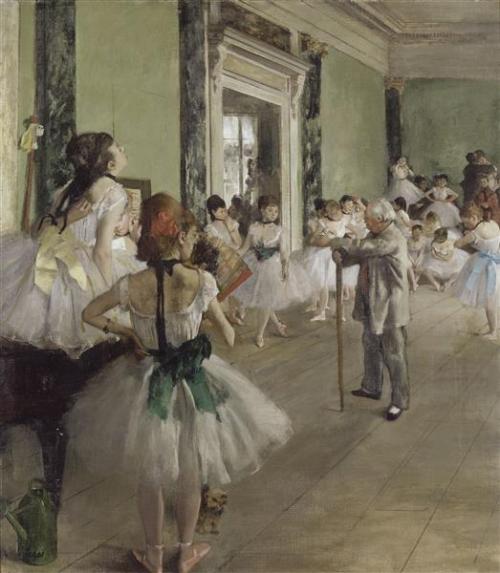
edgar-degas-the-ballet-class.jpg!Large.jpg

   “The Ballet Class (1871 – 1874) 


          Edgar Degas


             ________


ballet dancers will attach weights 

to their ankles during exercises 

to add lift to their legs when they 

are on stage, such is the point of 

études for a piano player, a 

workout for the fingers before 

public performance 


Chopin, however, made them, by

themselves, works of great art,

followed by, among others,

Debussy


here’s Chopin, his Opus 25


here’s Debussy, his own Études

pour piano, Livre 1“, or Book 1


how are they different


you tell me


listen


R ! chard


psst: this is an easy one, Chopin is

          Romantic, Debussy, manifestly,

          is not, Debussy is Impressionistic,

          it is a new perspective, you can 

          hear it, it’s textural rather than 

          emotional, indeed, it’s even

          abstract


          but nearly a century has gone by,   

          and Impressionism is the new  

          aesthetic, the new preoccupation


          which belongs to not only the  

          painters, let me point out, but to  

          all the arts, for better, once again, 

          or for worse

Études, Opus 10 – Chopin

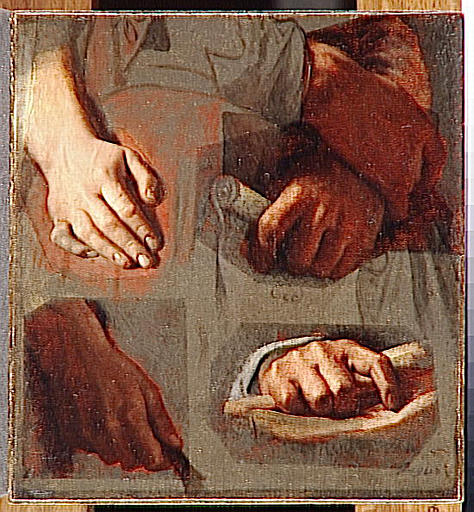
studies-for-the-apotheosis-of-homer-1827.jpg

Études pour l’Apothéose d’Homère” /


                “Studies for The Apotheosis of Homer (1826 – 1827) 


      Jean Auguste Dominique Ingres


             ____________________


what’s an étude


 you tell me


 here are 12, all by Chopin, his first

 set of two, his Opus 10


in English, étude is a study


enjoy


R ! chard


 psst: if you said they’re technical 

          pieces, warm-up exercises, 

          in preparation for more 

          substantial stuff, you’re on


          it should be noted that Chopin,

          after the more rudimentary

          undertakings of the earlier 

          Czernyfor instance, or Clementi

          say, added the required substance,
          the missing transcendental
          element, turning his otherwise
          mere digital pyrotechnics into
          utter poetry, into prestidigitatorial
          magic

          listen


from act 4, scene 3 – Othello

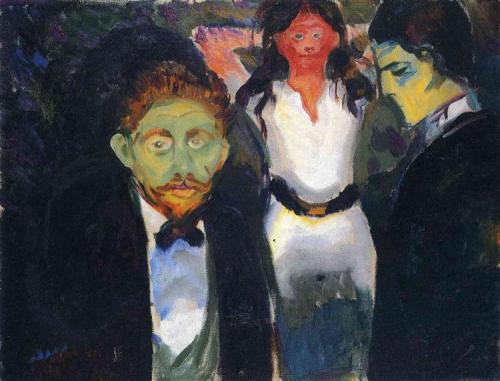
jealousy-from-the-series-the-green-room-1907.jpg!Large


when Desdemona learns that Othello

suspects her of adultery, she asks 

her maidservant


      Dost thou in conscience think,–tell me, Emilia,–
      That there be women do abuse their husbands
      In such gross kind?


Emilia, older, wiser, replies


      There be some such, no question.


       But I do think it is their husbands’ faults
       If wives do fall: say that they slack their duties,
       And pour our treasures into foreign laps,
       Or else break out in peevish jealousies,
       Throwing restraint upon us; or say they strike us,
       Or scant our former having in despite;
       Why, we have galls, and though we have some grace,
       Yet have we some revenge. Let husbands know
       Their wives have sense like them: they see and smell
       And have their palates both for sweet and sour,
       As husbands have. What is it that they do
       When they change us for others? Is it sport?
       I think it is: and doth affection breed it?
       I think it doth: is’t frailty that thus errs?
       It is so too: and have not we affections,
       Desires for sport, and frailty, as men have?
       Then let them use us well: else let them know,
       The ills we do, their ills instruct us so.


fall” in the second verse, for this is 

indeed a poem, in iambic pentameter, 

could easily be replaced by “fail

nearly even calls out for it, 

homophones but for the timbre of 

their vowels 


say that their husbands slack, she says,

then lists the several manners in which 

husbands might betray their marital 

duties, by “foreign, she means “other“, 

foreign to the family circle  


laps“, incidentally, is a wonderful 

metaphor to accompany “treasures,

suggesting intimate physical contact,

much more so, say, than hands

would’ve, for instance, been


restraint” means conditions, stress,

impositions  


scant our former having“, to diminish

that which formerly had been given,

of either material or psychological 

goods – “having” is a noun here, not

a participle


in despite, which is to say, “out of 

spite


galls“, a synecdoche for internal

organs, a synecdoche, the word

that means a part which signifies

the whole  


affection” is “lust


we’re equal partners, Shakespeare 

says, men and women, in a shared 

humanity, indeed Shakespeare is

one of the first Humanists after  

centuries of religious subjugation,

centuries of the suppression of

independent thought, a defining

notion, not incidentally, of the

Renaissance


R ! chard


andante / polonaise, Chopin

Kwiatkowski-chopin

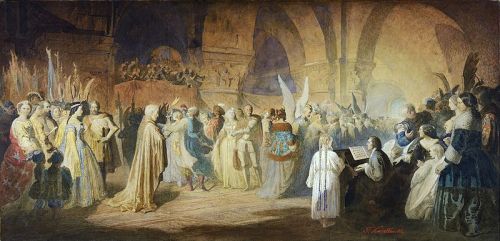
   “Chopin’s Polonaise – a Ball in Hôtel Lambert in Paris (1859) 


          Teofil Kwiatkowski


                ___________


what’s the difference between 


       one, an andante spianato


       two, a polonaise


you tell me


both, of course, by Chopin


“andante” is a pace, a tempo, a little faster 

than adagio, slower than allegro, spianato” 

is an Italian word for “smooth”, “even”


“et” is “and” in French


“polonaise” is a French adjective for 

“Polish”, as a noun it means a Polish 

dance


R ! chard


psst: if you said intention, you’re again

          right, everything else is, of course,

          Chopin, two different perspectives

          on a related issue


           think of two distinct elements 

           coming together, formally 

           conjoined, as in a mariage, 

           for better, ever, or for worse   


           or as in this Andante Spianato et

           Grande Polonaise Brillante, a

           conjunction which has lasted,  

           indeed brilliantly, for nearly two 

           hundred years, despite individual, 

           sometimes divergent, even

           conflicting, outlooks


           enjoy


nocturnes / scherzos, Chopin

joke-of-putti.jpg!Large

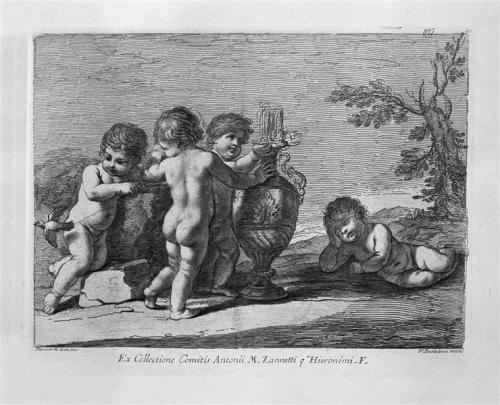
    Scherzo di putti 


          Giovanni Battista Piranesi


                        ______________


what is the difference between 


        one, a nocturne

         two, a scherzo

you tell me

both by Chopin


nocturne, incidentally, is a French 

word for night music


scherzo is an Italian word for joke, 

something humorous


R ! chard


psst: if you said the pace, the tempo, 

          however comparably, in all the 

          instances, elastic, you’re 

         absolutely right, the rest is

         ever entirely Romantic, which

         is to say, by definition,

         introspective

a waltz / a nocturne, Chopin

nocturne-1991.jpg!Large

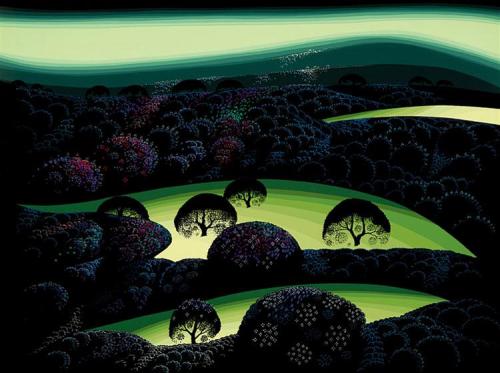
    “Nocturne (1991) 


         Eyvind Earle


               ________


what is the difference between 


        one, a waltz 


        two, a nocturne 


both by Chopin


you tell me


R ! chard


psst: if you said the beat, you’re

           entirely on your way, the

           rest is, in either case,

           entirely Romantic


mantic

on the third day of C***mas

les-musiciens-1952

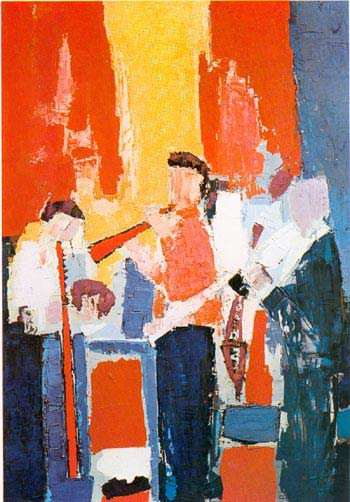
   “Les musiciens (1952) 


        Nicolas de Staël


           ___________


on the third day of C***mas, I needed to 

ready myself for the onslaught, I was 

hosting, yikes, for someone from out

of town


I thought I’d had it all figured out, but 

obstacles occurred, of course, to my, 

nearly cowed, consternation


needed help


I’d anticipated more violin concertos 

to get me going, but, among my 

several bookmarks, King Crimson

came up, a group I’d admired 

tremendously in my formative years,

the 70s, when freedom of expression

prevailed, in all of its innocent

expectations


they are tremendous, if you like that 

sort of thing, entirely progressive 

rock


you’ll think me eccentric if I relate 

them to Classical considerations, not 

only are they rigorous about tempo, 

tonality, and repetition, essential 

Classical components, but reach 

further into even tribal configurations,

their minimalism – later formalized by,

incidentally, Beethoven – of infinitely

repeated rhythms, like thumping, 

intoxicating, essentially, thrusts,

heartbeats meeting heartbeats, very, 

in other words, primitiveprimeval


add to that, later, their superimposed 

atonal riffs – Jimi Hendrix meets the 

jungle – a direct reference to 

Schoenberg‘s breakdown of the 

orthodoxy of the musical scale, and

cadence, and reiteration, you’re left 

with a history of our culture’s sonic

aspirations in a single incandescent

concert, despite a couple of egregious 

commercial interruptions in the

download, a 21st-Century, it seems, 

corporate roadblock


watch, enjoy 


R ! chard

“A Delicate Balance” – Edward Albee

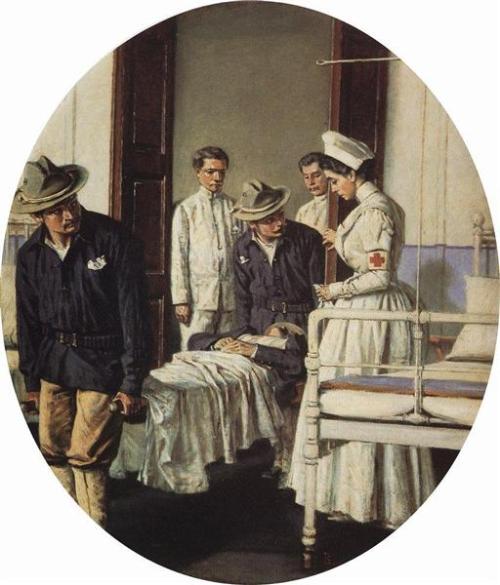
in-the-hospital-1901.jpg!Large

      “Theatre Drama 


             Kuzma Petrov-Vodkin

 
                           ___________


there are only a very few 20th-Century

American playwrights who’ve weathered

the rigours of time, two with several 

successes, Eugene O’Neill, and 

Tennessee Williams, but only one to 

tower above those two with only one 

work to outmatch them, Edward Albee,

his Who’s Afraid of Virginia Woolf? 

is every inch a king


this is not an impossible feat, Margaret

Mitchell wrote her only book, Gone 

with the Wind“, a contemporary Iliad“,

which will find its rightful place again 

in world literature, note, when our own 

too reverberant still times cede to the 

concerns of another, less pertinently 

fraught era, like reading “War and

Peace“, for instance, now that 

Napoleon is long gone


Gone with the Wind, quick, name 

another 20th-Century novel to top it, 

seconds are too long, Gone with 

the Windis in our bloodstream, 

like Walt Disney or Marilyn Monroe

even if you’ve never read it, which 

you should


but Edward Albee wrote another play

which deserves some attention, and 

with redoubtable performances from 

both the consummate ever Katharine 

Hepburn, and from our own Canadian 

tower of unutterable talent, Kate Reid

abetted by masterful presentations 

from no less than the revered Paul 

Scofield and the iconic Joseph Cotten 

when their supporting numbers come 

up, here is a show to watch for, if 

nothing else, those individual stellar

contributions


but A Delicate Balance“, also an 

incontestable masterpiece, is about 

friendship, and tells a lesson you’ll

not soon forget, friendship is more 

than, for better or for worse, just 

knowing each other, it says, an 

idiosyncratic, indeed recurrent,

Albee theme


cinematography, note, is, here

dreadful, though actually in that 

manner conceived, however 

improbably, by an otherwise 

noteworthy director, you’ll even 

think they’ve shrunk his frame


but visual style shouldn’t let you 

forego the play’s profound substance, 

nor the triumphant work of its illustrious 

cast, at the very top, mostly, of their 

considerable, even defining, powers


watch


R ! chard

happy birthday, Joni Mitchell

clouds

  Nuages / Clouds 


      Fernand Léger


         _________


                         for Lajla, and, of course, Joni


in my German class in Dresden, I

was asked, since I was from 

Canada, to translate into German

a Canadian song, my teacher

suggested something of Joni 

Mitchell, someone she profoundly,

she said, admired, was I the one

to choose Both Sides Now“, or 

was she, I can’t remember, but 

that was the song I translated


Rows and floes of angel hair
And ice cream castles in the air
And feather canyons everywhere
I’ve looked at clouds that way


But now they only block the sun
They rain and snow on everyone
So many things I would have done
But clouds got in my way

I’ve looked at clouds from both sides now
From up and down, and still somehow
It’s cloud illusions I recall
I really don’t know clouds at all

Moons and Junes and Ferris wheels
The dizzy dancing way you feel
As every fairy tale comes real
I’ve looked at love that way

But now it’s just another show
You leave ’em laughing when you go
And if you care, don’t let them know
Don’t give yourself away

I’ve looked at love from both sides now
From give and take, and still somehow
It’s love’s illusions I recall
I really don’t know love at all

Tears and fears and feeling proud
To say “I love you” right out loud
Dreams and schemes and circus crowds
I’ve looked at life that way

But now old friends are acting strange
They shake their heads, they say I’ve changed
Well something’s lost, but something’s gained
In living every day

I’ve looked at life from both sides now
From win and lose and still somehow
It’s life’s illusions I recall
I really don’t know life at all

I’ve looked at life from both sides now
From up and down and still somehow
It’s life’s illusions I recall
I really don’t know life at all”

it could be my anthem


as it happened, Lajla, my teacher, who

who has since become a dear friend, 

in fact, meine beste deutsche Freundin, 

didn’t let me finish reading meinen 

übergesetzten Text for the class, it 

would’ve been too long


I still regret the unrecognized work

I did, but mostly I rue the fact that  

the other students never got to 

hear the sublime ending of the

song


R ! chard