Études – Chopin /Debussy
say, added the required substance,
the missing transcendental
element, turning his otherwise
mere digital pyrotechnics into
utter poetry, into prestidigitatorial
magic
two, a scherzo
you tell me

But now they only block the sun
They rain and snow on everyone
So many things I would have done
But clouds got in my way
I’ve looked at clouds from both sides now
From up and down, and still somehow
It’s cloud illusions I recall
I really don’t know clouds at all
Moons and Junes and Ferris wheels
The dizzy dancing way you feel
As every fairy tale comes real
I’ve looked at love that way
But now it’s just another show
You leave ’em laughing when you go
And if you care, don’t let them know
Don’t give yourself away
I’ve looked at love from both sides now
From give and take, and still somehow
It’s love’s illusions I recall
I really don’t know love at all
Tears and fears and feeling proud
To say “I love you” right out loud
Dreams and schemes and circus crowds
I’ve looked at life that way
But now old friends are acting strange
They shake their heads, they say I’ve changed
Well something’s lost, but something’s gained
In living every day
I’ve looked at life from both sides now
From win and lose and still somehow
It’s life’s illusions I recall
I really don’t know life at all
I’ve looked at life from both sides now
From up and down and still somehow
It’s life’s illusions I recall
I really don’t know life at all”
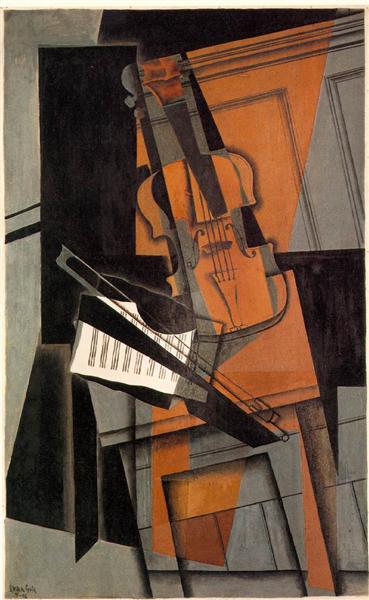
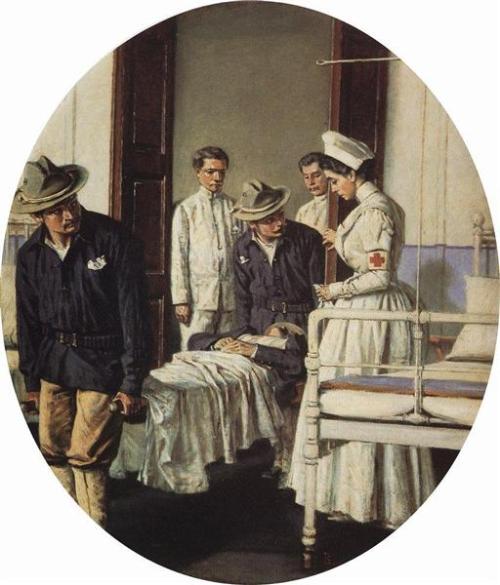
“The Violin“ (1916)
_____
if I was able to bring up a list of
ten top Romantic piano concertos
throughout the 19th Century earlier,
I can number of violin concertos
only three essential ones, with,
however, two other significant
such compositions, which remain,
for one reason or another,
peripheral, secondary
more about which later
but the exalted three are situated
conveniently, the first, at the very
beginning of the Romantic Era,
Beethoven’s magisterial, even
extraordinary, Opus 61 in D major,
1806, and close doubly with the
two others, Tchaikovsky’s
resplendent work, words cannot
do it justice, and Brahms’ no less
transcendental one, at its very end,
1878, none are negligible, it’d be
like missing the Eiffel Tower while
in Paris, skipping the pyramids
along the Nile, they are part of our
cultural consciousness, it would
be an utter shame to pass them
by, they are our glory, our
magnificent heritage
it should be noted that the
concerto, be it for violin, piano,
cello, what have you, a soloist
in concert with an array of
instruments, is the perfect allegory
for the Romantic Era, an individual
in contention with a community,
under the influence of a conductor,
a mayor, a mentor, a polity, the
individuality afforded by the
proclamation of human rights in
the aftermath of the French
Revolution, and its social
consequences, musically
manifested
the match might be fraught,
should be, though with
compromise, considerate
accommodation, fruitful,
hopefully even transcendental,
if not at least entertaining,
cooperation, music seems to
infer eventual concord,
congress, harmony, a way out
of, even dire, distress, or at
least point the way toward it
concertos die out, incidentally, in
the 20th Century, you don’t hear
of very many, if any at all, after
Rachmaninoff, they are gone,
much like later, in the 1950s, the
waltz, forever, with the wind
may they rest in peace
R ! chard
 Richibi's Weblog