Richibi’s Weblog

Just another WordPress.com weblog

Category: plays to ponder

March: “Black March” – Stevie Smith‏

"The Frozen Pool, March" - Willard Metcalf

The Frozen Pool, March (1909)

Willard Metcalf

_______

in this wonderful film about Stevie Smith,
Glenda Jackson is the celebrated poet,
whose poem, “Black March“, I’ve chosen
to introduce the new month

you’ll love also Mona Washbourne in it,
as Stevie’s beloved aunt

the site presents the film in numbered
episodes, which seamlessly flow if you
don’t touch your dial, but should you,
just click on the episode number, one
of eleven, when you return

Richard

psst: you might also want to compare
this story with that of Emily
Dickinson in The Belle of Amherst“,
another, unconventionally then,
unmarried woman, for which Julie
Harris got a richly deserved Tony
in 1977

read all about it in one of my recent
blog
s

_________________

Black March

I have a friend
At the end
Of the world.
His name is a breath

Of fresh air.
He is dressed in
Grey chiffon. At least
I think it is chiffon.
It has a
Peculiar look, like smoke.

It wraps him round
It blows out of place
It conceals him
I have not seen his face.

But I have seen his eyes, they are
As pretty and bright
As raindrops on black twigs
In March, and heard him say:

I am a breath
Of fresh air for you, a change
By and by.

Black March I call him
Because of his eyes
Being like March raindrops
On black twigs.

(Such a pretty time when the sky
Behind black twigs can be seen
Stretched out in one
Uninterrupted
Cambridge blue as cold as snow.)

But this friend
Whatever new names I give him
Is an old friend. He says:

Whatever names you give me
I am
A breath of fresh air,
A change for you.

Stevie Smith

“Dancing at Lughnasa”

   "O'Malley Home (Achill Island, County Mayo, Ireland)" (1913) - Robert Henri

O’Malley Home (Achill Island, County Mayo, Ireland) (1913)

Robert Henri

_______

a quiet February evening, or even a quiet
February afternoon, would be perfect to
watch Dancing at Lughnasa“, a fireside
movie with family and warmth, even
chickens, it’s Ireland, 1936, in the distance
the Spanish Civil War, sisters are taking
care of each other

Meryl Streep heads an impeccable cast,
each performer surely inspiring the other
for such excellence to so generally shine
through, the magic is inveterately
consistent

Michael, Christina’s illegitimate son, tells
the story of when his dad visited them all
that summer he was seven, children are
always the victims, also the survivors

the play won the Tony Award in 1992 for
Best Play of the Year

watch, click

Richard

“Macbeth” – William Shakespeare‏

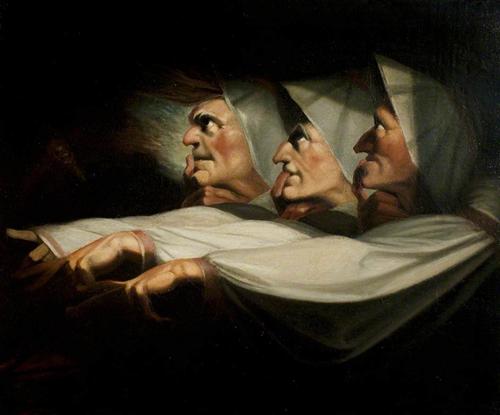
Henry Fuseli - "'Macbeth', Act I, Scene 3, the Weird Sisters"

‘Macbeth’, Act I, Scene 3, the Weird Sisters (1783)

Henry Fuseli

_______

Judy Dench is Lady Macbeth, Ian McKellen
her consort, in this superb production by
Trevor Nunn

also great witches

watch

Richard

“The Belle of Amherst”‏

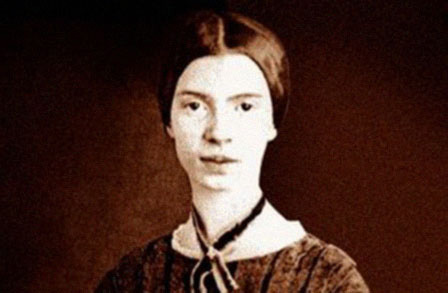
Emily Dickinson

Emily Dickinson

_______

a couple of my Internet interests intersected
recently to bring me this theatrical gem, this
outright treasure

there’d been a few poems of Emily Dickinson
I’d read in my poetry class, none particularly
affecting, while at the Tonys on another site
Julie Harris was winning the ’77 award for
best actress for her role as that very poet, in
a superb evocation, The Belle of Amherst“,
of Dickinson’s life, available, I, to my delight,
indeed erudition, discovered, elsewhere still
on the Internet, straight from the original
Broadway stage

Julie Harris was the very stuff of Tonys, so
was the production

watch, don’t not watch

you’ll want to run back to your Emily
Dickinsons afterwards, even

here’s one

If I can stop one heart from breaking,
I shall not live in vain;
If I can ease one life the aching,
Or cool one pain,
Or help one fainting robin
Unto his nest again,
I shall not live in vain.

Emily Dickinson

Richard

another Tony treasure


the Tony Award Medallion

the Tony Award Medallion

___________

from the 1974 Tonys, you’ll want to
watch this skit, Mrs Snodgrass has
had 27 children, Nancy Walker is
Mrs Snodgrass

should the video not come up at the
right position, as it should, find Mr
and Mrs Snodgrass at 1:42:00 on
the time strip

enjoy

Richard

the Tonys‏

the Tony Award Medallion

the Tony Award Medallion

______________

this is why I love the Tonys

this is why I love Broadway

this is why I love New York

just click

Richard

“Wait Until Dark”‏

Wait Until Darkout-Hitchcocks Hitchcock,
this is not an unremarkable feat
 
the director, Terence Young, had already
managed the early James Bond films,
Goldfinger“, and so had already
achieved noteworthy experience,
not to mention acclaim
 
here he delivers perhaps the most satisfying
suspense film ever
 
Audrey Hepburn is again more than luminous,
she claims again, following so many impeccable
performances, her inviolable spot as a veritable
legend and immortal goddess of art, though she
loses again the Oscar, this time to the other
incandescent Hepburn   
 
she chooses all her own clothes for the movie,
incidentally, in Paris
 
 
Alan Arkin has been equalled only recently, to
my mind, as a villain, by Heath Ledger‘s Joker
in The Dark Knight“, a much less convincing,
however, movie, Richard Widmark was pretty
nasty too, come to think of it, in 1946’s Kiss
 
when quizzed on why he didn’t get a nomination,
one, one would think, he should’ve had in the
bag, he replied, “You don’t get nominated for
being mean to Audrey Hepburn!” 
 
gotcha
 
or touché, as we say in French
 
 
you’ll notice that the entire movie takes place
in one setting, a restriction imposed by the
fact of being originally a play, which must
abide such constraints, see Give ’em Hell,
Harry
 
however, having been raised in French I fully
subscribe to the Classical imperatives of unity
of time, unity of place, unity of action, which
this play delivers in spades   
 
the impositions, when masterfully maneuvered,
deliver entertainment of an even more impressive
order, see Who’s Afraid of Virginia Woolf?for
another celebrated such instance 
 
 
when Wait Until Dark” was first screened lights  
were darkened “to the legal limit” during the
climactic scene
 
even in your well-lit viewing room, even over
forty years on, think of it, you’ll still need to
hold onto your seat, pacemaker 
 
 
Henry Mancini, however unlikely here, though
not especially ineffectively, does the music  
 
in the last scene he’s heartstoppingly hot
 
 
enjoy
 
 
Richard


“Give ’em Hell, Harry”- Beethoven piano sonata no 18 – “Truman”‏

up until very recently I’d never heard of either
the movie, or the play, Give ’em Hell, Harry“,
or that its lead in this production, James 
Whitmore, had been nominated for an Oscar
for his performance in it, he lost out to Jack   
Nest, you decide  
  
Give ’em Hell, Harry“, the movieturns out to
be a filming of the play, an evocation of Harry
Truman, at a performance one evening in 1973
during its run at the Moore Theater in Seattle,
we are watching an actual play, audience and
all, it is riveting
 
it is a one-man show, an unforgettable experience
when the performer is up to it, James Whitmore 
is eminently up to it, delivering a towering
performance, every inch his President
 
after a brief introductory set of thoughtfully
considered sentences, precisely and decisively
articulated, much like Beethoven’s propositions,
incidentally, at the start of many a sonata, he
starts in at a clip, which, again in the same
Beethovenian manner, will never let up, except 
for at a moment of tenderer reflection when he
slows to an andante, a moderate pace, to maybe
even an andantinoa bit slower than moderate,
but never to an adagio
 
more like a constant allegro, fast, or often even
like a presto, swiftly, like the very wind 
 
Beethoven does the same especially in his Middle
Period when he’s full of fire, not impeded by 
earlier questions of unmastered technique, nor
later subdued by his progressive disillusion
with life 
 
you heard the Middle Period fire, in his 15th 
again not a single adagio nor, you’ll note by the
opus numbers, very far behind – a less convincing
sonata for me for not as assuredly engaging as
well as my admiration my heart, but which 
nevertheless must be considered of the very
highest order  
 
in the spirit of music as narrative, a spirit as I’ve
suggested Beethoven had been evoking, let me 
propose that, were the association with music
pursued here I would liken this play to a set of
musical variations, a series of takes on a subject 
that elaborate a central notion, here, of course,
that of Harry Truman, the President
 
to note that a sonata is also a one-person
performance does much to acquaint these
two at first glance unacquainted arts, allowing
each of these several consummate artists here,
in the 15th, in the 18th, and in …Harry, to
deliver resounding bravura performances
 
notice also, incidentally, the similar joy in each
his enraptured countenance
  
 
Richard   
 
psst: here’s Truman“, a more detailed account
          of the not often recollected man, at least
          not outside America, in a not at all
          undistinguished production  
 
          it is no longer necessary, of couse, to
          italicize the Italianate tempo markings,
          but for me it makes the letters dance 


“Song of the South”‏ – Walt Disney

it’s been over fifty years since I’ve seen this movie,
never thought I’d see it again but now for the magic
of the Internet, the boundless trove of irreducible
treasures, like those in Ali-Baba’s caves, or the
attics of our ancestors, stowed away, open again
to our poetic or otherwise imaginations, at our
very fingertips
 
I remembered this movie to be wonderful, moving,
but not much else, except for the Zip-A-Dee-Doo-
Dah” theme, which is unforgettable, and a single
plot twist it would be unchivalrous to divulge 
 
it has apparently been controversial, and is
presently banned, it would appear, in cinemas,
but it would be to my mind as racially insensitive
as “Huckleberry Finn”, “Tom Sawyer’, or even
“Gone with the Wind” have been, when they
were patently giving voice rather to a shocking
human cultural, and political, abomination, 
however awkwardly, that is still powerfully,
shamefully, even manifestly, resonant
 
this is not a universal, note, condition, every
season for any culture has its bugbears, its
demons and monsters, and woe to the
unfortunate and inadvertent victim 
 
 
in perhaps his most wonderful movie, and there
were quite a few, Song of the South“, Walt Disney 
lets us know that we’re all in this together, and
that kindness meets kindness in everyone, when
you open your heart 
 
and that the reverse is horrible 
 
 
Walt Disney is of course one of the great cultural
influences of the 20th Century, dismissed among
the titans as merely for kids
 
Walt Disney will be for an entire generation the
place where we learned our moral ABCs, much
more than in the dire Bible
 
as such he’s no less significant an artist, not at
all less significant, than Monet, Picasso, for
instance, Beethoven, Shakespeare, in shaping
our present moral and aesthetic world 
 
 
you’ll need some Kleenex 
 
 
you can also sing along 
 
 
Richard 
 
psst: filmed, I’m sure, right here in beautiful Stanley
         Park behind my place in Vancouver, even the
         animated portions    


“The Trojan Women” – Euripides

the purpose of any art essentially is to either
inform or entertain, preferably both together,
therefore comedy would be associated with
entertaining whereas tragedy with informing
and, as such, this last would be perhaps more
intellectually demanding, so be it 
 
the strength nevertheless of great tragedy is in
its level of delivering immediacy and fascination,
which is to say entertainment, of great comedy
its obverse, insight  
 
The Trojan Women” was written in 415 BC by
Euripides, a tragedian at the very summit still,
2400 years later, count them, of remarkable 
historical achievement 
 
the war with Troy had taken place a full 800
hundred years earlier, Homer had written the
alternate Bible to our Western civilization,
The Iliad“, still with Proust to my mind the
very summit of our Occidental accomplishment,  
resonating across the ages as powerfully as
even the pyramids, extraordinary to read,
from about, again count them, astounding
millennia, nearly unimaginable centuries, 
850 BC  
 
 
Helen had been abducted from Sparta, according
to that side of the story, by Paris, the son of King
Priam of Troy, she had been whisked away not
unwillingly according to that prince of that city,
from where she became known to us as Helen of
Troy, rather than of her original Sparta
 
the Trojan War ensued
 
 
the Trojans were creamed by the Achaeans, the
Greeks, the Spartans, interchangeable terms,
under Menelaus, king of Sparta, and his brother,
Agamemnon, older brother, and king of Mycenae,
the greater incorporating kingdom   
 
the Trojan women remain to pay the price of
war, after so many centuries still their horror is
vivid, nor do we need to look far for equivalent
modern instances, they were all slaughtered or
enslaved, ‘nough, or maybe not ‘nough, said 
 
 
here we get perhaps the best interpretation
we’ll ever see, with a cast we’ll probably not
in a long while again put together – Katharine
Hepburn in perhaps her greatest role – “Once
I was queen in Troy”, she says, and you will
profoundly believe her – Vanessa Redgrave
doesn’t get ever much better as she reaches
chthonically, which is to say from the very
entrails of her earth, her soul, for a cry of
anguish you are not likely to ever forget – 
Geneviève Bujold, a mad Cassandra, and
Irene Papas, the very incarnation of the
most beautiful woman in the world
 
all tear up the screen in their moments,
leaving you breathless and helpless before
their art and evocative power, only Helen,
because of her beauty, insidiously manages
in the story to reasonably comfortably
survive, making mincemeat meanwhile
out of her big bad, he would have it, 
Menelaus
 
Helen had been the gift to Paris, who’d had
to choose among the goddesses, Hera, Athena,
Aphrodite, which of these was the most
beautiful, but only when Aphrodite had bribed
him with the gift of the most beautiful woman
in the world instead of from either other deity
power and glory, had he chosen Helen
 
the other two of course reponded with the
devastation at Troy, Olympians were not prone
to be easy, Christian mercy would find in that
pagan unequivalency propitious ground 
 
  
wonderful rendering of the traditional Greek
chorus – the Greek version of back-up girls,
“doo-wop, doo-wop” or “she loves him, she
loves him” – commenting on the tempestuous
story     
 
one of my favourite ever films   


Richard