Richibi’s Weblog

Just another WordPress.com weblog

Category: music to ponder

on odes

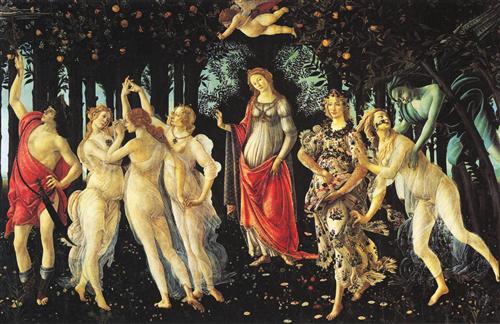
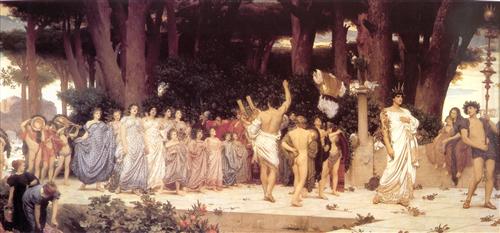
                          "The Daphnephoria" - Frederic Leighton

The Daphnephoria (c. 1875)

Frederic Leighton

________________

odes, with their suggestion of music
– despite a history of merely words
spoken in the intervening interim,
counting on meaning and rhythm
without music’s attendant tonality –
go back to the Greeks, the Seventh
Century, BCE, Sappho, for instance,
one of history’s most honoured
women poets, surely quite an
achievement for her in an age of
predominant, indeed
disenfranchising, masculinity

the ode was meant to accompany
tributes to people, events, things,
thereby acquiring an element of
acclamation and praise within its
dimensions, Pindar, ca 552 – 442
BCE, wrote odes for heroes of the
original Greek Olympics, for
instance

by the time of Horace, 65 – 8 BCE,
odes had become stylized,
independent of music, here’s one,
not inappropriately in this season’s
vernal context, to spring

odes remained spoken throughout
their resurrection in the wake of the
rediscovery of the Ancient World
during the Renaissance, onwards
through some famous Romantic
ones, Shelley, for instance, Keats,
up to even this one, by Stanislaw
Barańczak
, which I found in the
New Yorker
, April 20th, a gem, I
think, and in the very spirit of our
Age of Irony

Plywood

O plywood, second best to the real stuff,
believe me, one day I will say “Enough”

to my stooping shoulders, my slouched spine;
my sloped shape and your stiff boards will align,

and you’ll see how my backbone will unbend
and I’ll be standing straight until the end

of my makeshift but rectilinear
prayer, one stiff-backed as a chest of drawers

when we shove heavy furniture around;
I will rise from the dead, though on what ground

and which I, I don’t know; I’ll stand erect,
though my vertebrae’s hierarchic sect

won’t outlive plywood, no, it just can’t win
against that vertical eternity, so thin

and yet so sturdy in its ersatz pride;
as if the moon had shown me its dark side,

I lean, my ear glued to a cupboard’s back,
and I can hear its hollow and exact

hymn to its own cheap immortality;
no, wait, I still can straighten, still can be

square with this upright world (you knew I could),
just as plumb as four planks of real wood.

Stanisław Barańczak

(Translated, from the Polish,
by Clare Cavanagh and the author.)

__________

though you mightn’t’ve caught an “Ode”
in the title, the clue to its essence is in
the initial “O”, an acclamation

and yes, “O, Canada” is therefore also
an ode, as would be most anthems

incidentally Beethoven put the music
back into the form with his incendiary
use of Schiller’s poem for his vocal
triumph in his ninth Symphony, An
die Freude
“,
the Ode to Joy,
incomparable in this rendering for
an improbable 10,000
, yes 10,000, just
click

Richard
Beethoven’s tribute to spring

Sandro Botticelli - "Primavera"

Primavera (1478)

Sandro Botticelli

_________

if there’s a musical work to perform for
spring what Botticelli‘s Primavera
does with painting, celebrate it, that is,
for the ages, it must be Beethoven’s
“Pastorale”, German for “Pastoral”,
Symphony, usually referred to thus,
with the accent on the last “a”

the composition is expressly narrative,
Beethoven even sets the scene for every
movement, five of them

1 Awakening of cheerful feelings upon arrival in the countryside
2 Scene by the brook
3 Merry gathering of country folk
4 Thunderstorm
5 Shepherd’s song; cheerful and thankful feelings after the storm

he is manifestly using music as language,
descriptive language, you can nearly hear
the flowers grow, you can most definitely
imagine them, you bristle at the crack of
thunder

the subject isn’t specifically spring, but
the spirit is undeniably so, the spring of,
indeed also, the spirit, the buoyancy of
youth

it’s 1808, Beethoven is at the height of
his euphoria, his admiration, and
celebration, of physical nature, he’s
sowing his wild oats

later he’ll address the metaphysical,
but for now he’s still bursting with
unmitigated life, his spring

Richard

psst: see also his “Spring” Sonata, opus 24,
for still more, though less familiar,
vernal, purportedly, magic, Beethoven
didn’t name the sonata, his publisher
did, which is why the “Pastorale”
Symphony
sounds more springlike
than this other more direct, apparently,
offering

which had never been there, essentially,
Beethoven’s primary, anyway, intention,
however lovely the eponymous, the
titular, work
might have in comparison
proven to be

you be the judge, listen

R

winning performances‏

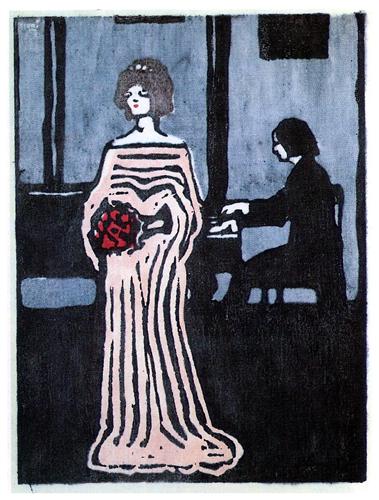
 "The Singer" - Wassily Kandinsky

The Singer (1903)

Wassily Kandinsky

___________

though a new winner was crowned
this year again at Québec’s La voix“,
last year’s winner, who made a guest
appearance at the ceremony, wins
again hands down, I think, Yoan
Garneau incontrovertibly delivers

listen to him sing both “J’entends
siffler le train”
and “Good-Hearted
Woman”
, wherein I am of course
the good-hearted woman

listen to Peter, Paul and Mary do
“…siffler…” in the original English,
you’ll cry

meanwhile at The Voice UK“, Stevie
McCrorie sings I’ll Stand By You“,
powerfully, and wins despite the
formidable opposition from Lucy
O’Byrne doing No Surprises“,
wherein I am the very air that
bristles around her music

Richard

a birthday wish

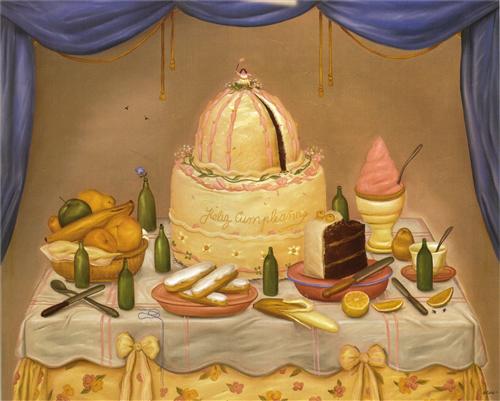
  "Happy Birthday"- Fernando Botero

Happy Birthday (1971)

Fernando Botero

_________

a friend of mine was eighty today,
she’s gone off to London to celebrate,
she didn’t want anyone to make a fuss

a fuss, I said, it’s your eightieth birthday,
one should make a fuss, she’s gone to
London anyway

from this side of the ocean, and indeed
from this side of the continent, it seemed
nevertheless remiss of me not say
something

but as in Hallmark cards, sometimes
the message is better in someone
else’s words, in this case Bob Dylan’s
but sung by Joan Baez, just click

May God bless and keep you always
May your wishes all come true
May you always do for others
And let others do for you
May you build a ladder to the stars
And climb on every rung
May you stay forever young
Forever young

May you grow up to be righteous
May you grow up to be true
May you always know the truth
And see the light surrounding you
May you always be courageous
Stand upright and be strong
May you stay forever young
Forever young

May your hands always be busy
May your feet always be swift
May you have a strong foundation
When the winds of changes shift
May your heart always be joyful
May your song always be sung
May you stay forever young
Forever young, forever young
May you stay forever young

Bob Dylan

happy birthday, dear friend, may you
live forever

Richard

Beethoven Cello Sonata no 1, opus 5, no 1‏

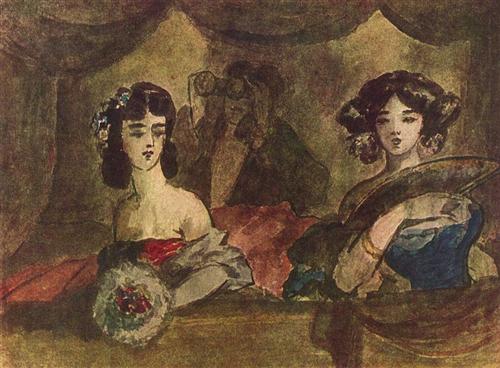
"La loge de l'opéra"-  Constantin Guys

La loge de l’opéra

Constantin Guys

__________

through the good graces of a friend
of mine, a musicologist, who writes
the programmes for the chamber
music presentations put on by our
city’s recital society, pithy, pungent
pieces to prepare the patrons for
their palpitating performances, I had
the not only unfettered privilege but
also the undiluted glee, yes, glee, of
seeing, hearing, two internationally
acclaimed artists deliver works for
piano and cello of Beethoven, one
of them one of my very favourite
compositions, the opus 5, no 1

unable to find anything by these two
of anything of Beethoven’s, I struck
upon, instead, these two others,
titans in their field, the very two who
defined for me this exuberant sonata
in the eighties, wherein Beethoven
was finding, to my mind, his chops,
nothing before this, of his nevertheless
extraordinary output, had inspired me,
the early piano sonatas still sound to
my ear didactic, like someone putting
together academic theory, where here
Beethoven lets his spirit fly, let’s the
music running through him deliver,
carry unimpeded the fire, the charge
is electric

eccentricities abound, there are only
two movements, the first sports two
tempi, an introductory, hesitant,
segment giving way to the second
unfettered one, the contrast a move
in the direction of drama, I think,
highlighting context, narrative, an
aesthetic inspired, I’m sure, by
opera, and its combative
peregrinations

Beethoven wrote one opera, not at all
the equal of his other productions,
words were to get in the way of his
instrumental, it appears, music, his
more direct, ultimately,
communication

though you’ll not want to miss, from
Fidelio“, his Mir ist so wunderbar,
a vocal quartet of the very highest
order

mir ist, you’ll say, so wunderbar,
indeed

Richard

psst: click everything, there are wonders
beneath the above links

to my boyfriend in Mexico

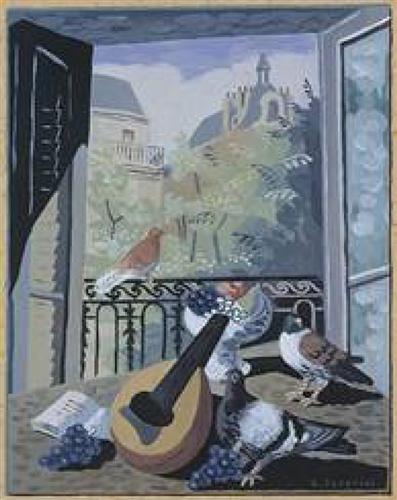
"Window with Doves" - Gino Severini

Window with Doves (c.1931)

Gino Severini

________

I thought I’d watch a movie but these
songs of tortured love took over and
I can’t stop

here’s a song that defines my
Guadalajara trip, when Carlos, I think,
waiting for me in my hotel room,
sitting on the bed under a springtime
painting on the wall above it, asked,
may I kiss you, outside the
bougainvillea were blooming as they
do there in spring, I said yes

later on I found out about chicken
mole, a wonderful Spanish dish

everywhere then the song had
invaded the city, Nana Mouskouri
was singing it

Julio Iglesias seems to have made
sure of that

love

me

“April Showers” – “Buddy” DeSylva‏

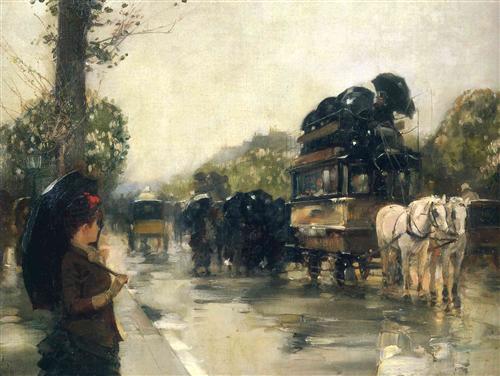
"April Showers, Champs Élysées Paris" - Childe Hassam

April Showers, Champs Élysées Paris (1888)

Childe Hassam

________

when I was a boy the obliteration of
Al Jolson as an extraordinary talent
hadn’t yet occurred, black indignation
hadn’t, however justifiably, banished
him from our cultural landscape

but he’d been big, consider the array
of songs he made indelible from
April Showers to My Mammy
by way of You Made Me Love You,
for instance, or About a Quarter to
Nine
“,
among other equally
noteworthy melodies, airs we all still
sing on occasion, complete with all
their familiar words

the film, The Jolson Story is still
one of my very favourite musicals,
available in segments here if you
follow the links, its every megabyte
worth watching, you’ll come away
enraptured and singing

and there’s even a sequel

meanwhile here are the lyrics to
this irrepressibly hopeful tribute
to the month of bluebirds and
daffodils and, of course, violets

of which I wish you boundless
bouquets

April Showers

Life is not a highway strewn with flowers,
Still it holds a goodly share of bliss,
When the sun gives way to April showers,
Here’s a thought that we should never miss:

Though April showers
May come your way,
They bring the flowers
That bloom in May;
And if it’s raining,
Have no regrets;
Because it isn’t raining rain, you know,
It’s raining violets

And when you see clouds
Upon the hill,
You soon will see crowds
Of daffodils;
So keep on looking for the bluebird,
And listening for his song,
Whenever April showers come along.

Though April showers
May come your way,
They bring the flowers
That bloom in May;
And if it’s raining,
Have no regrets;
Because, it isn’t raining rain, you know,
It’s raining violets.

And when you see clouds
Upon the hill,
You soon will see crowds
Of daffodils;
So keep on looking for the bluebird,
And listening for his song,
Whenever April showers come along

“Buddy” DeSylva

__________

Richard

a grab bag of love songs‏


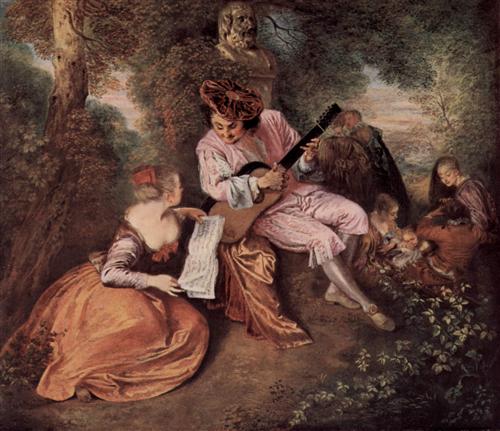
 "The Scale of Love" - Antoine Watteau

The Scale of Love ( c.1717)

Antoine Watteau

______

a clutch of other pop songs that have
moved me in March

for its unabashed servility, Mon Dieu – Johanne Lefebvre

please, God, she says, let my lover be
with me still even for a short time, time
to tell each other of how we adore each
other, time to create for ourselves
memories, six months, three months,
two, one month only, let him remain,
time to begin or time to end, time to
glow or time to even suffer, please,
God, don’t take him away

for its irresolute resolution, I’ve Been Loving You Too Long
Emmanuel Nwamadi

for its recriminations, self-flagellation, Jealous Guy – Kevin Bazinet

for its out-of-control hormones, Sing – Liana Bureau
and Dominic Dagenais

Richard

Beethoven Cello Sonata no 3, opus 69 – Gould/Rose‏

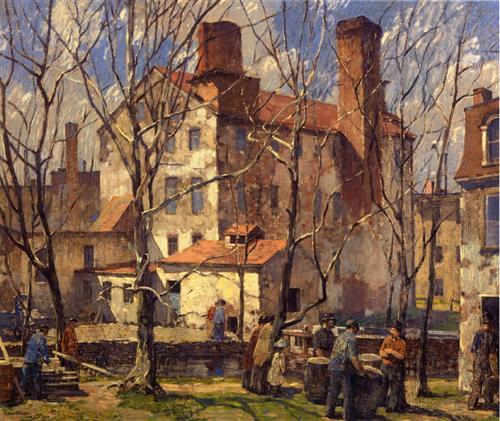
 "A Day in March" - Robert Spencer

A Day in March(1918)

Robert Spencer

_________

hot upon having seen a tremendous recital
by two internationally renowned interpreters
of the cello sonatas of Beethoven, neither
could I find their own renditions on the
Internet but their individual performances
only of works by other composers, some
astounding, others not, nor performances
by other artists of the same works I could
wholeheartedly recommend, even the big
ones, sometimes they have an off night

but with Beethoven, Glenn Gould never
lets you down, he is, quite simply, ever
transcendent, watch his Cello Sonata
no 3 of Beethoven, opus 69
, with cellist
Leonard Rose, up as well to so august
a challenge, be unequivocally
transported, don’t not watch, just click,
wow

Richard

Paganini’s First Violin Concerto – Akiko Suwanai‏

Jean Auguste Dominique Ingres - "Niccolo Paganini" (c.1819)

Niccolo Paganini (c.1819)

Jean Auguste Dominique Ingres

_____________

for Apollo, who alerted me to my error

having egregiously misspelled “Akiko”
in my recent commentaries about Ms
Suwanai, since, however, corrected, I
can only heap upon her greater praise
now for again an immaculate
performance of, this time, Paganini’s
First Violin Concerto
, itself an event,
as atonement

not only does she play this thrilling
masterpiece
with precision and
consummate artistry, this is the
performance with which she wins
the Tchaikovsky Competition, the
one Van Cliburn had secured so
illustriously back in the late Fifties,
at the height of Soviet Communism,
she in 1990, moments only after its
fall, a full, now, 25 years ago

it astounds me that such a talent
would’ve taken so long to reach my
ears, which have been attuned to
Classical music and its
peregrinations for as long as I can
remember

then again there was no ticker tape
parade for Ms Suwanai when she
triumphed
, the world has changed,
it seems such excellence is no longer
so universally paraded, not even
much advertised

the Paganini Violin Concerto was
composed around 1818, late
Beethoven, early Chopin, Paganini
defines for the violin the Romantic
Period, what Chopin did for the piano,
Beethoven had given them the push

if you can get past your astonishment
you’ll note that the foundation of the
piece
is Classical, tight tempi, tonality,
no discordant notes, and repetition
always of the themes, still the triple
pillars of our understanding of music,
its Trinity, despite some strong forays
into their deconstructions, see, for
instance, the haunting George Crumb

what Paganini adds to Classicism is
personality, Romanticism, same as
Beethoven did, and at about the
same time

aristocratic formality was giving way
to the voices of the crowd, some highly
articulate, representative, formidable,
as the shackles of servitude fell with
the French Revolution and human
rights became central, and
indomitable

Richard