Richibi’s Weblog

Just another WordPress.com weblog

Category: literature to ponder

“Vancouver” – Philip Resnick
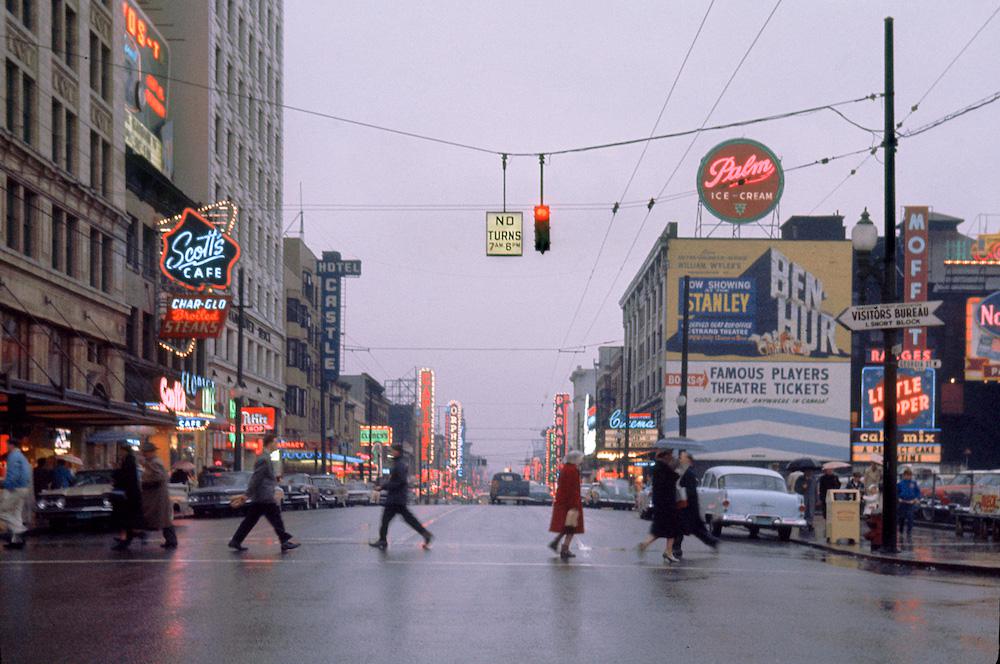
"Crosswalk" - Fred Herzog

Crosswalk (1960)

Fred Herzog

_______

not many poems exalt a city, the first
for me was Sandburg’s Chicago, a
far cry from Shelley, Byron, Keats,
and finally something that I could
sink my teeth into – though pretty,
the earlier, Romantic, poems had
been prissy, effete, skylarks,
Grecian urns, the irrelevant fall of
Babylon to the Assyrians
to me

– a lot of festooned air, I thought,
signifying nearly nothing, despite,
afterwards, its often very clever,
indeed truly inspiring, aphorisms

“Beauty is truth, truth beauty, — that is all
Ye know on earth, and all ye need to know.”

for instance

but I was young then, have gotten through
Romanticism’s idiosyncratic pretensions
to its noble universal heart, maybe ‘ve
even picked up a few of its literary
excesses since, what do you think

here’s one, right up there with Chicago“,
about Vancouver this time, my city

and it’s a dandy, I think

come visit

Richard

_______________

Vancouver

The most liveable city on the planet, they say,
which seems true enough on a mid-August afternoon,
sailboats dotting the bay,
picknickers at crowded beaches
competing for summer heat
and precious square centimetres of sand.
Sunlight casts its spell,
and hearing over and over again
how wonderful you are
has a hypnotic ring to it,
much like lovers gently rocking
to rhythms of the midnight hour
or first sight of running water to the parched.
We who grow old here
have like Cavafy‘s Alexandrians
learned to treat such messages with suspicion.
Those bereft of love
find little compassion betwixt concrete condo towers,
those with few means dwell in the same Inferno’s circles
as the bereft of other cities,
and those in hawk to the god of greed
are no less addicted for living in the suburbs of insatiability.
Philip Resnick

“King John” – Shakespeare‏

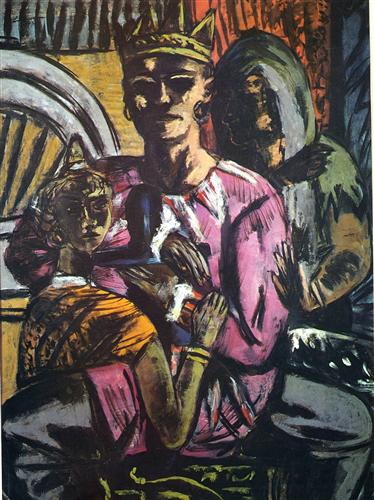
"The King" - Max Beckmann

The King ( 1934 – 1937)

Max Beckmann

_________

King John, 1166 to 1216, was the brother
of Richard the First, “the Lionheart”, and
of Geoffrey, both sons, as well as John,
of Eleanor of Aquitaine and Henry the
Second

you might remember them all from the
classic The Lion in Winter from the
Sixties

in Shakespeare’s story, John has become
king, both Geoffrey and Richard have
already perished, but Geoffrey has left an
heir, Arthur, Constance’s son, and since
Geoffrey had been the eldest, his own son,
it is contested, should be the rightful heir
to the English throne

John is not in agreement, nor is Eleanor,
his mom, but Constance is backed by the
Duke of Austria and the King of France,
who will go to war to unseat John

meanwhile Arthur is too young to be
anything but ineffectual, innocent

they all meet before Angiers, a town
now in France, but ruled then by
England, where a delightful
confrontation occurs at its gates,
the town representative will let in
the King of England but only when
he knows who, of either, He is

war is however averted when a
marriage is suggested between the
two courts, a niece of John, Blanche
of Castille, will marry the Dauphin,
Louis, son of Philip of France,
joining, however improbably, the
two sparring factions

but thereby Arthur’s claim is lost,
and Constance is fully aware of
the inevitable, and treacherous,
consequences

a legate from the Pope, Cardinal
Pandolf, also steps into the fray,
to stir the political pot, pompously,
predictably, punctiliously and
perniciously, not to mention,
perfidiously, in the end, of course

the language is Shakespeare’s, to
be sure, therefore unavoidably
wrought, but with garlands of
irrepressible poetry that is ever
utterly, and irresistibly, enchanting

“I am not mad:”, says Constance to
Pandolf, who’s accused her of being
in such a state

“Lady, you utter madness, and not sorrow.”

Constance replies

“I am not mad: this hair I pull is mine
My name is Constance; I was Geoffrey’s wife;
Young Arthur is my son, and he is lost:
I am not mad: I would to heaven I were!
For then, ’tis like I should forget myself:
O, if I could, what grief should I forget!
Preach some philosophy to make me mad,
And thou shalt be canonized, cardinal;
For being not mad but sensible of grief,
My reasonable part produces reason
How I may be deliver’d of these woes,
And teaches me to kill or hang myself:
If I were mad, I should forget my son,
Or madly think a babe of clouts were he:
I am not mad; too well, too well I feel
The different plague of each calamity.”

act lll, scene lV

has there ever been such a telling
evocation of agony

Stratford’s version is superb, extraordinary,
unforgettable, don’t miss it, just click

Richard

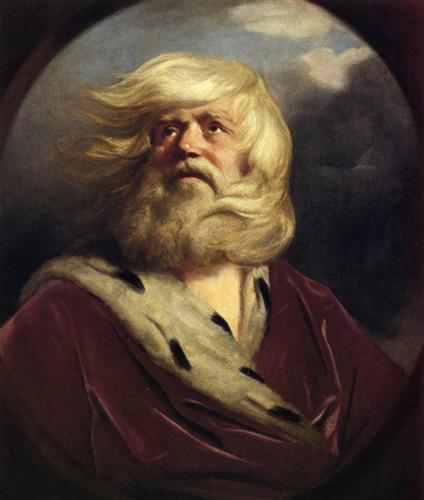
“King Lear” – William Shakespeare

 "Study for King Lear" - Joshua Reynolds

Study for King Lear (1760)

Joshua Reynolds

________

though it has its weaknesses, I have
never seen a better version of “King
Lear”
than this one, also, to my mind,
Shakespeare’s best play

watch

Lear has always been a difficult
character to portray, a King becomes a
vagrant, a Jesus figure, “a man / more
sinned against than sinning”,
and the
most difficult part an actor must render,
I’ve found, is that of social status

and here we have both extremes, a not
easy transition, nor have I seen but once
a Lear I could believe in

James Earl Jones in New York’s Central
Park
is Lear from the word go, but the
rest of the cast betrays him, they all
mostly merely phone in their roles

in this alternate production, the reverse
is true, Lear, though in many moments
mighty, is never really a King, nor truly,
I think, a Jesus, though his final breaths
are nothing short of holy

Cordelia speaks her lines well, but
doesn’t breathe them

every other performer is magnificent,
with a special mention for the truly
human Fool, not merely a caricature
here, but a wise man

also Kent, the vitriolic sisters, Edgar
and his ignominious brother Edmund,
even the several messengers, all of
whom intently and forcefully to a one
live out their roles

the direction is thrillingly manifest in
the solid and detailed work of the cast,
note, for instance, Regan’s laugh, an
inspired directorial touch, when Lear
declares his intention to bequeath
his land according to which of the
daughter’s “doth love Us most”,
relaying in an instant, and at the very
start, her fundamental, and thereafter,
of course, unswerving, unfilial scorn

I’ve never seen that note played
elsewhere so incisively

mostly, however, it’s the poetry of
Shakespeare, which bristles throughout,
like buds in spring in a garden, which ‘ll
especially delight, and have you marvel

watch

Richard


“Tru”‏

"Truman Capote" - Gloria Vanderbilt

Truman Capote

Gloria Vanderbilt

____________

Truman Capote, a towering XXth-Century
figure, might be remembered much more
for his personality than his considerable
literary output, In Cold Blood remains
a turning point in the history of literature,
not to mention an extraordinary read

three major works have been produced
about Capote since at least 1992, when
Robert Morse won a Tony for Tru, my
favourite rendition, with a nod to the
superb Infamous, before even the
dire, Oscar-winning, Capote, however
deserving Philip Seymour Hoffman
might’ve been of his own award for his
brilliant work

watch Tru in coordinated instalments,
no fuss, no muss, only the suspicion
you’ve missed an irretrievable and
perhaps crucial nugget in the clip
change

chill, Tru, however apportioned here,
is seamless, and captivating, hilarious
and, all at once, profound, not to be
ever forgotten, much as I never have

Richard


“Julius Caesar”, a foretaste

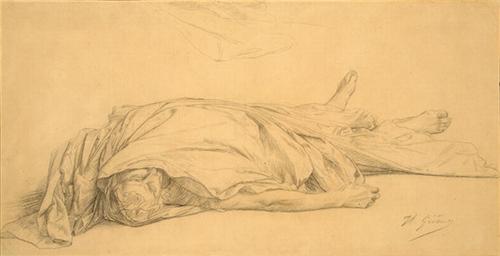
"The Dead Caesar" -  Jean-Léon Gérôme

The Dead Caesar (c.1859)

Jean-Léon Gérôme

__________

a friend and I are undertaking our
umpteenth reading of a Shakespeare
play, “Julius Caesar” this time, which
I hadn’t read in an age

in this version, still unparalleled,
Brutus, James Mason, presents his
argument for the assassination of
Caesar
, “Hear me for my cause, and
be silent that you may hear…not that
I loved Caesar less but that I loved
Rome more”,
he proclaims

Mark Antony, in the incarnation of
Marlon Brando, responds, for the
ages

and therein lies the glory, incidentally,
of Shakespeare

just saying

Richard

on odes

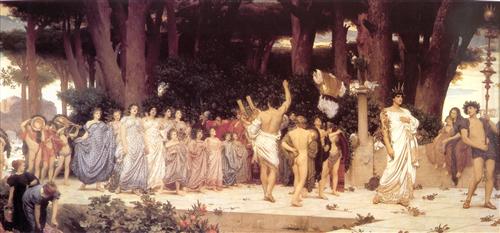
                          "The Daphnephoria" - Frederic Leighton

The Daphnephoria (c. 1875)

Frederic Leighton

________________

odes, with their suggestion of music
– despite a history of merely words
spoken in the intervening interim,
counting on meaning and rhythm
without music’s attendant tonality –
go back to the Greeks, the Seventh
Century, BCE, Sappho, for instance,
one of history’s most honoured
women poets, surely quite an
achievement for her in an age of
predominant, indeed
disenfranchising, masculinity

the ode was meant to accompany
tributes to people, events, things,
thereby acquiring an element of
acclamation and praise within its
dimensions, Pindar, ca 552 – 442
BCE, wrote odes for heroes of the
original Greek Olympics, for
instance

by the time of Horace, 65 – 8 BCE,
odes had become stylized,
independent of music, here’s one,
not inappropriately in this season’s
vernal context, to spring

odes remained spoken throughout
their resurrection in the wake of the
rediscovery of the Ancient World
during the Renaissance, onwards
through some famous Romantic
ones, Shelley, for instance, Keats,
up to even this one, by Stanislaw
Barańczak
, which I found in the
New Yorker
, April 20th, a gem, I
think, and in the very spirit of our
Age of Irony

Plywood

O plywood, second best to the real stuff,
believe me, one day I will say “Enough”

to my stooping shoulders, my slouched spine;
my sloped shape and your stiff boards will align,

and you’ll see how my backbone will unbend
and I’ll be standing straight until the end

of my makeshift but rectilinear
prayer, one stiff-backed as a chest of drawers

when we shove heavy furniture around;
I will rise from the dead, though on what ground

and which I, I don’t know; I’ll stand erect,
though my vertebrae’s hierarchic sect

won’t outlive plywood, no, it just can’t win
against that vertical eternity, so thin

and yet so sturdy in its ersatz pride;
as if the moon had shown me its dark side,

I lean, my ear glued to a cupboard’s back,
and I can hear its hollow and exact

hymn to its own cheap immortality;
no, wait, I still can straighten, still can be

square with this upright world (you knew I could),
just as plumb as four planks of real wood.

Stanisław Barańczak

(Translated, from the Polish,
by Clare Cavanagh and the author.)

__________

though you mightn’t’ve caught an “Ode”
in the title, the clue to its essence is in
the initial “O”, an acclamation

and yes, “O, Canada” is therefore also
an ode, as would be most anthems

incidentally Beethoven put the music
back into the form with his incendiary
use of Schiller’s poem for his vocal
triumph in his ninth Symphony, An
die Freude
“,
the Ode to Joy,
incomparable in this rendering for
an improbable 10,000
, yes 10,000, just
click

Richard

“Primavera” – Sandro Botticelli‏

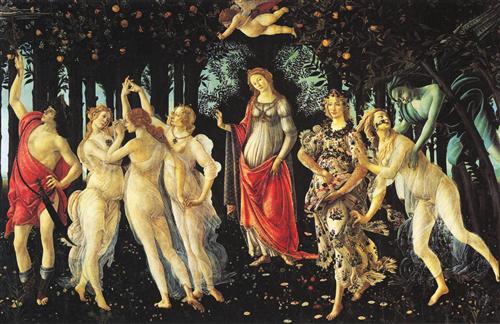
Sandro Botticelli - "Primavera"

Primavera (1478)

Sandro Botticelli

_________

on the right, Zephyrus, god of the west
wind, and messenger of spring, having
prised Chloris from his brother, Boreas,
the icy north wind, ravishes her, the
naked nymph, who is being transformed
into Flora, goddess of flowers, note
Chloris‘ hand dissolving into Flora‘s
arm

but listen to Ovid tell it

“‘I, called Flora now, was Chloris: the first letter in Greek
Of my name, became corrupted in the Latin language.
I was Chloris, a nymph of those happy fields,
Where, as you’ve heard, fortunate men once lived.
It would be difficult to speak of my form, with modesty,
But it brought my mother a god as a son-in-law.
It was spring, I wandered: Zephyrus saw me: I left.
He followed me: I fled: he was the stronger,
And Boreas had given his brother authority for rape
By daring to steal a prize from Erechteus‘ house.
Yet he made amends for his violence, by granting me
The name of bride, and I’ve nothing to complain in bed.
I enjoy perpetual spring: the season’s always bright,
The trees have leaves: the ground is always green.
I’ve a fruitful garden in the fields that were my dower,
Fanned by the breeze, and watered by a flowing spring.
My husband stocked it with flowers, richly,
And said: “Goddess, be mistress of the flowers.”
I often wished to tally the colours set there,
But I couldn’t, there were too many to count.””

Fasti, Book V, May 2 – Ovid

________________

I love “It would be difficult to speak of my
form, with modesty”

go, girl, indeed goddess

on the left of the painting the three Graces,
Aglaea, Euphrosyne, and Thalia dance

on the far left, Mars, whence, incidentally,
our name for the month of March, is god
not only of war, but of also agriculture

Venus, who needs no introduction,
presides at the centre, accompanied
by her prankish son, Cupid, fluttering
above

“Love looks not with the eyes, but
with the mind”, Shakespeare says,
“And therefore is winged Cupid
painted blind” *

as he is in the painting above

no painting has yet replaced Botticelli‘s
Primavera as a universal symbol of
spring

may yours be equally timeless,
enchanted

Richard

* A Midsummer Night’s Dream
Act 1, scene 1, lines 234 – 235

– William Shakespeare

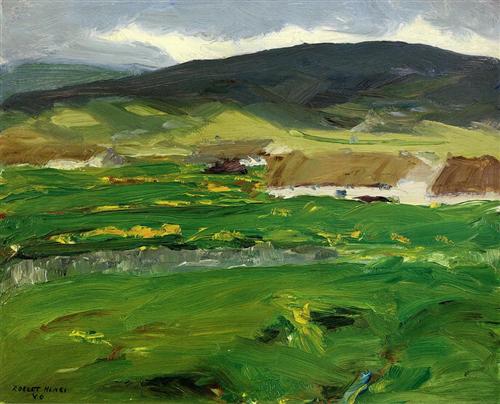
“Dancing at Lughnasa”

   "O'Malley Home (Achill Island, County Mayo, Ireland)" (1913) - Robert Henri

O’Malley Home (Achill Island, County Mayo, Ireland) (1913)

Robert Henri

_______

a quiet February evening, or even a quiet
February afternoon, would be perfect to
watch Dancing at Lughnasa“, a fireside
movie with family and warmth, even
chickens, it’s Ireland, 1936, in the distance
the Spanish Civil War, sisters are taking
care of each other

Meryl Streep heads an impeccable cast,
each performer surely inspiring the other
for such excellence to so generally shine
through, the magic is inveterately
consistent

Michael, Christina’s illegitimate son, tells
the story of when his dad visited them all
that summer he was seven, children are
always the victims, also the survivors

the play won the Tony Award in 1992 for
Best Play of the Year

watch, click

Richard

“No Ideas But In Things” – Jessica Greenbaum‏

   "Lady with a Squirrel and a Starling" (c.1527) - Hans Holbein the Younger

Lady with a Squirrel and a Starling (c.1527)

Hans Holbein the Younger

__________

it’s been a while since I’ve offered
up a poem, it’s been a while since
I’ve read one, and I miss them

but this one inadvertently this
morning struck a conversational
tone I found particularly engaging,
easy to read, though with cadences

no paragraphs

Jessica Greenbaum uses longer
iambic pentameters than I do, you
might note, decidedly more
punctuation

but she sings her lines, her daily
prose, as if they were poems

that’s what I especially like

Richard

_____________

No Ideas But In Things

We checked the vents and hidden apertures of the house,
then ran out of ideas of where it might be open to the world.
So we couldn’t figure out how the squirrel was getting in.
We each had methods that succeeded in shooing him,
or her, out the door—but none of them lasted. Whether
it was the same squirrel—terrified when in the house, and
persistently so—or various we couldn’t tell because,
tipped off by a glance, he zigzagged from froze-to-vapor,
vanishing, Zorro-like, until signs would tell us he had
revisited the sideboard to dig in the begonia. (Escaping
Newcastle in a search for coal.) We plotted his counter-
escape, laying a path of pecans to a window opening
on the yard. A few days would pass, and, believing him
gone, we felt inexplicably better than when we began.
Then, from another room, the amplified skritch of nutmeg
being grated—and, crash. Bracelets off dresser tops, bud
vases, candy dishes, things houses have that the back yard
doesn’t. You don’t think of squirrels knocking things over,
but inside it was like living with the Ghost and Mrs. Muir.
When we couldn’t trust the quiet or prove his absence,
we cast him as that hapless shade: worry. Our own gray
area, scat-trailing proof of feral anxiety. But after a few
cycles of release-and-catch I grew bored with the idea,
with its untamed projections. Since he dashes up walls,
(yanked, like a pulley), or seeks treasure in a five-inch pot,
daily, why not adopt him as optimism’s travelling rep?
I tried. But the sun comes up, we step toward the stove,
and he shoots out like a cue ball, banks off the kitchen door
—what mayhem is caused by going to make coffee!—
and the day, again, begins with a shriek. We are now in
week three and I accept that, inside, the squirrel is going
to stand for something else. And so is the May rain
and so is the day you took off your coat and the tulips
joined in with the cherry blossoms and the people came out
and the pear-tree petals floated down in polka dots
around the tulips, and even around the cars. We name life
in relation to whatever we step out from when we
open the door, and whatever comes back in on its own.

Jessica Greenbaum

“A Year’s Carols” – Algernon Charles Swinburne


"February Forest with Sheep" - Diana Harrison

February Forest with Sheep

Diana Harrison

__________

happy poems about February are not
easy to find, nor are poems by any
poet written for each month of the
year

but here are Algernon Charles
Swinburne
‘s “January” and “February”
from his A Year’s Carols

January

Hail, January, that bearest here
On snowbright breasts the babe-faced year
That weeps and trembles to be born.
Hail, maid and mother, strong and bright,
Hooded and cloaked and shod with white,
Whose eyes are stars that match the morn.
Thy forehead braves the storm’s bent bow,
Thy feet enkindle stars of snow.

February

Wan February with weeping cheer,
Whose cold hand guides the youngling year
Down misty roads of mire and rime,
Before thy pale and fitful face
The shrill wind shifts the clouds apace
Through skies the morning scarce may climb.
Thine eyes are thick with heavy tears,
But lit with hopes that light the year’s.

Algernon Charles Swinburne

March’ll have to wait

most of us have never even heard of
Swinburne, I actually thought he was
German, he’s not, he was English,
and decadent, apparently, like his
compatriots then, Dante Gabriel
Rossetti
and Oscar Wilde, who
thought Swinburne, however, was
a sham

though he never received a Nobel prize,
he was nominated for one in literature
each year from 1903 to 1907, then
again in 1909

to Swinburne

Richard