Richibi’s Weblog

Just another WordPress.com weblog

Category: in search of beauty

“Metamorphoses” (The Brazen Age / The Iron Age ) – Ovid

british-industries-steel.jpg!Large

     British Industries. Steel 


              Richard Jack


                  _______


The Brazen Age
 

          To this came next in course, the brazen age:
          A warlike offspring, prompt to bloody rage,
          Not impious yet… 


brazen, of brass, the pride, and collective 

title, of the military, not to mention of

industrialists, CEOs, still 


yet…., or the Iron Age, follows


The Iron Age
 

          Hard steel succeeded then:
          And stubborn as the metal, were the men.
          Truth, modesty, and shame, the world forsook:
          Fraud, avarice, and force, their places took. 


remember conscience, from the Golden Age,

now, during this Iron Age“fors[aken]”


          Then sails were spread, to every wind that blew.
          Raw were the sailors, and the depths were new: 


note “sails” here, a perfect example of a

metonymy, where the word means not 

only the cloth, the canvas that catches 

the wind, but also its larger self, the 

ship, which benefits from that integral

propulsive action, like the body the

heart 


          Trees, rudely hollow’d, did the waves sustain;  


hollowed out trees could manage to

remain above the water, could float


          E’re ships in triumph plough’d the watry plain.


our archetype here would again be Columbus,

however ignominiously


          Then land-marks limited to each his right:
          For all before was common as the light. 


though all land had earlier been common,

available to all to freely enjoy, now fences,

signposts prohibited collective access


          Nor was the ground alone requir’d to bear
          Her annual income to the crooked share, 


crooked, awry, disproportionate


          But greedy mortals, rummaging her store,
          Digg’d from her entrails first the precious oar; 


“greedy mortals”, mining, not only from

“the ground alone”, but from the earth’s 

very “entrails”, her “oar”, or ore


          Which next to Hell, the prudent Gods had laid;
          And that alluring ill, to sight display’d. 


the “prudent Gods” had set the precious 

metals near that unholy place to ward off,

however ineffectually, eventually, potential  

pilferers, plunderers 


          Thus cursed steel, and more accursed gold,
          Gave mischief birth, and made that mischief bold: 


or again Truth, modesty, and shame, the 

world forsook: / Fraud, avarice, and force, 

their places took.“, lines 3 and 4 from the 

top


          And double death did wretched Man invade,
          By steel assaulted, and by gold betray’d, 


double death, assault and betrayal, invade, 

become components, properties, of Man


          Now (brandish’d weapons glittering in their hands)
          Mankind is broken loose from moral bands; 


immoralities follow


          No rights of hospitality remain:
          The guest, by him who harbour’d him, is slain,
          The son-in-law pursues the father’s life;
          The wife her husband murders, he the wife.
          The step-dame poyson for the son prepares;
          The son inquires into his father’s years. 


the stuff, at present, of all of our arts and 

literature, of our collective consciousness, 

we are the Iron Age


where


          Faith flies, and piety in exile mourns;
          And justice, here opprest, to Heav’n returns. 


“justice” has flown, fled, to Heaven,

to our universal, and grievous, 

distress


R ! chard


Metamorphoses (The Silver Age) – Ovid

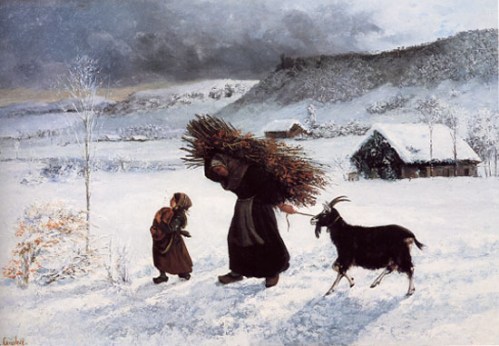
poor-woman-of-the-village

      “Poor Woman of the Village” 


              Gustave Courbet


                 ___________


the good times wouldn’t last, however,

discord among the gods would bring 

on the Silver Age 


           But when good Saturn, banish’d from above,
           Was driv’n to Hell, the world was under Jove. 


Saturn, god of plenty, had presided over 

the Golden Age


Jove, or Jupiter, god of thunder, was 

king of the gods


there would be consequences for this

disarrangement, this strife


           Succeeding times a silver age behold,
           Excelling brass, but more excell’d by gold. 


silver might not have been gold, but it

was still better than brass, as, later,

we’ll see


           Then summer, autumn, winter did appear:
           And spring was but a season of the year. 


no longer “immortal” 


by casting Saturn into the Underworld, Jove

set off the cycle of the seasons, whereby

Saturn, clutching his way back to the realm

of the deities, after his initial fall, would inspire

regeneration, the return of springtime, for a

while, before being ousted again, and again, 

and again


           The sun his annual course obliquely made,
           Good days contracted, and enlarg’d the bad. 


in keeping with the suns “oblique[ ]” 

progressions, not parallel, not at  

right angles


           Then air with sultry heats began to glow;
           The wings of winds were clogg’d with ice and snow; 


the emergence of heat and cold


           And shivering mortals, into houses driv’n,
           Sought shelter from th’ inclemency of Heav’n. 


see above


           Those houses, then, were caves, or homely sheds;
           With twining oziers fenc’d; and moss their beds. 


oziers, or osiers, shrubs of which the 

branches have traditionally been used 

to make baskets, basketry


           Then ploughs, for seed, the fruitful furrows broke, 
           And oxen labour’d first beneath the yoke.


not to mention Man, the advent of agriculture,

toil


R ! chard


“Metamorphoses” (The Golden Age) – Ovid

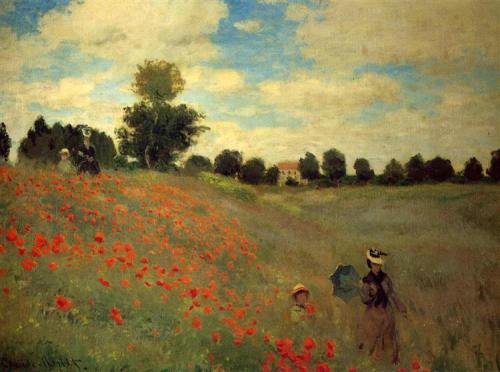
field-of-poppies.jpg!Large

    “Field of Poppies (1873) 


           Claude Monet


               _______


once the Creation is complete, Time 

becomes one of its components, ages, 

or eras, or epochs ensue giving credence 

to the fact of an evolutionary process,

instead of stasis a continuation of the 

inner workings of primordial Chaos still 

roils, bristles, but among more orderly 

elements now 


so that the first age, The Golden Age,

is positively blissful 


             The golden age was first; when Man yet new,
             No rule but uncorrupted reason knew: 


Evil was not yet even a concept 


             And, with a native bent, did good pursue. 


a native bent, naturally, by instinct, inately


             Unforc’d by punishment, un-aw’d by fear,
             His words were simple, and his soul sincere; 


therefore


             Needless was written law, where none opprest: 


where no one offended, laws were 

unnecessary


             The law of Man was written in his breast: 


a function of his emotions


             No suppliant crowds before the judge appear’d,
             No court erected yet, nor cause was heard: 


suppliant crowds, petitioners for justice


             But all was safe, for conscience was their guard. 


remember conscience, something that too

often now has fallen, it seems, by the 

wayside


though we’re a long way off at present, 

admittedly, from the Golden Age


             The mountain-trees in distant prospect please, 


please is a verb here, as in the mountain-trees 

bring pleasure


but


             E’re yet the pine descended to the seas: 


E’re, or before, the pine trees descended, 

grew closer to, gravitated toward, the water


compare here, ” About her coasts, unruly 

waters roar; / And rising, on a ridge, 

insult the shore.”, from earlierwhere 

“water vies with earth for its place upon 

the strand”


instead of water, Earth encroaches here, 

an equally formidable opponent 


             E’re sails were spread, new oceans to explore: 


E’re, or before, ships set out to conquer,

see Columbus for the archetypal example


             And happy mortals, unconcern’d for more,
             Confin’d their wishes to their native shore. 


a world without an economy


             No walls were yet; nor fence, nor mote, nor mound,
             Nor drum was heard, nor trumpet’s angry sound: 


drums and trumpets at any distance 

would’ve been cause for alarm, or at

the very least caution


             Nor swords were forg’d; but void of care and crime, 


note the negative no, nor, nor hammered out

through the last three verses, describing by 

omission the state of the original age, 

what there was not


             The soft creation slept away their time. 


soft creation, not inclined to struggle


             The teeming Earth, yet guiltless of the plough,
             And unprovok’d, did fruitful stores allow: 

             Content with food, which Nature freely bred,
             On wildings and on strawberries they fed; 


the subject here throughout is the “teeming 

Earth”, the Earth, metonymized, becomes 

earthlings – therefore “they” replaces 

“teeming Earth” as subject in the last two 

lines – who’d feed on wildings, uncultivated 

plants, crab apples, for instance, strawberries


             Cornels and bramble-berries gave the rest,
             And falling acorns furnish’d out a feast. 


Cornels, shrubs 


             The flow’rs unsown, in fields and meadows reign’d: 


flowers bloomed unbidden, covering fields


see above 


I watch the cherry blossoms grace our 

streets with their opulence as I speak,

decking our April days with springtime, 

still, even thousands of years later“,

a remnant, a bequest, of that golden 

past 


             And Western winds immortal spring maintain’d. 


like very Paradise, stretching into even 

immortality


             In following years, the bearded corn ensu’d
             From Earth unask’d, nor was that Earth renew’d. 


renew’d, tilled, harvested


             From veins of vallies, milk and nectar broke; 


valleys engender streams that create 

the conditions for milk and nectar


             And honey sweating through the pores of oak.


or our own indigenous syrup of maple


R ! chard


“Metamorphoses” – Ovid, 105

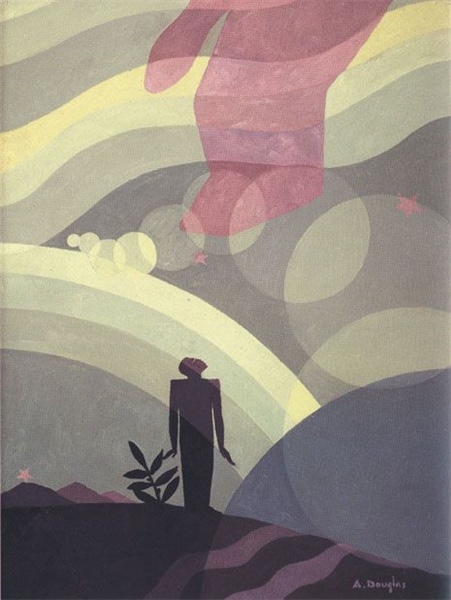
fullsizeoutput_5aa

    The Creation(1935) 


           Aaron Douglas


               ________


it should be noted that this exemplary 

translation of Metamorphoses was 

done by a clutch of eminent poets, 

John Dryden principally, England’s 

first Poet Laureate, 1688, but with 

the help of, notably, Joseph Addison,  

Alexander Pope, and William 

Congreve, among a number of 

celebrated others, under the 

direction of the poet and physician,

Samuel Garth, in no later than 1717, 

over 300 hundred years ago


this will explain the sometimes 

disorienting spelling of some 

otherwise common words, you’ve

read alreadyfor instance, extreams” 

for “extremes”“watry” for “watery”, 

“blustring” for “blustering” 


it might also be that my own reading

of the text could be influenced by 

idiosyncratic interpretations given 

by the above poets, who would’ve 

written according to the perspectives 

of their own time, the 18th Century, 

somewhat altering, most likely, the 

pristine intentions of Ovid’s original


as I myself, however philologically 

scrupulously – mea culpa, mea 

culpa, mea maxima culpaI must 

contritely confess – can, can 


be forewarned


but onwards to the completion of 

the Creation


            High o’er the clouds, and empty realms of wind,
           The God a clearer space for Heav’n design’d;
           Where fields of light, and liquid aether flow; 


a description of Heaven, “fields of light and 

liquid aether”


            Purg’d from the pondrous dregs of Earth below. 


“the pondrous dregs of Earth”, our dwelling


             Scarce had the Pow’r distinguish’d these, when streight
            The stars, no longer overlaid with weight,
            Exert their heads, from underneath the mass;
           And upward shoot, and kindle as they pass, 


“the Pow’r”, or “the God, whatever God was he”, 

earlier noted


while gravitation again allows the “fields of light”, 

newly “distinguished”, or separated, from the 

pondrous dregs of Earth“, to “streight…upward 

shoot, and kindle”, or sparkle, like firewood, or 

nebulae, aurorae, very constellations 


             And with diffusive light adorn their heav’nly place.


diffusive, evanescent, aetherial, nearly 

transcendental


             Then, every void of Nature to supply,
           With forms of Gods he fills the vacant sky:
           New herds of beasts he sends, the plains to share:
           New colonies of birds, to people air:
           And to their oozy beds, the finny fish repair. 


note that all life forms are “forms of Gods”,

and “birds”, anthropomorphically, no less

than “people air”

             A creature of a more exalted kind
           Was wanting yet, and then was Man design’d: 


the design follows


             Conscious of thought, of more capacious breast,
           For empire form’d, and fit to rule the rest: 


though the specific initial progenitor will remain 

ever the secret of that Creator


           Whether with particles of heav’nly fire
           The God of Nature did his soul inspire,
           Or Earth, but new divided from the sky


was it “heav’nly fire” or Earth”, which malleable


             And, pliant, still retain’d th’ aetherial energy: 


we are, in other words, quintessentially, 

however muddied, starlight


             Which wise Prometheus temper’d into paste,
           And, mixt with living streams, the godlike image cast. 


Prometheus is the Titan who fashioned 

us of clay, and gifted us with fire despite 

the opposition of the Gods, for which he 

was cruelly punished, but that’s another

story


             Thus, while the mute creation downward bend
            Their sight, and to their earthly mother tend, 


mute creation, species who have no 

language, animals, lizards, insects


             Man looks aloft; and with erected eyes
            Beholds his own hereditary skies. 


hereditary, received from the Creator,

the primordial ancestor, generator


             From such rude principles our form began;
           And earth was metamorphos’d into Man.


R ! chard


“Metamorphoses” – Ovid, 104

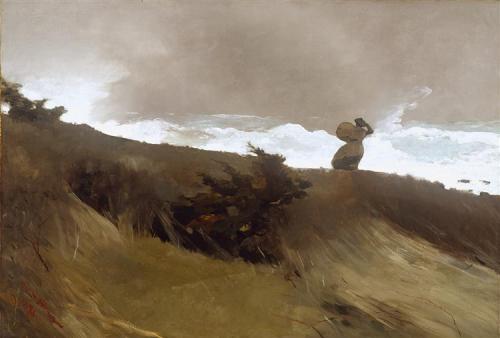
the-west-wind.jpg!Large

      The West Wind (1891)


            Winslow Homer


               __________


next, the creation of climate 


          And as five zones th’ aetherial regions bind,

          Five, correspondent, are to Earth assign’d: 


the five zones are the equatorial zone, the two 

temperate zones, and the polar zones


          The sun with rays, directly darting down,

           Fires all beneath, and fries the middle zone: 


the equator gets the brunt of it


          The two beneath the distant poles, complain

          Of endless winter, and perpetual rain. 


the poles get the other brunt of it


          Betwixt th’ extreams, two happier climates hold

          The temper that partakes of hot, and cold. 


temper”, as in “temperate”, as in zones


          The fields of liquid air, inclosing all, 

          Surround the compass of this earthly ball:


fields of liquid air, cloud covers


          The lighter parts lye next the fires above; 


fires above, the sun and the stars 


         The grosser near the watry surface move:


“grosser” air, less pure, less aetherial


          Thick clouds are spread, and storms engender there, 

          And thunder’s voice, which wretched mortals fear, 

          And winds that on their wings cold winter bear. 


they gravitate towards the denser earth, creating

conditions “there” for storms, strife, thunder


ever so ominously


          Nor were those blustring brethren left at large,

          On seas, and shores, their fury to discharge: 


blustring brethren, the winds, are not, we learn,  

not apportioned, not not allocated


          Bound as they are, and circumscrib’d in place,

          They rend the world, resistless, where they pass;

          And mighty marks of mischief leave behind;

          Such is the rage of their tempestuous kind. 


tempests, tsunamis, hurricanes


they call the winds 


          First Eurus to the rising morn is sent

          (The regions of the balmy continent);

          And Eastern realms, where early Persians run,

          To greet the blest appearance of the sun. 

          Westward, the wanton Zephyr wings his flight;

          Pleas’d with the remnants of departing light: 

          Fierce Boreas, with his off-spring, issues forth

          T’ invade the frozen waggon of the North.  


where we encounter, incidentally, aurorae borealis


          While frowning Auster seeks the Southern sphere;

          And rots, with endless rain, th’ unwholsom year.


it is to be noted that in 8 AD, when Metamorphoses 

was purportedly first published, one gathers from 

the text that the world was understood to be 

spherical, with two poles, the boreal and the 

austral, from which we later get the eponymously 

named Australia 


the world went flat, note, only later in the 

Middle Ages


R ! chard 


“Metamorphoses” – Ovid, 102

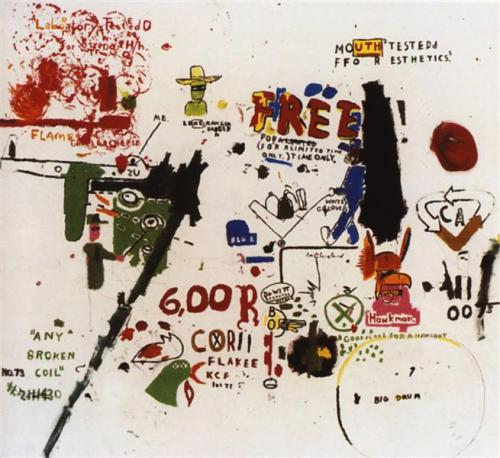
to-be-titled.jpg!Large

   To Be Titled (1987) –


          Jean-Michel Basquiat


                     __________


next, according to Ovid, inspired, presumably,  

by the Gods, is what happens before the world 

is created


        Before the seas, and this terrestrial ball, 


which is to say, the earth


        And Heav’n’s high canopy, that covers all,

        One was the face of Nature; if a face:


the “face of Nature” was “One”, an 

indistinguishable, perhaps not even, “face”


        Rather a rude and indigested mass:

        A lifeless lump, unfashion’d, and unfram’d,

        Of jarring seeds; and justly Chaos nam’d.


this undifferentiated agglomeration, this “lifeless 

lump” was called Chaos


note the “seeds”, however, potential, though 

“jarring”, or conflicting, the genesis for what 

is to follow   


           No sun was lighted up, the world to view;

           No moon did yet her blunted horns renew:


the horns of the moon are visible when the 

crescent moon lies flat on the horizon, in 

the shape of a smile, presenting “horns”, 

the twin elevated extensions


           Nor yet was Earth suspended in the sky,

           Nor pois’d, did on her own foundations lye:


or lie


           Nor seas about the shores their arms had thrown;

           But earth, and air, and water, were in one.


see again Chaos here


           Thus air was void of light, and earth unstable,

           And water’s dark abyss unnavigable.

           No certain form on any was imprest;

           All were confus’d, and each disturb’d the rest.

           For hot and cold were in one body fixt;

           And soft with hard, and light with heavy mixt.


next, the first metamorphosis


stay tuned


R ! chard


“Metamorphoses” – Ovid, 101

primavera-1478(1).jpg!Blog

   “Primavera (1478) 


       Sandro Botticelli


             _________


a friend expressed some interest in Ovid’s

Metamorphoses recently after I’d sung for 

a few moments its praises, had told her I 

was revisiting it after some time with the 

intention of duly, this time, completing it, 

given that, hey, we’ve got lots of time, at 

present, all of us, on our hands, by very 

mandate  


it sounds wonderful, she briefed me after 

I’d sent her the appropriate link, but there 

are some parts I don’t understand


I’ll help, I said, only too eager to share 

the delights of this inprobable treasure,

a gift nearly two thousand years old, 

with the magic still of very revelation


Metamorphoses is a creation story, the 

equivalent of the Bible for those who 

revered the Roman deities, the same 

deities that the Greeks revered, but 

transplanted, renamed, to Roman 

stock, like the Puritans did their  

Christian seed at Plymouth Rock  


Ovid, 43 BC to 17/18 AD, was a Roman

poet, paying fealty to Augustus, Emperor

of Rome, 63 BC to 14 AD, therefore his 

Roman goddesses, gods, and his, 

contemporary, Latin


which was translated into English early 

in the Renaissance, but found its best

expression, to my mind still, in the 

eminent hands of Sir Samuel Garth,

John DrydenAlexander PopeJoseph

AddisonWilliam Congreve, among 

others in, already, 1717


listen 


The Creation of the World


       Of bodies chang’d to various forms, I sing:
 

Ovid is saying my topic is transformation, very

metamorphoses, plural of metamorphosis


       Ye Gods, from whom these miracles did spring,
       Inspire my numbers with coelestial heat;
       ‘Till I my long laborious work compleat:
       And add perpetual tenour to my rhimes,
       Deduc’d from Nature’s birth, to Caesar’s times. 


poets have traditionally called upon their related

muses to inspire them to accomplish their task,

Ovid invokes his Gods, compare Shakespeare’s 

O for a Muse of fire, that would ascend / The

brightest heaven of invention, his prologue to 

Henry V   


“Ye Gods”, Ovid says, from whom these 

miracles did spring”, those everyday wonders 

that surround us, inspire me, he asks, that I 

might “compleat”, which is to say complete, 

his poem, this long laborious work”


his “numbers” are his years, “coelestial”, or

celestial, “heat”, is inspiration


“tenour to my rimes” means rhythm, weight, 

to his poetry


“Nature’s birth”, or the beginning of time, to

“Caesar’s time”, Ovid‘s own period under

Augustus


Ovid asks the Gods to fuel him with the

fire to tell the story of the world from its 

very beginning to his own epoch,

Caesar’s 


how’s that for a project


enough for now


but stay tuned for, to follow, the Creation,

capital C, I tell you 


R ! chard


on love – “Nature Boy”

99_9

    unidentified


       _______


                               for Danielle and Joe


a few nights ago, friends came over, a 

young couple, in the bloom of youth,

relatively speaking, half, approximately, 

my age, I’m seventy, for a glass of wine


during a conversation about the many

knickknacks scattered about my 

apartment, pictures, paintings, 

assorted paraphernalia, memorabilia,

they asked, was there one piece of 

information I could give them, 

something not just physical, but 

metaphysical, that could lead to a  

good and meaningful life


after cautioning that any answer would

be way too complex, the question way 

too broad, I nevertheless trotted out, 

convivially, a few words of ready 

wisdom, a couple of trusted and true 

maxims I hold in store for such 

occasions, personal precepts, 

however seemingly flippant, I 

faithfully and diligently live by


pray for grace, for instance, make sure 

your tie’s on right, the only two 

practicable positions in any 

predicament, I’ve found


later, after privately thinking more 

about it, I realized there is indeed a 

specific answer, I’d been singing it 

already for a while, to help me deal 

with recent, and even accumulated, 

loss, it is the punchline to this 

wonderfully enchanted 

composition, called Nature Boy


      the greatest thing you’ll ever learn,


it knowingly advises 


      is just to love, and be loved in return 


words eminently worth retaining


listen


R ! chard


on Beethoven’s Symphony no. 6, the “Pastorale”

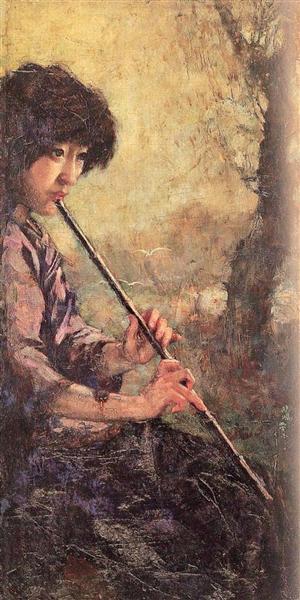
the-sound-of-the-flute.jpg!Large

      The Sound of the Flute 


               Xu Beihong


                 ________


                                    for Susan, who urges

                                               me ever to write


a friend wrote recently, extolling a

performance of Beethoven’s Sixth

Symphony he’d just seen, a 

noteworthy conductor conducting 


then again, how can you go wrong, 

I wrote back, with that already 

enchanting music, sent him, in

return, a version I’d ferreted out,

tried out for him, had been duly

enchanted, had laughed, had cried, 

taken shelter from the storm, come 

out the other side transported, again  


I wondered about the power of music, 

during my intermittent musings

throughout the variegated movements, 

as the peregrinations ambled on along 

their own magical explorations, long 

irrepressible arpeggios running up or 

down the scales, performing 

arabesques at their peaks, rumbling 

tremolos at their grumbling bottoms, 

before returning to the more stable 

middle ground of the melody


where, wondered, does it all find its 

source


sounds, individual sounds, would 

have been signals of danger, 

originally, a single note from a horn

warning of strangers on the way to

a community of otherwise peaceful

cohabitants if not only family, twig 

cracking in the forest when you 

believe you’re all alone


individual sounds would’ve picked

up meaning beyond their own pitch

and volume, resonance, reverberation,

rotundity, through Darwinian, even, 

time


a mother’s voice, for instance, 

identified immediately, upon a single

note, perenially, by any of her brood


it’s a long way from there to a symphony

but those are its roots, why we laugh, why

we cry, take shelter from the storm, and 

come out the other side transported


notes are written, emblazoned, on 

our consciousness, our lives depended,

depend still, on it 


listen


R ! chard


psst: interestingly, our Darwinian evolution

          has produced pitch as an identifying

          factor for our species, a female voice 

          is higher than a male’s, this has 

          allowed us, as a species, to sing

“The Boulevard of Broken Dreams”

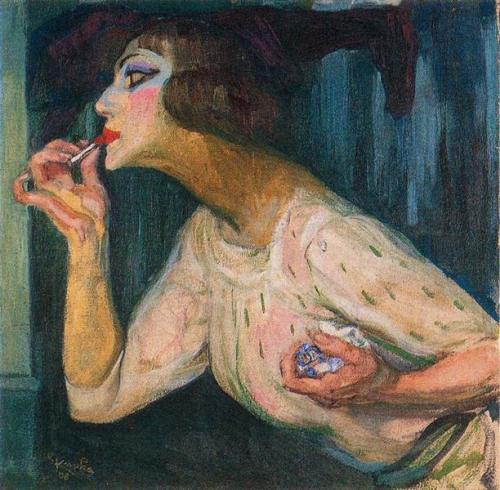
lipstick-1908.jpg!Large.jpg

    Lipstick (1908) 


          Frantisek Kupka


               __________


 whenever my heart is broken, I’ve recently 

noted, I’ve learned to sing a corresponding

song, it didn’t happen by design, but  

organically, it seems, as a response to my 

periods of anguish, a song would come up, 

each time, to contain the dimensions of my 

rue 


I need to learn the notes, which are usually 

tonal and melodic, with the characteristic

that they pretty consistently span a vocal

range that requires some intimate attention, 

work that tears me away, studiously and 

diligently, from my own private concerns

in order to consider, through his, her, very 

articulated lyrics, those of another, not to

mention the response of my proposed 

audience


I have developed quite a repertoire 


recently, this has been my aria


I was especially impressed by the 

irony in the composition, the 

songsmith laughing at himself, 

melodramatizing his sentiments, 

taking the sting out of his despair, 

if you’ll pardon the allusion
with over-the-top, it must be 
admitted, metaphors, allegories 

I mean, I walk along a street of

sorrows, a boulevard of broken 

dreams, you need a big floppy 

hat, and very red lipstick to pull

that one off


you ought to see me


enjoy


R ! chard