Richibi’s Weblog

Just another WordPress.com weblog

Category: films to ponder

“Suite Française” (2014)
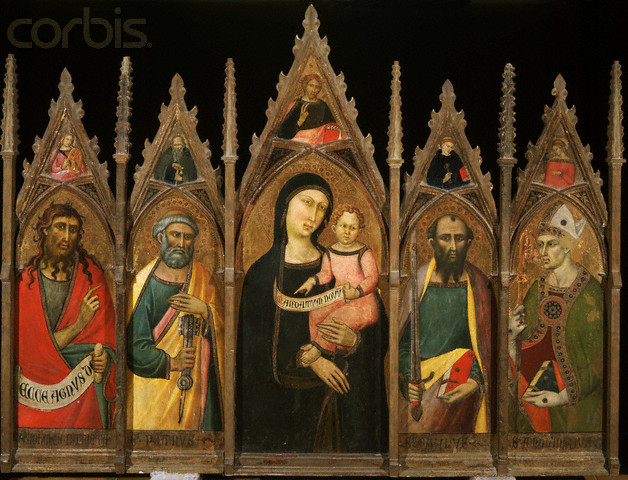
 "Madonna and Child Pentaptych" - Luca di Tommè Madonna and Child Pentaptych

Luca di Tommè

__________

Suite française“, had it not been for
its musical associations, would’ve
been called a “quintette”

a suite is, of course, a series of five
dance movements, a sarabande, a
minuet, a gigue, for instance, most
commonly with reference to Bach’s
Baroque masterpieces

which is to say that without its dance
implications, a suite would’ve been
called simply a sonata with five
movements, or a duet, trio, quartet,
and so forth, depending on the
participating instruments

in fiction, a sequence of five books
equals a quintet, see Durrell’s
Avignon Quintet“, for instance

in art, five panels are called a
pentaptych, see above

five books had been intended for her
Suite française“, but in 1942 their
author, Irène Némirovsky, was arrested
for being Jewish, and died later at
Auschwitz, she’d completed only two
of her intended manuscripts, a tragic
account of day-to-day life during the
Second World War

these texts were only discovered by her
daughters in 1998, who then had them
published in 2002, in just one volume
called Suite française

the superb movie came out last year

it’s a whiff of another era, a
recollection of things past

also a timely consideration of the
flawed foundations of any occupation,
I thought

Richard

psst: incidentally, in French, capital
letters are eschewed – gesundheit –
after the first initial, therefore
the French title, Suite française“,
sports a lower case f

the film, Suite Française uses
the English construction


“King John” – Shakespeare‏

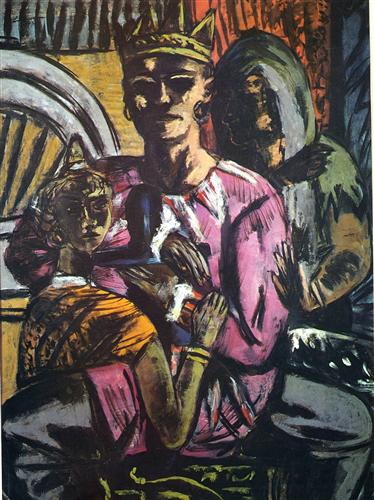
"The King" - Max Beckmann

The King ( 1934 – 1937)

Max Beckmann

_________

King John, 1166 to 1216, was the brother
of Richard the First, “the Lionheart”, and
of Geoffrey, both sons, as well as John,
of Eleanor of Aquitaine and Henry the
Second

you might remember them all from the
classic The Lion in Winter from the
Sixties

in Shakespeare’s story, John has become
king, both Geoffrey and Richard have
already perished, but Geoffrey has left an
heir, Arthur, Constance’s son, and since
Geoffrey had been the eldest, his own son,
it is contested, should be the rightful heir
to the English throne

John is not in agreement, nor is Eleanor,
his mom, but Constance is backed by the
Duke of Austria and the King of France,
who will go to war to unseat John

meanwhile Arthur is too young to be
anything but ineffectual, innocent

they all meet before Angiers, a town
now in France, but ruled then by
England, where a delightful
confrontation occurs at its gates,
the town representative will let in
the King of England but only when
he knows who, of either, He is

war is however averted when a
marriage is suggested between the
two courts, a niece of John, Blanche
of Castille, will marry the Dauphin,
Louis, son of Philip of France,
joining, however improbably, the
two sparring factions

but thereby Arthur’s claim is lost,
and Constance is fully aware of
the inevitable, and treacherous,
consequences

a legate from the Pope, Cardinal
Pandolf, also steps into the fray,
to stir the political pot, pompously,
predictably, punctiliously and
perniciously, not to mention,
perfidiously, in the end, of course

the language is Shakespeare’s, to
be sure, therefore unavoidably
wrought, but with garlands of
irrepressible poetry that is ever
utterly, and irresistibly, enchanting

“I am not mad:”, says Constance to
Pandolf, who’s accused her of being
in such a state

“Lady, you utter madness, and not sorrow.”

Constance replies

“I am not mad: this hair I pull is mine
My name is Constance; I was Geoffrey’s wife;
Young Arthur is my son, and he is lost:
I am not mad: I would to heaven I were!
For then, ’tis like I should forget myself:
O, if I could, what grief should I forget!
Preach some philosophy to make me mad,
And thou shalt be canonized, cardinal;
For being not mad but sensible of grief,
My reasonable part produces reason
How I may be deliver’d of these woes,
And teaches me to kill or hang myself:
If I were mad, I should forget my son,
Or madly think a babe of clouts were he:
I am not mad; too well, too well I feel
The different plague of each calamity.”

act lll, scene lV

has there ever been such a telling
evocation of agony

Stratford’s version is superb, extraordinary,
unforgettable, don’t miss it, just click

Richard

“King Lear” – William Shakespeare

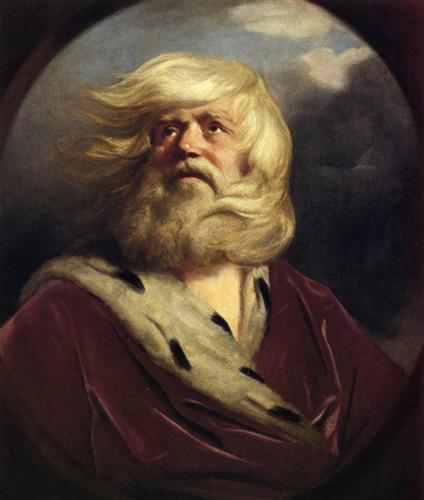
 "Study for King Lear" - Joshua Reynolds

Study for King Lear (1760)

Joshua Reynolds

________

though it has its weaknesses, I have
never seen a better version of “King
Lear”
than this one, also, to my mind,
Shakespeare’s best play

watch

Lear has always been a difficult
character to portray, a King becomes a
vagrant, a Jesus figure, “a man / more
sinned against than sinning”,
and the
most difficult part an actor must render,
I’ve found, is that of social status

and here we have both extremes, a not
easy transition, nor have I seen but once
a Lear I could believe in

James Earl Jones in New York’s Central
Park
is Lear from the word go, but the
rest of the cast betrays him, they all
mostly merely phone in their roles

in this alternate production, the reverse
is true, Lear, though in many moments
mighty, is never really a King, nor truly,
I think, a Jesus, though his final breaths
are nothing short of holy

Cordelia speaks her lines well, but
doesn’t breathe them

every other performer is magnificent,
with a special mention for the truly
human Fool, not merely a caricature
here, but a wise man

also Kent, the vitriolic sisters, Edgar
and his ignominious brother Edmund,
even the several messengers, all of
whom intently and forcefully to a one
live out their roles

the direction is thrillingly manifest in
the solid and detailed work of the cast,
note, for instance, Regan’s laugh, an
inspired directorial touch, when Lear
declares his intention to bequeath
his land according to which of the
daughter’s “doth love Us most”,
relaying in an instant, and at the very
start, her fundamental, and thereafter,
of course, unswerving, unfilial scorn

I’ve never seen that note played
elsewhere so incisively

mostly, however, it’s the poetry of
Shakespeare, which bristles throughout,
like buds in spring in a garden, which ‘ll
especially delight, and have you marvel

watch

Richard


“Julius Caesar”, a foretaste

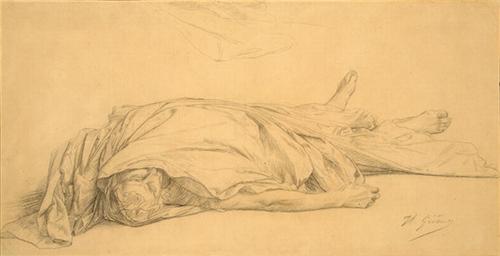
"The Dead Caesar" -  Jean-Léon Gérôme

The Dead Caesar (c.1859)

Jean-Léon Gérôme

__________

a friend and I are undertaking our
umpteenth reading of a Shakespeare
play, “Julius Caesar” this time, which
I hadn’t read in an age

in this version, still unparalleled,
Brutus, James Mason, presents his
argument for the assassination of
Caesar
, “Hear me for my cause, and
be silent that you may hear…not that
I loved Caesar less but that I loved
Rome more”,
he proclaims

Mark Antony, in the incarnation of
Marlon Brando, responds, for the
ages

and therein lies the glory, incidentally,
of Shakespeare

just saying

Richard

“Blue Jasmine” – Woody Allen‏

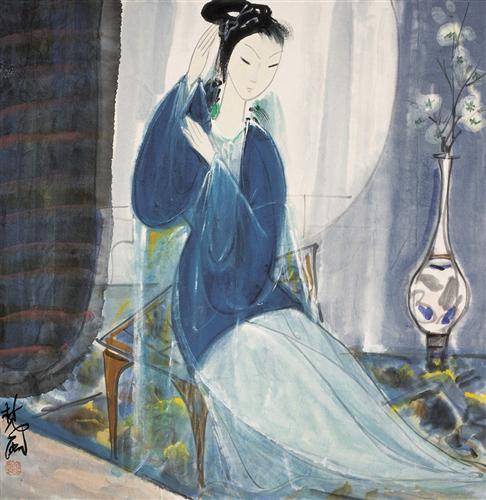
"Lady in Blue" - Lin Fengmian

Lady in Blue

Lin Fengmian

________

watch also Woody Allen’s Blue Jasmine“,
Cate Blanchett got an Oscar, A Streetcar
Named Desire
for the 21st Century, with
an Oscar performance to match

a moment of silence for Vivien Leigh,
extraordinary in her role, may she ever
rest in peace

Richard

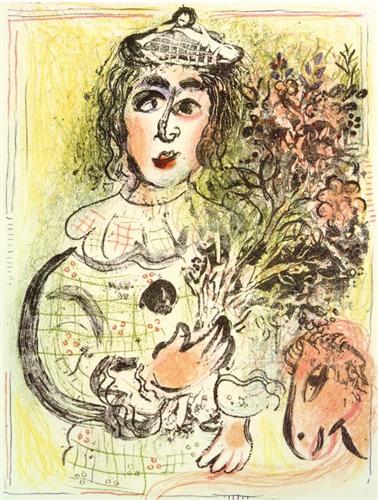
“Whatever Works” – Woody Allen


"Clown with Flowers"- Marc Chagall

Clown with Flowers (1963)

Marc Chagall

______

after Existentialism, Camus, Sartre,
after “God Is Dead”, there was
Woody Allen, to let us know that,
you know, Whatever Works“, you
can either jump out ‘ a window or
make the best of it

I am, of course, Boris Yellnikov,
though my girl from Mississippi
hasn’t shown up yet

nor for that matter has my
psychic

maybe I should jump out ‘ a
window

what do you think

watch

Richard

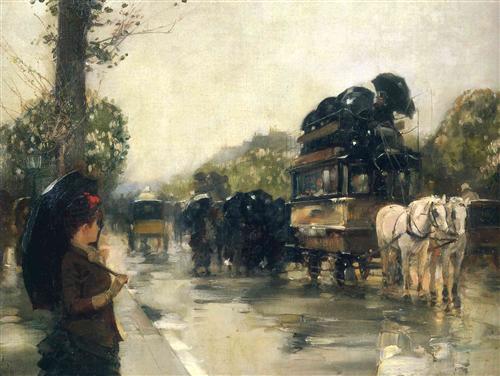
“April Showers” – “Buddy” DeSylva‏

"April Showers, Champs Élysées Paris" - Childe Hassam

April Showers, Champs Élysées Paris (1888)

Childe Hassam

________

when I was a boy the obliteration of
Al Jolson as an extraordinary talent
hadn’t yet occurred, black indignation
hadn’t, however justifiably, banished
him from our cultural landscape

but he’d been big, consider the array
of songs he made indelible from
April Showers to My Mammy
by way of You Made Me Love You,
for instance, or About a Quarter to
Nine
“,
among other equally
noteworthy melodies, airs we all still
sing on occasion, complete with all
their familiar words

the film, The Jolson Story is still
one of my very favourite musicals,
available in segments here if you
follow the links, its every megabyte
worth watching, you’ll come away
enraptured and singing

and there’s even a sequel

meanwhile here are the lyrics to
this irrepressibly hopeful tribute
to the month of bluebirds and
daffodils and, of course, violets

of which I wish you boundless
bouquets

April Showers

Life is not a highway strewn with flowers,
Still it holds a goodly share of bliss,
When the sun gives way to April showers,
Here’s a thought that we should never miss:

Though April showers
May come your way,
They bring the flowers
That bloom in May;
And if it’s raining,
Have no regrets;
Because it isn’t raining rain, you know,
It’s raining violets

And when you see clouds
Upon the hill,
You soon will see crowds
Of daffodils;
So keep on looking for the bluebird,
And listening for his song,
Whenever April showers come along.

Though April showers
May come your way,
They bring the flowers
That bloom in May;
And if it’s raining,
Have no regrets;
Because, it isn’t raining rain, you know,
It’s raining violets.

And when you see clouds
Upon the hill,
You soon will see crowds
Of daffodils;
So keep on looking for the bluebird,
And listening for his song,
Whenever April showers come along

“Buddy” DeSylva

__________

Richard

Canadian surrealism

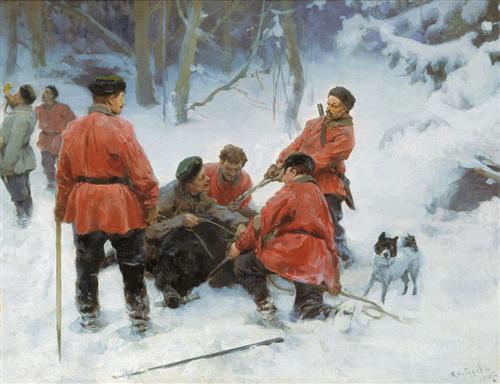
"Capture of bear in the woods" - Klavdy Lebedev

Capture of bear in the woods (1907)

Klavdy Lebedev

_______

if Pink Floyd pigs can fly, as well as
Michael Sowa penguins, watch what
bears can do
in Canada in January,
surely even in February

amazing, just click

Richard

“Dancing at Lughnasa”

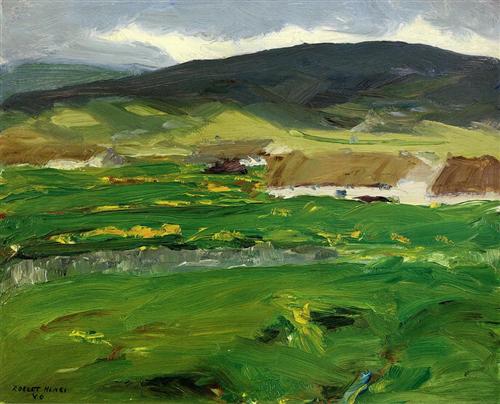
   "O'Malley Home (Achill Island, County Mayo, Ireland)" (1913) - Robert Henri

O’Malley Home (Achill Island, County Mayo, Ireland) (1913)

Robert Henri

_______

a quiet February evening, or even a quiet
February afternoon, would be perfect to
watch Dancing at Lughnasa“, a fireside
movie with family and warmth, even
chickens, it’s Ireland, 1936, in the distance
the Spanish Civil War, sisters are taking
care of each other

Meryl Streep heads an impeccable cast,
each performer surely inspiring the other
for such excellence to so generally shine
through, the magic is inveterately
consistent

Michael, Christina’s illegitimate son, tells
the story of when his dad visited them all
that summer he was seven, children are
always the victims, also the survivors

the play won the Tony Award in 1992 for
Best Play of the Year

watch, click

Richard

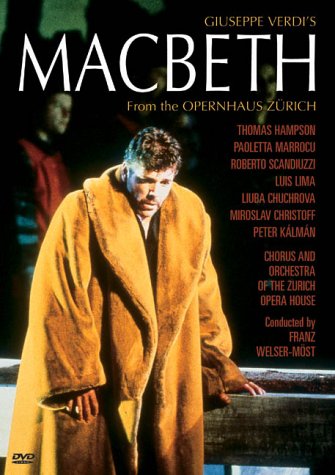
“Macbeth” – Guiseppe Verdi‏

  "Macbeth" / Welser-Most, Zürich Opera

Macbeth / Welser-Most, Zürich Opera

______________

Giuseppe Verdi’s “Macbeth” has everything
you’d ever want out of even the very best of
Shakespeare’s, but with also music, rich,
passionate, searing

in this production, Thomas Hampson is
every inch Macbeth, warrior, murderer,
king, to date my very favourite incarnation

his wife, Paoletta Marrocu, unknown till
now to me, is a sinuous virago, seductive,
maleficent, deadly, “all the perfumes of
Arabia will not sweeten”
indeed “this
little hand”,
Lady Macbeth usually steals
the show if she’s able, here she does it,
incontrovertibly, again

the witches, dependably weird, malicious,
are mesmerizing, wait for the ghoulish
“Unknown Powers” telling of Birnam
Wood, and prophesying that “none of
woman born / Shall”
neither “harm
Macbeth”

chilling

brilliant

do not not watch

Richard

psst: “Tomorrow, and tomorrow, and tomorrow,
Creeps in this petty pace from day to day
To the last syllable of recorded time,
And all our yesterdays have lighted fools
The way to dusty death. Out, out, brief candle!
Life’s but a walking shadow, a poor player
That struts and frets his hour upon the stage
And then is heard no more. It is a tale
Told by an idiot, full of sound and fury,
Signifying nothing.”

“Macbeth”, act 5, scene 5