Just another WordPress.com weblog
Tag: W.A. Mozart
________
cause the pickings are slim among the
shared musical formats between Mozart
and Chopin, Mozart, for instance,
composed eighteen piano sonatas to
Chopin’s mere three, Chopin’s First
even having been more or less
disregarded since for being promising
maybe, but not at all inspired, where
Mozart meanwhile also wrote 27 piano
concertos to Chopin’s only two, though
both, his, entirely mighty
Chopin, however, pretty well establishes
the nocturne, the scherzo, the prelude,
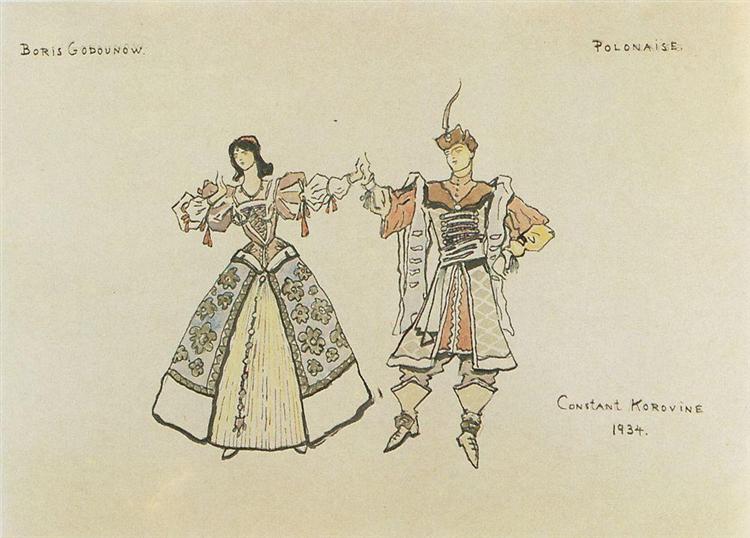
the étude, the polonaise, the mazurka
as musical forms, while Mozart never
establishes a thing, apart from his own
supreme talent
but here are a couple of fantasias that
they both share, Mozart’s Fantasia
fantaisie to the beat of a polonaise,
a dance form of his native Poland,
admittedly show up only near the
end of the piece, otherwise he
sounds a lot like, I’ll admit, Chopin
trills, notably, up against arpeggios
R ! chard
_______________
having spent too much time, perhaps,
giving context, from Classicism to
brought on by the worlds that open up
to me when l Iisten to this kind of music,
rather than imparting specific information
about how to sharpen one’s aesthetic
sensitivity, about listening rather than
just hearing, this time I’ll get technical,
if you’ll allow, with the help of the same
Chopin’s 3rd, how are they different,
how are they similar, how do they
compare
first, similarities, they are both sonatas,
pieces of music consisting of more than
one segment of music, traditionally, three
four
Chopin doesn’t diverge from the trinity
of imperatives that Mozart set up
tonality, and repetition, the pace of
the music remains constant within
the parameters established by the
directions at the top of the page,
an adagio doesn’t change its beat
throughout the movement for either,
nor would an andante, a presto, an
allegretto
this will change
neither does any element of the
music produce discords, tonality
remains mellifluous throughout
for both, lilting, harmonious ever,
even often, in either, enchanting
this will also change
and everywhere, a flight of musical
invention will eventually return to
its original source, and you find
that you’ve come back from a sonic
adventure to home base, where the
whole thing starts all over again,
repetition, a condition considered
essential, until relatively recently,
to the definition of music
this will also change
but how are they different
listen to the decoration, Mozart
applies trills to individual notes,
a flutter of adjacent tonalities
to set the central one off, like
glitter, the twitter of birds
punctuating, here and there,
the stillness of a forest
Chopin colours his entire
keyboard with arpeggios rather,
runs up and down the scales,
turning melodies into not only
delights, but stepping stones to
entirely other dimensions,
extrapolations from the original
tune, seemingly spontaneous
evolutions, the first burgeonings,
incidentally, of jazz, before returning,
notably, to his original air, much as
Mozart does, to his core statement,
fulfilling the Classical requirement
of repetition
how to tell your Chopin from your
Mozart, how to sharpen your
aesthetic sensibility, listen, listen
R ! chard
_____________
by now, if you’ve been listening,
you’ll probably easily tell your
Chopin from your Mozart, even
without looking
if not, the one who isn’t Mozart
is Chopin, the one who isn’t
Chopin is Mozart, cause you’re
likely to recognize the one if not
the other
1788, which even Mozart
deemed “for beginners”, but
its very elementary qualities
suit, here, my purposes
some sixty years later, the
Mozart is Classical, the foundation
of the shape and sound of music
in the West, think of Oriental music,
Chinese, for instance, opera, as an
alternative inspirational direction
he sets, along with Haydn, incidentally,
the parameters of Western music, I
call it its grammar, tempo, tonality,
and repetition, its hallmarks, its sine
qua non, as we say in Latin, its trinity
of imperatives, its without which there
would be no Western music as we
know it
Romanticism, after two revolutions,
the French and the American, comes
along to turn all of that into literature,
prompted by the spirit of democracy,
the first expressions of it since Caesar,
Ancient Rome, where earlier,
everywhere, kings had ruled, and by
extension, even more autocratically,
the Church, for monarchs had
received, morally, and consequently
politically, from it, their mandates
from God
one man, one vote, even theoretically,
upended that entire metaphysical
everyone had a voice, everyone had
a story, the birth of the individual,
and of, by extension, human rights,
for better or for worse, see above
therefore Chopin
listen, Chopin is the new Jesus,
prophet, but for a new age
stay tuned
R ! chard

 Richibi's Weblog