Richibi’s Weblog
Just another WordPress.com weblog
Tag: Van Cliburn
January 29, 2023
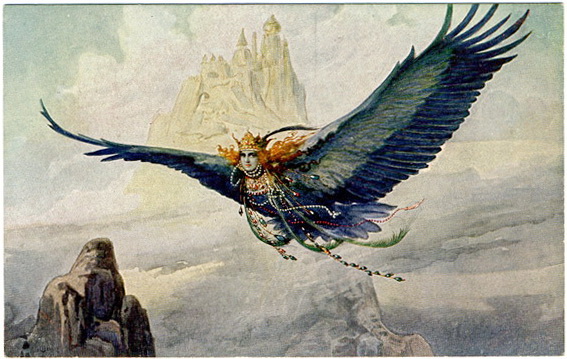
Fantasy in F minor, Op.49,
February 20, 2017
“First Piano Concerto” – Pyotr Ilyich Tchaikovsky
“Concerto“ (1975)
_____
if there’s a piece that defines Classical music
for most people, encapsulates it, even for
those who aren’t especially interested in
Classical music, that piece would be, I think,
Tchaikovsky‘s “First Piano Concerto“
strictly speaking Tchaikovsky isn’t a Classical
composer, but a Romantic one, the Classical
period in music having been transformed
some years earlier into the Romantic period
by none other than Beethoven, 1770 – 1827,
perhaps the most transformative composer
of all time – Tchaikovsky‘s “First Piano Concerto“
was written in the winter of 1874 – 1875, pretty
well at the end of the Romantic Period, which
then ceded to the Impressionists, just to get
our periods right
what the Romantic Period added to the
Classical Era was emotion, sentiment – note
the use of tenuto, for instance, beats being
drawn out, languidly, longingly, for pathos –
what it maintained was the structure, the
trinity of Classical conditions, rhythm, tonality,
and repetition, which is why even the most
uninformed listener will usually be able to
sing along throughout the entire performance,
the blueprint is in our collective blood, in the
DNA of our culture
to remain present a piece must remain
relevant to the promoter, an interpreter must
have reason to play it, substance surely plays
a big part, but technical considerations play
perhaps an even greater role towards a great
work’s longevity, “Chopsticks“, for instance,
is good but it won’t fill a concert hall
unless, of course, it’s with Liberace
the “First Piano Concerto” of Tchaikovsky is
the Everest of compositions, emotionally
complex and technically forbidding, nearly
impossible, it would seem, were it not for
those few who’ve mastered its treacherous
challenges, conquered its nearly indomitable
spirit
Van Cliburn put it on the map for my
generation, with a ticker tape parade in
New York to confirm it
Martha Argerich later on kept the ball rolling
and now Behzod Abduraimov, a mere youth,
born in 1990 in Uzbekistan, Tashkent, delivers
by far the best performance I’ve seen since,
giving it new life for the new millenium
behold, be moved, be dazzled, be bewitched
Richard
June 19, 2015
the XVth International Tchaikovsky Competition
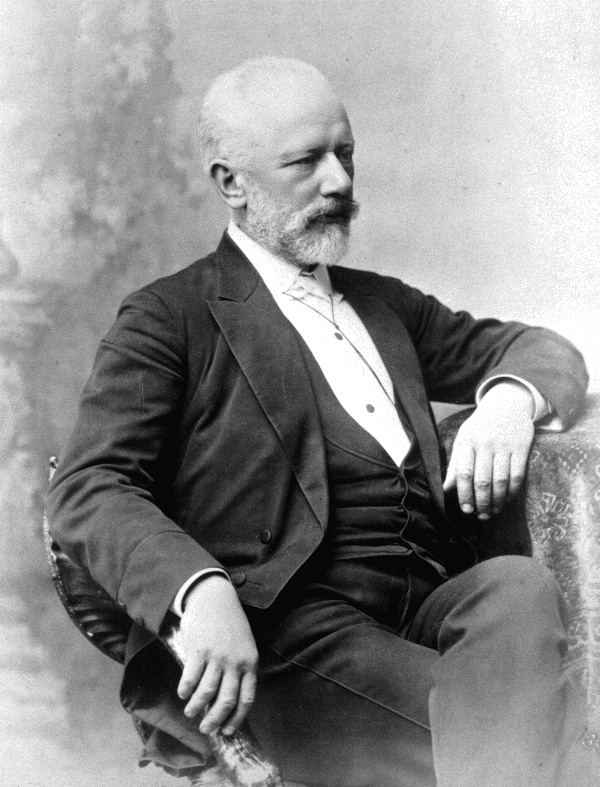
(1840 – 1893)
________
my musicologist friend alerted me to the
fact that since the 15th of this month, and
onwards till the 3rd of July, the XVth
International Tchaikovsky Competition is
on, at which point I raced to my position,
got a front row seat, for you as well
should you decide to join me, at the gala
opening, check it out, performed in the
Bolshoi Hall of the Moscow Conservatory,
in, of course, Moscow, no less
you’ll be reminded of the monumentality
of Tchaikovsky, his melodic sense, his
emotional power, his subtlety
also Russia’s
the introductory “Capriccio”, conducted
by Vladimir Fedoseyev, is rousing,
probably the best you’ll ever hear, though
it should’ve been called “espagnol” rather
than “italien”, I’ve always thought, there’s
even a redoubtable tambourinist – how
Spanish is that – you’ll want to watch out
for, however far from Spain he might, in
his quenched enthusiasm, seem
Tchaikovsky’s “Mélodie”, op. 42, no. 3,
played in all innocence by a 14-year-old,
a cherub in the guise of already an angel,
follows
the concert suite from his “Nutcracker”,
mastered by a 13-year-old with the
command of a prodigy, after that
you’ll remember Daniil Trifonov from
the 13th Rubinstein Competition, which
he won, accompanying a soprano here,
but you’ll also see him bring down the
house with his last two movements of
Tchaikovsky’s iconic 1st Piano Concerto
why would they have left out the
thunderous, wonderful first, I wonder
Daniil also won the last Tchaikovsky
Competition, the 14th, also in 2011
most of the program is in Russian,
with some considerations for a
perhaps interested English audience,
thanks to Valery Georgiev, a conductor
of considerable note, not at all the
vagrant here that he seems
my musicologist, who speaks everything,
understands the Russian, but it’s not
difficult to understand, the message
is one of harmony and peace
the opposite of war is not peace, they
are saying, it’s art, and specifically
here music, these are here actions to
unite, beyond borders, beyond creeds,
beyond even transgressions
they signal out Van Cliburn, who plays
all, incidentally, of Tchaikovsky’s 1st
I signal out Eurovision, the Tchaikovsky
Competition, now in its XVth year
Richard
March 19, 2015
Paganini’s First Violin Concerto – Akiko Suwanai

“Niccolo Paganini“ (c.1819)
_____________
for Apollo, who alerted me to my error
having egregiously misspelled “Akiko”
in my recent commentaries about Ms
Suwanai, since, however, corrected, I
can only heap upon her greater praise
now for again an immaculate
performance of, this time, Paganini’s
First Violin Concerto, itself an event,
as atonement
not only does she play this thrilling
masterpiece with precision and
consummate artistry, this is the
performance with which she wins
the Tchaikovsky Competition, the
one Van Cliburn had secured so
illustriously back in the late Fifties,
at the height of Soviet Communism,
she in 1990, moments only after its
fall, a full, now, 25 years ago
it astounds me that such a talent
would’ve taken so long to reach my
ears, which have been attuned to
Classical music and its
peregrinations for as long as I can
remember
then again there was no ticker tape
parade for Ms Suwanai when she
triumphed, the world has changed,
it seems such excellence is no longer
so universally paraded, not even
much advertised
the Paganini Violin Concerto was
composed around 1818, late
Beethoven, early Chopin, Paganini
defines for the violin the Romantic
Period, what Chopin did for the piano,
Beethoven had given them the push
if you can get past your astonishment
you’ll note that the foundation of the
piece is Classical, tight tempi, tonality,
no discordant notes, and repetition
always of the themes, still the triple
pillars of our understanding of music,
its Trinity, despite some strong forays
into their deconstructions, see, for
instance, the haunting George Crumb
what Paganini adds to Classicism is
personality, Romanticism, same as
Beethoven did, and at about the
same time
aristocratic formality was giving way
to the voices of the crowd, some highly
articulate, representative, formidable,
as the shackles of servitude fell with
the French Revolution and human
rights became central, and
indomitable
Richard
July 16, 2014
my reply to BookInhabiter, a.k.a. Brain
a reader writes
“Hello Richard,
Recently I’ve been watching up on many dance competitions. I knew of the existence of piano competitions but never thought that they would be filmed. I must listen to the top contenders. How did you hear about this competition?”
here is my, admittedly extended, answer, with pertinent links
Richard
_____________
I haven’t missed “So You Think You
Can Dance“, Brain, for 11 years, so
we’ve probably been watching the
same “many dance competitions”
“piano competitions” aren’t much
different, just another art, judged
here by professionals throughout,
rather than entire publics
the competitions are fierce, to a
person the competitors are world
class
the music is often sublime, utterly
transcendent, though more rigorously
intellectual than popcorn – pace
Mozart – this puts some people off
much as you probably find covers of
songs you like, I go out looking for
sonatas, string quartets, concerti I
already know of and admire, I check
out the big names, Chopin, Beethoven,
Rachmaninov, see what might be up
the Internet abounds with nearly
anything you might want to find, the
only obstacle is the quality
the Van Cliburn competition, from
Houston, was dreadful, enough to
put me off it, but looking for musical
counterparts to pieces of interest, I
found the Rubinstein one in Tel
Aviv offering sterling performances
I quickly flew across the globe,
virtually, of course, speaking
the experience has been well worth
it, I heard miracles of music, haven’t
had so much fun since reading Proust,
in French of course, but you must
understand I’m an inveterate egghead,
totally chronic
this week I started Edward Gibbon’s
“The Decline and Fall of the Roman
Empire”, text and, to my delight,
audiotape, its reader is extraordinary
check out the Chopin Competition
for, up to this point anyway in my
investigation, only Chopin, but he’ll
do for a significant while, his music
is consistently breathtaking
I’ll also check out the Russian
Tchaikovsky Competition, which Van
Cliburn made famous for us in the late
50’s, by winning it, despite the rancours
of the Cold War, with a still paramount
rendition of Tchaikovsky’s own
monumental First Concerto
wow, I’ve been hooked ever since
thanks for stopping by my blog, Brain,
you’ll find, incidentally, a lot of excellent
performances highlighted there, several
of the best, in fact, from the most recent
Rubinstein Competition, none of which,
to my utter consternation, managed to
win
other recommendations follow, check
it out
I think your blog is wonderful, keep
it up
Richard
March 21, 2013
Nemo – “Ennead I” by Plotinus (13)
Date: Sun, 17 Mar 2013 19:04:56 +0000
To: Richibi’s Weblog
To: Richibi’s Weblog
From: comment-reply@wordpress.com
Subject: [New comment]“Ennead I” by Plotinus.
Subject: [New comment]“Ennead I” by Plotinus.
Richard,
You wrote, “my experience is that I cannot know even dimensions before I formally deduce them,”
That is a unique experience. Einstein came to the same conclusion when he developed the Theory of Special Relativity, though perhaps he didn’t have quite the same experience. You both beheld the same underlying reality, although you expressed it in different ways.
Plato’s Absolute, i.e., which is Beauty, Goodness and Truth in One, is immanent. It is distinct but not distant from us, and every soul can ascend to it by reason and intellect. There are different types and levels of beauty, in the human body, in nature, in the universe, in science and art, literature and music. One doesn’t have to be a “Superman” to see beauty or create beauty. Every life is an artistic activity. Every individual is an artist.
The concept of Absolute by no means deny or diminish the freedom of individual existence. On the contrary, the more diverse and free the individual existence, the better and fuller it manifest Absolute Beauty. For instance, Beethoven’s Ninth, unless each member of the choir and orchestra plays his/her best part, the beauty of the symphony cannot be manifested nor experienced by the audience.
Unlike Kant who believes that the noumenal is unknowable, Platonists reason that the noumenal and the phenomenal correspond with one another (sort of like the way an image in the mirror corresponds to the original), since they are both derived from one and the same intelligible reality. Because of this “correspondence”, it is possible to do science. We have been able to predict with accuracy the movement of the stars and other events occurring in nature; Because of this “correspondence” between our consciousness and the outside world, it is possible for us to interact with other people and the world
you say, Nemo, “Plato’s Absolute, i.e., which is
Beauty, Goodness and Truth in One“, which
seems to me anachronistic, a premature
conflation with Christian, however implicit,
thought, I don’t think Plato would’ve had a
Trinity, whatever for in a society replete with
a variety of quite serviceable, not to mention
glorious, deities
when you speak of “[e]very life“, “[e]very
individual” being “an artistic activity“, “an
artist“, what about animals, insects, trees,
do roses perceive their own beauty, these
are lives, even creative, even inspiring ones,
though I draw the line at inspired, I suspect
they don’t consciously know it
therefore “Beauty, Goodness and Truth” are in
the eye of the beholder, no, as we ask in
French, and the beholder is our own human
only, it appears, incarnation, blessed as we
are, for better or for worse, with
self-consciousness, ““Superm[e]n”” need
not even, but only superfluously, apply
the Tree of Knowledge bore the fruit of
which all of us have partaken, for better or
for worse, by our very nature, and we’ve
created a poem around it in order to
understand
it has been mighty, if flawed
about mirrors, when I yearned for word
from above, or from wherever, I understood
I’d have to forego my entrenched scepticism
under the influence of Sartre and Camus,
the Existentialists, whose ideas dominated
the Western World, and my university years,
however nowadays incredible, a time when
Van Cliburn, a Classical music pianist,
would return from a sealed Communist
Russia, no less, to a New York ticker tape
parade, a more idealistic time than our
present more rapacious, morally bankrupt,
apparently, epoch, I’d believed in Being
and Nothingness, and the corollary Absurd,
I was alone in an indifferent Universe
to assume spirits, an extraterrestrial entity
who might be responsive, would require
an act of absolute faith, a profound
disorder in my otherwise determinedly
rational perspective
but I had no choice but to succumb to
even irrationality, I knew, for any chance
of grace, you need to believe in miracles
to experience them
need I say that I found that transcendence,
I called it crossing the Bridge of Faith
where everything was the same but
different, Nemo, like crossing through a
mirror, like Alice, and discovering another,
infinitely more enchanted, however
numinous and otherworldly, world
Richard
October 9, 2011
Brahms violin concerto in D major, Op.77
though I’d’ve preferred to consider violin concertos for a while
after the Tchaikowsky, the Beethoven, a break from the usual,
though always eminently magisterial, piano, I was unable to
quickly find a performance of the work I had in mind that would
suit my needs, nothing primarily that was complete, that had all
its unabridged movements
and what’s a concerto without its movements, a meal without
an appetizer, without its main course maybe, without even
dessert, that’s making do, that’s subsisting, that’s got nothing
to do with appreciating a meal, not to mention our pending
Thanksgiving
then the Chopin struck, a very revelation, and I couldn’t, even
temporarily, put it aside
I hope you enjoyed it
because the Brahms in D major, opus 77, is after the first
two violin concertos I listed the third most revered and
respected major string work, it cannot but be duly and
with great honour represented in any Classical music
survey
the first movement, the allegro non troppo, or, jauntily but
not too much, in English, is played by David Oistrakh and
conducted by the legendary Kirill Kondrashin, who conducted
Van Cliburn, famously, in both his Tchaikowsky One and
Rachmaninoff Three concertos in Moscow, 1958, when Cliburn
won first prize, is he the best, Khrushchev asked when
nervous judges questioned awarding an American, give it
to him then, he most judiciously replied, in the very face
of Cold War bile and cynicism
Kondrashin defected to the West in 1978
David Oistrakh never left his homeland, Russia, though he
toured extensively enough in the West, surely dazzling
everywhere rapt audiences
but not too lively – little by little go faster, have the
glorious Leonard Bernstein jumping up and down even
with exhilaration at the thrilling sounds they are making,
while the equally glorious Gidon Kremer struts inimitable,
incendiary stuff, a Tchaikowsky competition winner also
he, in 1970, who ‘s since dominated and championed an
impressively extensive and eclectic, even modern,
repertoire
note in passing that their accompanying Vienna Philharmonic
doesn’t have a single woman, which nevertheless doesn’t
of course disqualify a superior sound, it is merely an archaic,
intransigeant, aristocratic institution, it would appear, with
a counterintuitively melodious and undeniably winning soul
one course at one restaurant then, the next two at another,
you’ll need to adjust to atmosphere, menu variations,
service, but expect in either case only the very best, you
will not be disappointed
Brahms violin concerto in D major, opus 77
1 – allegro non troppo, Oistrakh, Kondrashin,
the Moscow Philharmonic Orchestra
2 – adagio, Gidon Kremer, Leonard Bernstein, the Vienna Philharmonic
Kremer, Bernstein,
the Vienna Philharmonic again
Richard
psst: here is an alternate third movement by to me unknowns,
an exquisite partial repast, perhaps the most impressive
morsel here
September 20, 2011
Tchaikowsky piano concerto no 1 in B flat minor, opus 23
the piano concerto no 3 of Rachmaninoff was written in 1909,
a hundred years after Beethoven’s piano concerto no 5, the
“Emperor”, 1811, to the attentive ear the intervening years
are present in the evolution of the music
the most evident structural alteration, sensed now rather
than consciously heard, though this change would’ve been
glaring during that period, is the often elastic rhythm, the
hesitation, the reserve, the recapitulation of forces before
a surging onslaught, before a turbulent apotheosis, as a
movement returns to its fundamental tempo
the beat ever essentially reigns
this will change
let me point out here that this rallentando wouldn’t’ve been
even conceivable before the invention of the piano, which
happened around the time of Mozart, the harpsichord before
that couldn’t do that, it was confined, you might say, to
only rallentandon’ts, the harpsichord didn’t provide the
possibility of resounding a note, neither of moderating of
course its volume, which the piano, by very definition, did,
“piano” means “soft”, “pianoforte” “soft loud”, the very
foundational elements of the instrument, the elaboration
of beat would thus perforce henceforward play a major role
between Rachmaninoff and Beethoven, these two pillars of
our musical Trinity, there is the mighty, the third supreme
immortal, Tchaikowsky, a Late Romantic, of all composers
perhaps to us the most familiar, his piano concerto no 1 in
B flat minor, opus 23, written in 1875, is the concerto most
associated with my generation, Van Cliburn was a rock star
then, after winning the Tchaikowsky Piano Competition in
Moscow, 1958, an achievement of the very highest order
for an American in that historical context
and his performance of it was spectacular
the most salient aspect of Tchaikowsky‘s music to my mind
is the charged dramatics, which is not surprising when you
consider that he wrote the music for “The Nutcracker”,
“Swan Lake”, musical story-telling, you’ll note he evokes
this dramatic tension by sustaining, withholding, then
unleashing the beat before a storm of prestidigitatori
Tchaikowsky tells grandiose stories, Rachmaninoff opens
an anguished heart, Beethoven speaks with God, they are
our foundational musical poets, our sonic oracles
the formidable Emil Gilels, 1916 – 1985, plays Tchaikowsky,
he is electric, he is epic, he is extraordinary
Richard
September 4, 2011
Rachmaninoff: Piano Concerto no 3, in D minor, opus 30
fully 150 years after Mozart the concerto was still a thriving
musical form though it had undergone some modifications,
you’ll hear a more passionate account in Rachmaninoff than
the more lyrical, less emotionally overt compositions of
Mozart, the variations in volume, tempo, tonality, the play
of harmonization and discords, all incidentally within a single
movement, show the passage of time, of Beethoven, of Chopin,
of Debussy between Mozart and the more Romantic, Impressionistic
Rachmaninoff, note the sweeping ritardandos, where the beat is
drawn out, stretched for pathos, a Chopinesque insinuation into
music not found in earlier stuff, one imagines torrid expressions
of fervent sentiment, note the evanescent flurry of notes passing
by like the fleeting glitter of stars, the ephemerality of an
incorporeal idea that Debussy originated and brought to music,
and of course note the irrepressibility, the authority, the masculinity
of a volcanic Beethoven underpinning the lot, you can hear them all
the Vladimir Horowitz Piano Concerto no 3 of Rachmaninoff at
Carnegie Hall, January 8, 1978, with Eugene Ormandy leading the
New York Philharmonic Orchestra is, after Van Cliburn’s historic
1950s account, May 19, 1958, again at Carnegie Hall but under Kiril
Kondrashin this time, and the now defunct Symphony of the Air,
don’t ask, the one I then grew up with, it was riveting even without
the pictures
with pictures here he is again a few months later at Avery Fisher
Hall in New York, September 24, 1978, under Zubin Mehta with
again the New York Philharmonic, so good you’ll even forgive
Mehta his usual sentimental excesses
incidentally Horowitz was 74 at this concert, he is astounding
Vladimir Horowitz, colossus and legend, 1903 -1989
enjoy, be transported, be transfixed, you have been warned
Richard
 Richibi's Weblog