Just another WordPress.com weblog
Tag: trios
_____
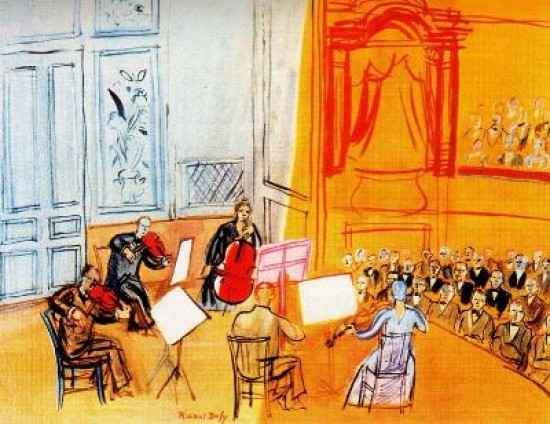
if a trio is a sonata written for three instruments,
a sonata, a piece of music consisting of more
than one segment, or movement, written for
four instruments, is called a quartet
a quartet is also what we call the group itself
of four players
quartets can play more than just quartets, they
can also play waltzes, nocturnes, rhapsodies,
for instance, just as trios, groups of three, can
play more than just trios
but quartets, the form, have had a long and
glorious history, from Mozart and Haydn,
the Classicists, through Beethoven, an
ardent Romantic, to the more political
Shostakovich, enemy, for a time, of his
repressive Soviet state, and on to
Messiaen, who composed his own
concentration camp
let me start with the Messiaen, now that I’ve
whetted your appetite, and work our way back
to Mozart to see where we came from, and
how
there are seven movements in Quartet for
four, atonality abounds, discordant, not
unexpectedly, progressions, repetition also
takes its punches, not easily identifiable
throughout, but tempo, the third pillar of
Western music, more or less holds its
own, keeping the tradition, however
precariously, together, listen
it’s 1941, we’re in a concentration camp,
Messiaen is caught between hope and
despair, give the guy a break, he hasn’t
many absolutes to hold onto, tempo
might be one of them, the heartbeat,
pulse, perseverance, an actual human
pace, a rhythmic instinct, by which
eventually, hopefully, meaning
transpires
hope is in one’s creativity, he says, each
individual answer can be a tribute to
one’s own tribulations, our responses
can be poetry, lessons rather than
invectives, epiphanies rather than
agonies, may the Force, in other words,
be with you, in the face of even the most
trying difficulties, honour can supplant
trials, he concludes, given grace and
integrity
Beethoven says pretty much the same
corroboration
R ! chard
_____________
a trio is a group of three instrumentalists,
most often a piano, a violin, and a cello,
in our Western musical tradition
but it is also a musical form, like a waltz
is, or a prelude, or a nocturne, a trio is
a sonata, essentially, but written for
three instruments, not one, nor two,
consisting of more than one segment,
or movement
though I’ve presented trios as trios to date,
sonatas for three instruments, here’s a piece
for three instruments but in one movement,
though segmented, admittedly, as variations,
see above, a similar collection of rhythms
and styles, brought together by a common
essential element, a game audiences played
back then, and still do even now, trying to
distinguish the individual variations, before
falling prey to their enchantment
R ! chard
_____
if I object to sonatas consisting of only
one movement, I can also object to
sonatas consisting of more than two
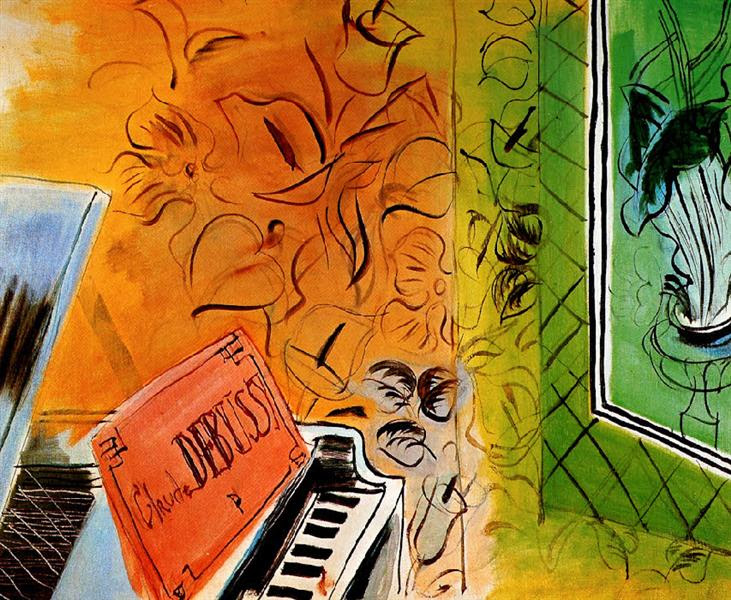
instruments, but here’s Debussy’s
which should more accurately have
been called a trio, a trio is a sonata
with three instruments
note also in the Debussy the breakdown
of all the Classical imperatives, tempo,
tonality, and repetition, another blow to
established authority
but the test is, does it work, at which
point, if it does, terminology becomes
moot, and meaning changes
today, I pondered the word love, its
myriad meanings, and how we still
call that infinite variety of emotions
the same thing, the word sonata
doesn’t hold a candle to the word
love for disinformation
I thought, okay, just make it work,
I’ll define it for myself later, each
one of us being the final arbiter
of our own aesthetic sensibility
the question
R ! chard

 Richibi's Weblog