Just another WordPress.com weblog
Tag: trills
____________
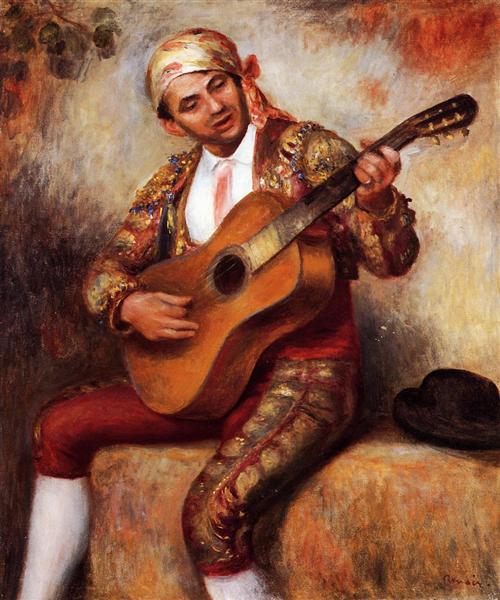
just as I was about to relegate the trill
to Mozart and the Classical Period, I
inadvertently came upon something
Spanish composer, 1901 – 1999, a
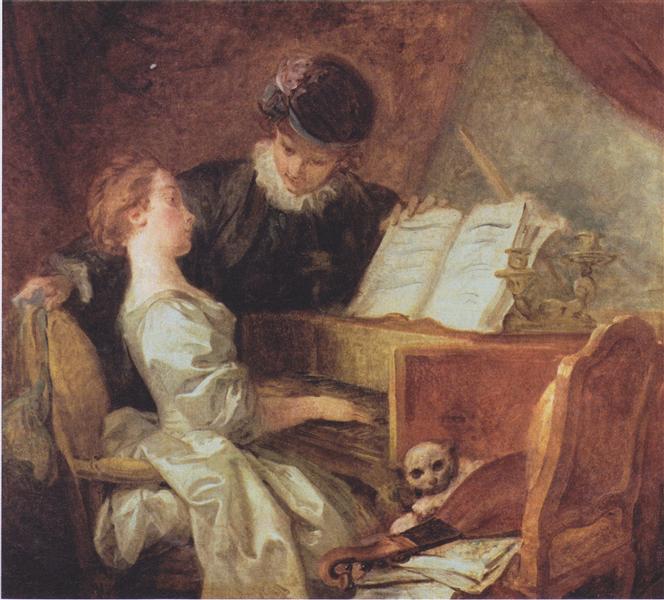
the trill had been decorative, meant to
appeal to aristocrats frequenting
salons
then the French Revolution happened,
and the growth of the Middle Class,
and consequently popular avenues
of entertainment for the liberated,
concert halls, for instance, looked
for a more emotionally powerful
experience, arpeggios took care of
that
the trill died
but in 1939, nearly two centuries
homage to an elder, trills abound
it should be stated that a guitar can
play only one note at a time, it might
be that trills lend themselves better
to such an instrument than an
arpeggio would
then again, I’ve found that Spanish
music, the tango, the tarantella, for
instance, see above, has held more
rigidly to the imperatives of Western
music I’ve spoken of here before,
tempo, tonality, repetition, it is not
Debussy, Ravel, it is not even
Chopin, it is peripheral, maybe, to
the cultural establishment, but
potent, steeped in blood and
tradition
R ! chard
_______________
having spent too much time, perhaps,
giving context, from Classicism to
brought on by the worlds that open up
to me when l Iisten to this kind of music,
rather than imparting specific information
about how to sharpen one’s aesthetic
sensitivity, about listening rather than
just hearing, this time I’ll get technical,
if you’ll allow, with the help of the same
Chopin’s 3rd, how are they different,
how are they similar, how do they
compare
first, similarities, they are both sonatas,
pieces of music consisting of more than
one segment of music, traditionally, three
four
Chopin doesn’t diverge from the trinity
of imperatives that Mozart set up
tonality, and repetition, the pace of
the music remains constant within
the parameters established by the
directions at the top of the page,
an adagio doesn’t change its beat
throughout the movement for either,
nor would an andante, a presto, an
allegretto
this will change
neither does any element of the
music produce discords, tonality
remains mellifluous throughout
for both, lilting, harmonious ever,
even often, in either, enchanting
this will also change
and everywhere, a flight of musical
invention will eventually return to
its original source, and you find
that you’ve come back from a sonic
adventure to home base, where the
whole thing starts all over again,
repetition, a condition considered
essential, until relatively recently,
to the definition of music
this will also change
but how are they different
listen to the decoration, Mozart
applies trills to individual notes,
a flutter of adjacent tonalities
to set the central one off, like
glitter, the twitter of birds
punctuating, here and there,
the stillness of a forest
Chopin colours his entire
keyboard with arpeggios rather,
runs up and down the scales,
turning melodies into not only
delights, but stepping stones to
entirely other dimensions,
extrapolations from the original
tune, seemingly spontaneous
evolutions, the first burgeonings,
incidentally, of jazz, before returning,
notably, to his original air, much as
Mozart does, to his core statement,
fulfilling the Classical requirement
of repetition
how to tell your Chopin from your
Mozart, how to sharpen your
aesthetic sensibility, listen, listen
R ! chard

 Richibi's Weblog