Richibi’s Weblog

Just another WordPress.com weblog

Tag: “The Story of Phaeton” – Ovid

The Story of Phaeton (VII) – Ovid
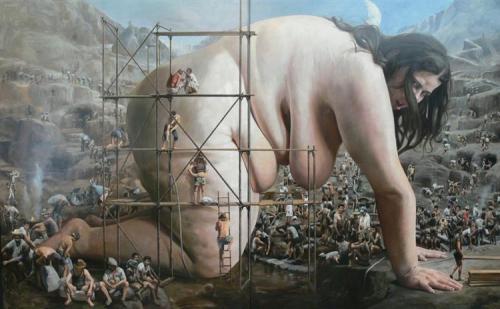
earth.jpg!Large

   Earth (2010) 


            Rolf Ohst


                     ______


mythologies are stories a people will 

tell itself to explain phenomena that 

remain mysterious, by transforming 

conundrums into people, 

anthropomorphizing them, a tale is

told that not only entertains, but 

informs, gives context in order to

shape moral character


most mythologies, if not all, it’s a 

question of definition, which I’ll 

get into later, past and present, 

are pantheistic, which is to say 

they refer to many goddesses 

and gods, rather than to one 

almighty one, therefore they see 

deities in rivers, trees, oceans, 

mountains, the sun, the moon, 

constellations, as well as in the 

more metaphysical entities, 

poetry, beauty, love  


there is therefore a more respectful,

even reverent, attitude to all of these

otherwise neglected realities, for 

being, often, peripheral to more 

immediate, daily, domestic, 

concerns


our prevalent monotheistic 

mythologies, by contrast, purport 

to be historical, however specious, 

which is why the word mythology 

here might not be appropriate, but 

regardless, they all posit one 

omnipotent God, notably 

imponderable, esoteric, and there 

are, correspondingly, only a few 

mentions in their foundational  

texts, the Bible, the Koran, the 

Torah, of nature playing any  

significant part, it is secondary to

to their overriding message


we therefore have allowed ourselves 

to watch the world burning without

having even noticed it come about, 

a function exacerbated, incidentally,

by our living mostly, now, in cities


Phaeton has let his horses stray from 

the cosmically ordained path of the 

Sun, the constellations have already

complained, Earth will follow


we, for our part, have despoiled our 

mother, we are presently watching 

her being ignominiously desecrated


see above


                   The Earth at length, on ev’ry side embrac’d
                   With scalding seas that floated round her waste, 


waste, waist, though waste itself throws 

its own homonymic reverberations of 

disorganized detritus, float[ing] round, 

into the mix, something Shakespeare,

incidentally, was especially good at


                   When now she felt the springs and rivers come,
                   And crowd within the hollow of her womb, 


the waters are receding, evaporating


                   Up-lifted to the Heav’ns her blasted head, 


blasted, overwhelmed


                   And clapt her hand upon her brows, and said
                   (But first, impatient of the sultry heat,
                   Sunk deeper down, and sought a cooler seat): 


a strange, and not especially effective

interjection between the parentheses

here, I think


                   “If you, great king of Gods, my death approve,
                   And I deserve it, let me die by Jove; 


Earth asks of Jove, king of Gods, 

that she might die at his own hands,

if her time has come


                   If I must perish by the force of fire,
                   Let me transfix’d with thunder-bolts expire.
                   See, whilst I speak, my breath the vapours choak
                   (For now her face lay wrapt in clouds of smoak),
                   See my singe’d hair, behold my faded eye,
                   And wither’d face, where heaps of cinders lye! 


we are familiar with forest fires,

hurricanes, droughts in our own day


                   And does the plow for this my body tear? 


after all I have given through 

agriculture, the plow, of nourishment, 

Earth asks, is this how I am to be 

repaid 


                   This the reward for all the fruits I bear,
                   Tortur’d with rakes, and harrass’d all the year?
                   That herbs for cattle daily I renew,
                   And food for Man, and frankincense for you? 


not only does Earth benefit living

creatures, but also the goddesses

and gods, she exclaims


                   But grant me guilty; what has Neptune done? 


Neptune, god of Water, the Sea,

is also Jove‘s brother


                   Why are his waters boiling in the sun?
                   The wavy empire, which by lot was giv’n,
                   Why does it waste, and further shrink from Heav’n? 


wavy empire, made of waves


Jove, Neptune, and Pluto were all

sons of Saturn, Titan, god of Time, 

after the sons overthrew their father 

during the Giants’ War, they divided 

the world by lot, which is to say, who

had the longest straw, Jove got the 

Heavens, Neptune, the Seas, Pluto

the Underworld


waste, resounding from above 


                   If I nor he your pity can provoke,
                   See your own Heav’ns, the Heav’ns begin to smoke!
                   Shou’d once the sparkles catch those bright abodes,
                   Destruction seizes on the Heav’ns and Gods;
                   Atlas becomes unequal to his freight,
                   And almost faints beneath the glowing weight. 


Atlas, a Titan, condemned to hold 

the heavens up for eternity


                   If Heav’n, and Earth, and sea, together burn,
                   All must again into their chaos turn. 


into their chaos turn, see the Creation

of the World


                   Apply some speedy cure, prevent our fate,
                   And succour Nature, ere it be too late.” 


sounds disquietingly familiar


                   She cea’sd, for choak’d with vapours round her spread,
                   Down to the deepest shades she sunk her head. 


surrounded by vapours, round her 

spread, Earth inexorably succumbs
 

gasp


R ! chard


The Story of Phaeton (VII) – Ovid

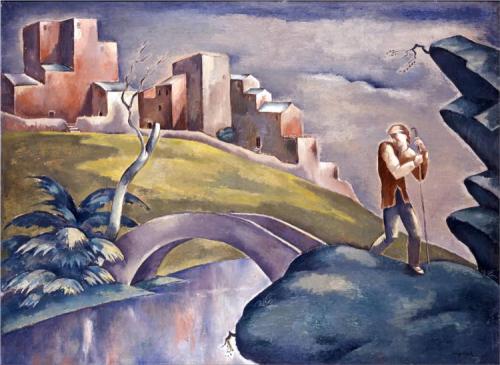
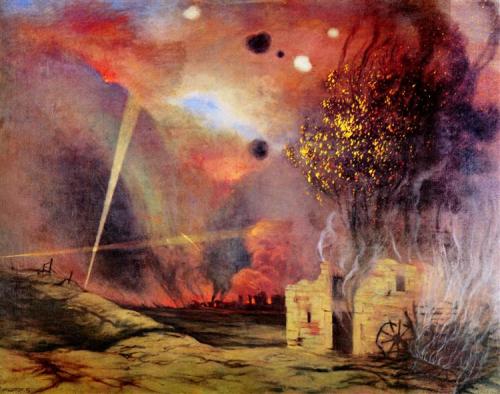
landscape-off-ruins-and-fires-1914.jpg!Large

   Landscape of Ruins and Fires (1914)


               Félix Vallotton


                   _______


                ‘Twas then, they say, the swarthy Moor begun
                To change his hue, and blacken in the sun. 


Moor, a flagrant anachronism here, 

as Moors, Muslim inhabitants of

North Africa, didn’t exist before the 

advent of Islam, which began in the 

Seventh Century CE, Ovid, in Latin,

uses Ethiopian, which would entirely 

throw off, note, Dryden‘s poetic 

metre, thus Moor


                Then Libya first, of all her moisture drain’d,
                Became a barren waste, a wild of sand. 


Libya, Ancient Libya, a much larger 

country of North Africa than the 

Libya we know of today


                The water-nymphs lament their empty urns,
                Boeotia, robb’s of silve Dirce, mourns, 


empty urns, the water has evaporated


Boeotia, a region still of Greece


Dirce, upon her gruesome death, which 

I won’t get into here, was transformed 

by Dionysus, god of revelry and fertility,  

into a fountain, which became revered


silve, sylvan, of the forest, the 

countryside


robb’s, I’ll guess robbers, because 

Boeotia is where Dirce, abducted,

became a fountain 


                Corinth Pyrene’s wasted spring bewails,
                And Argos grieves whilst Amymone fails. 


Corinth, a city still in Greece


Pyrene, a princess, who was, another 

distressing story, transformed into the 

Pyreneesby Heracles, her seducer,

as well as being a god renowned for 

his extraordinary exploits


Argos, a city still in Greece


Amymone, another unfortunate maiden,

who was granted by Poseidon, god of 

Water, for, throughout her tribulations, 

her probity, springs, sources of water, 

for her community, which, in the 

instance, all fail[ ] 


                The floods are drain’d from ev’ry distant coast,
                Ev’n Tanais, tho’ fix’d in ice, was lost. 


Tanais, the river today known as the 

Don in Russia, thus fix’d in ice


                Enrag’d Caicus and Lycormas roar, 


Caicus, a river in Asia Minor, now

given a different name in a different

script, Bakırçay, which I’ll let you 

try to pronounce 


Lycormas, a river in Ancient Greece, 

now called Evinos


                And Xanthus, fated to be burnt once more. 


Xanthus, or Xanthos, a river in Ancient

Asia Minor, which was yellowish already

due to its surrounding tainted soil, thus 

burnt once more    


                The fam’d Maeander, that unweary’d strays 


Maeander, a river in Ancient Asia

Minor


                Through mazy windings, smoaks in ev’ry maze. 


smoaks, smokes


mazy, maze, cute


                From his lov’d Babylon Euphrates flies;
                The big-swoln Ganges and the Danube rise
                In thick’ning fumes, and darken half the skies. 


the Euphrates, the Ganges, and the

Danube, rivers which still go by their

ancient names


                In flames Ismenos and the Phasis roul’d, 


Ismenos, or Ismenus, a river in 

Boeotia, Greece


Phasis, ancient name for the 

Rioni River in Georgia, Eurasia


roul’d, rolled


                And Tagus floating in his melted gold. 


Tagus, a river in the Iberian 

Peninsula


                The swans, that on Cayster often try’d
                Their tuneful songs, now sung their last and dy’d. 


Cayster, a river in Turkey


                The frighted Nile ran off, and under ground
                Conceal’d his head, nor can it yet be found:
                His sev’n divided currents all are dry,
                And where they row’ld, sev’n gaping trenches lye: 


it is being suggested that the Nile

had at one point seven tributaries,

some of which dried up, never

recovered


rowl’d, rolled


                No more the Rhine or Rhone their course maintain,
                Nor Tiber, of his promis’d empire vain. 


the Rhine, the Rhone, and the Tiber

are all European rivers


vain, deprived


                The ground, deep-cleft, admits the dazling ray,
                And startles Pluto with the flash of day. 


dazling, dazzling


Pluto, god of the Underworld, who 

would be understandably startle[d] 

by a flash of day


                The seas shrink in, and to the sight disclose
                Wide naked plains, where once their billows rose; 


billows, of [t]he seas


                Their rocks are all discover’d, and increase
                The number of the scatter’d Cyclades.

 discover’d, uncovered


Cyclades, a group of islands in the 

Aegean Sea, between present-day

Greece and Turkey


                The fish in sholes about the bottom creep, 


sholes, shoals


                Nor longer dares the crooked dolphin leap
                Gasping for breath, th’ unshapen Phocae die, 


Phocae, plural of Phoca, is the 

generic name, and therefore, 

interestingly, capitalized, for 

seals, walruses, sea lions


                And on the boiling wave extended lye. 


lye, lie


                Nereus, and Doris with her virgin train,
                Seek out the last recesses of the main; 


Nereus, and Doris, Sea god and 

goddess, parents, notably, of the 

Nereids, sea nymphs, the virgin 

train


the main, the ocean


                Beneath unfathomable depths they faint,
                And secret in their gloomy caverns pant. 


secret, unseen, alone, untended


                Stern Neptune thrice above the waves upheld
                His face, and thrice was by the flames repell’d. 


Neptune, principal god of the Sea


it is interesting to note that where 

earlier the earth had been 

submerged in water, during the 

Giants’ War, now the earth is

engulfed in flames, a primordial

global warming, as it were, the 

result, consider, of a human, 

Phaeton, trying to take on the 

duties of a god, a warning the 

Ancients were already delivering,

so many years, so many centuries, 

so many millennia, ago


I suspect, worldwide, indigenous 

people would be telling a similar 

tale were we able to access their 

own, unfortunately unwritten, 

though undoubtedly comparable, 

ancestral wisdom, going back,

perhaps, even as far 


R ! chard


The Story of Phaeton (VI) – Ovid

mountain-fire.jpg!Large

    Mountain Fire (c.1903 – c.1908)


              John Singer Sargent


                       _________


because Phaeton was light, nor cou’d 

he fill the seat, the horses he would’ve

controlled forsake / Their stated course, 

and leave the beaten track


                What cou’d he do? his eyes, if backward cast,
                Find a long path he had already past;
                If forward, still a longer path they find:
                Both he compares, and measures in his mind;
                And sometimes casts an eye upon the east,
                And sometimes looks on the forbidden west, 


note the description of the movement 

of the eyes, backward, forward, east

and west, uncontrolled, erratic, nearing 

madness, despite attempts, however 

futile, to remain rational, steady, his 

very mind, comparing, measuring, is 

quickly losing its bearings


forbidden, once again, this should 

probably read forbidding


                The horses’ names he knew not in the fright,
                Nor wou’d he loose the reins, nor cou’d he hold ’em right. 


“Now, Dasher! Now, Dancer! Now, 

Prancer, and Vixen! / “On, Comet! 

On, Cupid! On, Donner and Blitzen!,

who drove another of the very few 

famous chariots in our Western 

cultural history


couldn’t help it


the only other one I could think of 

is that of the Four Horsemen of 

the Apocalypse, red, white, black, 

and pale horses, which I won’t get 

into, but to say that they have no 

names


the horses who drove the Chariot of

the Sun, meanwhile, were called

Phlegon, Aeos, Aethon, and Pyrios, 

though I fully admit that I had to 

look those up, then again I’ve never 

had to ride the Chariot of the Sun


it appears that Helios / Phoebus / 

Apollo had other steeds in his stable 

as well, for a rainy day, but they don’t 

feature in this particular story


                Now all the horrors of the Heav’ns he spies,
                And monstrous shadows of prodigious size,
                That, deck’d with stars, lye scatter’d o’er the skies. 


lye, lie


                There is a place above, where Scorpio bent
                In tail and arms surrounds a vast extent; 


Scorpio, the constellation Scorpius

visible only in the Southern hemisphere


Scorpio, represented by a scorpion,

thus has eight legs, or arms, and a 

highly distinctive tail


                In a wide circuit of the Heav’ns he shines,
                And fills the space of two coelestial signs. 


coelestial, celestial


                Soon as the youth beheld him vex’d with heat
                Brandish his sting, and in his poison sweat,
                Half dead with sudden fear he dropt the reins; 


vex’d with heat, from the wayward 

chariot, Scorpio [b]randish[es]

his sting


poison sweat, Scorpio, under the 

influence of the heat, sweat[s],

exudes, produces, characteristically, 

poison


                The horses felt ’em loose upon their mains, 


mains, manes, long hair


                And, flying out through all the plains above,
                Ran uncontroul’d where-e’re their fury drove;
                Rush’d on the stars, and through a pathless way
                Of unknown regions hurry’d on the day. 


hurry’d on the day, kept the day going

at its usual, however presently pathless, 

or uncharted, pace


                And now above, and now below they flew,
                And near the Earth the burning chariot drew. 


ever, and increasingly, ominously

                The clouds disperse in fumes, the wond’ring Moon
                Beholds her brother’s steeds beneath her own; 


wond’ring, confused, puzzled


Brother Sun, Sister Moon


                The highlands smoak, cleft by the piercing rays,
                Or, clad with woods, in their own fewel blaze. 


smoak, smoke


fewel, fuel


where the highlands are clad with 

woods, they blaze in the fires 

consuming their own trees


                Next o’er the plains, where ripen’d harvests grow,
                The running conflagration spreads below.
                But these are trivial ills: whole cities burn,
                And peopled kingdoms into ashes turn. 


an apocalypse

                The mountains kindle as the car draws near, 


the car, the chariot


                Athos and Tmolus red with fires appear; 


Athos, Mount Athos, Tmolus, Mount

Tmolus, both mountains in Greece,

both named after mountain gods


                Oeagrian Haemus (then a single name) 


Haemus Mons, an early name for 

the Balkan Mountains


Oeagria, Agria, a town in Greece


                And virgin Helicon increase the flame; 


Helicon, Mount Helicon, notable for

being the home of the Muses


                Taurus and Oete glare amid the sky, 


Taurus, the Taurus Mountains, a 

mountain range in southern Turkey 


Oete, Mount Oeta, a mountain in

Central Greece


                And Ida, spight of all her fountains, dry.
                Eryx and Othrys, and Cithaeron, glow,
                And Rhodope, no longer cloath’d in snow;
                High Pindus, Mimas, and Parnassus, sweat,
                And Aetna rages with redoubled heat. 


spight, in spite

Ida, Eryx, Othrys, CithaeronRhodope

Pindus, and the more familiar Parnassus

and Aetna, or Etna, are all mountains, or 

ranges, in the Mediterranean, Mimas, an 

island there, which is to say, a partially 

submerged mountain, all of them

sweltering


see above


                Ev’n Scythia, through her hoary regions warm’d, 


Scythia, a region northeast of Ancient 

Greece, barbarian to the more cultured 

people of Greek Antiquity, coarse 

forebears of the Cossacks 


hoary, sullied white, tired, withered 


                In vain with all her native frost was arm’d. 


even so frosty a region as Scythia

was not immune to, arm’d against, 

the running conflagration


                Cover’d with flames the tow’ring Appennine,
                And Caucasus, and proud Olympus, shine;
                And, where the long-extended Alpes aspire,
                Now stands a huge continu’d range of fire. 


the AppennineCaucasusOlympus

and Alpes, or Alps, are all mountain 

ranges throughout Europe, the 

representative part then of the 

known world


               Th’ astonisht youth, where-e’er his eyes cou’d turn,
                Beheld the universe around him burn:
                The world was in a blaze; nor cou’d he bear
                The sultry vapours and the scorching air,
                Which from below, as from a furnace, flow’d;
                And now the axle-tree beneath him glow’d:
                Lost in the whirling clouds that round him broke,
                And white with ashes, hov’ring in the smoke.
                He flew where-e’er the horses drove, nor knew
                Whither the horses drove, or where he flew. 


R ! chard


The Story of Phaeton (V) – Ovid

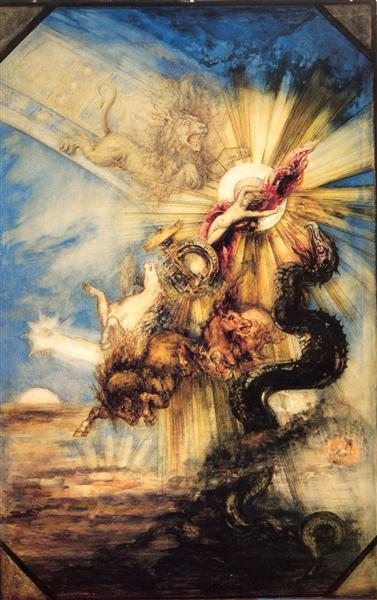
phaethon.jpg!Large

     Phaethon (1878) 


            Gustave Moreau


                       ________


              Mean-while the restless horses neigh’d aloud,
              Breathing out fire, and pawing where they stood.
              Tethys, not knowing what had past, gave way,
              And all the waste of Heav’n before ’em lay. 


Tethys, a Titaness, from the original 

race of gods, before the Olympians,

who seems to have some sort of 

controlling force in the heavens, 

and concern for the regularity of its

movements, though I haven’t yet 

figured out her specific purpose,

position, in the scheme of things 


              They spring together out, and swiftly bear
              The flying youth thro’ clouds and yielding air; 


They, the horses


The flying youth, Phaeton


              With wingy speed outstrip the eastern wind,
              And leave the breezes of the morn behind. “


the eastern wind, Eurus, which you

might remember from the Creation

of the World


              The youth was light, nor cou’d he fill the seat, 
              Or poise the chariot with its wonted weight: 


wonted, usual, the chariot is lighter 

now that only Phaeton’s lesser 

weight is in it rather than that of his 

heavier father


poise, superb word here suggestive 

of the delicacy, the precariousness, 

of the operation, not to mention its 

grace 


              But as at sea th’ unballass’d vessel rides, 


unballass’d, without ballast,

unstable, destabilized


              Cast to and fro, the sport of winds and tides;
              So in the bounding chariot toss’d on high,
              The youth is hurry’d headlong through the sky. 


see above


              Soon as the steeds perceive it, they forsake
              Their stated course, and leave the beaten track.
              The youth was in a maze, 


you can hear the etymology of amaze

here, was in a maze, caught up in a 

conundrum, completely disoriented


                                                    nor did he know
              Which way to turn the reins, or where to go;
              Nor wou’d the horses, had he known, obey. 


had he known, Phaeton didn’t know,

as his father would have, his horses


              Then the sev’n stars first felt Apollo’s ray,
              And wish’d to dip in the forbidden sea. 


the sev’n stars, the Pleiades, a star 

cluster, closest to the earth, would 

resort to the coolness of the sea, 

supposedly, upon being subjected 

to the heat of Apollo’s ray, or rays


forbidden, probably forbidding 


              The folded serpent next the frozen pole,
              Stiff and benum’d before, began to rowle, 


The folded serpent, the constellation

Serpens


              And raged with inward heat, and threaten’d war,
              And shot a redder light from ev’ry star; 


a redder light, the brightest star, 

indeed a double star, in the 

constellation Serpens, is called 

Alpha Serpentis, we now, with our 

greater understanding of the 

cosmos, call such stars red giant

because of a distinctive ring they 

present around their core for 

reasons of thermodynamics, Ovid 

is using this cosmic peculiarity 

here for his own poetic purposes


              Nay, and ’tis said Bootes too, that fain
              Thou woud’st have fled, tho’ cumber’d with thy wane. 


Bootes, or Boötes, is yet another 

constellation, like Serpens, in the 

northern sky

cumbered, encumbered

 wane, to lose its vigour 


              Th’ unhappy youth then, bending down his head,
              Saw Earth and Ocean far beneath him spread.
              His colour chang’d, he startled at the sight,
              And his eyes darken’d by too great a light. 


darken’d, blinded, by too great a light


              Now cou’d he wish the fiery steeds untry’d, 


untry’d, o, that he had not attempted to

take on the fiery steeds, Phaeton rues, 

nor to have ridden at all the Chariot of 

the Sun


              His birth obscure, and his request deny’d: 


had Phaeton only left [h]is birth obscure,

not demanded to know who his father 

was, and been denied, been deny’d, this 

horrifying proof of it would not be now

so threatening

              Now wou’d he Merops for his father own, 


Merops, Clymene‘s husband, Phaeton‘s 

stepfather, Phaeton would now willingly

accept, own, Merops as his father, and

give up his claim to being son of the

Sun god


              And quit his boasted kindred to the sun. 


kindred, originating from the same family,

spirit


              So fares the pilot, when his ship is tost
              In troubled seas, and all its steerage lost,
              He gives her to the winds, and in despair
              Seeks his last refuge in the Gods and pray’r. 


after a lifetime’s consideration, I’ve

determined there are only two things

one can do when confronted with a 

dire situation, pray for grace, and 

make sure your tie’s on right’s stepfather


Phaeton, one extrapolates, is doing 

at least one of these two things, the 

rest being up to the Gods, his last

refuge


stay tuned


R ! chard


The Story of Phaeton (IV) – Ovid

dawn.jpg!Large

    “Dawn (1873) 


           Fyodor Vasilyev


                     _______


                Thus did the God th’ unwary youth advise; 


Helios / Phoebus / Apollo tells his

son Phaeton, th’ unwary youth, 

that he shouldn’t try to ride the 

Chariot of the Sun himself


                But he still longs to travel through the skies. 


Phaeton, however, is inclined to

disregard his father’s advice


                When the fond father (for in vain he pleads)
                At length to the Vulcanian Chariot leads. 


Vulcanian, of Vulcan, god of fire,

metal, metalworkers


Vulcan, according to Ovid here, 

built the Chariot of the Sun 


                A golden axle did the work uphold, 


the axle is the principal part, the 

beam between the wheels, that 

holds the chariot together, that 

did the work, which is to say

the chariot, uphold


                Gold was the beam, the wheels were orb’d with gold.
                The spokes in rows of silver pleas’d the sight,
                The seat with party-colour’d gems was bright; 


the chariot was made of precious 

metals and gems, was therefore 

bright, resplendent


                Apollo shin’d amid the glare of light. 


Apollo, Sun god, would surely, as 

well as the chariot, be radiant, 

glowing


note that the Sun god is called 

Apollo here, where earlier he’d

been called Phoebus, the Latin 

name replacing the Greek, but

upon further investigation I found

that it was Dryden who’d made 

the switch, Ovid had called the 

Sun god Phoebus in the original

Latin text


                The youth with secret joy the work surveys, 


Phaeton is beside himself, eager 

with anticipation


                When now the moon disclos’d her purple rays; 


purple rays, tinged with the colours 

of dawn


see above


                The stars were fled, for Lucifer had chased
                The stars away, and fled himself at last. 


Lucifer, the Morning Star, the

planet Venus, as it appears in 

the East before sunrise


having suspected Dryden of having

replaced with Lucifer another name 

from the original Latin text, I was 

surprised to discover that Lucifer

had been indeed translated faithfully 

from Ovid’s poem, which means that 

the Christian name we’re familiar 

with as another name for Satan has 

to have been adopted from the 

Ancients and modified to fit the new 

Christian mythology, the biblical

narrative 


Lucifer, a god in his own right in

Antiquity, had been the son of 

Aurora, goddess of the Dawn


do you love it


                Soon as the father saw the rosy morn,
                And the moon shining with a blunter horn, 


blunter, less incandescent, dulled

by the advancing light


horn, a lesser phase of the moon, 

when it is either waxing or waning, 

thus resembling a horn


                He bid the nimble Hours, without delay,
                Bring forth the steeds; the nimble Hours obey: 


the Hours, or Horae, goddesses 

of the Seasons, horae is the 

Greek word for seasons


                From their full racks the gen’rous steeds retire, 


retire, come away, from their stalls

in the stables


                Dropping ambrosial foams, and snorting fire. 


ambrosial, especially fragrant, or

tasty


                Still anxious for his son, the God of day,
                To make him proof against the burning ray,
                His temples with celestial ointment wet,
                Of sov’reign virtue to repel the heat; 


celestial ointment, ambrosia,

elixir of the gods


sov’reign virtue, exceedingly effective

attribute


                Then fix’d the beamy circle on his head, 


beamy circle, radiant halo of

solar rays


                And fetch’d a deep foreboding sigh, and said,
                “Take this at least, this last advice, my son,
                Keep a stiff rein, and move but gently on:
                The coursers of themselves will run too fast,
                Your art must be to moderate their haste.
                Drive ’em not on directly through the skies,
                But where the Zodiac’s winding circle lies,
                Along the midmost Zone; but sally forth
                Nor to the distant south, nor stormy north.
                The horses’ hoofs a beaten track will show,
                But neither mount too high, nor sink too low.
                That no new fires, or Heav’n or Earth infest;
                Keep the mid way, the middle way is best.
                Nor, where in radiant folds the serpent twines,
                Direct your course, nor where the altar shines. 


serpent twines, serpentine, tortuous

entanglements


altar, probably alter, or other, light 

sources, the moon, for instance,

the Morning Star, do not be 

distracted by bright lights, 

Phoebus / Apollo advises


                Shun both extreams; the rest let Fortune guide, 
                And better for thee than thy self provide! 


Fortune, or Fortuna, goddess of Fate,

will be of greater help to you, Phoebus 

/ Apollo tells his son, than you, thy self,

can provide for yourself 


compare this last fatherly advice,

incidentally, to that of Polonius to

Laertes, his own son, act I, scene 

3, lines 55 to 81 in Shakespeare’s 

Hamlet, proof that Shakespeare 

was not only well acquainted 

with Ovid, but also much 

admired him


                See, while I speak, the shades disperse away,
                Aurora gives the promise of a day; 


Aurora, goddess of the Dawn


                I’m call’d, nor can I make a longer stay. 


I’m call’d, the time has come to 

mount the Chariot of the Sun, 

the morning breaks, I must, or

you must, in my stead, go


                Snatch up the reins; or still th’ attempt forsake,
                And not my chariot, but my counsel, take,
                While yet securely on the Earth you stand;
                Nor touch the horses with too rash a hand.
                Let me alone to light the world, while you
                Enjoy those beams which you may safely view.” 


should you choose to my counsel, take, 

from the Earth you may safely view my 

beams while I alone … light the world, 

Phoebus / Apollo implores his son


                He spoke in vain; the youth with active heat
                And sprightly vigour vaults into the seat;
                And joys to hold the reins, and fondly gives
                Those thanks his father with remorse receives.


for better, or for worse


stay tuned


R ! chard


The Story of Phaeton (III) – Ovid

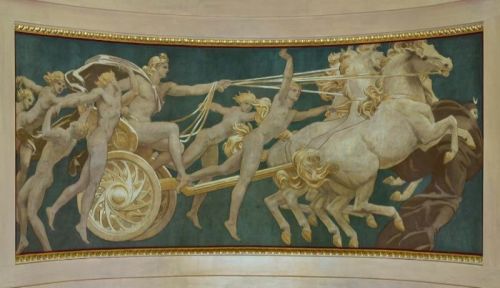
Apollo_in_His_Chariot_with_the_Hours

   Apollo in His Chariot with the Hours (1922–25) 


               John Singer Sargent


                     __________


                 The God repented of the oath he took, 


the God, Helios / Phoebus / Apollo,

father of Phaeton, with Clymene,

Phaeton’s mother


the oath, to grant Phaeton his wish

in order to prove his paternity


                 For anguish thrice his radiant head he shook;
                 “My son,” says he, “some other proof require,
                 Rash was my promise, rash is thy desire.
                 I’d fain deny this wish, which thou hast made,
                 Or, what I can’t deny, wou’d fain disswade. 


fain, willingly, gladly


what I can’t deny, his oath


disswade, dissuade


                Too vast and hazardous the task appears,
                 Nor suited to thy strength, nor to thy years.
                 Thy lot is mortal, but thy wishes fly
                 Beyond the province of mortality:


Beyond the province of mortality,

into immortality, for which Phaeton

is not equipped, being human, his

lot is mortal


                There is not one of all the Gods that dares
                 (However skill’d in other great affairs)
                 To mount the burning axle-tree, but I; 


the axle-tree, the bar that joins the 

wheels of the chariot, is burning 

because it transports the sun


                Not Jove himself, the ruler of the sky,
                 That hurles the three-fork’d thunder from above,
                 Dares try his strength: yet who so strong as Jove? 


not even Jove / Jupiter / Zeus, god of 

gods, and of Thunder, will attempt to  

mount the burning axle-tree, despite 

his immense strength, superior to

anyone’s


                The steeds climb up the first ascent with pain,
                 And when the middle firmament they gain, 


the middle firmament, noon, the

middle of the day, where the sun

reaches its zenith


                If downward from the Heav’ns my head I bow,
                 And see the Earth and Ocean hang below, 


hang, suspended in the heavens


                Ev’n I am seiz’d with horror and affright,
                 And my own heart misgives me at the sight. 


Helios / Phoebus / Apollo admits 

to fear of vertigo


                A mighty downfal steeps the ev’ning stage,
                 And steddy reins must curb the horses’ rage.
                 Tethys herself has fear’d to see me driv’n
                 Down headlong from the precipice of Heav’n. 


Tethys, a Titaness, of the race of 

Giants, who were defeated during 

the Giants’ War


what I’ve learned in the meantime 

is that the Giants, the Titans, had 

actually ruled the cosmos before 

being defeated by the Olympians

something Ovid had misrepresented

in his retelling, where he suggests 

that they were upstarts, rather, 

mortal, however gigantic, who were 

trying from the Earth, Hills pil’d on

hills, on mountains mountains … /

To make their mad approaches to

the skie, in order to unseat the 

gods of Olympus


the Titans, as it turns out, were 

immortals, who ruled the cosmos 

before being ousted by the

Olympians, Jove / Jupiter / Zeus

and his cohorts, and relegated, 

most of them, to the Underworld

though Tethys herself seems to 

have made it out, and been 

reconciled with, at least, the 

Sun god


should I point out that to try to set 

out in one, however comprehensive,

manuscript, a mythology that had 

endured for going on a thousand 

years was likely to reflect some 

inconsistencies, some inaccuracies,

not to mention the dictates of not 

only cultural, but also political 

considerations, we’ll have to 

forgive Ovid, or not, it appears,

his  transgressions 


                Besides, consider what impetuous force
                 Turns stars and planets in a diff’rent course. 


Helios / Phoebus / Apollo continues

to speak, warning his son Phaeton

of the strong, impetuous, and 

unpredictable, currents that [t]urn,

jostle, stars and planets


                I steer against their motions; 


that’s what I have to deal with,

Helios / Phoebus / Apollo

cautions, these motions,

these irascible, interplanetary,

interstellar, streams 


                                                              nor am I
                 Born back by all the current of the sky. 


neither am I born back, which is 

to say borne back, carried back, 

guided back, by any regular,

orderly, current of the sky, by any 

rhythm, of the days, for instance, 

or of the, however intransigent,

hours, that could, potentially,

redirect his path 


                But how cou’d you resist the orbs that roul
                 In adverse whirls, and stem the rapid pole? 


roul, roll, swirl


adverse whirls, of the winds, like 

ocean currents, that stem, are 

created by, are the source of, as 

in the stem of plants, the rapid 

pole, or pull, to rhyme with roul,

a bit, I think, of a poetic stretch


                But you perhaps may hope for pleasing woods,
                 And stately dooms, and cities fill’d with Gods;
                 While through a thousand snares your progress lies,
                 Where forms of starry monsters stock the skies: 


dooms, eventualities, a wonderful 

conjunction here of stately, or 

exalted, expectations, with the 

more dire threat of a thousand

snares, or starry monsters, that

the word doom would usually

suggest


                For, shou’d you hit the doubtful way aright, 


even if you stay on the right track,

even if you hit the … way aright


                The bull with stooping horns stands opposite; 


you’ll have to confront [t]he bull, 

Taurus


                Next him the bright Haemonian bow is strung, 


Haemonian, of Thessaly, a region 

still of Greece  


the Haemonian bow, representative

of Sagittarius


                And next, the lion’s grinning visage hung: 


the lion, Leo


                 The scorpion’s claws, here clasp a wide extent; 


The scorpion, Scorpio


                And here the crab’s in lesser clasps are bent. 


the crab, Cancer


an array of astrological configurations 

obstruct the sky


                Nor wou’d you find it easie to compose
                 The mettled steeds, when from their nostrils flows
                 The scorching fire, that in their entrails glows. 


mettled, spirited 


                Ev’n I their head-strong fury scarce restrain,
                 When they grow warm and restif to the rein. 


Ev’n I, Helios / Phoebus / Apollo, can 

barely, scarce, hold them back, restrain

them, when they grow … restif, restive,

unable to keep still 


                Let not my son a fatal gift require, 


don’t require of me a fatal gift, 

Phaeton’s father pleads, a gift 

that will destroy you 


                But, O! in time, recall your rash desire;
                 You ask a gift that may your parent tell, 


a gift that may your parent tell,

that is meant to determine, to 

prove, your descent


                Let these my fears your parentage reveal;
                 And learn a father from a father’s care:
                 Look on my face; or if my heart lay bare,
                 Cou’d you but look, you’d read the father there. 


were you to just look at my face, 

see my concern, you should be 

able to make out that I’m your 

father, Helios / Phoebus / Apollo

says


                Chuse out a gift from seas, or Earth, or skies, 


[c]huse, choose


                For open to your wish all Nature lies,
                 Only decline this one unequal task,
                 For ’tis a mischief, not a gift, you ask. 


unequal task, a challenge that 

is too great for Phaeton


                You ask a real mischief, Phaeton:
                 Nay hang not thus about my neck, my son: 


don’t hang about my neck, Helios

/ Phoebus / Apollo tells his son, 

you don’t need to try to cajole me


                I grant your wish, and Styx has heard my voice, 


Helios / Phoebus / Apollo has 

sworn an oath on Styx, the 

goddess, the river, an 

unshakable promise, which 

he intends to deliver


                Chuse what you will, but make a wiser choice.” 


now it’s up to you, Phaeton, for 

better or for worse, to decide


R ! chard


“The Story of Phaeton” – Ovid

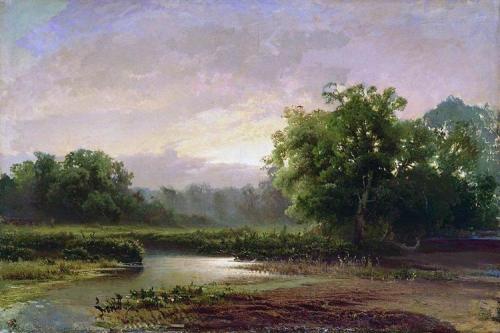
landscape-with-a-palace-1916.jpg!Large

   Landscape with a Palace (1916) 


             Eugeniusz Zak


                  ________


               Her son was Epaphus, at length believ’d
               The son of Jove, and as a God receiv’d; 


without proof, it could not have been 

absolutely determined, during this 

ancient mythological era, that  

Epaphus, son of Io become Isis, was 

indeed the son of Jove / Jupiter / Zeus

though that’s what at length, eventually, 

came to be believed


and as such Epaphus was


               With sacrifice ador’d, and publick pray’rs,
               He common temples with his mother shares. 


both Isis and Epaphus are worshipped

in common, in the same places, and 

with a similar degree of devotion


               Equal in years, and rival in renown
               With Epaphus, the youthful Phaeton
               Like honour claims; 


Phaeton, another youth, [e]qual in 

years to Epaphus, and in renown,

as famous, [l]ike honour claims, 

puts forward, his own illustrious 

heritage


                                      and boasts his sire the sun. 


the sun, Phoebus / Apollo, god,

among a number of other things,

of that very orb


               His haughty looks, and his assuming air,
               The son of Isis could no longer bear:
               Thou tak’st thy mother’s word too far, said he,
               And hast usurp’d thy boasted pedigree. 


Epaphus, son of Isis, challenges 

Phaeton, says that his mother’s 

claim that her consort was the 

god of the Sun is false, and that 

he, Epaphus, is only promoting 

the fabricated story of his high, 

his boasted, pedigree, ancestry 


               Go, base pretender to a borrow’d name. 


Epaphus delivers a double whammy, 

base pretender, borrow’d name, ouch


               Thus tax’d, he blush’d with anger, and with shame;
               But shame repress’d his rage: 


tax’d, confronted


repress’d his rage, Phaeton didn’t 

slug Epaphus


                                                            the daunted youth
               Soon seeks his mother, and enquires the truth: 


is he truly the son of the god of the 

Sun, Phaeton asks his mother, nearly 

intolerable drama must surely follow, 

turning on this burning question 


               Mother, said he, this infamy was thrown
               By Epaphus on you, and me your son.
               He spoke in publick, told it to my face;
               Nor durst I vindicate the dire disgrace:
               Even I, the bold, the sensible of wrong, 


Even I, Phaeton asserts, the sensible 

of wrong, as he describes himself, the 

impatient of improprieties, however 

bold, quick to respond, impetuous, 

might he be, durst not, dared not, 

vindicate, validate, the dire disgrace, 

Epaphus‘ profoundly distressing insult    


               Restrain’d by shame, was forc’d to hold my tongue. 


I was unable, Phaeton says, too 

[r]estrain’d by shame, humiliated, 

to even answer


               To hear an open slander, is a curse:
               But not to find an answer, is a worse. 


a worse, we would say just worse, 

but note that worse, here, is not a

noun, but the adjective for curse,

which has been elided, left out, 

worse curse, which, included, 

would’ve altered, however, the 

metre, the pentameter, and thus, 

the poetry, style having trumped, 

for better or for worse, in this

instance, the substance 


a, incidentally, is the first beat of the 

iamb, which is to say, the weak beat,

while worse, is the second, the one 

with the accent, the determining 

thump, worse, da, dum, an iamb 


Dryden didn’t have, in other words, 

much choice, were he wanting to 

be a poet, but to deftly press his, 

surely masterful, grammar, to fit 

his meaning to his, however

constricting, verse


               If I am Heav’n-begot, assert your son
               By some sure sign; 


assert your son, acknowledge him,

[b]y some sure sign, Phaeton 

demands of his mother 


                                      and make my father known, 


at the same time, make … known, 

identify, Phaeton continues, point

him out, my father 


              To right my honour, and redeem your own.
               He said, 


it is the honour[able] thing to do,

the required thing to do, [h]e said, 

to restore, [t]o right, our reputations


                                   and saying cast his arms about
               Her neck, and beg’d her to resolve the doubt. 


a son imploring his mother, can 

anything be more poignant


               ‘Tis hard to judge if Clymene were mov’d
               More by his pray’r, whom she so dearly lov’d, 


Clymene, wife of Helios, or Phoebus / 

Apollo, sun god, mother of Phaeton 


               Or more with fury fir’d, to find her name
               Traduc’d, and made the sport of common fame. 


Traduc’d, translated, transmitted


common fame, the casual, everyday

sport, entertainment, however 

inappropriate, however malicious,
of many


               She stretch’d her arms to Heav’n, and fix’d her eyes
               On that fair planet that adorns the skies; 


that fair planet that adorns the skies, 

the sun, though Dryden must’ve 

known the sun wasn’t a planet, nor 

Ovid, for that matter, literary licence

having given style, here again, sway 

over substance, for better, it’ll be up 

to you to say, or for worse


literary licence, where style 

overtakes substance


               Now by those beams, said she, whose holy fires
               Consume my breast, and kindle my desires; 


girlfriend, I have to here interject, your 

temperature is, ahem, showing, you’re 

sounding, however uncharacteristically, 

awfully intemperate, aroused, [c]onsume 

my breast indeed, kindle, you audaciously 

request, my desires


               By him, who sees us both, and clears our sight,
               By him, the publick minister of light,
               I swear that Sun begot thee; 


Clymene swears an oath upon the 

very sun, her sire, the publick minister 

of light, the very priest of illumination, 

of clarity, for everyone, the sun’s 

manifest incarnation


                                                                if I lye,
               Let him his chearful influence deny: 


don’t shine on me, Helios / Phoebus /

Apollo, him, Helios / Phoebus / Apollo

himself, Clymene cries, if I lye, lie, if I

tell an untruth


               Let him no more this perjur’d creature see; 


Let him, let yourself, Helios / Phoebus /

Apollo, be unable any longer to see me,

perjur’d creature that I, Clymene, am 


               And shine on all the world but only me. 


obliterate me, she defies, from your

purview, let the world receive your 

rays, but not myself


               If still you doubt your mother’s innocence,
               His eastern mansion is not far from hence;
               With little pains you to his Leve go,
               And from himself your parentage may know. 


Leve, where Helios / Phoebus / 

Apollo lives


               With joy th’ ambitious youth his mother heard,
               And eager, for the journey soon prepar’d. 


Phaeton is off on his mission


               He longs the world beneath him to survey; 


he wants to see the world from the 

perspective of the sun, an astronaut,

a dreamer, pulsing with ambition


               To guide the chariot; and to give the day: 


to drive his father’s car, chariot, how 

contemporary, how immediate


               From Meroe’s burning sands he bends his course, 


Meroe, a city on the Nile, you’ll 

remember that we’re still in Egypt, 

where Io / Isis prevails, with Epaphus

her son, the one who started all this  


               Nor less in India feels his father’s force: 


the sun, his father’s force, is no less 

vigorous in India than it is, he, Helios

/ Phoebus / Apollo, is, in Egypt


               His travel urging, till he came in sight; 


His travel urging, impatient to speed 

up his pace, hastening his metaphorical

horses


               And saw the palace by the purple light. 


purple light, evening, though purple 

is also, since antiquity, the colour of 

royaltyPhaeton is perhaps seeing 

both, the palace, at evening  


see above


R ! chard