Just another WordPress.com weblog
Tag: "The Story of Aglauros / transform'd into a Statue" – Ovid
_______
all mythologies have their picture, their
rendition, their evocation of an afterlife,
states of either resignation, in earlier
traditions, perdition or bliss in the later
Christian view, manifest, these latter,
in Dante, his depictions of Hell,
Commedia, are probably its most
explicit evocations
the Greek and Roman pictures of
their own representative Underworld,
notably, is less compartmentalized,
less extreme in its divisions, a gloom
pervades, but nowhere fire and
brimstone, nor the diametrically
opposed consolation of archangels
and trumpets, only an unending
sense of desolation, be one worthy
of it or not
limbo comes to mind
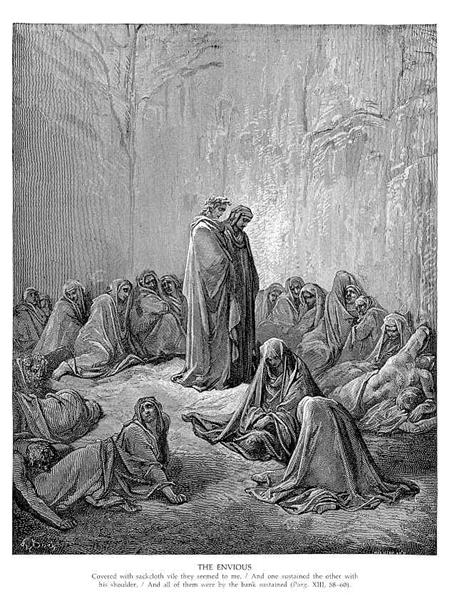
but Envy’s realm is actual, not
belated, in the Ancient Greek and
Roman traditions, it is of this world,
present, however horrid, a place
that lurks in the hearts of men, of
people, always, ever, accessible
Dante situates his nexus of Envy in
Purgatory, the afterlife, the nether
world, its Second Circle, of seven,
Wrath, Envy, Pride, Lust, Gluttony,
Greed, Sloth
for Ovid, you can reach Envy’s
dominion, in the nearby mountainous
areas, if only you’ll follow Minerva
the one course is transcendental,
the other, organic, note, physical,
carnate
Directly to the cave her course she steer’d;
Against the gates her martial lance she rear’d;
The gates flew open, and the fiend appear’d.
the fiend, Envy herself
A pois’nous morsel in her teeth she chew’d,
And gorg’d the flesh of vipers for her food.
yech
Minerva loathing turn’d away her eye;
as, incontrovertibly, would I
The hideous monster, rising heavily,
Came stalking forward with a sullen pace,
And left her mangled offals on the place.
Soon as she saw the goddess gay and bright,
She fetch’d a groan at such a chearful sight.
Livid and meagre were her looks, her eye
In foul distorted glances turn’d awry;
A hoard of gall her inward parts possess’d,
And spread a greenness o’er her canker’d breast;
Her teeth were brown with rust, and from her tongue,
In dangling drops, the stringy poison hung.
She never smiles but when the wretched weep,
Nor lulls her malice with a moment’s sleep,
Restless in spite: while watchful to destroy,
She pines and sickens at another’s joy;
Foe to her self, distressing and distrest,
She bears her own tormentor in her breast.
the passage, without explication,
speaks for itself, I cede to its
manifest erudition
The Goddess gave (for she abhorr’d her sight)
her sight, what she was looking
upon
A short command: “To Athens speed thy flight;
On curst Aglauros try thy utmost art,
And fix thy rankest venoms in her heart.”
Minerva condemns, curs[es],
This said, her spear she push’d against the ground,
And mounting from it with an active bound,
Flew off to Heav’n:
Minerva reminds me of my own
meanwhile, the hag, Envy, with
eyes askew
Look’d up, and mutter’d curses as she flew;
For sore she fretted, and began to grieve
At the success which she her self must give.
success, the humiliation of
Then takes her staff, hung round with wreaths ofthorn,
And sails along, in a black whirlwind born,
the picture of a witch on a
broomstick shouldn’t
here be unanticipated
O’er fields and flow’ry meadows: where she steers
Her baneful course, a mighty blast appears,
Mildews and blights; the meadows are defac’d,
The fields, the flow’rs, and the whole years laidwaste:
the whole years, the yearly crops
On mortals next, and peopled towns she falls,
And breathes a burning plague among their walls.
the, not unfamiliar to us, season,
now, of the witch
R ! chard
_______
has spotted Herse, Greek princess,
from on high, the most beautiful
among a procession of shining
virgins and, fir’d, swoops down to
earth, to th’ apartment of the royal
maid, in order to seduce her
The roof was all with polish’d iv’ry lin’d,
That richly mix’d, in clouds of tortoise shin’d.
colour, or the substance itself,
are referenced here, or maybe
even both
Three rooms, contiguous, in a range were plac’d,
contiguous, one beside the other
The midmost by the beauteous Herse grac’d;
Her virgin sisters lodg’d on either side.
Cecrops, they’d seen the child
Ericthonius, half man, half snake,
son of Minerva, who had been
given to them, into their care,
categorically not to open, but did,
to their great, to their utter, indeed
mythic, chagrin
Aglauros first th’ approaching God descry’d,
descry’d, witnessed, beheld
And, as he cross’d her chamber, ask’d his name,
And what his business was, and whence he came.
“I come,” reply’d the God, “from Heav’n, to woo
Your sister, and to make an aunt of you;
however unabashedly be he
forthright
I am the son and messenger of Jove;
My name is Mercury, my bus’ness love;
Do you, kind damsel, take a lover’s part,
And gain admittance to your sister’s heart.”
take a lover’s part, Mercury entreats,
be of help, he asks Aglauros, in this
amorous adventure, strategize a path,
gain admittance for me, to your sister’s
heart, to her serene acquiescence
She star’d him in the face with looks amaz’d,
As when she on Minerva’s secret gaz’d,
Minerva’s secret, her babe,
Ericthonius, half man, half snake,
whom Aglauros had earlier,
however treacherously, beheld
And asks a mighty treasure for her hire;
sure, says Aglauros, I’ll help, but
what will you give me in return
for my service, my hire
And, ’till he brings it, makes the God retire.
Aglauros will not assist till she
receives the mighty treasure she
requests for her hire
Minerva griev’d to see the nymph succeed;
get anything at all because of her
earlier indiscretion, disobediently
goddess’ son
And now remembring the late impious deed,
When, disobedient to her strict command,
She touch’d the chest with an unhallow’d hand;
In big-swoln sighs her inward rage express’d,
That heav’d the rising Aegis on her breast;
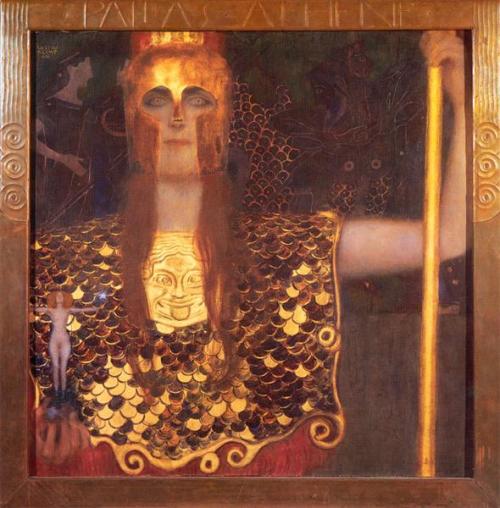
fashioned by the Cyclopes, brothers,
one-eyed giants, in the workplace of
Hephaestus, god of Craftsmen, Fire,
Metallurgy, it bore the Gorgoneion,
the head of Medusa, which would
turn one to stone when looked upon
Then sought out Envy in her dark abode,
Defil’d with ropy gore and clots of blood:
Shut from the winds, and from the wholesome skies,
In a deep vale the gloomy dungeon lies,
Dismal and cold, where not a beam of light
Invades the winter, or disturbs the night.
Envy, its personification, is a goddess
here, though the representative of
Envy is usually considered to be
next stop, Envy’s dark abode
stay tuned
R ! chard
________
This done, the God flew up on high,
This done, Hermes, the God, had just
and pass’d
O’er lofty Athens, by Minerva grac’d,
was patroness of Athens, grac’d,
indeed, by the very Parthenon, then,
and still now, her temple
And wide Munichia, whilst his eyes survey
All the vast region that beneath him lay.
Munichia, the ancient name for a steep
hill, now called Kastella, in Piraeus, the
port of Athens
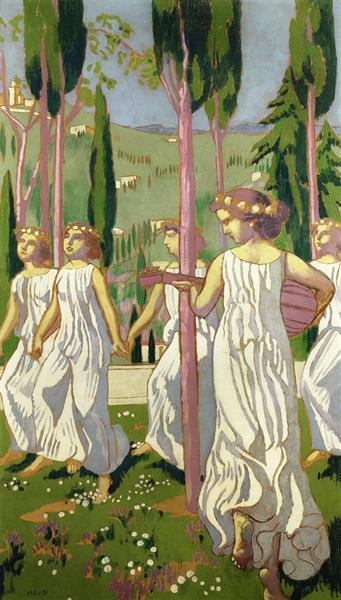
‘Twas now the feast, when each Athenian maid
Her yearly homage to Minerva paid;
let me point out that during the period
when pantheism prevailed, which is to
say anything earlier than the Emperor
established Christianity as the official
religion of the Roman Empire, and going
back to the very beginnings of recorded
history, but at the very least to the epics
Century BC, which tell of the Trojan War
and its aftermath, from the even more
distant 12th Century BC, homage was
paid, around the Mediterranean, to gods
and goddesses of Olympus, temples
were built, rituals performed in their
honour, much as in the Christian Era,
believers attend church, build cathedrals
to their preferred deity, feasts to Minerva
were as fervent then, in other words, as,
later, were those of devotees to their own
Christmas and Easter, say, celebrations
In canisters, with garlands cover’d o’er,
High on their heads, their mystick gifts they bore:
And now, returning in a solemn train,
The troop of shining virgins fill’d the plain.
The God well pleas’d beheld the pompous show,
The God, Hermes still
And saw the bright procession pass below;
Then veer’d about, and took a wheeling flight,
And hover’d o’er them: as the spreading kite,
kite, a bird of prey
That smells the slaughter’d victim from on high,
Flies at a distance, if the priests are nigh,
And sails around, and keeps it in her eye:
her eye, the kite is given the feminine
gender here, perhaps following upon
the original Latin word’s grammar
So kept the God the virgin quire in view,
And in slow winding circles round them flew.
quire, archaic spelling of choir, a
group of instrumentalists or singers
As Lucifer excells the meanest star,
Or, as the full-orb’d Phoebe, Lucifer;
Venus, as it appears in the East
before sunrise
Phoebe, pre-Olympian goddess
representative of the moon, thus
in the verse above the very moon
So much did Herse all the rest outvy,
And gave a grace to the solemnity.
Herse, a Greek princess
outvy, outvie, to surpass
Hermes was fir’d, as in the clouds he hung:
fir’d, inflamed, aroused, thus
flung as would be a missile,
the word fir’d here shimmers
with both meanings
So the cold bullet, that with fury slung
From Balearick engines mounts on high,
Glows in the whirl, and burns along the sky.
Balearick engines, slingshots,
off the coast of Spain, were famous
in ancient times for their use of the
slingshot, or sling, especially as a
weapon
At length he pitch’d upon the ground, and show’d
The form divine, the features of a God.
He knew their vertue o’er a female heart,
their vertue, the virtues of both [t]he
form divine and the features of a
God, however be these identical,
allow grammatically for the
possessive adjective their to be
used here
And yet he strives to better them by art.
Hermes would rather seduce with
art, which is to say with charm
and artistry, than by his august
credentials merely
He hangs his mantle loose, and sets to show
The golden edging on the seam below;
Adjusts his flowing curls, and in his hand
Waves, with an air, the sleep-procuring wand;
The glitt’ring sandals to his feet applies,
And to each heel the well-trim’d pinion ties.
pinion, the outer part of a bird’s wing,
including the flight feathers, which
Hermes applies to his sandals
His ornaments with nicest art display’d,
He seeks th’ apartment of the royal maid.
to be continued
R ! chard
 Richibi's Weblog