November / Month of the Sonata
___________
for Sarah and Rachel, the daughters
of the son of a dear cousin, after a
belated lunch recently, two young
girls, 14, 16, in bloom, as Proust
would say, who speak not only
music, but French and English,
fluently, I checked – perhaps
even German, their Oma
lives with them – they also
play the flute, the piano,
and sing, what could be
I ask you, more beautiful,
two young girls in bloom,
indeed in very blossom
or am I being too French
the form of the sonata had been established
decisively during the Classical Period, out
of the rudiments of Bach’s own such pieces,
Mozart and Haydn had given the concept its
final shape, its structure, three or four
contrasting movements, by definition all
entertainments
Beethoven kicked the entertainment part
right out of the ball park, made his show
into a veritable transcendental meditation,
rather than to merely applaud, audiences
gasped, were meant to be awed, as I still
ever am by his musical speculations
but by definition as well, a sonata is a
piece for a single instrument, therefore
inherently introspective, whether the
player has an audience or not, soloists,
note, play easily on their own
even an accompanied sonata, as violin
sonatas often are, for instance, or this
one for two pianos, would lose the
intimacy of a solo piece, for having
someone playing, however compatibly,
over one’s shoulder
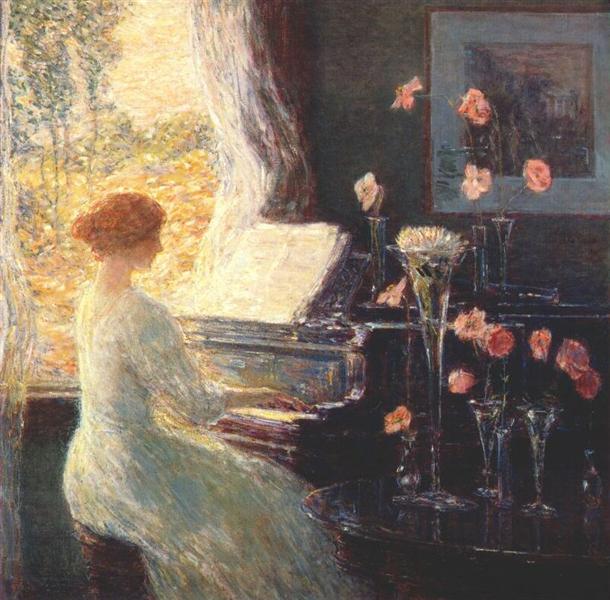
in other words, a piano sonata is, by
definition, a monologue, a soliloquy,
where notes tell the story that words
would intimately, even confessionally,
in poetry, convey
the emotions that are elicited from
a piece are as real as they would
be from any literary alternative,
except that they’re quickened, like
aromas, through the senses, rather
than through divisive, by definition
confrontational, logic
rosemary reminds me always, for
instance, of one of my departed
aunts, like the taste of a madeleine
dipped in tea opened the door for
Proust to an entire earlier epoch,
the seed, the subject, of his
disquisition on Time, “À la
recherche du temps perdu“, “An
Exploration into Elapsed Time“,
my own translation, none of the
published proffered titles
having rendered the subtlety
of the shimmering original
rosemary, in other words, speaks,
if even only to me
listen to Tchaikovsky’s First Piano
Sonata, in C# minor, opus 80, one
of only two of his, what do you
hear, think, feel
R ! chard
 Richibi's Weblog