Richibi’s Weblog

Just another WordPress.com weblog

Tag: the Romantic Period

November / Month of the Sonata – 18 
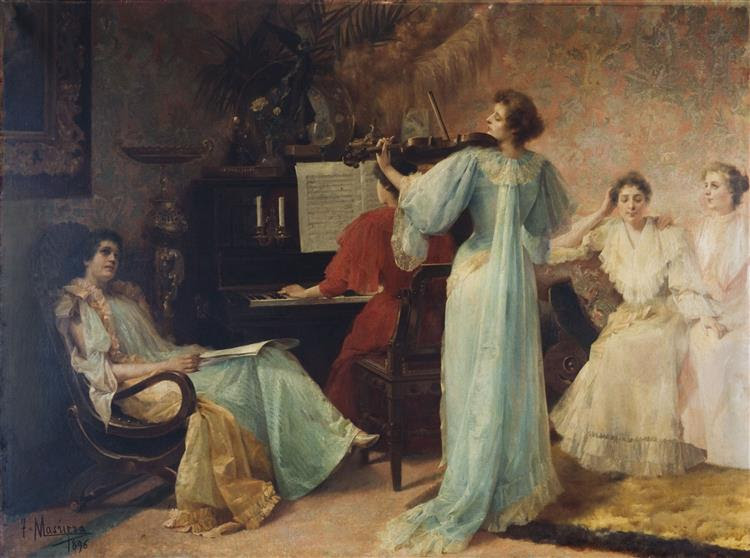
Una melodia de Schubert, c.1896 - Francesc Masriera

    A Melody of Schubert (c.1896) 


           Francesc Masriera


                  ________


though there are other, and quite significant, 

composers who fit into this category, 

Beethoven, Schubert, and Chopin pretty

much define, all by themselves, the 

Romantic Period


Chopin composed only two sonatas of note,

plus one more that is overlooked for being 

an early, student effort, not up to the

standard of his later ones, Chopin, rather, 

wrote mostly shorter pieces, nocturnes, 

études, preludes, polonaises, and more, 

that later became the very stuff of his 

reputation


Schubert wrote enough sonatas that he 

could be compared to Beethoven, indeed

it can be difficult to tell one from the other,

much as it can be difficult to tell Haydn 

from Mozart, products in either case of 

being both of their respective eras


when I was much younger, a guest among

a group of academics, where I’d been invited 

by the host’s wife, a co-worker, what I knew  

of Classical music, in the large sense, which 

is to say comprising all of the musical periods, 

Classicism, Romanticism, Impressionism, 

and beyond, was all self-taught


is that Beethoven, I asked the host, about 

a piece of music he’d put on


that’s Schubert, he replied, aghast, as 

though I’d just farted


I blushed, deep red, confounded


Schubert, having great admiration for 

Beethoven, took on many of the older

composer’s lessons, four movements

instead of the Classical three, for 

instance, and many of the technical 

tricks of his forebear


but there’s an essential component of

their styles that marks one from the

other, an easy way to tell them apart, 

Beethoven always composes against 

the beat, Schubert following it


listen to the first few notes of Beethoven’s 

“Pathétique”, for instance, the beats are  

erratic, confrontational, the mark of a 

revolutionary, Beethoven was brashly 

proclaiming his worth, he had something 

to prove


Schubert, who was essentially playing

for friends, just wanted to entertain

them, which he did in spades, without

bombast or bluster


listen to his Piano Sonata in A major,

D959, for example, no swagger, no 

ostentation, delivering nevertheless 

something quite, and utterly, 

enchanting, everything following, 

unobtrusively, the beat


enjoy


R ! chard

November / Month of the Sonata – 15

Beethoven, 1987 - Andy Warhol


       Beethoven (1987) 


            Andy Warhol


                ______


Beethoven’s piano sonatas are divided in

three sections, Early, Middle and Late,

indeed, the last of his Early sonatas is

his 15th, the “Pastorale”, see my

November / Month of the Sonata – 14


the early ones are all still highly influenced 

by his illustrious predecessors, Mozart and

and Haydn, and derive, however

idiosyncratically, from the Classical Era,

though there are notable differences, his 

addition of a fourth movement, for instance,

instead of the standard three, an upstart

strutting his stuff, asserting his potent 

individuality


with the Middle sonatas, Beethoven is well

on his way to defining the Romantic Period, 

nearly single-handedly, the works are bold, 

expansive, lush, powerful, a story is told, 

movements are chapters in a book, a book 

of metaphysical dimensions


with the Late sonatas, Beethoven will leave 

the planet, deliver musical revelations


compositional issues apply, which I won’t 

get into, for being abstruse, but you can 

already hear in his Middle sonatas the

powerful voice of a musical prophet


here’s his Piano Sonata no 21, in C major,

the “Waldstein”, dedicated to his friend

and patron, Count von Waldstein, hence

the name, it straddles the Classical and 

Romantic Periods, at home in the salons

of the nobles, but dazzling as well for the 

new audiences that are flocking to the 

flourishing concert halls


and we’re only at the start of his Middle

Period


stay tuned


R ! chard

November / Month of the Sonata – 9

      Jules Delsart


           ______


at the end of the Romantic Period, 1886, and

encroaching on the upcoming Impressionistic

Era, César Frank wrote his Violin Sonata in

A major, a musical glimpse into a new age,

this is not Chopin, not Beethoven, not 

Schubert, despite obvious, if you’re 

listening, homages, references


you’ll note the atonality, musical progressions 

that seem askew, eccentric, not as harmonious 

as those earlier composers, like a neurosis 

taking over


tempo, a second essential element of music 

in the West, however changeable might it be, 

even within the individual movements, is 

recognizable


repetition, the third pillar of Western music 

is keeping us on track, bringing us back to

the original statement, to the air each 

movement presents at their several 

introductions 


Frank’s sonata was so appreciated by an

accomplished cellist friend, Jules Delsart,

that he asked if he would transcribe it for 

cello, their joint Sonata in A major for 

Cello and Piano remains to this day a 

stalwart on the cello circuit


compare, an exercise in sharpening your

aesthetic pencil, try it, enjoy


R ! chard

how to listen to music if you don’t know your Beethoven from your Bach, X

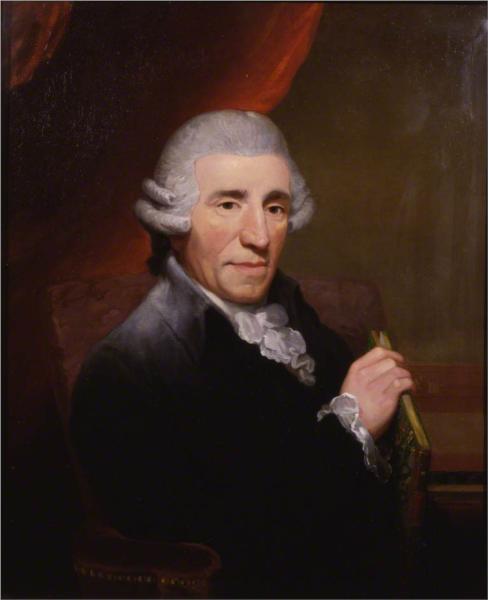
Joseph Haydn, 1791 - Thomas Hardy

        Joseph Haydn” (1791)


                 Thomas Hardy


                         _______


though I’ve focused especially, during

this introduction to Classical music,

on Mozart, a second great pillar of

that era is Haydn1732 – 1809


here is one of his 62 piano sonatas,

which expresses more than anything

you’ve heard here yet the definition

of what music was at the time, or

should be, tonality, as I’ve earlier

said, tempo and repetition were

tantamount


listen for or the rigidity of the tempo,

the consistent melliflousness of

the melody, and therefore tonality,

and the repetition of all the

component tunes


I remember going to a drum recital

once, here in Vancouver, a guy was

expressing his artistry in a formal

venue, I was sitting in a forward

row, saw him set up his music on

his music stand, and I thought,

he’s going to have to turn the

pages, which he did, a drummer


that’s all I remember of the

presentation, but that was enough,

an entire revelation


in this Haydn sonata, the pianist

turns the pages of his score, back

and forth, an interesting visual

expression of the imperative of

repetition in that era’s music,

having to return to what had

been written on the previous

page


also note that trills abound


note too in the second movement,

the adagio cantabile, the sudden

introduction of arpeggios,

transcendent, as though angels

had just appeared


which prefigures the metaphysical

aspirations of the Romantic Period

which ensued, see, for instance, 

Chopin


note also that we’re on fortepiano

here, a period instrument, a cross

between the harpsichord and the

modern instrument


thoroughly enjoy


R ! chard

Piano Concerto no 4, Opus 58 – Beethoven

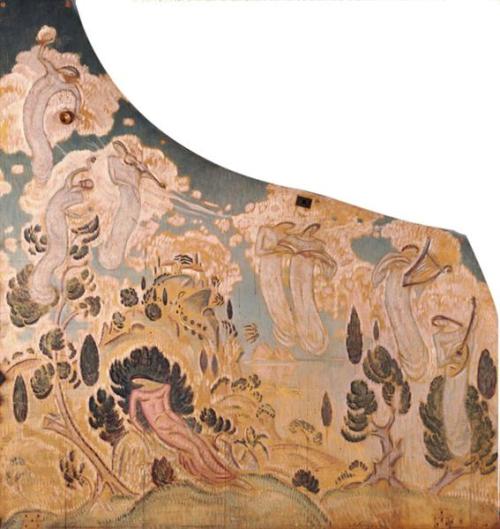
music-painting-and-decoration-of-a-piano-1920.jpg!Large.jpg

     Music (Painting and Decoration of a Piano) (1915-1920) 


          Konstantinos Parthenis


                    __________


like with Shakespeare, some of Beethoven’s

work doesn’t reach the heights I find in their 

utter masterpieces, his Fourth Piano Concerto

is, to my mind, such a piece, though it’s not at

all not impressive


my complaint is that the musical motive, the

original theme, the cluster, merely, of notes

that make up the matter of the ensuing 

harmonic explorations, in all of the three 

movements of the Fourth, is lost in his 

excessive elaborationsone is distracted by 

the soloist’s dazzling showmanship rather 

than by the work’s metaphysical magic, as 

is conversely the case rather in Beethoven’s 

sister concertos, his OneTwo, Three, and 

Five 


most notably, the Fourth‘s slow movement,

the andante con moto, slow, but not unduly,

passes by in an instant, nearly imperceptibly,

but for the conspicuousness of its plodding 

rhythm, you wonder what just happened,

what did I miss


the first movement, the allegro moderato, 

or slightly slower than allegro, begins highly

unconventionally with the soloist at the helm, 

setting up the conversation, as it were, the

subject of the matter


that an individual, a commoner, would’ve  

dared to initiate a dialogue of purported 

significance in a culture where subjects

would have known their place, like later,

for instance, a woman asserting her 

position in a patriarchal society, would’ve 

been shocking, and highly controversial


but Beethoven raps out a rhythm, four

quick notes followed by four quick notes

followed by the same four notes again,

ra ta ta tat, ra ta ta tat, ra ta ta tat, like

someone knocking at a door, however

plaintively, requiring attention, before the

orchestra responds, determinedly and

categorically, though the soloist will ever 

remain the prime, and manifest, mover


this is not a tune, this is a statement


this is also the 18th Century’s introduction 

to the Romantic Period, where individual 

voices were stating their answer to the 

question of the disintegration of the

aristocratic as well as the religious 

ideals which had prevailed throughout 

the earlier Christian centuries, when 

their controlling dogmas, however still 

entrenched, were being questioned, 

and rejected, as evidenced by both the 

constitutional dictates of the American ,

and the French Revolutions, which 

were installing, codifying for their 

progeny, their individual continents,

and for very history, the idea of Human,

as opposed to the traditionally assumed

Divine, Rights


secular voices would consequently

sprout in myriad profusion 

throughout the ensuing 19th Century 

in order to people with personalities, 

as distinct from omnipotent, whether 

secular or ecclesiastical, established 

figures, to shape the ideologies of the 

impending future, for better or for 

worse


but I digress, exponentially


the third movement of the Fourth Piano

Concerto reminds me, in all its urgency,

of the finale of Rossini’s William Tell

Overture, of which I suspect it might  

have been an inspiration, the work

better known to many of my generation

as the theme to The Lone Ranger


Lone Ranger indeed, Beethoven was

already leaving his indelible, not to

mention generative, mark on our

present, 21st Century, culture


enjoy


R ! chard


rhapsodies – Gershwin / Rachmaninov

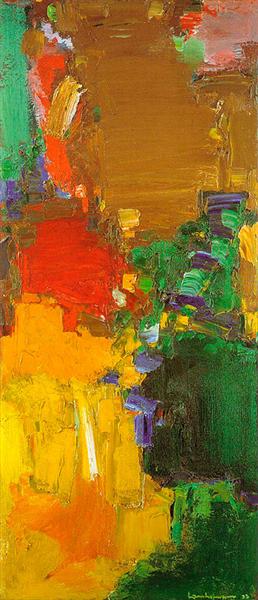
rhapsody-1958.jpg!Large

  “Rhapsody (1958) 


      Hans Hofmann


          _________


if a sonata is a piece of music with more

than one section, by definition a rhapsody

is not a sonata, a rhapsody has only one 

section, only one movement, all that is 

required, therefore, essentially, of a 

rhapsody, is that it be – a subjunctive 

here, incidentally, the mood of aspiration, 

high hopes, ideals – that it be, I reiterate, 

rhapsodic


in the spirit of juxtaposition, here are two

rhapsodies, the first, George Gershwin’s 

Rhapsody in Blue“, the other 

Rachmaninov’s, his Rhapsody on a 

Theme of Paganini


how are they different, you tell me


I’ll just point out that the one seems, to 

my ears, steeped still in the Romantic 

Period, the early 19th Century, despite 

its publishing date, 1934, the other

earlier, composition, 1924, sounds like 

full blown, in comparison, 20th Century

America, the future 


Old Europe, in other words, meets the 

New World, however chronologically 

counterintuitively


listen, you can hear all of it, both are,

either era, extraordinary, time is what

eventually tells


R ! chard


the infinitive in Shakespeare’s “To be, or not to be”

philosophy-and-grammar.jpg!Large

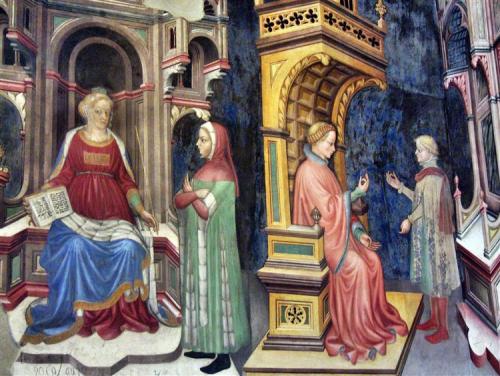
     Philosophy and Grammar 


           Gentile da Fabriano


                  __________


when I referred to Shakespeare’s 

perhaps most famous monologue,

To be, or not to be, in my most 

recent transmission, in order to 

shed light on the idea of tempi, 

that it would parallel Beethoven’s

Opus 111 in its philosophical 

significance, however might’ve I 

done so unintentionally, I was

nevertheless quite spot on, it is

perhaps his most potent

disquisition, as is Beethoven’s

own masterpiece, on existence


but let me extrapolate


to be, or not to be, both infinitives,

which is to say that their form, their 

moodrelate to infinity, the infinite, 

etymological correlatives, which 

means that the actions, thus, are 

not localized, not specific, but 

belong to all places at all times and

for all people, the very stuff, let me

point out, of philosophy 


whether ’tis nobler in the mind to 

suffer, infinitive, the slings and 

arrows of outrageous fortune, or 

to take, infinitive again, arms 

against a sea of troubles, and by 

opposing end, bare infinitive,

which is to say, without the

preposition to, them  


as in  


to die, to sleep, infinitives, no more, 

and by a sleep to say, infinitive, we 

end the heartache and the thousand 

natural shocks that flesh is heir to, 

’tis a consummation devoutly to be 

wished, passive infinitive      


you’ll find that the rest of the 

soliloquy abounds in infinitives,       

the grammatical home, the 

territory, of philosophy


with this speech, incidentally, 

Shakespeare kicks off, in

literature, the Renaissance, much

as Beethoven with his Opus 111

firmly establishes, in music, the

Romantic Period


compare, meanwhile, thou shalt 

not kill, an imperative, the mood

the tenor, the register, is of 

commandments, it differs from 

the infinitive in that, though 

seemingly universal at first, there 

is an exception to its authoritative 

span, and that exception is the 

speaker, all others are called upon 

to abide, this is not philosophy, 

this is power 


much as in music, see in that context

my earlier text, one can read an awful 

lot between the lines


R ! chard

Piano Concerto no 1, opus 23 – Tchaikovsky

the-birth-of-venus-1485(1).jpg!Large

    “The Birth of Venus” (1485) 

          Sandro Botticelli

              ___________

if there’s a piano concerto that dominates
the 19th Century, it’s Tchaikovsky’s First
Piano Concerto, not even Beethoven’s
Fifth, to my mind, matches its celebrity,
one thinks Romantic Period, one thinks
this iconic masterpiece

Tchaikovsky had the advantage of 
absorbing not only Beethoven by this
point in history, but also Chopin, the
narrative power of the former, with 
the mesmerizing textures of the latter,
what could go wrong but insufficient 
genius 

of which Tchaikovsky manifestly had 
more than plenty, enough to verily 
stop your breath  

many towering performers have 
challenged this concerto‘s peaks, 
some even historically, you’ve 
heard them, I won’t reiterate

but listen to what Yuja Wang does with
this challenge, and you tell me if she 
doesn’t conquer its tribulations
despite, or abetted by, her 
controversial dress 

she is a vixen, manifestly, at least in, 
admittedly, her attire, but should a 
vixen play as brilliantly, what does 
one have to counter her provocative 
presentation but her innate femininity, 
her, too often castigated, female pulse, 
something the world could do with 
lot more of

Venuswith all her allure, was goddess 
for centuries before women were 
obliterated from the dominant Christian 
pantheon, the Father, the Son, the Holy, 
I ask you, Ghost, with no equal female 
foundational representative 

Yuja Wangmodern day Venus abetted 
by her evident attendant muses, the
symbolic, hereorchestra, see  above 
could play nude, as far as I’m concerned,  
she’d still be transcendent, and I’m not
even heterosexual 

girlfriend, I say, however proper, modest, 
blushing, get a grip

not to mention that Tchaikovsky is also, 
in this outing, once again, astounding

listen


R ! chard

“Grand Piano Sonata” in G major, opus 37 – Tchaikovsky

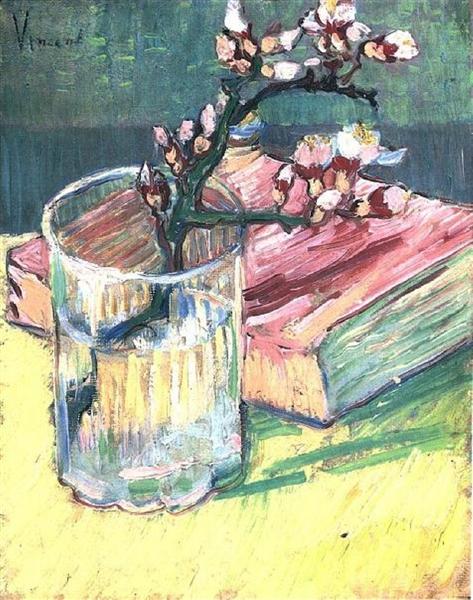
blossoming-almond-branch-in-a-glass-with-a-book-1888(1).jpg!Large.jpg

  “Blossoming Almond Branch in a Glass with a Book (1888)

       Vincent van Gogh

             __________

if Tchaikovsky’s 2nd Piano Sonata hasn’t
remained in the canon, if it isn’t one of 
the pieces you’ve heard if only through
the grapevine, it’s, I suspect, cause it’s 
essentially not an advance on other more 
prescient works in the form, other more 
oracular compositions

Beethoven had paved the way for the 
Romantic Period, nearly invented it,
established incontrovertibly the 
dimensions of the sonata, notably its 
purpose, its structure, Schubert had, 
however belatedly, confirmed it, with 
works equal to his, and even, here 
and there, superior, listen

but having reached the summit of 
what a sonata could say, the form 
little by little withered in its several
Romantic permutations, Tchaikovsky
here, for example, and became mere
elaborations upon a waning theme 
rather than exciting, and revelatory, 
productions 

the sonata would survive, but  
transformed by another era, 
Impressionism, Tchaikovsky would
as well, of course, but not through 
his sonatas

his Second, however, is not not 
worth a listen, would you pass, 
for instance, on a less celebrated
perhaps, van Goghsee above

Tchaikovsky’s, therefore, Second

 
R ! chard
String Quintet in C major, D. 956 – Franz Schubert

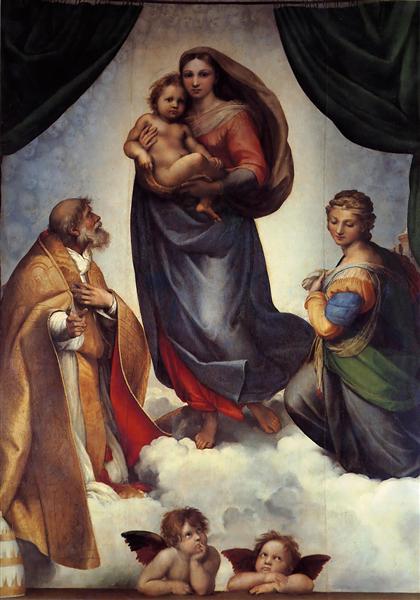
the-sistine-madonna-1513.jpg!Large

   “The Sistine Madonna (1513)
 
          Raphael


          __________ 


if you listen to only one piece of music  
this week, make it this one, Schubert’s 
a monument of Western culture, it’d be
like missing the Venus de Milo when 
you’re at the Louvre, or the Sistine 
Madonna of Dresden’s Zwinger 
the church of Saint Agnes Outside the 
Walls, transformative experiences

quartets, I couldn’t not next introduce
their very gold standard 
 
written in 1828, it was composed at 
the very height of the Romantic 
Period, just a little ahead of Chopin,
1810 – 1849, his other significant 
counterpart, apart from the ageing
Beethoven, 1770 – 1827, who still 
towered above all, despite his 
demise, and was universally 
admired 
 
but had Schubert lived longer than 
his 31 years, I suspect he might’ve 
been Beethoven’s equal, Schubert 
died even earlier than Mozart did, 
at 35, but of something that wasn’t
spoken of until much later, which 
is why we haven’t heard about the 
loss of this other musical giant
quite as grievously as we have 
about his somewhat more senior 
counterpart
 
but listen
 
it’s even hard to tell him apart from 
Beethoven, the passion, the urgency, 
the drama, even composing against 
the beat, a signature trait in 
Beethoven, like Alfred Hitchcock 
showing up in his own movies, or
Woody Allen, always introducing a 
work of art
 
a few things
 
though the frame is immaculately 
Classical, tonality, tempo, and 
recapitulation are not at all 
unobserved, the mood has changed 
from courteous, deferential, and 
respectful, to urgent, confessional, 
and private, the walls are there, but 
the furniture has changed, thanks 
of course here to Beethoven
 
and to the times
 
was writing her Sonnets from the 
Let me count the ways. – right about 
thenunfettered love poems to her 
beloved husband, Robertthe equally 
famous poet, who was remaining 
nevertheless, in his own work, more 
emotionally punctilious
 
I noted as well that the tempo in the 
second movement, one of the most 
beautiful adagios eversurely, 
lurches into an intemperate rebellion,
a second rhythm, up against the earlier 
mournful resignation of the poignant 
lament – note, in passing, that its 
stress of the dominant note is on the 
last beat not the first, like a weight 
that becomes, at every inching 
forward, intolerable, very path to a 
personal Calvary – before returning 
to that very fateful, though luminous, 
initial, stricken dirge

the next movement, the scherzo, does 
the reverse, fast, then slow, then fast 
again, to give the work in its entirety
eight rather than the four traditional 
tempi
 
the piece now has episodes, rather 
than merely a clockwork display,
drama has replaced the dance
entirely as the subtext for music
 
Schubert died two weeks after its
publication, for your info, I think 
his soul had been talking
 
 
R ! chard

psst: there’s a magical film I associate 
          with this music, The Company 
          of Strangers“, a Canadian 
          production, about several elderly
          ladies who get stuck in the 
          wilderness after their tour bus  
          breaks down in the middle of 
          nowhere
 
          you’ll never forget it