Richibi’s Weblog

Just another WordPress.com weblog

Tag: the Romantic Age

Bruch Violin Concerto in G minor‏, opus 26

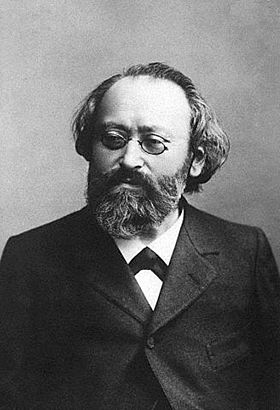
Max Bruch

Max Bruch

______

still under the spell of the captivating
Akiko Suwanai, it didn’t take me long
to search out this enchantress further

as a follow-up to the perhaps tonally
discomfiting Berg I earlier highly,
nevertheless, recommended, I found
this utterly thrilling Bruch

Max Bruch, a Late Romantic, a
composer of the full flowering of the
Romantic Age, before Brahms, for
instance, Impressionism and the turn
towards social grievances rather than
the merely personal, Karl Marx, and
the rush towards isms, Capitalism,
Fascism, Communism, even indeed
Impressionism – is famous for
especially his Violin Concerto in G
minor
, his first of three, and Kol
Nidrei
, a setting for the introduction
of a Jewish service, suggesting
Bruch might’ve been Jewish, which
he wasn’t

I’ve always been indifferent to the
Kol Nidrei“, perhaps because I’m
an utterly lapsed Catholic

but the Violin Concerto is something
else

listen

Richard

psst: compare the Bruch to the Berg
for powerful historical insight
into the evolution of music in
the West

“One Last Poem for Richard” – Sandra Cisneros

One Last Poem for Richard

December 24th and we’re through again.
This time for good I know because I didn’t
throw you out — and anyway we waved.
No shoes. No angry doors.
We folded clothes and went
our separate ways.
You left behind that flannel shirt
of yours I liked but remembered to take
your toothbrush. Where are you tonight?

Richard, it’s Christmas Eve again
and old ghosts come back home.
I’m sitting by the Christmas tree
wondering where did we go wrong.

Okay, we didn’t work, and all
memories to tell you the truth aren’t good.
But sometimes there were good times.
Love was good. I loved your crooked sleep
beside me and never dreamed afraid.

There should be stars for great wars
like ours. There ought to be awards
and plenty of champagne for the survivors.

After all the years of degradations,
the several holidays of failure,
there should be something
to commemorate the pain.

Someday we’ll forget that great Brazil disaster.
Till then, Richard, I wish you well.
I wish you love affairs and plenty of hot water,
and women kinder than I treated you.
I forget the reason, but I loved you once,
remember?

Maybe in this season, drunk
and sentimental, I’m willing to admit
a part of me, crazed and kamikaze,
ripe for anarchy, loves still.

Sandra Cisneros

_____________

Sandra Cisneros is in a direct line from
Elizabeth Barrett Browning, you’ll note,
from the Romantic Age through to the
XXlst-Century emancipation and
independence of women, Elizabeth could
never ‘ve so cavalierly abandoned a lover
in fiction, much less fact, in the Romantic
Age, not to mention two, or three, maybe
even, gallants, any more being, of course,
unthinkable, without dire consequences,
often suicide, see Anna Karenina, Madame
Bovary, the lot, for details, Violetta Valéry
in “La Traviata”

what remains however is the stark,
emotionally driven truth of their
declarations before either of
their consorts

the Romantic ideal still burns bright, in
other words, in our cultural imagination,
see even my own derivations

Richard

XXXVlll. First time he kissed me, he but only kissed – Elizabeth Barrett Browning‏

from Sonnets from the Portuguese

XXXVlll. First time he kissed me, he but only kissed

First time he kissed me, he but only kissed
The fingers of this hand wherewith I write;
And ever since, it grew more clean and white,
Slow to world-greetings, quick with its “Oh, list,”
When the angels speak. A ring of amethyst
I could not wear here, plainer to my sight,
Than that first kiss. The second passed in height
The first, and sought the forehead, and half missed,
Half falling on the hair. O beyond meed!
That was the chrism of love, which love’s own crown,
With sanctifying sweetness, did precede.
The third upon my lips was folded down
In perfect, purple state; since when, indeed,
I have been proud and said, “My love, my own.”

Elizabeth Barrett Browning

________________________

had the sonnet allowed for more lines,
instead of its strict fourteen, this poem
could not ‘ve not become indecent,
“purple”, she says, indeed

nor, for that matter, more clear, Elizabeth
has succumbed to his one, two, three
kisses, enough to now call him [m]y love,
my own”

meed is a reward, and archaic

chrism is holy anointing oil, nearly also
now, but sacramentally, lost

so intimate a declaration as this would’ve
been unprecedented in 1845-46, when
these poems were written, though we’re
used to much more flagrant stuff nowadays

that this had been written by a woman
must’ve been nearly scandalous, though
such was allowing the Romantic Age, and
this “most flagrant” expression would
become eventually its very symbol, the
exploration of the human heart, the highly
intimate revelations of an individual soul

Elizabeth Barrett Browning holds the top
spot here, nobody does it better

in intrinsically less overtly graphic music,
Chopin

Richard Strauss does a similar thing in his
opera “Salome” several years later, several,
indeed, decades later, 1905, but in reverse,
Salome wants to first of all touch John the
Baptist’s skin, he won’t allow it, undaunted
she asks to touch his black hair, nor will
he allow that, she insists further on a kiss,
which doesn’t either come, the scene is
lurid and shocking

“nothing in the world is as red as your
mouth”,
she begs, “let me kiss it, your
mouth”

my dear, I cautioned

later she will dance the Dance of the Seven
Veils
“,
lately performed even, after the veils
are, one by one, off, naked

for which she gets John the Baptist’s head,
and finally gets her kiss

honest

the version I saw was unforgettable,
though it had taken a free ticket to
get me there

Richard

psst: you’ll note, incidentally, that this poem
is not an avowal, but a confidence,
spoken to us, not to him, a not
insignificant factor

XXXlV. With the same heart, I said, I’ll answer thee – Elizabeth Barrett Browning‏

from “Sonnets from the Portuguese”

XXXlV. With the same heart, I said, I’ll answer thee

With the same heart, I said, I’ll answer thee
As those, when thou shalt call me by my name –
Lo, the vain promise! is the same, the same,
Perplexed and ruffled by life’s strategy?
When called before, I told how hastily
I dropped my flowers or brake off from a game,
To run and answer with the smile that came
At play last moment, and went on with me
Through my obedience. When I answer now,
I drop a grave thought, break from solitude;
Yet still my heart goes to thee – ponder how –
Not as to a single good, but all my good –
Lay thy hand on it, best one, and allow
That no child’s foot could run fast as this blood.

Elizabeth Barrett Browning

_______________________

despite the fact that this poem is evidently
a continuation of the last one, her XXXlllrd,
Yes, call me by my pet-name! let me hear“,
it is interesting to note that this XXXlVth
can stand entirely on its own, a separate
and independently cohesive entity, having
in this present iteration revisited all the
points that make the previously rendered
account wholly here a recapitulation, in all
even its intricate detail, superimposed upon
the other, or, more accurately here, after the
other, like skilled and artful embroidery, or
like Russian, maybe, nesting dolls

again it’s wise to watch the commas, and
read the lines as you would prose, if you’ll
pardon my, perhaps impertinent,
suggestion

but even then you’ll come up short, in the
second line at “those”, whose referents
are only inferred, though indeed still only
dimly, by the end of the poem

“those” are of course those she ran to, her
elders, and by extension their plural, note,
“eyes”, a wonderful, and shimmering, dare
I say, stitch, a reverberant metonymy, where
the “eyes” are not only those of one “some
face”,
but apparently various also others, a
veritable prism ultimately in which she had
been severally reflected

and we’re just at line two, the second verse,
Elizabeth is manifestly a poet

in the third verse, “the same, the same”
juxtaposes twin statements, the point is
that these identities are now timeworn,
[p]erplexed and ruffled by life’s strategy”,
by life’s disaffections and dislocations,
and become entirely opposite

but this remains

she says that her step is even more nimble,
now, fleeter, “no child’s step could run as
fast as this blood”,
“this blood” being her
ardent, of course, devotion, she asks that
he be her purpose, [n]ot as to a single
good, but all my good”

but isn’t that like saying God, in a world,
the Romantic Age, become then, if you’ll
remember, much more secular, this
position no longer a blasphemy, a heresy,
however unconsciously publically, even
scandalously, subversive

may he [l]ay [his] hand on it”, she invokes,
his metaphysical hand on her metaphorical
heart, and “allow”, confirm, indeed consecrate,
this fervent declaration, which she has signed
with, assigned her last word to, note, her very
“blood”

Richard