Just another WordPress.com weblog
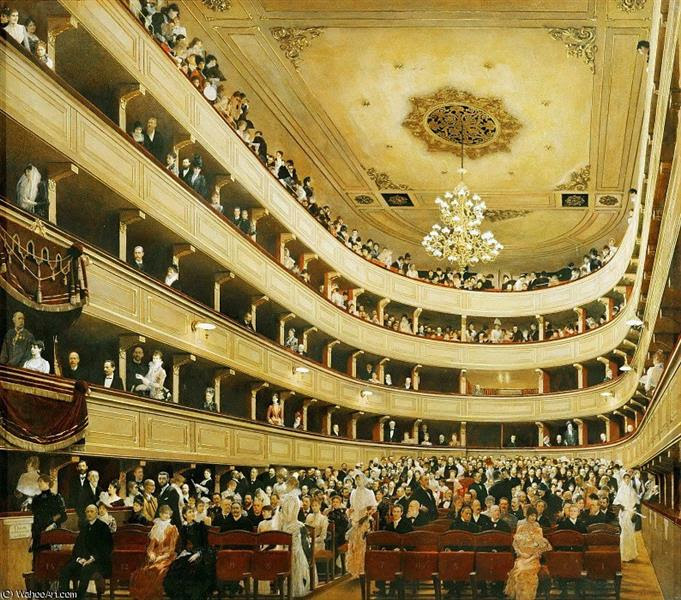
Tag: "The Old Burgtheater" – Gustav Klimt
_______
cause most composers, including the great
ones, didn’t write many sonatas, or not many
to equal their greatest compositions, I’ll skip
directly from Bach to Beethoven, who first
gave sonatas their commanding position
on the cultural map
he wrote 32, the early ones competent,
even admirable, others inspiring, several
completely transcendental
of the 32, here’s the first of my favourites,
“Pastorale”, German spelling, of 1801
you might wonder about all the letters and
numbers in the naming of early music, much
of it compiled by later musicologists, cause
titles hadn’t been given to musical pieces,
even Beethoven’s “Pastorale” had been
later provided by his publisher
music before the late Classical Period
might’ve been written down, but not
widely distributed, there wasn’t a
market for it until the advent of the
Middle Class, who now wanted
access to what the aristocracy had
earlier, what compositions existed
would’ve been the property not of
the composer, but of the duke,
baron, or prince who’d hired him
for his court, see Haydn here, for
when greater demand grew for music
manuscripts, titles little by little became
a manner of increasing marketing,
scores found their way throughout
Europe to supply the many amateurs
who’d gather and play before we had
television
some of these amateurs became
noteworthy performers, who also
began to proliferate, to fill the
burgeoning concert halls,
incidentally, there’s also a “Pastorale”
Opus 68, you might want to listen to
and compare
enjoy
R ! chard
_______
having brought up nocturnes and ballades
I’ll dig into these deeper, to illustrate the
impact Romanticism had on music, on
fine arts as well, and literature, in the
West, as it highlighted emotions as a
requirement of the audiences that
funded them
the French Revolution had happened,
the idea of individual rights, liberty,
equality, fraternity, spread across
even autocracies, czars, kaisers,
kings were threatened
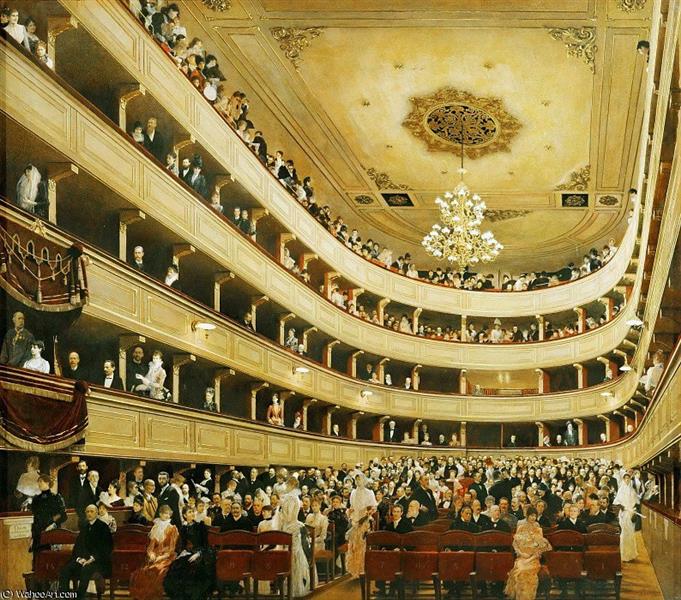
theatres were becoming, because of
the growth of the Middle Class, what
had been the salons of the aristocrats,
people were paying for what the nobility
had been seeing, in concert halls, see
but the audience wanted their money’s
worth, both in spectacle, and personal
contact, easy ingenuity was out, they
had to be impacted, get them howling,
whooping, just like today
but to return to ballades and nocturnes,
they were the answer, plangent appeals
to the heart, which had not been a
concern of the earlier Classical Period,
where prestidigitation, technical
wizardry, had been the requirement
of the courtly courts
ballades, nocturnes, preludes, didn’t
exist before the Romantic Period,
essentially, music that hadn’t a
formal structure, hadn’t a set of
compositional rules, but spoke,
rather, from a place of intimacy,
unconstrainedly
here’s a ballade, for instance, here’s
identifiable as Shakespeare, van
Gogh, in each their own particular
vocabulary, wearing his heart on
his sleeve, and always absolutely
extraordinary
enjoy
R ! chard

 Richibi's Weblog