Richibi’s Weblog
Just another WordPress.com weblog
Tag: the minuet
February 2, 2023
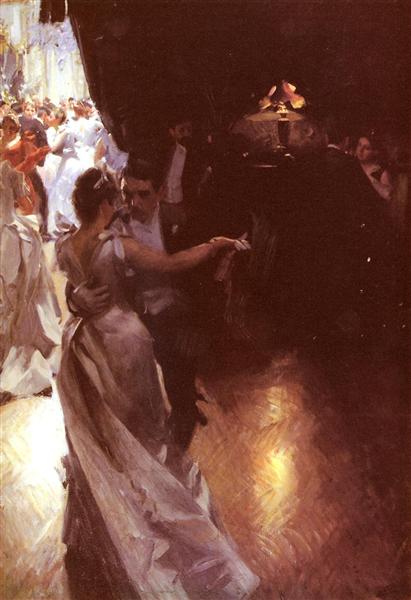
intensity, relevance, rhythm
February 28, 2018
String Quartet opus 74, no 1, in C major – Joseph Haydn
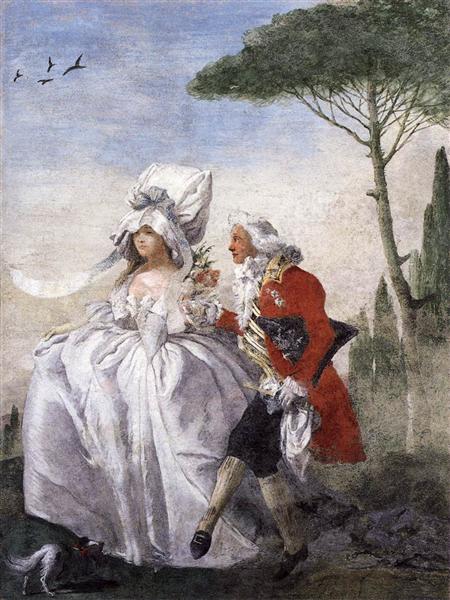
“Minuet in Villa“ (c.1791)
_____________
for my father
the Opus 74, along with the Opus 71, were
written as a unit, to deliver to the English
public for presentation, if the opus numbers
differ, it’s probably to do with publication
dates, the 74‘s being later than the earlier,
but they fit the bill together, batches of six
string quartets for Haydn’s opuses up until
now being the standard, each opus here
comprising only half the normal number,
just three
Haydn’s sponsor, Prince Nicholas Esterházy,
had died, leaving his son, Anton, to preside,
but being tone deaf, the descendant fired
the orchestra, however until then illustrious
the fact that these works were no longer,
therefore, court pieces but intended for
larger, paying, audiences, changed the
dynamics, Haydn is not only peripheral
music at an aristocratic court any longer,
he’s the host, and you can hear it
fermatas, where the note, or the pause,
are accentuated, deliver drama, so does
volume, and sudden tempo changes
therefore the Romantic Period
but, interestingly, the Classical
foundation remains, the established
structure – a musical statement, an
elaboration, a second musical,
related, statement, in usually a
complementary key, it’s own
elaboration, then a recapitulation
of either, or both
the minuet, incidentally, stalwart
still, holding on to the very end of
the 18th Century, still applies, a
sure enough, though residual
sign of the earlier Classical
supremacy, even as that era was
inexorably disintegrating
music is an entertainment, it
inspires, however so incidentally,
though it ever, perhaps even
intentionally, makes you often,
indeed, cry, it’s needed, even in
the direst circumstances, for
courage, however ironically,
however contrapuntally, in any
particular moment, it might even
seem cynical so to arouse spirit,
inspiration, I mean the French had
just turned the world upside down,
and here was sparkling creativity
Haydn was doing his stuff, keeping
us musically integrated, speaking
music instead of politics, turning a
bad situation into pearls, keeping
the world going, the very stuff of
oracles
listen
R ! chard
January 26, 2018
String Quartet no. 14 in G major, K. 387, (“Spring”) – Mozart
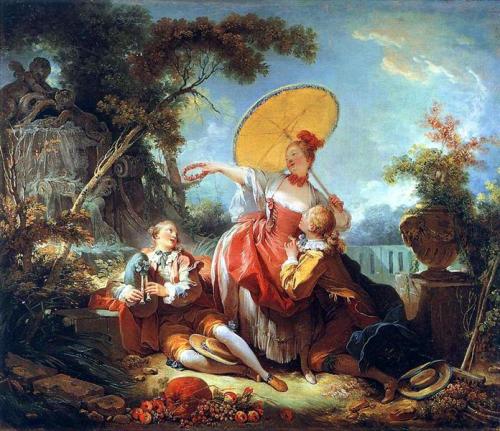
“The Musical Contest“ (c.1754 – 1755)
____________
right about this time, 1782 to 1785, Mozart
was writing his Haydn Quartets, six of
them, in the very fashion, not incidentally,
of Haydn, as a tribute to the master, the
father, the very originator of the string
quartet
here’s the first of them, a not at all
unimpressive tribute
Mozart follows the master in kind, the
number of movements, the selection
of tempi, there’s even again a minuet,
an aristocratic prerequisite, note even
the delicate, the deferential, endings,
to all, not just one, of the movements,
a trait indicative of Haydn, his courtly,
courteous reserve before any too
personalized spotlight, however
manifest his brilliance – noblesse,
in other words, oblige
Mozart follows immaculate suit
you might find it difficult to distinguish
between Mozart and Haydn, I do, the
differences are so subtle as to be
nearly, for the most part,
indistinguishable, their periods overlap,
their contexts were not at all dissimilar,
just even Vienna as their musical core
the aristocracy was still, evidently, in
charge, however henceforth briefly,
and paying the bills, and the mood
required remained respectful, polite,
unpolitical, which both composers
dutifully obliged, neither subjecting
himself to any constraints around
his higher manifest destiny, his
irresistible muse, the pursuit of
pure, and unadulterated, music
this will unfurl, see, for instance,
Shostakovich
R ! chard
 Richibi's Weblog