Richibi’s Weblog

Just another WordPress.com weblog

Tag: the Louvre

“Metamorphoses” (The Giants’ War, II) – Ovid, 110

the-marriage-at-cana-1563.jpg!Large

      “The Marriage at Cana (1563) 


              Paolo Veronese


                  _________


Jove “sigh’d;” if you’ll remember, “nor 

longer with his pity strove; / But kindled 

to a wrath” which was worthy of him


           Then call’d a general council of the Gods;

           Who summon’d, issue from their blest abodes,

           And fill th’ assembly with a shining train. 


Jove calls the gods together to discuss 

the abhorrent conditions on Earth, who, 

upon being summon’d, leave their blest, 

or blessed, homes, and fill Jove’s 

assembly hall with their glittering train, 

their advancing pageantry


           A way there is, in Heav’n’s expanded plain,

           Which, when the skies are clear, is seen below,

           And mortals, by the name of Milky, know. 


when the skies are clear in Heaven’s

expanded plain, its wide expanse, 

mortals can see the Milky Way


           The ground-work is of stars; through which the road

           Lyes open to the Thunderer’s abode: 


this Milky Way is paved with stars, which

lead to Jove’s, the Thunderer’s, domain


           The Gods of greater nations dwell around, 

           And, on the right and left, the palace bound;


the dwellings of the gods who represent 

the greater nations of the era, of Rome, 

for instance, or Greece, surround,

encircle, the Thunderer’s abode, his 

palace 


           The commons where they can: the nobler sort

           With winding-doors wide open, front the court. 


the more common gods, those of 

lesser nations, live where they can, 

while the winding-doors of the nobler 

gods, doors which can be activated

mechanically, on hinges, though 

perhaps here divinely, stand wide 

open for this colloquy, this exalted 

conference, before the celestial 

court 


           This place, as far as Earth with Heav’n may vie,

           I dare to call the Louvre of the skie. 


if one were to compare [t]his place

this court, to anything on Earth, have 

it vie with, one would liken it, Ovid 

says, to the Louvre


there’s evidently an anachronism 

here since the Louvre didn’t exist at

the time of Ovid, so that the translators 

have replaced the “Palatia” of Ovid’s 

original Latin, which refers to the 

Palatine, the most central of Rome’s

Seven Hillswhere imperial palaces

were built at the time of Augustus

63 B.C. to 14 A.D., which is to say 

during Ovid’s time, 43 B.C. to 

17 /18 A.D., by this relatively more 

recent palatial residence, the Louvre,

in order to make the text more

contemporary, like settings and 

attire are used in Renaissance

art to kindle the viewer’s sense 

of connection


see, for instance, above, where 

Veronese depicts the scene of Jesus 

attending a marriage at Cana, a village 

in Galilee, and transforms water there 

into wine to accommodate a shortage,

midst Roman, note, rather than Galilean, 

trappings, splendour


           When all were plac’d, in seats distinctly known, 

           And he, their father, had assum’d the throne,


seats distinctly known means the

traditionally assigned places, with 

Jove, “their father”, at the head of

the convocation 


           Upon his iv’ry sceptre first he leant,
           Then shook his head, that shook the firmament: 


leant, or leaned, [t]hen shook his head

in revulsion


           Air, Earth, and seas, obey’d th’ almighty nod;
           And, with a gen’ral fear, confess’d the God. 


the elements, Air, Earth, and seas“, 

acknowledge, or confess’d, the God, 

with quivering anxiety


           At length, with indignation, thus he broke
           His awful silence, and the Pow’rs bespoke. 


Jove, after a silence, bespeaks, or 

addresses, the assembled Pow’rs, 

the other divinities


R ! chard


Piano Sonata no 29 in B♭ major, opus 106 – Beethoven

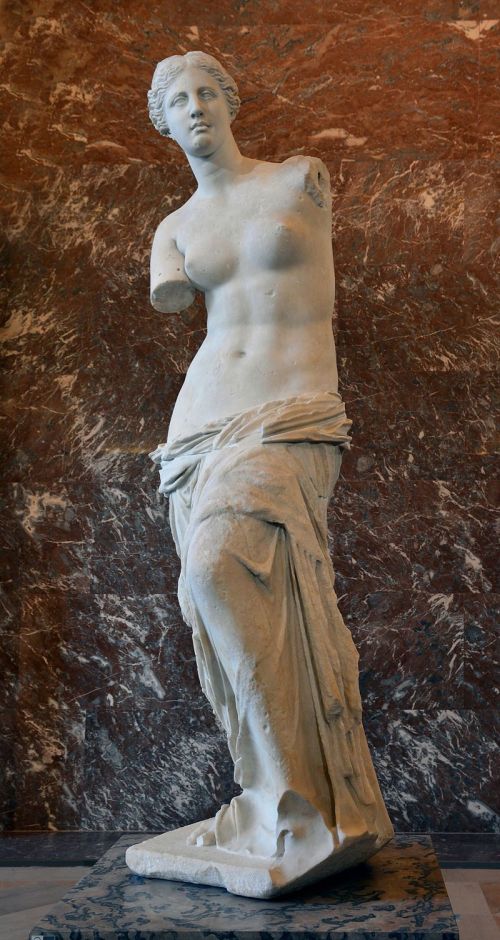
Front_views_of_the_Venus_de_Milo

       Venus de Milo

            _______

here and there, an artwork has presented 
itself to me as transcendent, which is to 
say that in its presence, I quivered, 
experienced verily cosmic transmission 
of energy, a sacred communication 

the Venus de Milo, in the Louvre, who
breathed, existed, as I turned a corner
and beheld her, imperiously presiding,
holding undying, immortal court, as a 
goddess indeed should, would, and
there profoundly did, and does, I  
suppose, still 

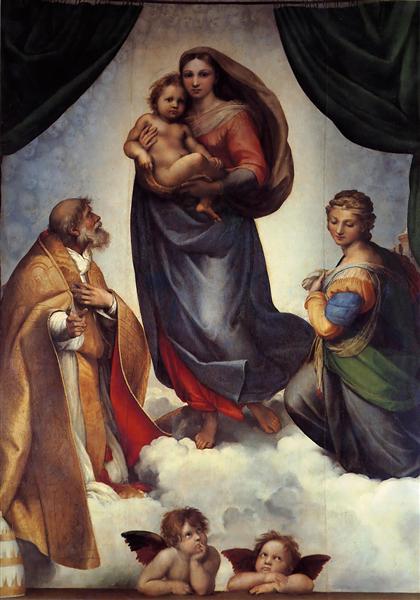
the Sistine Madonna“, in the Zwinger
in Dresden, mesmerized me from a 
distance as I approached her, along  
a long row of corridors, towards a 
resplendence that was 
incontrovertible, a very epiphany, I 
still reverberate recollecting her  
incandescent majesty

Beethoven’s Opus 106, his 
“Hammerklavier”, is such a work, 
not evident perhaps before the third 
movement, the “adagio sostenuto”,
which will, I suspect, stop you dead 
in your tracks, arrest you from its 
very first mystifying moments
magical, miraculous   

Beethoven’s “Hammerklavier” is 
the first piece of his to have moved
from being descriptive, narrative, 
to being philosophical, meditative 
in its motivation, emotions are 
evident, but evoked only in the 
context of exploring something 
grander, something metaphysical, 
you come out the other end having 
gone to church, having explored a 
spiritual environment, you exit
perhaps not absolved, but 
somehow understood, reassured
comforted, counted

a lot, incidentally, like Bach, note, 
plying his cantatas and oratorios, 
not to mention his introspective 
fugues, a not to be unremarked 
atavism, how grandchildren 
resemble, even imitate, however 
unconsciously, their grandparents, 
I even have such pictures

more about all of which later 


R ! chard

psst: something I found cute as I 
          brushed my teeth between 
          the movements, the 
          “Hammerklavier”  is in the 
          same key as my electric 
          toothbrush, B-flat major, a
          robust, I assure you, way 
          to greet the morning

String Quintet in C major, D. 956 – Franz Schubert

the-sistine-madonna-1513.jpg!Large

   “The Sistine Madonna (1513)
 
          Raphael


          __________ 


if you listen to only one piece of music  
this week, make it this one, Schubert’s 
a monument of Western culture, it’d be
like missing the Venus de Milo when 
you’re at the Louvre, or the Sistine 
Madonna of Dresden’s Zwinger 
the church of Saint Agnes Outside the 
Walls, transformative experiences

quartets, I couldn’t not next introduce
their very gold standard 
 
written in 1828, it was composed at 
the very height of the Romantic 
Period, just a little ahead of Chopin,
1810 – 1849, his other significant 
counterpart, apart from the ageing
Beethoven, 1770 – 1827, who still 
towered above all, despite his 
demise, and was universally 
admired 
 
but had Schubert lived longer than 
his 31 years, I suspect he might’ve 
been Beethoven’s equal, Schubert 
died even earlier than Mozart did, 
at 35, but of something that wasn’t
spoken of until much later, which 
is why we haven’t heard about the 
loss of this other musical giant
quite as grievously as we have 
about his somewhat more senior 
counterpart
 
but listen
 
it’s even hard to tell him apart from 
Beethoven, the passion, the urgency, 
the drama, even composing against 
the beat, a signature trait in 
Beethoven, like Alfred Hitchcock 
showing up in his own movies, or
Woody Allen, always introducing a 
work of art
 
a few things
 
though the frame is immaculately 
Classical, tonality, tempo, and 
recapitulation are not at all 
unobserved, the mood has changed 
from courteous, deferential, and 
respectful, to urgent, confessional, 
and private, the walls are there, but 
the furniture has changed, thanks 
of course here to Beethoven
 
and to the times
 
was writing her Sonnets from the 
Let me count the ways. – right about 
thenunfettered love poems to her 
beloved husband, Robertthe equally 
famous poet, who was remaining 
nevertheless, in his own work, more 
emotionally punctilious
 
I noted as well that the tempo in the 
second movement, one of the most 
beautiful adagios eversurely, 
lurches into an intemperate rebellion,
a second rhythm, up against the earlier 
mournful resignation of the poignant 
lament – note, in passing, that its 
stress of the dominant note is on the 
last beat not the first, like a weight 
that becomes, at every inching 
forward, intolerable, very path to a 
personal Calvary – before returning 
to that very fateful, though luminous, 
initial, stricken dirge

the next movement, the scherzo, does 
the reverse, fast, then slow, then fast 
again, to give the work in its entirety
eight rather than the four traditional 
tempi
 
the piece now has episodes, rather 
than merely a clockwork display,
drama has replaced the dance
entirely as the subtext for music
 
Schubert died two weeks after its
publication, for your info, I think 
his soul had been talking
 
 
R ! chard

psst: there’s a magical film I associate 
          with this music, The Company 
          of Strangers“, a Canadian 
          production, about several elderly
          ladies who get stuck in the 
          wilderness after their tour bus  
          breaks down in the middle of 
          nowhere
 
          you’ll never forget it