Just another WordPress.com weblog
Tag: the Golden Age
_____________ This was a single ruin, but not one Deserves so just a punishment alone . the punishment of Lycaon, Jove says, was not an isolated incident, more miscreants need to be held accountable for deeds equally as blameworthy, equally as horrid Mankind’s a monster, and th’ ungodly times Confed’rate into guilt, are sworn to crimes. Jove doesn’t think much of the human race, nor of th’ ungodly times, for thatmatter, that promise more crimes, are sworn, he believes, consigned to them confed’rate is an adjective here, meaning participating, in agreement, party to the events All are alike involv’d in ill, and all Must by the same relentless fury fall. Jove here, much like the Christian God, intends to subject the entire human race, not just Lycaon, to punishment for its pervasive monstrosities, its innate aberrations Thus ended he; the greater Gods assent; By clamours urging his severe intent; The less fill up the cry for punishment. all Gods are in agreement, the greater, and [t]he less, by very clamours urging Jove’s blanket, and severe, censure, once he has ended , completed, his proclamation Yet still with pity they remember Man; And mourn as much as heav’nly spirits can. there remains among the Gods, however, the memory of early Man, which is to say the people of the tribulations of earthlings generally would not be of much consequence to the deities, it is suggested, who as immortals, and as a function of their infinite longevity, wouldn’t be very likely, anyway, to mourn, would find it an unfamiliar concept They ask, when those were lost of humane birth, What he wou’d do with all this waste of Earth: if, the Gods ask, all humans were obliterated from the Earth, what would he, Jove, do with what remained, bereft as it would be of human stewardship If his dispeopl’d world he would resign To beasts, a mute, and more ignoble line; Neglected altars must no longer smoke, If none were left to worship, and invoke. if Jove were to grant the dispeopl’d world, a world without humans, to beasts alone, the mute, and more ignoble species, who would tend the altars, who would worship To whom the Father of the Gods reply’d, Lay that unnecessary fear aside: Mine be the care, new people to provide. leave it to me, Jove, Father of the Gods, tells them, I will provide a new and improved model I will from wondrous principles ordain A race unlike the first, and try my skill again. from new and wondrous principles, Jove promises, I will create from the scratch, as my German teacher used to say, a better humanity let’s see how that turns out R ! chard
___________ discord among the gods would bring But when good Saturn, banish’d from above, Was driv’n to Hell, the world was under Jove. Saturn , god of plenty, had presided over Jove , or Jupiter , god of thunder, was king of the gods there would be consequences for this disarrangement, this strife Succeeding times a silver age behold, Excelling brass, but more excell’d by gold. silver might not have been gold, but it was still better than brass, as, later, we’ll see Then summer, autumn, winter did appear: And spring was but a season of the year. by casting Saturn into the Underworld, Jove set off the cycle of the seasons, whereby Saturn , clutching his way back to the realm of the deities, after his initial fall, would inspire regeneration, the return of springtime, for a while, before being ousted again, and again, and again The sun his annual course obliquely made, Good days contracted, and enlarg’d the bad. in keeping with the suns “oblique[ ]” progressions, not parallel, not at right angles Then air with sultry heats began to glow; The wings of winds were clogg’d with ice and snow; the emergence of heat and cold And shivering mortals, into houses driv’n, Sought shelter from th’ inclemency of Heav’n. Those houses, then, were caves, or homely sheds; With twining oziers fenc’d; and moss their beds. oziers, or osiers , shrubs of which the branches have traditionally been used to make baskets, basketry Then ploughs, for seed, the fruitful furrows broke, And oxen labour’d first beneath the yoke. not to mention Man, the advent of agriculture, toil R ! chard
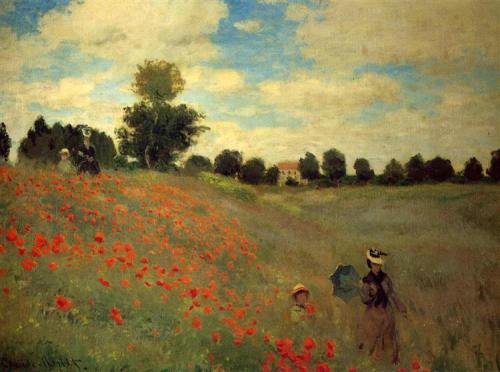
_______ once the Creation is complete, Time becomes one of its components, ages, or eras, or epochs ensue giving credence to the fact of an evolutionary process, instead of stasis a continuation of the inner workings of primordial Chaos still roils, bristles, but among more orderly elements now is positively blissful The golden age was first; when Man yet new, No rule but uncorrupted reason knew: Evil was not yet even a concept And, with a native bent, did good pursue. a native bent, naturally, by instinct, inately Unforc’d by punishment, un-aw’d by fear, His words were simple, and his soul sincere; therefore Needless was written law, where none opprest: where no one offended, laws were unnecessary The law of Man was written in his breast: a function of his emotions No suppliant crowds before the judge appear’d, No court erected yet, nor cause was heard: suppliant crowds, petitioners for justice But all was safe, for conscience was their guard. remember conscience , something that too often now has fallen, it seems, by the wayside though we’re a long way off at present, admittedly, from the Golden Age The mountain-trees in distant prospect please, please is a verb here, as in the mountain-trees bring pleasure but E’re yet the pine descended to the seas: E’re, or before, the pine trees descended, grew closer to, gravitated toward, the water compare here, ” About her coasts, unruly waters roar; / And rising, on a ridge, insult the shore.”, from earlier , where “water vies with earth for its place upon the strand” instead of water, Earth encroaches here, an equally formidable opponent E’re sails were spread, new oceans to explore: E’re, or before, ships set out to conquer,see Columbus for the archetypal example And happy mortals, unconcern’d for more, Confin’d their wishes to their native shore. a world without an economy No walls were yet; nor fence, nor mote, nor mound, Nor drum was heard, nor trumpet’s angry sound: drums and trumpets at any distance would’ve been cause for alarm, or at the very least caution Nor swords were forg’d; but void of care and crime, note the negative no, nor, nor hammered out through the last three verses, describing by omission the state of the original age, what there was not The soft creation slept away their time. soft creation, not inclined to struggle The teeming Earth, yet guiltless of the plough, And unprovok’d, did fruitful stores allow: Content with food, which Nature freely bred, On wildings and on strawberries they fed; the subject here throughout is the “teeming Earth”, the Earth, metonymized , becomes earthlings – therefore “they” replaces “teeming Earth” as subject in the last two lines – who’d feed on wildings , uncultivated plants, crab apples, for instance, strawberries Cornels and bramble-berries gave the rest, And falling acorns furnish’d out a feast. The flow’rs unsown, in fields and meadows reign’d: flowers bloomed unbidden, covering fields I watch the cherry blossoms grace our streets with their opulence as I speak, decking our April days with springtime, a remnant, a bequest, of that golden past And Western winds immortal spring maintain’d. like very Paradise, stretching into even immortality In following years, the bearded corn ensu’d From Earth unask’d, nor was that Earth renew’d. renew’d, tilled, harvested From veins of vallies, milk and nectar broke; valleys engender streams that create the conditions for milk and nectar And honey sweating through the pores of oak. or our own indigenous syrup of maple R ! chard
 Richibi's Weblog