Richibi’s Weblog

Just another WordPress.com weblog

Tag: the Chariot of the Sun

“The Transformation of Cycnus into a Swan” – Ovid

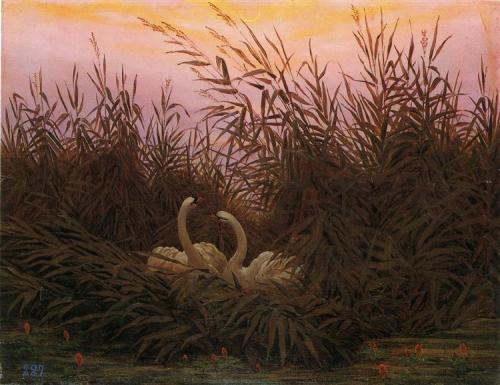
wans-among-the-reeds-at-the-first-morgenro.jpg!Large

   “Swans among the Reeds at First Light (1832) 


             Caspar David Friedrich


                 _______________


were I to be transformed into anything,

I told myself, after reading about all 

these earlier metamorphoses, then 

coming upon this one, of Cycnus, I 

wouldn’t mind, I decided, becoming 

a swan


                   Cycnus beheld the nymphs transform’d, ally’d 
                   To their dead brother on the mortal side, 
                   In friendship and affection nearer bound; 


Cycnus, son of Sthenelus, King of Liguria,

a region still of Northern Italy, a prince, 

therefore, in his own right, was a good 

friend of Phaeton


the nymphs, the Heliades, daughters

of Helios / Phoebus / Apollo and 

Clymene, though transform’d into trees, 

were nevertheless on the mortal side, 

living things, ally’d  / To their dead 

brother, by the earth, which confined, 

constrained, covered them, if only,

the maidens, partially


nearer bound, ally’d again, like a refrain, 

a literary reverberation, honouring their 

brother, Phaeton, [i]n friendship and

affection 


                   He left the cities and the realms he own’d, 
                   Thro’ pathless fields and lonely shores to range, 
                   And woods made thicker by the sisters’ change. 


the sisters’ change, more trees than 

there had been before


                   Whilst here, within the dismal gloom, alone, 
                   The melancholy monarch made his moan, 


monarch, Cycnus, prince of Liguria


                   His voice was lessen’d, as he try’d to speak, 
                   And issu’d through a long-extended neck; 


the transformation of Cycnus occurs, 

much as it did earlier with the Heliades

through the mercy, presumably, of the 

gods, who, usually indifferent, express 

compassion here, however 

uncharacteristically, for the unbearable 

anguish suffered by the grieving sisters 

and friend


Cycnus, incidentally, would also later be 

placed by Apollo among the stars, to 

become the constellation Cygnus


                   His hair transforms to down, his fingers meet 
                   In skinny films, and shape his oary feet; 


oary, hoary, grayish white, grizzled,

withered


                   From both his sides the wings and feathers break; 
                   And from his mouth proceeds a blunted beak: 
                   All Cycnus now into a Swan was turn’d, 
                   Who, still remembring how his kinsman burn’d, 


his kinsman, Phaeton, burn’d, in the

sundered Chariot of the Sun


                   To solitary pools and lakes retires, 
                   And loves the waters as oppos’d to fires. 


swans, it appears, seek out the shade, 

are oppos’d to fires, shun the heat of 

the nefarious, the treacherous, sun


see above


                   Mean-while Apollo in a gloomy shade 
                   (The native lustre of his brows decay’d) 


decay’d, disintegrated, fell away from,

its native lustre


                   Indulging sorrow, sickens at the sight 
                   Of his own sun-shine, and abhors the light; 


Indulging sorrow, allowing himself 

to steep in his own agony


                   The hidden griefs, that in his bosom rise, 
                   Sadden his looks and over-cast his eyes, 
                   As when some dusky orb obstructs his ray, 
                   And sullies in a dim eclipse the day. 


another reverberation erupts here

recalling the darkness, eclipse, just

undergone after the incineration of 

Apollo’s chariot, however paltry

might’ve been, to that god, the 

mere disturbance of a planet 

obstructing the sun, however 

otherwise momentous, compared 

to the death of his son    


                   Now secretly with inward griefs he pin’d, 
                   Now warm resentments to his griefs he joyn’d, 
                   And now renounc’d his office to mankind. 


Helios / Phoebus / Apollo, presently

in the throes of griefs and guilt, warm,

impassioned, resentments, chooses 

to no longer drive the Chariot of the 

Sun, renounc[es] his office, his duty,

responsibility, service, to mankind  


                   “Ere since the birth of time,” said he, “I’ve born 
                   A long ungrateful toil, without return; 
                   Let now some other manage, if he dare, 
                   The fiery steeds, and mount the burning carr; 
                   Or, if none else, let Jove his fortune try, 
                   And learn to lay his murd’ring thunder by; 


Helios / Phoebus / Apollo challenges 

Jove himself, if no other will take his 

place, to guide the horses, holding 

him responsible for the death of 

his son, Phaeton, by having cast his 

murd’ring thunder at him, though

the Earth herself and the harried

constellations, in Jove’s defence,

had begged the god of gods to do

something


                   Then will he own, perhaps, but own too late, 
                   My son deserv’d not so severe a fate.” 


but could there have been any other 

option

                   The Gods stand round him, as he mourns, and pray 
                   He would resume the conduct of the day, 
                   Nor let the world be lost in endless night: 


without the Chariot of the Sun and

someone to guide it, there would be

no day, an apocalyptic cataclysm


                   Jove too himself descending from his height, 
                   Excuses what had happen’d, and intreats, 


intreats, entreats, implores, beseeches


                   Majestically mixing pray’rs and threats. 


Jove / Jupiter / Zeus, from his position

of supreme authority, pulls out all the 

stops, uses all his mechanisms,

pray’rs, threats


                   Prevail’d upon at length, again he took 
                   The harness’d steeds, that still with horror shook, 
                   And plies ’em with the lash, and whips ’em on, 
                   And, as he whips, upbraids ’em with his son. 


Helios / Phoebus / Apollo takes out 

his anguish on the horses, which 

must’ve led to a daunting, a hellish 

day


R ! chard


Story of Phaeton (VIII) – Ovid

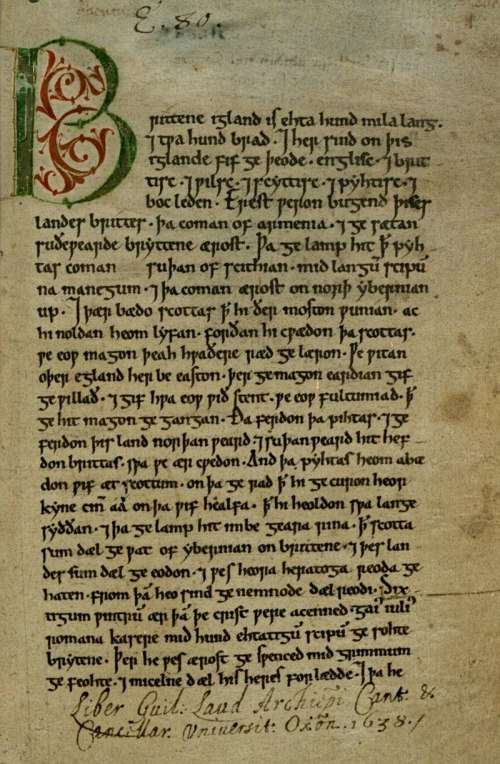
800px-Peterborough.Chronicle.firstpage

  the initial page of the Peterborough Chronicle (14th Century CE)


           ___________


                  Jove call’d to witness ev’ry Pow’r above, 
                  And ev’n the God, whose son the chariot drove, 
                  That what he acts he is compell’d to do, 
                  Or universal ruin must ensue. 


had Dryden applied commas above,

as I am, you might’ve noted, nearly

compulsively wont to do, commas 

being a significant part of my religion, 

the verses might’ve been more easily 

understood, put a comma after 

witness and the object of the 

witnessing, in this case an entire 

independent clause, That what he 

acts he is compell’d to do, finds its 

natural position, clarity, Jove has to 

do, he says, what Jove has to do


I cannot too much blame Dryden for 

this literary indiscretion, this peccadillo,

to my mind, for punctuation has been 

an evolving thing, there was a time 

when there was no punctuation at all, 

not even spaces between the words, 

see abovethis translation, of 1717, 

stands somewhere within the gamut 

of our ever evolving English grammar


the God, meanwhile, whose son the 

chariot drove, in, above, the second 

pentameter, is Phoebus / Apollo

Phaeton‘s father


                  Strait he ascends the high aetherial throne, 


Jove does


                  From whence 
he us’d to dart his thunder down,  
                From whence his show’rs and storms he us’d to pour, 
                But now cou’d meet with neither storm nor show’r. 


Jove, being rendered impotent by the 

raging fires, the immutable trajectory 

of the very Sun having been 

catastrophically, however improbably, 

distorted, is left, at that time, or Then, 

as the next line starts up, with no 

option


                  Then, aiming at the youth, with lifted hand, 
                  Full at his head he hurl’d the forky brand, 
                  In dreadful thund’rings. 


forky brand, a forklike piece of burning 

wood, Jove’s trident


                                                  Thus th’ almighty sire   
                  Suppress’d the raging of the fires with fire. 


I’m reminded of the planned explosions 

at the mouth of the oil wells in Kuwait,

wellheads, after the Gulf War, that were 

meant to still for a critical moment the 

fires, that would otherwise burn out 

of control, in order to squelch the

disastrous conflagrations 


                  At once from life and from the chariot driv’n, 
                  Th’ ambitious boy fell thunder-struck from Heav’n. 
                  The horses started with a sudden bound, 
                  And flung the reins and chariot to the ground: 
                  The studded harness from their necks they broke, 
                  Here fell a wheel, and here a silver spoke, 
                  Here were the beam and axle torn away; 
                  And, scatter’d o’er the Earth, the shining fragments lay. 
                  The breathless Phaeton, with flaming hair, 
                  Shot from the chariot, like a falling star, 
                  That in a summer’s ev’ning from the top 
                  Of Heav’n drops down, or seems at least to drop; 
                  ‘Till on the Po his blasted corps was hurl’d, 


corps, body, from the French, or 

corpse 


the Po, a river in Italy


                   Far from his country, in the western world. 


one wonders, however, what happened

to the Earth, the Chariot of the Sun, 

upon their fiery interaction, perhaps 

the Sun, fallen behind the horizon,

beyond the western oceans, set out 

again, the following morning, with its 

usual master, Phoebus / Apollo, at 

its steady reins, for the world to 

see again another day under that 

lord’s august intervention


R ! chard


The Story of Phaeton (VI) – Ovid

mountain-fire.jpg!Large

    Mountain Fire (c.1903 – c.1908)


              John Singer Sargent


                       _________


because Phaeton was light, nor cou’d 

he fill the seat, the horses he would’ve

controlled forsake / Their stated course, 

and leave the beaten track


                What cou’d he do? his eyes, if backward cast,
                Find a long path he had already past;
                If forward, still a longer path they find:
                Both he compares, and measures in his mind;
                And sometimes casts an eye upon the east,
                And sometimes looks on the forbidden west, 


note the description of the movement 

of the eyes, backward, forward, east

and west, uncontrolled, erratic, nearing 

madness, despite attempts, however 

futile, to remain rational, steady, his 

very mind, comparing, measuring, is 

quickly losing its bearings


forbidden, once again, this should 

probably read forbidding


                The horses’ names he knew not in the fright,
                Nor wou’d he loose the reins, nor cou’d he hold ’em right. 


“Now, Dasher! Now, Dancer! Now, 

Prancer, and Vixen! / “On, Comet! 

On, Cupid! On, Donner and Blitzen!,

who drove another of the very few 

famous chariots in our Western 

cultural history


couldn’t help it


the only other one I could think of 

is that of the Four Horsemen of 

the Apocalypse, red, white, black, 

and pale horses, which I won’t get 

into, but to say that they have no 

names


the horses who drove the Chariot of

the Sun, meanwhile, were called

Phlegon, Aeos, Aethon, and Pyrios, 

though I fully admit that I had to 

look those up, then again I’ve never 

had to ride the Chariot of the Sun


it appears that Helios / Phoebus / 

Apollo had other steeds in his stable 

as well, for a rainy day, but they don’t 

feature in this particular story


                Now all the horrors of the Heav’ns he spies,
                And monstrous shadows of prodigious size,
                That, deck’d with stars, lye scatter’d o’er the skies. 


lye, lie


                There is a place above, where Scorpio bent
                In tail and arms surrounds a vast extent; 


Scorpio, the constellation Scorpius

visible only in the Southern hemisphere


Scorpio, represented by a scorpion,

thus has eight legs, or arms, and a 

highly distinctive tail


                In a wide circuit of the Heav’ns he shines,
                And fills the space of two coelestial signs. 


coelestial, celestial


                Soon as the youth beheld him vex’d with heat
                Brandish his sting, and in his poison sweat,
                Half dead with sudden fear he dropt the reins; 


vex’d with heat, from the wayward 

chariot, Scorpio [b]randish[es]

his sting


poison sweat, Scorpio, under the 

influence of the heat, sweat[s],

exudes, produces, characteristically, 

poison


                The horses felt ’em loose upon their mains, 


mains, manes, long hair


                And, flying out through all the plains above,
                Ran uncontroul’d where-e’re their fury drove;
                Rush’d on the stars, and through a pathless way
                Of unknown regions hurry’d on the day. 


hurry’d on the day, kept the day going

at its usual, however presently pathless, 

or uncharted, pace


                And now above, and now below they flew,
                And near the Earth the burning chariot drew. 


ever, and increasingly, ominously

                The clouds disperse in fumes, the wond’ring Moon
                Beholds her brother’s steeds beneath her own; 


wond’ring, confused, puzzled


Brother Sun, Sister Moon


                The highlands smoak, cleft by the piercing rays,
                Or, clad with woods, in their own fewel blaze. 


smoak, smoke


fewel, fuel


where the highlands are clad with 

woods, they blaze in the fires 

consuming their own trees


                Next o’er the plains, where ripen’d harvests grow,
                The running conflagration spreads below.
                But these are trivial ills: whole cities burn,
                And peopled kingdoms into ashes turn. 


an apocalypse

                The mountains kindle as the car draws near, 


the car, the chariot


                Athos and Tmolus red with fires appear; 


Athos, Mount Athos, Tmolus, Mount

Tmolus, both mountains in Greece,

both named after mountain gods


                Oeagrian Haemus (then a single name) 


Haemus Mons, an early name for 

the Balkan Mountains


Oeagria, Agria, a town in Greece


                And virgin Helicon increase the flame; 


Helicon, Mount Helicon, notable for

being the home of the Muses


                Taurus and Oete glare amid the sky, 


Taurus, the Taurus Mountains, a 

mountain range in southern Turkey 


Oete, Mount Oeta, a mountain in

Central Greece


                And Ida, spight of all her fountains, dry.
                Eryx and Othrys, and Cithaeron, glow,
                And Rhodope, no longer cloath’d in snow;
                High Pindus, Mimas, and Parnassus, sweat,
                And Aetna rages with redoubled heat. 


spight, in spite

Ida, Eryx, Othrys, CithaeronRhodope

Pindus, and the more familiar Parnassus

and Aetna, or Etna, are all mountains, or 

ranges, in the Mediterranean, Mimas, an 

island there, which is to say, a partially 

submerged mountain, all of them

sweltering


see above


                Ev’n Scythia, through her hoary regions warm’d, 


Scythia, a region northeast of Ancient 

Greece, barbarian to the more cultured 

people of Greek Antiquity, coarse 

forebears of the Cossacks 


hoary, sullied white, tired, withered 


                In vain with all her native frost was arm’d. 


even so frosty a region as Scythia

was not immune to, arm’d against, 

the running conflagration


                Cover’d with flames the tow’ring Appennine,
                And Caucasus, and proud Olympus, shine;
                And, where the long-extended Alpes aspire,
                Now stands a huge continu’d range of fire. 


the AppennineCaucasusOlympus

and Alpes, or Alps, are all mountain 

ranges throughout Europe, the 

representative part then of the 

known world


               Th’ astonisht youth, where-e’er his eyes cou’d turn,
                Beheld the universe around him burn:
                The world was in a blaze; nor cou’d he bear
                The sultry vapours and the scorching air,
                Which from below, as from a furnace, flow’d;
                And now the axle-tree beneath him glow’d:
                Lost in the whirling clouds that round him broke,
                And white with ashes, hov’ring in the smoke.
                He flew where-e’er the horses drove, nor knew
                Whither the horses drove, or where he flew. 


R ! chard


The Story of Phaeton (IV) – Ovid

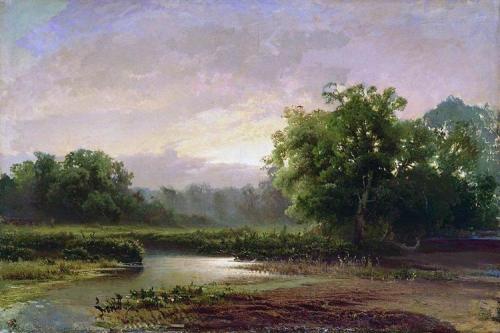
dawn.jpg!Large

    “Dawn (1873) 


           Fyodor Vasilyev


                     _______


                Thus did the God th’ unwary youth advise; 


Helios / Phoebus / Apollo tells his

son Phaeton, th’ unwary youth, 

that he shouldn’t try to ride the 

Chariot of the Sun himself


                But he still longs to travel through the skies. 


Phaeton, however, is inclined to

disregard his father’s advice


                When the fond father (for in vain he pleads)
                At length to the Vulcanian Chariot leads. 


Vulcanian, of Vulcan, god of fire,

metal, metalworkers


Vulcan, according to Ovid here, 

built the Chariot of the Sun 


                A golden axle did the work uphold, 


the axle is the principal part, the 

beam between the wheels, that 

holds the chariot together, that 

did the work, which is to say

the chariot, uphold


                Gold was the beam, the wheels were orb’d with gold.
                The spokes in rows of silver pleas’d the sight,
                The seat with party-colour’d gems was bright; 


the chariot was made of precious 

metals and gems, was therefore 

bright, resplendent


                Apollo shin’d amid the glare of light. 


Apollo, Sun god, would surely, as 

well as the chariot, be radiant, 

glowing


note that the Sun god is called 

Apollo here, where earlier he’d

been called Phoebus, the Latin 

name replacing the Greek, but

upon further investigation I found

that it was Dryden who’d made 

the switch, Ovid had called the 

Sun god Phoebus in the original

Latin text


                The youth with secret joy the work surveys, 


Phaeton is beside himself, eager 

with anticipation


                When now the moon disclos’d her purple rays; 


purple rays, tinged with the colours 

of dawn


see above


                The stars were fled, for Lucifer had chased
                The stars away, and fled himself at last. 


Lucifer, the Morning Star, the

planet Venus, as it appears in 

the East before sunrise


having suspected Dryden of having

replaced with Lucifer another name 

from the original Latin text, I was 

surprised to discover that Lucifer

had been indeed translated faithfully 

from Ovid’s poem, which means that 

the Christian name we’re familiar 

with as another name for Satan has 

to have been adopted from the 

Ancients and modified to fit the new 

Christian mythology, the biblical

narrative 


Lucifer, a god in his own right in

Antiquity, had been the son of 

Aurora, goddess of the Dawn


do you love it


                Soon as the father saw the rosy morn,
                And the moon shining with a blunter horn, 


blunter, less incandescent, dulled

by the advancing light


horn, a lesser phase of the moon, 

when it is either waxing or waning, 

thus resembling a horn


                He bid the nimble Hours, without delay,
                Bring forth the steeds; the nimble Hours obey: 


the Hours, or Horae, goddesses 

of the Seasons, horae is the 

Greek word for seasons


                From their full racks the gen’rous steeds retire, 


retire, come away, from their stalls

in the stables


                Dropping ambrosial foams, and snorting fire. 


ambrosial, especially fragrant, or

tasty


                Still anxious for his son, the God of day,
                To make him proof against the burning ray,
                His temples with celestial ointment wet,
                Of sov’reign virtue to repel the heat; 


celestial ointment, ambrosia,

elixir of the gods


sov’reign virtue, exceedingly effective

attribute


                Then fix’d the beamy circle on his head, 


beamy circle, radiant halo of

solar rays


                And fetch’d a deep foreboding sigh, and said,
                “Take this at least, this last advice, my son,
                Keep a stiff rein, and move but gently on:
                The coursers of themselves will run too fast,
                Your art must be to moderate their haste.
                Drive ’em not on directly through the skies,
                But where the Zodiac’s winding circle lies,
                Along the midmost Zone; but sally forth
                Nor to the distant south, nor stormy north.
                The horses’ hoofs a beaten track will show,
                But neither mount too high, nor sink too low.
                That no new fires, or Heav’n or Earth infest;
                Keep the mid way, the middle way is best.
                Nor, where in radiant folds the serpent twines,
                Direct your course, nor where the altar shines. 


serpent twines, serpentine, tortuous

entanglements


altar, probably alter, or other, light 

sources, the moon, for instance,

the Morning Star, do not be 

distracted by bright lights, 

Phoebus / Apollo advises


                Shun both extreams; the rest let Fortune guide, 
                And better for thee than thy self provide! 


Fortune, or Fortuna, goddess of Fate,

will be of greater help to you, Phoebus 

/ Apollo tells his son, than you, thy self,

can provide for yourself 


compare this last fatherly advice,

incidentally, to that of Polonius to

Laertes, his own son, act I, scene 

3, lines 55 to 81 in Shakespeare’s 

Hamlet, proof that Shakespeare 

was not only well acquainted 

with Ovid, but also much 

admired him


                See, while I speak, the shades disperse away,
                Aurora gives the promise of a day; 


Aurora, goddess of the Dawn


                I’m call’d, nor can I make a longer stay. 


I’m call’d, the time has come to 

mount the Chariot of the Sun, 

the morning breaks, I must, or

you must, in my stead, go


                Snatch up the reins; or still th’ attempt forsake,
                And not my chariot, but my counsel, take,
                While yet securely on the Earth you stand;
                Nor touch the horses with too rash a hand.
                Let me alone to light the world, while you
                Enjoy those beams which you may safely view.” 


should you choose to my counsel, take, 

from the Earth you may safely view my 

beams while I alone … light the world, 

Phoebus / Apollo implores his son


                He spoke in vain; the youth with active heat
                And sprightly vigour vaults into the seat;
                And joys to hold the reins, and fondly gives
                Those thanks his father with remorse receives.


for better, or for worse


stay tuned


R ! chard