Richibi’s Weblog
Just another WordPress.com weblog
Tag: the Beatles
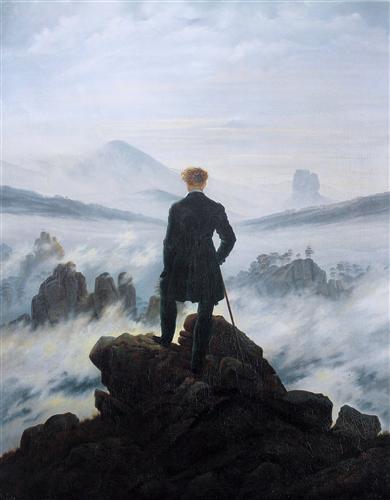
April 2, 2018
Cello Concerto no 1 in C major – Joseph Haydn

“St. George and the Dragon“ (c.1470)
________
it isn’t easy for me to leave Bach behind
whenever I start listening to him, I could
ride his musical train forever
but the middle of the 18th Century did, put
him aside, for about a hundred years, until
Mendelssohn rediscovered him
Bach’s Cello Suites were themselves only
reinstated in the 1930s by Pablo Casals,
the Classical 18th Century had considered
Bach too fussy, his pieces, they thought,
were technical exercises rather than
actual entertainments, form was
overtaking, for them, function
there’s a wonderful book about all this,
“The Cello Suites“, written by Eric Siblin,
a Canadian journalist, which is not only
amazingly informed and probing, but also
beautifully written, it holds a place of
honour on my bookshelf, along with other
inspired, and inspiring, texts
not only was Bach set asunder, dismissed,
during the Classical Era, but all of the
formative music also he had written, for
cello, violin, keyboard, in other words,
the entire curriculum
which, since Bach’s reinstatement, has
become, paradoxically, the very
foundation for learning these instruments
imagine playing a tune with the right
hand, then a few notes later, picking
it up in the left hand while the right
hand keeps on going, imagine what
that does to your fingers, never mind
to your mind, that’s what his Two-Part
Inventions are all about, fifteen of
them, eight in major keys, seven in
minor, consider the technical
difficulties, intricacies, imposed
both compositionally and upon
the harried performer
then Bach follows through with his
Three-Part Inventions to top it all
off, for the keyboard at least, and
only for the moment – there’ll still
be his transcendental “Goldberg
Variations” among other
incandescent masterpieces –
wherein one juggles three tunes at
a time, and all of them in the same
assortment of fifteen contrasting,
foundational, keys, the “Inventions“
– if you can do that, you’re on your
way, one would think, to knowing
entirely what you’re doing
but time marches on, the Classical
Era hits, Haydn takes over, not
unimpressively
the same thing happened in my
generation to Frank Sinatra via
the Beatles, not to mention, a little
later, to either, with Pink Floyd
listen to Haydn’s First Cello Concerto,
note the bravura inherent in the
composition, this is not Bach’s
meditative music, the very Romantic
Period is, through Classical reserve,
expressing already its imminence,
individual prowess is taking over
from community, which is to say
religious, affiliation, the same way
the Renaissance artists, Duccio,
Giotto, Fra Angelico, Filippo Lippi,
Uccello had stood out, incidentally,
from their brethren in the standard
communal art schools dedicated to
decorating the ever burgeoning
churches sprouting out in the still
fervent European environment
musical, though unaristocratic,
talents, this time, were beginning,
within a German context, to flex
their decidedly not unimpressive
muscles, and gaining some
significant purchase
and who wouldn’t when a Cello
Concerto would’ve sounded like
this, listen
R ! chard
March 2, 2018
String Quartet in C major, opus 76, no 3, “Emperor” – Joseph Haydn
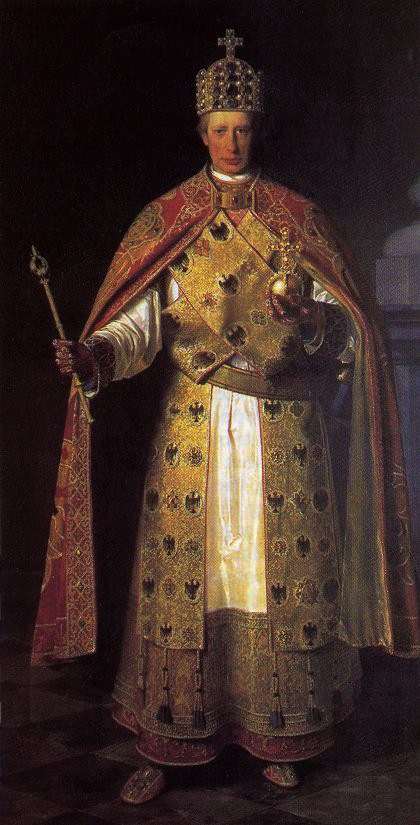
“Francis II as Holy Roman Emperor“ (1874)
_____________
Haydn’s String Quartet, opus 76, no 3,
is nicknamed the “Emperor“ cause the
second movement, the poco adagio;
cantabile, is a recapitulation of an
anthem Haydn had earlier written for
Francis ll, the Holy Roman Emperor
– not, incidentally, for Napoleon, the
Emperor of the moment, who was to
defeat Francis ll, eventually, at the
Battle of Austerlitz, December 2, 1805,
thereby dissolving that Holy Roman
Empire, which had been established
by Leo, the very Pope, lll when, on
December 25th, 800, which is to say
preceding Austerlitz by a thousand
years, he crowned Charlemagne its
Emperor
Haydn must’ve been a monarchist
you’ll recognize that second movement
as the present day anthem of Germany
but listen to how Haydn makes it glisten,
explicitly, with articulations and filigree
that render it utterly irresistible
the adagio is usually the moment that
remains immutable, if the composer
is doing hir stuff, it’s the one you walk
home singing, the faster movements,
however histrionic, are nearly a dime
a dozen, though ever nevertheless
often dazzling
this adagio is utterly Romantic, though
I’m sure Haydn didn’t know what he
was doing, cause despite their push
against the democratic surge, even
monarchists, princes, dukes, dutiful
composers, were finding, and voicing,
their personal, and individual, which
is to say, their democratic, opinions,
however aristocratic their pedigree
artists had done a similar thing when
their personalities began to single
themselves out as especially gifted
when the Renaissance was
happening, it was now music’s hour,
individual voices were staking their
claim, Haydn’s manifestly superior
based on talent and, after widespread
economic affluence, audience appeal,
Haydn’s commercial boots were made
for walking, and he filled them both
magnificently and incontrovertibly
the poco adagio; cantabile is not
courtly music, it reaches for not
merely elegance, but the heart,
we’ve entered another
transformational generation,
something like the revolution
that triggered change in the
cultural upheaval of the1960s
our first step then was the Beatles,
theirs was Haydn, or rather Elvis
Presley shoring up the Beatles,
Beethoven was more aptly John,
Paul, George and Ringo
but watch the rapture on the players’
faces, Francis ll would’ve been
appalled, much like parents in my
generation facing the pill, drugs,
unorthodox sexual couplings, and,
of course, raucous and unruly rock
music
today, under the spell of the
Romantic Period, and encouraged
by that very Sexual Revolution, the
Calidore String Quartet’s Elysium,
their evident bliss, emotionally
manifest, and utterly arresting, sells
tickets, for better or, hopefully not,
for worse
but you call the shots, to decorum or
not to decorum, that is the question
R ! chard
September 23, 2016
on art, its purpose
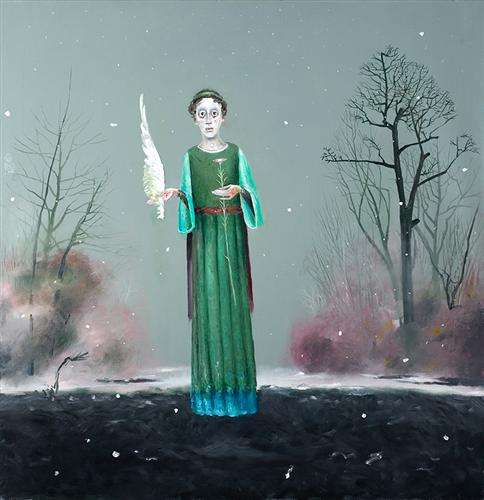
“Poet With Flower“ (2008)
_____
wherefore art, I’ve long and often wondered,
with only a wink to Juliet’s Romeo, for my
question dug deeper, why, indeed, itself art
we build our souls on the stories we’ve
heard, the impressions we’ve received
from voices that spoke directly to our
senses, painters with paint, musicians
with music, writers with words, poets
with poems
it started with fairy tales, which told of
right and wrong, good and bad, courage,
kindness, responsibility, and dire
consequences for discord
Biblical stories also took up a lot of my own
childhood, Jesus, Adam and Eve, Moses
and the Ten Commandments, this last
reinforced by Cecil B. DeMille’s epic
but soon enough it was Oliver Twist, Little
Nell, and by an inescapable authorial leap,
since these were all by an irresistible
Charles Dickens for a guy my age, Sydney
Carton, who valiantly stands in for his
friend, Charles Darnay, at the guillotine, a
quantum, even existential, leap from
Peter Pan and Mary Poppins
though I had the good fortune to learn to
read and write music as a boy, play music,
learn about Bach, Brahms and Beethoven,
it didn’t take anyone else much more than
their enthusiasm to see what the Beatles
were similarly doing, the Rolling Stones,
the Supremes, they were not only singing,
but making history, shaping it, and us, we
followed the questions they rose, their
responses, the effects upon ourselves
for nothing is considered until it’s
mentioned, spoken, made clear, and they
were those prophets
the same goes for art, we see as we see
cause Monet, Picasso, Warhol showed
us how to see, what to look at
and of course poets, Shakespeare,
Rostand, Dante, Goethe, to inform, each,
their individual language, and culture
I have been Philip Carey, Scarlett O’Hara,
Blanche Dubois, Gary Cooper in “High
Noon“, both Martha and George in
“Who’s Afraid of Virginia Woolf“, lately
I’ve been even Hank Williams
as Babette would say, a French doll who
gets abducted in “Raggedy Ann and Andy:
A Musical Misadventure“, an animated
movie from the Seventies, – oo aahrr yoo
Richard
psst: all of them have been me too,
incidentally
December 8, 2015
December, 2015
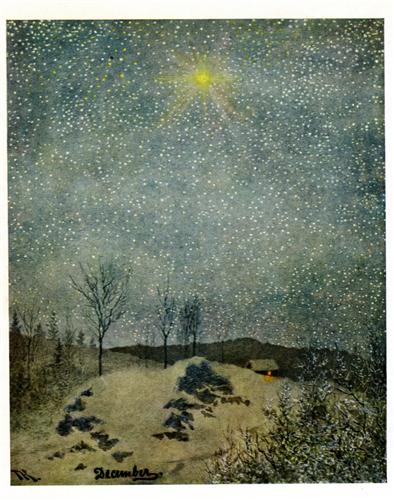
“December“ (1890)
__________
for Susan
several years ago, a friend of mine
invited me to a concert, Sir Edward
Elgar‘s “The Dream of Gerontius“,
to my mind, a double mountain to
cross, both English and ceremonial,
this is not music you can dance to,
nor even dream on, but music that
demands your allegiance, as well
as your attention
to my mind English music, nearly
an oxymoron, remained stagnant
from Purcell, 1659 to 1695, to the
Beatles, 1960 to 1970, with very
few exceptions, never managing,
mostly, to hold, even, a tune
ceremonial music suffered much
from its rigid partisan bent,
whether political or religious, try
singing “La Marseillaise“ or
“The Stars and Stripes“ if you’re
not of those nations, you are
instantly sidelined, a mere
spectator, try “How Great Thou
Art“ at a party, however
inspirational
but the ticket was free, my friend
couldn’t think of anyone else she
could invite who’d enjoy the show,
she’d received the tickets in a
bundle
Gerontius, an old man – you’ll note
the Greek root, geron, as in
“gerontology” – is dying, fears the
other side, friends comfort him and,
in particular, a priest sends him on
his way, that’s act one
act two, he’s on the other side,
wherein the dream of being on the
other side, should he still be alive,
or the actuality of being on the
other side, confront him, have I
died, he wonders
I could tell you something about
that
an angel appears to lead him to,
the programme boasted, no less
than God eventually, in a burst,
for the occasion, of musical
pyrotechnics
well, I wondered, let’s see what
they’re going to do with that
it was unforgettable, though my
friend was somewhat more
equivocal, perhaps not as intent,
quite yet, as I was, about meeting
her divine
in search of something lately to
commemorate the several recent
worldwide atrocities, I quickly
settled on the only work I could
think of, apart from anything,
of course, by Bruckner, to mourn
appropriately
I found this extraordinary production
from no less than London’s St Paul’s
though not an oratorio, according
to the composer’s strict intentions,
Elgar‘s “The Dream of Gerontius“, a
concert piece, is played here in a
church, an Anglican, indeed,
cathedral, despite the flagrantly
Catholic story being told, Elgar had
converted to Catholicism, the piece
transcends, however, religions
an oratorio, incidentally – not to be
confused with Ontario, the Canadian
province – is an opera conceived
without sets or costumes, usually
associated with significant religious
occasions
the text of “Gerontius” is taken
from a poem of Cardinal John
Henry Newman, 1801 to 1890,
a Catholic convert himself, only
recently beatified, as a matter
of fact, not yet, however, for
insufficiency of miracles, it
would appear, canonized
“The Dream of Gerontius“ is
Cardinal Newman‘s retelling of
Dante‘s “Divine Comedy“, our
original tour guide through
Purgatory, Heaven and Hell,
Newman‘s take on it is
particularly poignant, Elgar‘s
musical accompaniment not
any less
the conjunction of divine,
composer, sacred venue and
superior performers is an
extraordinary occasion,
despite, not least, a
scratchy recording, the
experience here is
profound
bring your solemnity
Richard
by the way: December is the end of
the year, 2016 is already act two, are
you ready to meet your own God/dess
June 16, 2014
from Beethoven to Pink Floyd
in juxtaposing inadvertently recently
Pink Floyd’s “Dark Side of the Moon”
with Beethoven’s String Quartet no 14
in C# minor, opus 131, I was once again
struck by how one resembled implicitly
the other, both had achieved structurally
an operatic concert, an original musical
form for each their epoch, a piece of
instrumental music – with, even with
Beethoven eventually, voice – see his
9th Symphony for that – in the form of
opera
stay with me
songs started off as ditties, see, for
instance, in our time, “She Loves You“,
the Beatles, in Classical music that’s
the equivalent of a Mozart sonata,
quick, easy to hum along with, and
spirited
then “MacArthur Park“ came along, in
1968, with a song twice the length,
seven minutes and some, of anything
heard before, check out Jimmy Webb,
Richard Harris, and the process
that sounds a lot like Beethoven, I
thought, throw in extrapolations of
symphonic proportions and that
sounds a lot like Beethoven too,
saying, this is not just pretty, people,
it’s potentially momentous, listen
“Sgt. Pepper’s Lonely Hearts Club
Band“ then put several compositions
together, without breaks, to give us
the first concept album, an
uninterrupted flow of various musical
ideas held together by an, however
inexplicit, theme
or “MacArthur Park“, in other words,
amplified
in 1826, it had been Beethoven’s 14th,
where all this started out, no one had
ever done this sort of thing before,
confounded so intimately contrasting
musical forms, but he’d got it from
the Christian Mass
thus Beethoven, a secular prophet
and thus, in his eminent footsteps,
Pink Floyd, solely, among
contemporary artists, addressing
God
it all seems nearly inevitable today,
but it was 1968 then, a time of, if
you’ll recall, revolution
and all of these had been, for better
or worse, once again, our rallying
cries, anthems, towards a better
world
Richard
March 15, 2013
Beethoven piano sonata no 23, opus 57, “Appassionata”
despite its apparently appropriate appearance
Beethoven’s “Appassionata” once again was
not so titled by Beethoven, but posthumously
even only, by an otherwise inconsequential
publisher with respect to our story, it is filled
with brilliance and verve, as had been
Beethoven’s wont, but a new spirit has
invaded this work, to my mind, which
hadn’t been evident in his earlier, even
more recent sonatas
Beethoven has ceded to contemplation,
no longer merely the bravura that bristled
thrillingly when his fingers flew across a
dazzled, surely, keyboard, dashing off
feats of musical dexterity, indeed of
outright improbable prestidigitation, the
inspired and omnipotent fury of a youth
in all his promise and pulsating
exhilaration
here, in the second movement mostly,
the very heart of the piece, his quest is
philosophical, this is no longer merely
a musical air, but a striving for meaning
from here on Beethoven, where earlier
he’d been an adventurer, a Johnny
Appleseed, if you’ll remember my calling
determination and fire, still impervious
to any danger, now has suffered doubt,
and begins here, at the height of his
compositional powers to display it
this is no longer entertainment, this is
conversation, it’s like going from the
Beatles’ “I Want to Hold Your Hand“ to
John Lennon’s “Imagine“ having been
through the intermediate “Sergeant
Pepper“, the later works meant to
actually change the world, not only
just to regale it
this is also only the start, Beethoven
will become extraordinary, a sage,
music’s highest priest, and prophet
watch, listen, wonder
Richard
February 6, 2013
Beethoven: Sonata no. 21 in C major, op. 53 (Waldstein)
the “Waldstein” Sonata, no. 21 in C major, opus 53, is
one of the few compositions that Beethoven named
himself, which is to say that he dedicated it to a
friend and patron, Count Ferdinand Ernst Gabriel
von Waldstein, if you can call that naming it
the ones with descriptive titles, the “Moonlight”, the
“Pastorale“, “The Hunt“, for instance, were mostly so
labeled by his publisher for ease of identification in
the growing market place, a more affluent merchant
class eager to take on the refinements of the nobles,
see such an instance of social mobility, however
lampooned, updated and upended, in again the
engaging and not at all unperceptive “The Beverly
Hillbillies“
this means that the suggestive names we’ve come
to associate with his sonatas, “Moonlight”, “Pastorale“,
“The Hunt“, were never conceived as such by
Beethoven, his compositions were ever purely musical
inventions, or more accurately inspirations, prophetic
pronouncements of a much more oracular order,
like Prometheus Beethoven was delivering nothing
short of fire
to match music to specific visual, or even emotive,
cues, incidentally, “Pictures at an Exhibition“,
“The Carnival of the Animals“, for example, came
later, already a nod to Beethoven’s even indirect
propositions
that titles were given to music, rather than the more
clinical and mnemonically difficult numbers, which
is to say, not easy to remember, isn’t very different
from the evolution of popular music in the early
1960′s
the Beatles, you’ll remember, had cuts on albums
that had nothing more than their group name in
the titles, or the title of one of the album’s cuts,
“Sgt Pepper’s Lonely Hearts Club Band” came
along to change all that, we saw the birth of the
concept album, where the whole extended affair
becomes a musical metaphysics, this is no
different from the move from the music of Mozart
to that of the more expansive Beethoven, music
is no longer a ditty but an extended technical
and philosophical text, listen to Pink Floyd take
on this mantle superbly in the Seventies, the only
other body since ever to effectively challenge
Beethoven in that especially rarefied field, with
the probable exception of the sublimely expressive
Schubert perhaps, who died much too young for us
to tell, for him to have decisively dialectically proven
himself beside these erudite peers, all having,
however, found ways to have us touch beyond the
sky, the very infinite, and into the no less infinite
confines of our more private and secret selves
what they state is that creation itself, absent any
other meaning, remains potent, perhaps even
ultimately redemptive
creation as a bold and noble response to eternity,
art as affirmation
you’ll note here that the structure of this sonata
is entirely Classical, unity of tone, unity of pace,
and the eventual return of the initial melody,
essential Classical components, what has
changed is the personal bravura of the composer,
Beethoven is not playing for the aristocratic court,
but for a wider, an infinite, audience, he is
pronouncing his and, by extension, our own place
and validity in the universe, by our ability as humans
to create, to respond creatively, and even sublimely,
out of only our otherwise flailing and indeterminate
existence
it is the Romantic response to the waning belief
in God, and incidentally a profound spur to,
argument for, our present notion of inalienable
individual rights
the personal soul has taken over from the earlier
unchallenged deity, the wavering concept of God
has had a seismic fall, and all the king’s horses
and all the king’s men will never be able to put it
together undiminished again
Beethoven is showing us that future
Richard
psst: Helena Bonham Carter plays excerpts from the
“Waldstein“, incidentally, in “A Room with A View“,
a movie entirely worth a revisit
 Richibi's Weblog