Richibi’s Weblog

Just another WordPress.com weblog

Tag: “the Age of Reason

Piano Concertos 2, 3, 4 – Beethoven
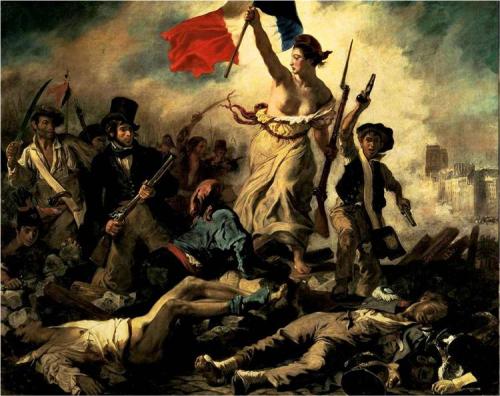
the-liberty-leading-the-people-1830.jpg!Large

     “Liberty Leading the People (1830) 

             Eugène Delacroix

                    _________

                               for everyone, with great gratitude, 
                                  who reads me, I mean only to 
                                     bring poetry, which is to say,
                                        light

though I’d considered leaving the 
Romantic Piano Concertos behind
to explore other areas of the period
in this survey, it seemed unfair,  
indeed remiss of me, not to include 
the three among my top ten that I 
haven’t yet highlighted, Beethoven’s 
2nd, 3rdand 4th Piano Concertos
Opuses 1937and 58 respectively,
after all, these are where the spirit 
of the age, the Zeitgeist, was 
constructed, like a building, with 
walls, windows, a hearth, all of 
which would become church, 
then a Church, and by the time of 
Brahms, a very Romantic Cathedral 

the foundation had already been laid 
by Mozart with his 27, but music had 
not yet become anything other than 
an entertainment by then, or 
alternatively, an accessory to 
ceremonial pomp and circumstance, 
see Handel and England for this, or 
liturgical stuffsee, among many 
others here, Bach

but with the turn towards 
independence of thought as the 
Enlightenment progressed, cultural 
power devolved from the prelates, 
and their reverent representations, 
to the nobles, who wanted their own 
art, music, which is to say, something 
secular, therefore the Classical 
Period, 1750 – 1800, in round figures

then in the middle of all that, 1789, 
the French Revolution happened, 
and the field was ripe for prophets, 
anyone with a message of hope, 
and a metaphysical direction, midst 
all the existential disarray – the Age
of Reason had set the way, 
theoretically, for the possibility of a 
world without God, something, or 
Something, was needed to replace 
the The Trinity, the Father, the Son, 
and the Holy Ghost, Who had been 
seeing Their supremacy contested 
since already the Reformation 

Beethoven turned out to be just
our man, don’t take my, but history‘s 
authentification of it, see the very
Romantic Period for corroboration

in a word, Beethoven established 
Faith, a Vision, not to mention the 
appropriate tools to instal this new 
perspective, a sound, however
inherited, musical structure – his 
Piano Concertos TwoThreeand 
Four, for instance, are paramount 
amongst a host of others of his  
transcendental revelations

briefly, the initial voice, I am here, in 
the first movement, is declamatory, 
even imperious, but ever 
compositionally solid, and proven, 
tempo, tonality, recapitulation, the 
materials haven’t changed from the 
earlier Classical epoch, just the 
design, the interior, the 
metaphysical conception

his construction is masterfully
direct, the line of music is 
throughout ever clear and concise, 
despite flights ofoften, ethereal, 
even magical, speculation, you 
don’t feel the music in your body 
as you would in a dance, as in the 
earlier eraof minuets, but follow 
it, rather, with your intellect, you,
nearly irresistibly, read it

but the adagio, the slow movement, 
the middle one Classically, is always, 
for me, the clincher, the movement 
that delivers the incontrovertible 
humanity that gave power to the 
Romantic poet, who touched you 
where you live 

Beethoven says life is difficult, and
eventually, at the end of his Early, 
Middle and Late Periods, life may 
even have no meaning
 
but should there be someone, he 
says, who is listening, Someone – 
though implicit is that one may be 
speaking to merely the wind – this 
is what I can do, this is who I am
 
and while I am here, however 
briefly, am not insignificant, I 
can be worthy, even glorious, 
even beautiful, I am no less 
consequential, thus, nor  
precious, than a flower

for better, of course, or for worse


R ! chard
Piano Concerto no 1 in D minor, opus 15 – Brahms

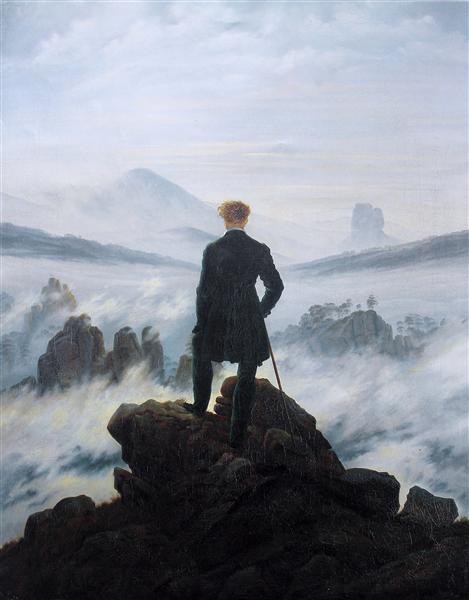
the-wanderer-above-the-sea-of-fog.jpg!Large

    “The Wanderer above the Sea of Fog (1818)

         Caspar David Friedrich

                  _____________

if Beethoven built the Church, along 
with Goethe maybe, of Romanticism, 
and be assured Romanticism is an 
ideology, a moral outlook, a 
motivational perspective, much like 
the economy is nowadays, 
supplanting any more humanistic 
imperatives, Brahms put up one of its 
Cathedrals, just listen, the First Piano
Concerto is a monument, as mighty 
as the Cologne Cathedral musically,
right next to Bonn, incidentally,  
Brahms‘ birthplace

with the disintegration of the 
supremacy of the Catholic deity 
at the onset of the Protestant 
Reformation, Luther, Calvin
Henry Vlll and all that, bolstered
by new discoveries in scientific
speculation, that the earth wasn’t 
flat, for instance, that it revolved 
around the sun rather than the 
other way around, contradictory, 
though convincing, voices began 
to abound, excite question  

in the 18th Century, the Age of 
Reason, the Christian Deity fell,
never effectively to be put back 
together again, see for Its final
sundering, Nietzsche

in France, after the Revolution
the Church was officially removed 
from political consideration, 
countermanding its centuries of 
morally heinous depredations, 
the United States had already at 
its own Revolution separated it 
from State  

Romanticism was an answer to 
a world wherein there might not 
be a God, a world with, however,  
a spiritual dimension, to respond 
to the clockwork universe 
envisioned by the earlier epoch,
the Enlightenmenta world where 
everything could be categorized,
analyzed, predicted

Romanticism called for the 
inclusion of inspiration in the mix,
there are more things in heaven 
and earth, Horatio, than are 
dreamt of in your philosophy, 
as Shakespeare would, for 
instance, have it – “Hamlet”,
1.5.167-8 
 
poets became prophets thereby, 
if they could manage it, very 
oracles, the world was blessed 
with, at that very moment, 
Beethoven, far outstripping the 
likes of, later, for example, Billy
Graham, or other such, however
galvanizing, proselytizers, 
whose messages would’ve been 
too, to my mind,  literal

for music cannot lie, obfuscate, 
prevaricate, music cannot be 
fake  

and then there was Schubert
and Chopin, TolstoyDickens
Elizabeth Barrett Browning
Roberther husband, 
TchaikovskyCaspar David
Friedrich, the Johann Strausses,  
ByronShelley, Keats, whose 
artworks, all, are as profoundly 
in our blood, our cultural system,
as, if not more so than, our 
present information about the 
details of our Christian myths, 
despite superfluity of them 
even, throughout the long 
indeed Middle Ages, and right 
up to, and including, the still 
fervent then Renaissancefor 
better or for worse still, for us

what Romanticism did, and 
specifically through the work 
of these seminal artists, was 
give each of us a chance, 
show us how to come 
through trial and tribulation,
what a faith does, any faith

it said, here, this is my dilemma, 
and this is how I deal with it

for me, Beethoven’s 32nd
Piano Sonata is, soundly, the 
epitome of that, but listen to 
Brahms put a stamp on it
with undaunted authority

we might be ultimately of no 
consequence in an indifferent 
universe, they say, but, hey, 
this is what we can do, and 
do gloriously, while we are 
at it

Woody Allen picks up the 
purpose in our own recent 
20th Century, following in 
the earnest footsteps of his 
Existential mentor, the much 
too dour, think, Ingmar 
Bergman  

but that’s another story
entirely 


meanwhile, listen

also watch, the conductor here
complete delight, is right out 
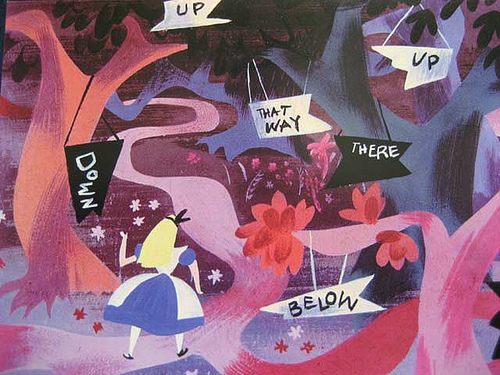
of Alice in Wonderland“, 
promise you’ll love it


R ! chard 

off my top – from Bach to Beethoven

6.jpg

    “Alice in Wonderland” 

             Mary Blair

               _______

when I listen to Bach, I feel like I’m 
on a train – from Leipzig to Dresden, 
say, his territory – the constancy of
his rhythms, modified only by 
accidentals along the way, the 
particular condition of the rails, that 
indeed decorate an otherwise 
monotonous clockwork progression, 
beat upon beat, there is neither an 
increase in volume, which hadn’t been 
formally invented yet as a principal 
musical implement – and I’m only 
partially joking here – the music is 
horizontal, not focused on reiteration, 
but on getting there, accomplishing 
mission, upon which the outcome is
even spiritual – it’s Dresden, I get off 
at the Neustadt Station, am not only 
refreshed but utterly inspired, 
reminded of my position in the world, 
and my place in this novel, but
ordered, and pious, environment 

listen to Bach, his Sonata for Violin
and Piano, B minor, BWV 10141717 
to 1723 approximately, for instance

with Mozart, I get on a merry-go-round,
at a carnival, the clockwork has become 
circular, you can sing the tune, and sing 
it again without a problem, the wooden
horses fly by, one after the other, entirely 
recognizable, though ever magical and
entertaining, but you get off at exactly 
the same untransformed station, 
however delightedly

Mozart’s Sonata for Violin and Piano,
no 18 in G major, K301, 1778, say

with Beethoven, though, it’s like going 
through the looking glass, if you’ve ever 
been through one, the direction is 
horizontal again, you might try singing 
along, but get only so far, until you’re 
utterly confounded, what happened, 
where am I, you wonder, when 
suddenly a Mad Hatter comes along, 
or a Queen of Heartsand speechless, 
you hold onto your seat, it’s 
Disneyland, but without the usual 
safeguards

later, after however many movements,
you’re returned to, if you’ll permit in 
its American transliteration, Kansas, 
from Oz, and Dorothy’s tornado, her 
equally transformational journey, 
safe and wondrously sound, but with 
extraordinary benefits, mystical, 
even transcendental 

but, o my goodness, you think, it’s 
late, I’ve got to get the supper on, 
and, did that really just happen, a 
blip in the order of consciousness, 
a very illumination, a transcendence, 
however secular, however 
non-denominational a take on the 
question of our shared fate, our 
shared humanity, our manifest 
and sublime glories, our profound 
and wrenching tragedies, as 
probing, and indeed as oracular 
as the words of any of the other 
propounding pastors, indeed 
philosophers, then, in a world 
coming to grips with the debate 
around God, and by extension,  
I might extrapolate, my own 
God/dess

for by this time, that had become
a concern, Science, which is to say, 
the Enlightenment, the Age of 
Reasonhad provided a convincing 
counterpoint to the various takes on 
an, even just Christian, Supreme 
Deity, Who’s very viability was up,
in the 18th Century, for grabs

Beethoven provides the first 
personal option, his version of the 
Ten Commandments, for the later
non-denominational ages, our 
souls, our individual agonies, he 
demonstrates, are enough of an 
argument for our unconditional 
salvation, our personal, and 
resplendent souls are not not to
be discounted, their poetry, their 
truth and beauty, are the heaven 
towards which we can existentially 
all aspire, for better, of course, or  
for worse

Beethoven, his Sonata for Violin 
and Piano in G major, no 10
Opus 96, 1812, listen 


R ! chard

String Quartet, opus 77, no 1 – Joseph Haydn

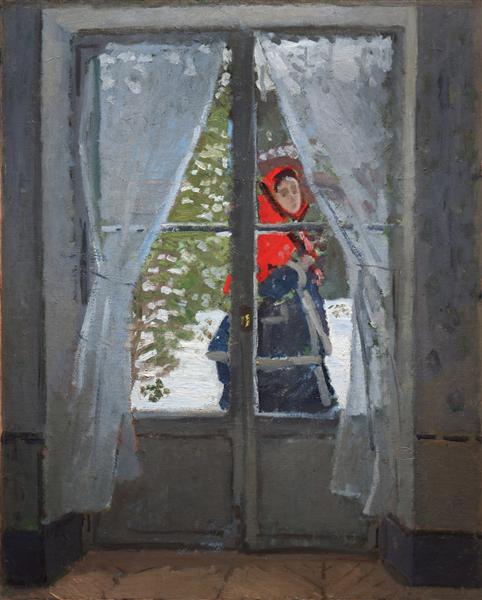
the-red-cape-madame-monet.jpg!Large.jpg

      The Red Cape (Madame Monet) (c.1870) 

              Claude Monet

                    _______

                                              for my mom

that’s a lot of Haydn, I said to my mom, 
when I saw the list of my transmittals in
her hotmail, hm, I wondered, maybe it’s 
too much

then I said, but it’s like when we’ve 
toured, for instance, our European 
art galleries, me propounding on 
the paintings, as I am wont, however 
incorrigibly, to do, but now, note, you 
can tell the difference between your 
Monets and your Klimts, however 
similar their perspectives

or like your tour guide taking you
recently through Argentina, 
highlighting spots, in the space of 
a month only, the same amount of 
time I’ve spent for the music of 
Haydn

pronounced, incidentally, I specified, 
like “hidin'” in English, not “maiden”, 
just sayin’

I gathered that she’d ‘ve sensed by 
now, if she’d been listening, which she 
said she had, mornings over her 
coffee, what a string quartet is, four
movements, different tempos, fast
at first, a joyful introduction, 
followed by a lament, then a spirited 
third movement, for countereffect, 
then a big fourth movement finish

also, the internal structure of each 
movement would’ve been internalized,
theme, a counter theme, a 
recapitulation of both, or either, all of 
it, probably unconsciously, which is 
how art fundamentally works till you
meticulously deconstruct it

the string quartet is the work of Haydn, 
the house that Haydn built, from 
peripheral aristocratic entertainment, 
like modern day artists sporting their 
wares in noisy restaurants, to the 
glamour of taking on, in concert halls, 
Europe, Brunelleschi did a similar, 
sleight-of-hand thing with his dome 
in Florence for its oracular Cathedral

remember that the string quartet lives 
on as a form, where no longer does 
the minuet, for instance, nor the 
polonaise, nor even the waltz, not to 
mention that concertos, and  
symphonies have become now  
significantly subservient to movies, 
secondary players


watch the instrumentalists here live 
out, in Haydn’s Opus 77, no 1, their 
appropriately Romantic ardour,
something not at all promoted in 
Haydn’s earlier Esterházy phase, to 
raise their bow in triumph, as they 
do at the end of most movements
is already an indicationnot at all 
appropriate for the earlier princely 
salons, that times have changed

Haydn was a prophet, but also an
elder, with an instrument to connect 
the oncoming, and turbulent, century 
to the impregnable bond of his 
period’s systems, the legitimacy of 
the autocratic, clockwork, world, 
Classicism, the Age of Reason, the 
Enlightenment, for better or for 
worse

we are left with its, however ever 
ebullient, consequences

enjoy


R ! chard

Beethoven‏’s “Pathétique Sonata”, no 8 in C minor, opus 13

the very first chord of Beethoven’s Pathétique Sonata,
no 8 in C minor, opus 13, does the same for the
Romantic Era as Descartes’ “I think, therefore I am”
and Shakespeare’s “To be, or not to be” did for the
Age of Reason, it defined its parameters, and set it
on its path, I can think of no other literary equivalent
with anywhere near the same power, the same clarity
and precision as that bold, peremptory statement for
that burgeoning period
 
Delacroix, too nationalistic, the Romantic poets too
introspective, Beethoven perfect, blending the political
with the personal, the personal with the philosophical,
the philosophical with the transcendental, and the
transcendental finally with the sublime, you come out
of a Beethoven composition not only entertained but
informed, inspired, transformed, he takes you there 
 
 
though unknown, to me at least, not yet among the
immortals, Daphne Honma acquits herself quite well
here in Beethoven’s masterpiece, perhaps a little too
plodding at the beginning, I thought, for my taste,
stretching nearly embarrassingly her sforzandos,
those initial arresting statements, Beethoven would
never ‘ve called for that, too much melodramatic
excess would only blur, he knew, the sheen of
unadulterated oracles 
 
but all is soon set aright, indeed redeemed by what
comes next, Daphne Honma deserves much more
applause than is here her portion
 
 
one of Beethoven’s early works, it’s 1798, Beethoven
is 27
 
 
Richard
 
psst: an “unadulterated oracle” 


“Trouble” – Matthew Dickman‏

                                                                                                                                                                              after the great hiatus of the Middle Ages Descartes declared I think, therefore I am, and set the modern world in motion, the Age of Reason, the Era of Human Rights 
 
but even Shakespeare some seventy years earlier had given voice already to the consequent existential dilemma, by way of Hamlet in his “To be, or not to be“, the moral dilemma of the individual before existence – “the slings and arrows of outrageous fortune” – and the abyss of eternity, a question up to that point forbidden on dire pain of heresy  
  

                                                                                                                                                                         Emily Dickinson touches on the subject famously, others also of equal authority, but here is something I thought true, touching, beautiful, and ultimately inspiring for anyone who’s delved that deep  
 
                                                                                                                                                                   Richard 
  
  
                       ______________________
  
 
Trouble   
 

                                                                                                                                                                        Marilyn Monroe took all her sleeping pills
to bed when she was thirty-six, and Marlon Brando’s daughter
hung in the Tahitian bedroom
of her mother’s house,
while Stanley Adams shot himself in the head. Sometimes
you can look at the clouds or the trees
and they look nothing like clouds or trees or the sky or the ground.
The performance artist Kathy Change
set herself on fire while Bing Crosby’s sons shot themselves
out of the music industry forever.
I sometimes wonder about the inner lives of polar bears. The French
philosopher Gilles Deleuze jumped
from an apartment window into the world
and then out of it. Peg Entwistle, an actress with no lead
roles, leaped off the “H” in the HOLLYWOOD sign
when everything looked black and white
and David O. Selznick was king, circa 1932. Ernest Hemingway
put a shotgun to his head in Ketchum, Idaho
while his granddaughter, a model and actress, climbed the family tree
and overdosed on phenobarbital. My brother opened
thirteen fentanyl patches and stuck them on his body
until it wasn’t his body anymore. I like
the way geese sound above the river. I like
the little soaps you find in hotel bathrooms because they’re beautiful.
Sarah Kane hanged herself, Harold Pinter
brought her roses when she was still alive,
and Louis Lingg, the German anarchist, lit a cap of dynamite
in his own mouth
though it took six hours for him
to die, 1887. Ludwig II of Bavaria drowned
and so did Hart Crane, John Berryman, and Virginia Woolf. If you are
travelling, you should always bring a book to read, especially
on a train. Andrew Martinez, the nude activist, died
in prison, naked, a bag
around his head, while in 1815 the Polish aristocrat and writer
Jan Potocki shot himself with a silver bullet.
Sara Teasdale swallowed a bottle of blues
after drawing a hot bath,
in which dozens of Roman senators opened their veins beneath the water.
Larry Walters became famous
for flying in a Sears patio chair and forty-five helium-filled
weather balloons. He reached an altitude of 16,000 feet
and then he landed. He was a man who flew.
He shot himself in the heart. In the morning I get out of bed, I brush
my teeth, I wash my face, I get dressed in the clothes I like best.
I want to be good to myself.


Matthew Dickman


                        ____________________________________