Richibi’s Weblog

Just another WordPress.com weblog

Tag: tempo

November / Month of the Sonata – 23
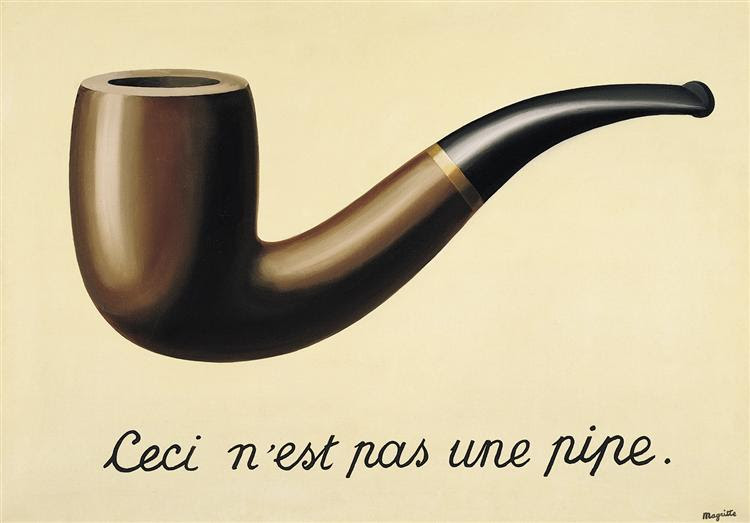
The treachery of images (This is not a pipe), 1928 - 1929 - Rene Magritte

    The treachery of images (This is not a pipe) (1928 – 1929) 


            René Magritte


                 _______


when is a sonata not a sonata, when, 

to my mind, it has less than two 

movements, but here’s Alban Berg 

doing just that in his Sonata, Opus 1


Alban Berg was a student of Arnold 

Schoenberg, the composer who did 

the most to break down the pillars

of Classical music, tempo, tonality,

and repetition, you’ll here it all here


Berg was working on a piece he 

expected would be a sonata, but 

after the first segment, he couldn’t 

find the inspiration to continue, 

Schoenberg replied that that must 

mean his work was complete, 

and Berg went along with that, 

calling it, nevertheless, a sonata, 

playing fast and loose with the

definition, poets do that, also 

painters, see above 


here’s Glenn Gould playing it, the

pianist I believe the greatest who 

ever lived, Gould admired the 

Berg, how could I argue with that


R ! chard

November / Month of the Sonata – 20

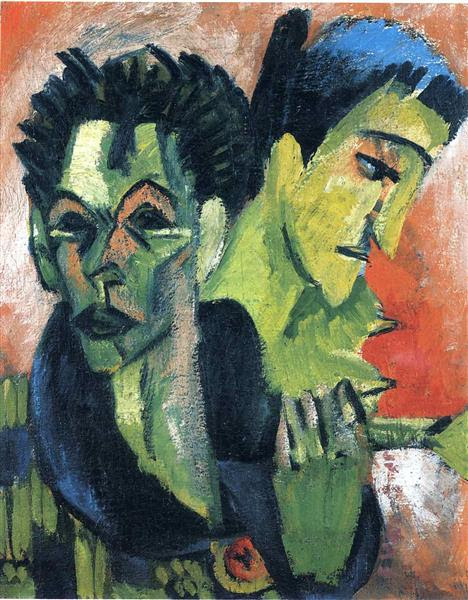
Double Self-Portrait - Ernst Ludwig Kirchner


        “Double Self-Portrait 


               Ernst Ludwig Kirchner


                           ________


Ravel’s Violin Sonata no 2, of 1927, is a 

long way from the Romantics, though I

usually settle Ravel among the 

Impressionists, this piece seems rather

to reflect the later Expressionists in art,

see above, for its virulence and eccentric 

tonalities and performance techniques 

in both the violin and the piano, the age 

had given us the First World War, and 

would soon lead to the Second


the three Classical imperatives of tonality, 

tempo, and repetition are maintained still, 

but their descendants are unruly, willful, 

bold and impervious, there are no holds 

barred here, they take no prisoners


listen


R ! chard

how to listen to music if you don’t know your Beethoven from your Bach, X

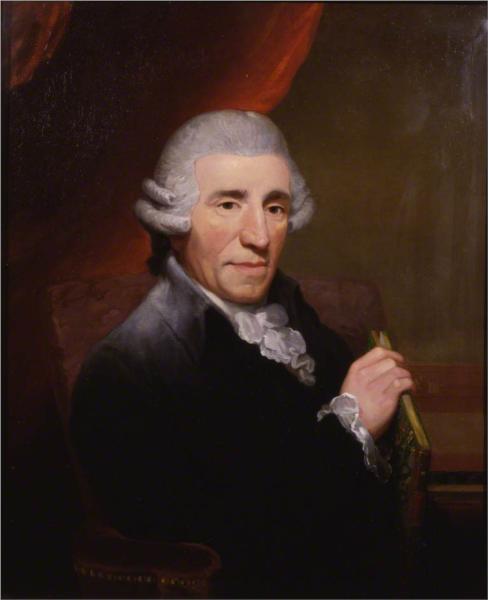
Joseph Haydn, 1791 - Thomas Hardy

        Joseph Haydn” (1791)


                 Thomas Hardy


                         _______


though I’ve focused especially, during

this introduction to Classical music,

on Mozart, a second great pillar of

that era is Haydn1732 – 1809


here is one of his 62 piano sonatas,

which expresses more than anything

you’ve heard here yet the definition

of what music was at the time, or

should be, tonality, as I’ve earlier

said, tempo and repetition were

tantamount


listen for or the rigidity of the tempo,

the consistent melliflousness of

the melody, and therefore tonality,

and the repetition of all the

component tunes


I remember going to a drum recital

once, here in Vancouver, a guy was

expressing his artistry in a formal

venue, I was sitting in a forward

row, saw him set up his music on

his music stand, and I thought,

he’s going to have to turn the

pages, which he did, a drummer


that’s all I remember of the

presentation, but that was enough,

an entire revelation


in this Haydn sonata, the pianist

turns the pages of his score, back

and forth, an interesting visual

expression of the imperative of

repetition in that era’s music,

having to return to what had

been written on the previous

page


also note that trills abound


note too in the second movement,

the adagio cantabile, the sudden

introduction of arpeggios,

transcendent, as though angels

had just appeared


which prefigures the metaphysical

aspirations of the Romantic Period

which ensued, see, for instance, 

Chopin


note also that we’re on fortepiano

here, a period instrument, a cross

between the harpsichord and the

modern instrument


thoroughly enjoy


R ! chard

“Three Movements from Petroushka” – Igor Stravinsky‏

"Ballets Russes" - August Macke

Ballets Russes (1912)

August Macke

__________

Donald, I said to my friend, the
musicologist, what’s the plural
of tenuto

I’d been lining up what I call my
“articles of pace”, the musical
notations that indicate tempo,
tempi

rubato, of course, for time stretched,
the bottom of a dip when your partner
pauses at the end of your arm where
you steal a private moment during
otherwise waltz time, or tango

rubato must be in the middle of a
bar cause a stolen moment needs
space to return to its more natural
rhythm, equilibrium

a ritardando, or rallentando, slows
down but at the end of a bar, or
musical statement, often at the very
end of a piece, for an introspective,
say, ending

an accelerando is its opposite,
speeding up the beat, and will
continue till it reaches its apogee,
climax, as it were

a tenuto holds, caresses, one note,
or one chord, only, before proceeding
any further

all of these words, incidentally, are
adverbs, not nouns, but through
usage have assimilated the idioms
of nouns, therefore singulars and
plurals, articles and adjectives
apply

what’s the plural of tenuto, I’d
asked

Donald, always a sport, answered
tersely, tenuti, grinning

you’re kidding me, I replied, boy,
will I have fun with that

two tenuti, three tenuti, four tenuti,
five, six tenuti, seven tenuti, eight
tenuti, jive, I continued, racking up
immediate levity, not to mention
momentum, and cadence

count the tenuti in this masterpiece,
Stravinsky‘s Three Movements
from Petroushka
“,
a programmatic
piece, Petroushka is a puppet in love
with a ballerina, but she’s in love
with a Moor, more about Moors later,
maybe, it could get controversial

Petroushka, distressed, challenges
the Moor, but the Moor kills him

Petroushka returns as a ghost, but
ineffectually, cause he’s really only,
finally, a puppet

Vaslav Nijinsky played Pertroushka
in the original production with
Diaghilev‘s Ballets Russes, June 13,
1911, in Paris, the rest is history

in 1921 Stravinsky wrote an arrangement
for virtuosic, he specified, piano, using
three scenes only from the ballet as
pivot

1 – Danse russe (Russian Dance)
2 – Chez Pétrouchka (Petroushka’s Room)
3 – La semaine graisse (The Shrovetide Fair)

they’re fast, very fast, prestississimo,
you’ll miss the breaks if you blink,
where you’d be likely to find, if any,
tenuti

good luck

Richard