Richibi’s Weblog

Just another WordPress.com weblog

Tag: Tchaikowsky

Seong-jin Cho‏

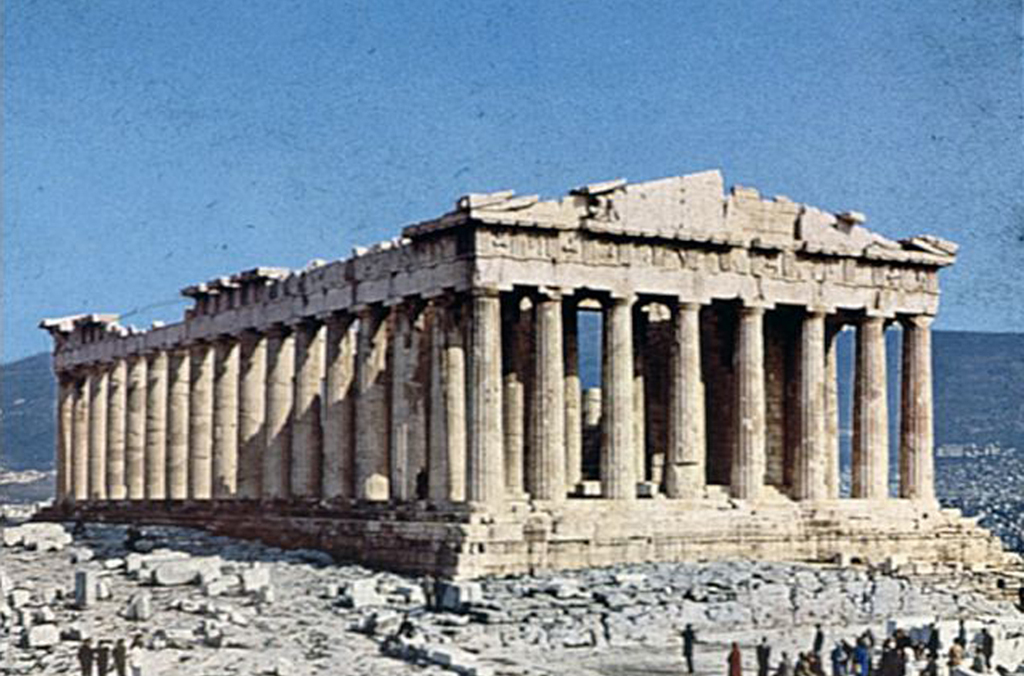
parthenon

the Parthenon

______


in the last phase of the Arthur Rubinstein
Piano Master Competition
, wherein
contestants play with the Israel
Philharmonic Orchestra
, of course
resounding works abound, among those
Tchaikovsky’s First Piano Concerto holds
a revered place, in our culture it stands
right up there with the Parthenon, the
Roman Coliseum, the Cathedral at
Chartres, as an icon, an emblem, of
our civilization

here Seong-jin Cho gives it an impeccable,
an irreproachable, rendering, lights it up,
sets it on very fire

don’t not watch

Richard

“Eugene Onegin”

years ago, when I first started paying
attention to opera, I listened to Joan
Sutherland and Luciano Pavarotti
singing “La Traviata” on my
headphones for six months solid,
Alfredo, Alfredo, I sang, di questa
core / Non puoi comprendere tutto
l’amore

now there’s “Eugene Onegin“,
Tchaikowsky’s homage to Pushkin,
the celebrated Russian poet who
wrote the national epic, turning it
into another prideful, musical this
time, monument

at first I’d been reluctant to take it on,
wary of other too ponderous Russian
productions, all heavy and lugubrious,
fraught with the trying tribulations of
too many harsh winters, I fathom

but after only a brief folkloric
interjection, too ecclesiastical a
reference for me, the story moved on
to less pompous things, an unfolding
love

Onegin is a rake, a rogue, a young
man not yet smitten, Tatyana, a
country lass but from a good manor,
hopelessly falls in love with him

he, of course, will break her heart

he will also break the heart of his
friend Lensky, when he dances an
écossaise, a grand waltz, and a
cotillion with Olga, Lensky’s
intended, and, parenthetically,
Tatyana’s sister

Olga had, injudiciously, allowed
Onegin to flirt

Lensky, offended, challenges
Onegin to a duel

in an aria that will haunt you forever,
Lensky commits himself to his fate,
be it Olga or the ineluctable hereafter,
knowing that she couldn’t either have
much loved him

you’ll cry

Kuda, kuda, you’ll also sing, kuda
vy udalilis,
like I will into surely at
least next month

I won’t tell you who wins, but it’s
tragic

and unforgettable

Richard

Mendelssohn Violin Concerto in E minor, Op. 64

despite not having the stature of the other composers
already considered, Felix Mendelssohn, 1809 – 1847,
nevertheless squeezes right up the middle with his
the greatest violin concertos of all time, perhaps the
most tender of all in contrast to the mightier, more
imperious declamations of the other also more varied
and prolific masters, an archangel among the august
divinities, having earned a place of the very highest
order in their midst with even this one masterful
work, perhaps even of all the most beloved
 
he squeezed right up the middle chronologically as
well in fact, Beethoven wrote his violin concerto in
1806, while Tchaikowsky and Brahms theirs to my
astonishment each from his own little corner of the
world independently in the very same year, 1878,
a fabulous year, it would appear, for violin concertos 
 
Mendelssohn finished his violin concerto in E minor,  
opus 64 in 1844
  
 
when I began a few decades ago to explore violin
concertos, my essential resource was the set I had
on disc of all the great ones played, indeed definitively
executed, by Kyung-Wha Chung, who bested then to
my mind all, without exception, even the most
celebrated virtuosos, whom I need not therefore 
here recall   
 
until now I had never seen her perform 
 
in this outing she recovers in spades my early adulation, 
utterly, she lives and breathes her enchanted instrument,
she is the Mitsuko Uchida of the violin, I can think of no
higher honour, she is meteoric 
 
André Previn and the London Symphony Orchestra, who
accompany her, though accomplished, pale beside her
fire, which is throughout riveting   
 
André Previn was married famously to Mia Farrow way
back when, later married our very own Anne-Sophie
Mutter, though they divorced in 2006, he was a pop,
to my mind, conductor, made of serviceable and
always dependable stuff, but never shining, you’ll
have to leave that to his featured brilliant light here,
who will not, I assure you, fail to deliver searing
heat along with the stated incandescence 
 
 
Richard


Brahms violin concerto in D major, Op.77

though I’d’ve preferred to consider violin concertos for a while
after the Tchaikowsky, the Beethoven, a break from the usual,
though always eminently magisterial, piano, I was unable to
quickly find a performance of the work I had in mind that would
suit my needs, nothing primarily that was complete, that had all 
its unabridged movements
 
and what’s a concerto without its movements, a meal without
an appetizer, without its main course maybe, without even 
dessert, that’s making do, that’s subsisting, that’s got nothing
to do with appreciating a meal, not to mention our pending
Thanksgiving
 
then the Chopin struck, a very revelation, and I couldn’t, even
temporarily, put it aside 
 
I hope you enjoyed it   
 
 
because the Brahms in D major, opus 77, is after the first
two violin concertos I listed the third most revered and 
respected major string work, it cannot but be duly and
with great honour represented in any Classical music 
survey
 
the first movement, the allegro non troppo, or, jauntily but
not too much, in English, is played by David Oistrakh and 
conducted by the legendary Kirill Kondrashin, who conducted
Van Cliburn, famously, in both his Tchaikowsky One and
Rachmaninoff Three concertos in Moscow, 1958, when Cliburn 
won first prize, is he the best, Khrushchev asked when
nervous judges questioned awarding an American, give it
to him then, he most judiciously replied, in the very face
of Cold War bile and cynicism 
 
Kondrashin defected to the West in 1978 
 
David Oistrakh never left his homeland, Russia, though he
toured extensively enough in the West, surely dazzling
everywhere rapt audiences
 
 
the next two movements, the adagio, slow, the allegro 
but not too lively – little by little go faster, have the
glorious Leonard Bernstein jumping up and down even 
with exhilaration at the thrilling sounds they are making,
while the equally glorious Gidon Kremer struts inimitable,
incendiary stuff, a Tchaikowsky competition winner also
he, in 1970, who ‘s since dominated and championed an
impressively extensive and eclectic, even modern, 
repertoire  
 
note in passing that their accompanying Vienna Philharmonic
doesn’t have a single woman, which nevertheless doesn’t 
of course disqualify a superior sound, it is merely an archaic,
intransigeant, aristocratic institution, it would appear, with
counterintuitively melodious and undeniably winning soul
 
 
one course at one restaurant then, the next two at another,
you’ll need to adjust to atmosphere, menu variations,
service, but expect in either case only the very best, you
will not be disappointed 
 
 
Brahms violin concerto in D major, opus 77
 
              1 – allegro non troppo, Oistrakh, Kondrashin,
                                                          the Moscow Philharmonic Orchestra
              2 – adagio, Gidon Kremer, Leonard Bernstein, the Vienna Philharmonic
                                                              Kremer, Bernstein,  
                                                    the Vienna Philharmonic again
 
 
Richard 
 
psst: here is an alternate third movement by to me unknowns,
         an exquisite partial repast, perhaps the most impressive
         morsel here    


a couple of violin concertos‏

a violin concerto is of course the same thing as a piano
concerto with a violin however where the piano would
be, performing histrionics before an orchestra for the
length of several movements, traditionally three, usually
fast, slow, fast, for reasons of presentation psychology,
a fast, arresting introduction, then a slow, languorous
beat to forcefully display an alternative musical sensibility,
then fast again for a big, splashy, electrifying finish, leaving
no question about outsized either compositional or
interpretive capabilities, or rather, about outright,
manifest, wizardries 
 
Beethoven and Tchaikowsky give us again the big ones,
Rachmaninoff, essentially a pianist, didn’t write for the
violin, composing to be able to play himself his own works, 
superbly in fact, even definitively, his performances of his
piano concertos are matchless 
 
Anne-Sophie Mutter, one of the brightest stars in
Herbert von Karajan‘s Deutsche Grammophon galaxy,
the company that he put on the international map in
the sixties to cast, magisterially, the richness of our
musical heritage upon that unsuspecting decade, and  
beyond, still commands rapt attention internationally 
though her mentor died in 1989, leaving the world
with less charisma, I might add, less glamour and
authority, less power and panache, in his musical
wake, though other concert luminaries shine
illustriously still, only without now the power of his
charged magnetism, his inspired musical sensibility
and the consummate ability to market his own and
his artistic community’s wares to an often otherwise
distracted audience
 
here he is a divinity overseeing the motion of the sun,
the moon, the stars in a universe of his own creation,
he is extraordinary, he is composed, supremely
confident, while his eyelids reveal the reaches of his
ecstasy 
 
Anne-Sophie Mutter is impeccable, evidently a star
pupil in her master’s stable 
 
 
Sarah Chang, a mere child, is no less dazzling in her
piece, an old spirit in the guise of a sprite, she polishes
off a fiendish Tchaikowsky, an electrifying work, with
the invaluable help of her own conductor, the eminent,
Charles Dutoit, you can see it in her trusting, ever
soulful intermittent gaze 
 
be assured you will be dazzled 
 
 
the Royal Concertgebouw Orchestra, which accompanies
her, is a symphony orchestra of the Netherlands, considered
one of the very best in the world  
 
 
Richard


Tchaikowsky piano concerto no 1 in B flat minor, opus 23‏

the piano concerto no 3 of Rachmaninoff was written in 1909,
a hundred years after Beethoven’s piano concerto no 5, the
“Emperor”
, 1811, to the attentive ear the intervening years
are present in the evolution of the music

the most evident structural alteration, sensed now rather
than consciously heard, though this change would’ve been
glaring during that period, is the often elastic rhythm, the
hesitation, the reserve, the recapitulation of forces before
a surging onslaught, before a turbulent apotheosis, as a
movement returns to its fundamental tempo

the beat ever essentially reigns

this will change

let me point out here that this rallentando wouldn’t’ve been
even conceivable before the invention of the piano, which
happened around the time of Mozart, the harpsichord before
that couldn’t do that, it was confined, you might say, to
only rallentandon’ts, the harpsichord didn’t provide the
possibility of resounding a note, neither of moderating of
course its volume, which the piano, by very definition, did,
“piano” means “soft”, “pianoforte” “soft loud”, the very
foundational elements of the instrument, the elaboration
of beat would thus perforce henceforward play a major role

between Rachmaninoff and Beethoven, these two pillars of
our musical Trinity, there is the mighty, the third supreme
immortal, Tchaikowsky, a Late Romantic, of all composers
perhaps to us the most familiar, his piano concerto no 1 in
B flat minor, opus 23, written in 1875, is the concerto most
associated with my generation, Van Cliburn was a rock star
then, after winning the Tchaikowsky Piano Competition in
Moscow, 1958, an achievement of the very highest order
for an American in that historical context

and his performance of it was spectacular

the most salient aspect of Tchaikowsky‘s music to my mind
is the charged dramatics, which is not surprising when you
consider that he wrote the music for “The Nutcracker”,
“Swan Lake”, musical story-telling, you’ll note he evokes
this dramatic tension by sustaining, withholding, then
unleashing the beat before a storm of prestidigitatori

Tchaikowsky tells grandiose stories, Rachmaninoff opens
an anguished heart, Beethoven speaks with God, they are
our foundational musical poets, our sonic oracles

the formidable Emil Gilels, 1916 – 1985, plays Tchaikowsky,
he is electric, he is epic, he is extraordinary

Alfred Wallenstein conducts

Richard