Richibi’s Weblog

Just another WordPress.com weblog

Tag: Sturm und Drang

String Quartet no 13 in B-flat major, opus 130 – Beethoven
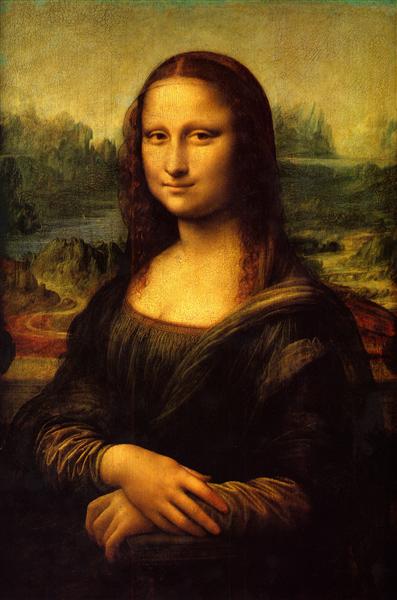
mona-lisa.jpg!Large

    “Mona Lisa (c.1504) 

           Leonardo da Vinci

                      ___________

not liking Beethoven is not an option, it’s 
like saying you don’t like Shakespeare, 
or the Mona Lisa“, or Paris, there’s too
much there to not not like, you either 
don’t know them, haven’t even a clue, 
or you’ve a very good reason for your
disfavour, which you are expected then
and with great authority, to explicate

which is to say, however, that not liking 
Beethoven, but for valid reasons, is a
sign of a sharpened, rather, intellect, 
something that no one, I suspect, 
would want to eschew – Gesundheit 

in his Late Quartets, Beethoven can be 
demanding, and not especially convincing
sometimes in his musical argument, let me 
stress the word “argument” here, a notably 
Beethovenian consideration, the last 
movement of his 13th String Quartetfor 
instance, his famous Große Fuge“*, has 
him verily in a rage

for me, the same objections apply to the 
13th as those I accused him of in his 12th
String Quartet, display of uncoordinated 
pieces, like food stands at public markets, 
apples, however delicious, oranges, 
however juicy, pomegranates, however 
exotic, varieties of fish, meat, cheeses, 
tempting desserts, but where I come out 
with just the basil that I wanted in the first 
place for being overwhelmed, wondering, 
wow, all that Sturm und Drang, but what
just happened

what do you think 

listen


R ! chard

*  do not not click, this is totally 
    transcendental, you’ll verily  
    learn how to read music 
a “Musical Offering” – Bach

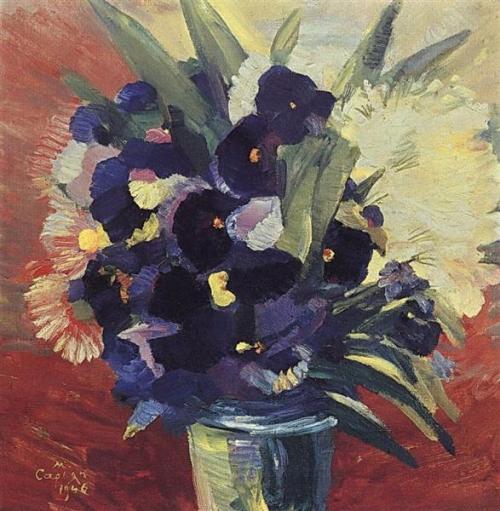
bouquet-of-flowers-1946.jpg!Large

    “Bouquet of Flowers (1946) 

            Martiros Sarian

                _________

                                      for Collin

a friend, who lives too far from me 
to visit, but who is too close to my 
heart for me to do nothing, has just 
had a stroke, “His body, smile, motor functions are improving.The most affected area is his speech center. He is filling in the gaps, has surrendered to his situation, but is operating at about 25% comprehension and memory. He has to rebuild his language, and is getting his ideas across with a lot of help in translation. He will be doing a lot of speech therapy. His uncanny resilience will serve him well.“, 
I’ve been advised

should I continue to write to him,
I’ve wondered, maybe just a few 
cheery words a day, does he 
take the time to read his mail, 
can he, does someone do it for 
him, should I call, or when  
I thought, if not anything else, why 
not music, something I can easily 
send, something he can hear, 
surrender to, rather than pay any 
more cerebral attention 

yesterday, I sent him Bach, Bach’s 
Musical Offering“, 1747, Bach is
from a much more serene period
in music than Beethoven, my 
recent area of investigation here
Bach wrote a lot of ecclesiastical 
stuff, cantatas and such, masses, 
was indeed music director for the 
Lutheran churches in Leipzig for 
a time, the combination makes for 
reflective, often even transcendental 
music, Beethoven wouldn’t at all, 
in this case, ‘ve done, with all of
his Sturm und Drang

I’m lighting a candle a day for my
friend, I’ll also be sending him
internet flowers, till I think of 
what else I can do but pray, for 
his speedy recovery


thanks for dropping by

R ! chard 

French Suite no 3 in B minor – Bach

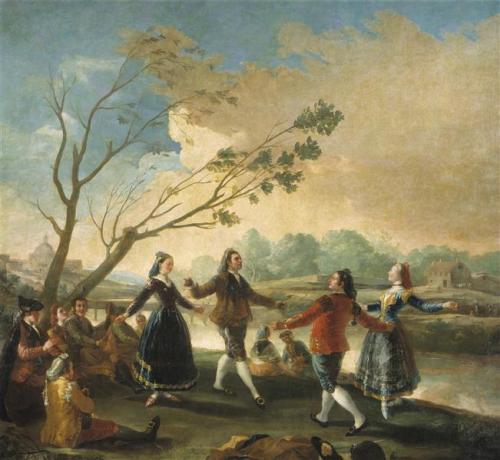
dance-of-the-majos-at-the-banks-of-manzanares-1777.jpg!Large.jpg

   “Dance of the Majos at the Banks of Manzanares (1777)

           Francisco Goya

                _________

upon reading up somewhat on the different
Bach Suites, I’ve provisionally concluded
that the earlier English Suites, 1715 to 1720,
were a modification of the established form 
of the suite, which would not have included 
a prelude, which isn’t, indeed, a dance

the Cello Suites follow, ahem, suit

but by the French Suites, 1722 to 1725, Bach 
is eschewing – Gesundheit – the prelude, but 
inserting, however, an air in his Fourth – an  
air is not either a dance – and mixing up  
their order in the later Suites, a minuet, for 
instance, in the last one of them, his Sixth,  
coming up after the gigue, which sports even
also a polonaise, where in his Fifth, Bach adds  
a loure, I ask you, a slow French gigue, to his  
bristling concoction

the terms French and English, incidentally, 
were added only after Bach’s demise, for 
diverse and uncorroborated reasons, so 
that these titles probably don’t mean much 
to a contemporary audience, who can’t tell, 
anyway, our gavottes from our bourrées

the music of Bach is like that of no other 
composer, he owns essentially the Baroque
Period, having, in fact, wrenched the Era 
from the painters, who’d established it in 
art to such a degree that it defined its
earlier historical phase

with Bach, the torch is handed over to 
music, from then on until the 
Impressionists, the period is defined 
by composers, both Classical, then 
Romantic, with some poets holding 
some sway 

the technique that dominates the music 
of Bach is that of counterpoint, where 
a tune is repeated in the harmonization
a few beats from its first iteration, 
vocally, we call that singing in canon

his music is introspective, as though 
the player were privately meditating,
it has the playfulness of Mozart, but
Mozart is expressive, not interior,
therefore nowhere near as spiritual,
Beethoven will return with a 
profundity that matches Bach’s, but 
with much more Sturm und Drang, 
tempestuous moral struggle, much  
less resignation, ouch, watch

listening to Bach for me is like getting 
on a train, and just letting the rhythm
of the wheels sustain me, as I watch,
indeed introspectively, the surrounding 
countryside, stopping at the musical 
journey’s several halts, its intervals, 
until its final destination, which 
despite, or even because of, taking 
sometimes hours, is nevertheless  
endlessly satisfying, and never  
ever less than, however improbably, 
inspiring

here’s Bach’s Third French Suite
you’ll note it includes an idiosyncratic 
“trio”, not strictly a recognized dance
either – leave it to the saucy French, I   
say, to consider interpolating a trio


R ! chard