Richibi’s Weblog

Just another WordPress.com weblog

Tag: string quartets

String Quartet, opus 77, no 1 – Joseph Haydn
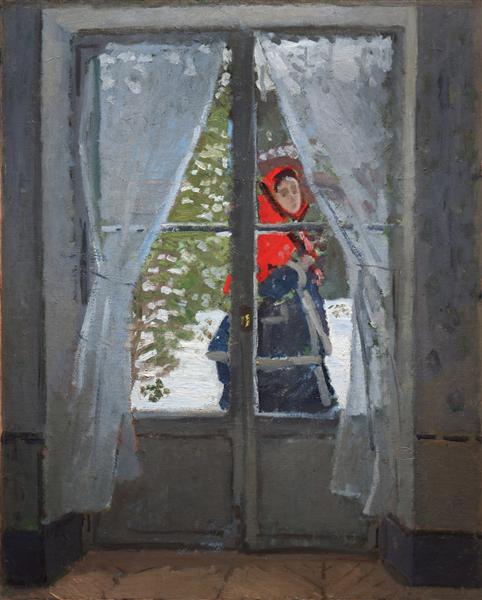
the-red-cape-madame-monet.jpg!Large.jpg

      The Red Cape (Madame Monet) (c.1870) 

              Claude Monet

                    _______

                                              for my mom

that’s a lot of Haydn, I said to my mom, 
when I saw the list of my transmittals in
her hotmail, hm, I wondered, maybe it’s 
too much

then I said, but it’s like when we’ve 
toured, for instance, our European 
art galleries, me propounding on 
the paintings, as I am wont, however 
incorrigibly, to do, but now, note, you 
can tell the difference between your 
Monets and your Klimts, however 
similar their perspectives

or like your tour guide taking you
recently through Argentina, 
highlighting spots, in the space of 
a month only, the same amount of 
time I’ve spent for the music of 
Haydn

pronounced, incidentally, I specified, 
like “hidin'” in English, not “maiden”, 
just sayin’

I gathered that she’d ‘ve sensed by 
now, if she’d been listening, which she 
said she had, mornings over her 
coffee, what a string quartet is, four
movements, different tempos, fast
at first, a joyful introduction, 
followed by a lament, then a spirited 
third movement, for countereffect, 
then a big fourth movement finish

also, the internal structure of each 
movement would’ve been internalized,
theme, a counter theme, a 
recapitulation of both, or either, all of 
it, probably unconsciously, which is 
how art fundamentally works till you
meticulously deconstruct it

the string quartet is the work of Haydn, 
the house that Haydn built, from 
peripheral aristocratic entertainment, 
like modern day artists sporting their 
wares in noisy restaurants, to the 
glamour of taking on, in concert halls, 
Europe, Brunelleschi did a similar, 
sleight-of-hand thing with his dome 
in Florence for its oracular Cathedral

remember that the string quartet lives 
on as a form, where no longer does 
the minuet, for instance, nor the 
polonaise, nor even the waltz, not to 
mention that concertos, and  
symphonies have become now  
significantly subservient to movies, 
secondary players


watch the instrumentalists here live 
out, in Haydn’s Opus 77, no 1, their 
appropriately Romantic ardour,
something not at all promoted in 
Haydn’s earlier Esterházy phase, to 
raise their bow in triumph, as they 
do at the end of most movements
is already an indicationnot at all 
appropriate for the earlier princely 
salons, that times have changed

Haydn was a prophet, but also an
elder, with an instrument to connect 
the oncoming, and turbulent, century 
to the impregnable bond of his 
period’s systems, the legitimacy of 
the autocratic, clockwork, world, 
Classicism, the Age of Reason, the 
Enlightenment, for better or for 
worse

we are left with its, however ever 
ebullient, consequences

enjoy


R ! chard

on string quartets – Opus 76, no 1 – Joseph Haydn

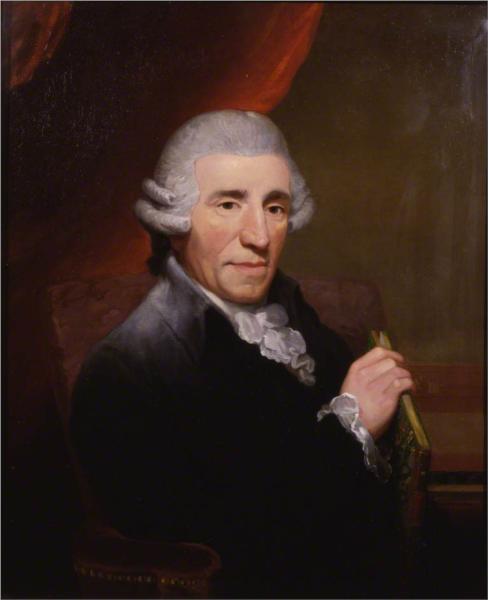
joseph-haydn-1791.jpg!Large.jpg

                                   “Joseph Haydn (1791) 

                                          Thomas Hardy

                                                 ______

to not consider other musical forms of
Shostakovich would be unfair, his
symphonies are mostly propaganda,
however often, though somewhat 
culturally specific, riveting

my favourite works of his, works I 
consider iconic, are mostly chamber 
pieces, piano solos, string quartets

a string quartet, after a symphony, is
like sitting down to dinner with four,
at the very least, acquaintances, 
rather than being a guest at a party,  
the conversation is more intimate,
every person plays hir part, everyone
is heeded, if even only with courtesy,
a social, a Classical, an aristocratic,
prerequisite 

movements can be compared to 
courses, distinct and identifiable for
their particular culinary, musical, 
propriety

later variations on this reflect the 
variations in social mores, where 
restaurants, the modern way of
socializing, allow for disparate 
choices, often superimposed, 
throughout the meal for any,
every, occasion

dim sum, tapas, celebrate this, not
unhappily 


but string quartets can be tricky, I 
thought I’d start from the beginning,
with some Haydn, their recognized 
Father, you’ll understand when you
hear this, his Opus 76, no 1, an 
outstanding string quartet to live 
up to

Haydn set the standard for string 
quartets when the norms of Western 
music were being established, Bach
had given us the alphabet, the
well-tempered clavier, Mozart, the 
grammar, the structure of music,
tempo, tonality, repetition, Beethoven 
gave us the literature, the poetry, the 
philosophical, the transcendent

Haydn is somewhere between these 
last two, but decidedly, still, the king  
of the string quartet, though Beethoven  
does a good job of trying to best him,  
and so does Shostakovich, you’ll have 
to pick

but first, let’s start with Haydn, that’ll
be already, you’ll see, or hear, enough

later, I’ll get into it


R ! chard

my reply to BookInhabiter, a.k.a. Brain

a reader writes

“Hello Richard,
Recently I’ve been watching up on many dance competitions. I knew of the existence of piano competitions but never thought that they would be filmed. I must listen to the top contenders. How did you hear about this competition?”

here is my, admittedly extended, answer, with pertinent links

Richard

_____________


I haven’t missed So You Think You
Can Dance
“,
Brain, for 11 years, so
we’ve probably been watching the
same “many dance competitions”

“piano competitions” aren’t much
different, just another art, judged
here by professionals throughout,
rather than entire publics

the competitions are fierce, to a
person the competitors are world
class

the music is often sublime, utterly
transcendent, though more rigorously
intellectual than popcorn – pace
Mozart – this puts some people off

much as you probably find covers of
songs you like, I go out looking for
sonatas, string quartets, concerti I
already know of and admire, I check
out the big names, Chopin, Beethoven,
Rachmaninov, see what might be up

the Internet abounds with nearly
anything you might want to find, the
only obstacle is the quality

the Van Cliburn competition, from
Houston, was dreadful, enough to
put me off it, but looking for musical
counterparts to pieces of interest, I
found the Rubinstein one in Tel
Aviv
offering sterling performances

I quickly flew across the globe,
virtually, of course, speaking

the experience has been well worth
it, I heard miracles of music, haven’t
had so much fun since reading Proust,
in French of course, but you must
understand I’m an inveterate egghead,
totally chronic

this week I started Edward Gibbon’s
The Decline and Fall of the Roman
Empire”
, text and, to my delight,
audiotape, its reader is extraordinary

check out the Chopin Competition
for, up to this point anyway in my
investigation, only Chopin, but he’ll
do for a significant while, his music
is consistently breathtaking

I’ll also check out the Russian
Tchaikovsky Competition, which Van
Cliburn made famous for us in the late
50’s
, by winning it, despite the rancours
of the Cold War, with a still paramount
rendition of Tchaikovsky’s own
monumental First Concerto

wow, I’ve been hooked ever since

thanks for stopping by my blog, Brain,
you’ll find, incidentally, a lot of excellent
performances highlighted there, several
of the best, in fact, from the most recent
Rubinstein Competition
, none of which,
to my utter consternation, managed to
win

other recommendations follow, check
it out

I think your blog is wonderful, keep
it up

Richard