Richibi’s Weblog

Just another WordPress.com weblog

Tag: Somerset Maugham

who’s afraid of the subjunctive

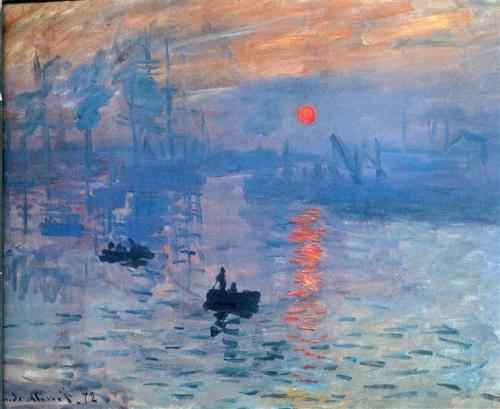
impression-sunrise.jpg!Large

Impression, Sunrise” (1873)

Claude Monet

________

who’s afraid of the subjunctive
much like Elizabeth Taylor as Martha
in “Who’s Afraid of Virginia Woolf?”,
my answer is, I am, George, I am

the subjunctive is an esoteric mood,
even more abstruse in English than
in other languages, where the verb’s
conjugation highlights its presence,
in English, it’s nearly identical to the
indicative, the mood everybody
instinctively speaks in, facts

the subjunctive is about aspiration,
like the conditional, abstract, not
real, but its intention, rather than
the conditional’s inherent
impediment, a condition, shoots
for the stars, isn’t introspective,
but adamant, imperative

it is necessary that one be, it is
urgent that one have, it is
important that one effect, a
particular thing or event, all
subjunctives after the
doorkeeper word, “that”

one finds the subjunctive in
Shakespeare, master of grammar,
perhaps unparalleled in English,
a lot – O, that this too solid flesh
would melt, / Thaw and resolve
itself into a dew!
– and follows
with Elizabeth Barrett Browning –
Pardon, o pardon that my soul
should make, / Of all that strong
divineness which I know / For
thine and thee …,
for instance,
who is so profoundly indebted to
Shakespeare for her aesthetics

one wondrous day, I realized that
Proust’s entire À la recherche du
temps perdu
, his “In Search of
Lost Time
“, my Bible, was set in
the, French however, subjunctive,
the mood, there as well, of
possibility, therefore rather than
the definitive recreation of an
earlier time, Proust was
describing a sensibility, a personal
interpretation of a previous reality,
however bolstered by intimate and
apparently precise recollection of
shimmeringly imprecise, though
personally accurate, impressions

note here the similar preoccupations
of Proust’s contemporaries, the, aptly
named, Impressionists

everything, Proust was saying, as
were also the Impressionists, is in
the eye of the beholder

the subjunctive is the mood that
sets this instinct in motion

R ! chard

psst: Somerset Maugham I remember
being noteworthy as well for his
immaculate use, in his South
Pacific tales, of the subjunctive,
extremely elegant in its refined
construction, even with its
English austerities, like making
lace out of mere cloth, impressive
despite its impracticality, or
perhaps even because of it

the 50 greatest books in English

should you have been following the contest in the Globe and Mail, here’s the latest:
 
THE 50 GREATEST BOOKS, to date
 
Mark Twain, The Adventures of Huckleberry Finn
Marcel Proust, Remembrance of Things Past
Charles Darwin, On the Origin of Species
Dante Alighieri, Commedia (The Divine Comedy)
Plato, The Republic
Miguel de Cervantes, Don Quixote
James Joyce, Ulysses
Karl Marx, Das Kapital
St. Augustine, Confessions
Niccolo Machiavelli, The Prince
 
 
my recent response :
 
first of all of the first ten choices of the 50 greatest books in English only three strictly fit the bill, the others are culled from everything already from French and German to verily Ancient Greek and Latin, by way of medieval Spanish no less, and Italian
 
with this I have no cavil but for not paying proper heed to translations, translators, and their varied abilities for delivering accurate goods, both in substance and in spirit, some references should be made to preferred renditions, I would suspect Dante for instance in even competent prose would be no match at all for nearly any in thoughtful verse, and these superior options should be duly credited and recommended, otherwise where is the “English” in these “50 greatest books”
 
“Remembrance of Things Past” got me off, it is my supreme masterpiece along with “The Iliad”, it got me interested in this contest, further choices did not disinterest, and I held back scepticism
 
however having just read Plato on essentially your instigation, and found him outrageous, indeed offensive, not least of all because he actually proposes to castrate Homer, censor parts of him, to fit a cockeyed political agenda, a tyranny in fact – for where is the line between tyranny and even enlightened kingship – a tyranny he would of course administer himself
 
Plato throughout merrily essentially rambles, nearly incoherently, certainly without any real relevance to ourselves, unless you want to start a tyranny, while his audience, Thrasymachus, Glaucon and the rest, let him ramble, tyrannically, for over four hundred nearly interminable pages
 
could they be thinking, could we
 
 
and where is Homer for that matter on your list
 
to propose a list of the 50 greatest books one would have to have read a good part of the canon, or have a pool of such people, for where otherwise is the validity of the contest, you can’t even begin to make those choices without having read too many of the masters that haven’t made the list yet
 
where is of course Shakespeare in all this, where is this pinnacle of English literature, where is Dickens, where is Henry Fielding and the boisterous “Tom Jones”, the gothic Emily Brontë of “Wuthering Heights, the ethereal and unforgettable Virginia Woolf, where, closer to home, are Truman Capote, Vladimir Nabokov, with each their masterful groundbreakers, “In Cold Blood”, “Lolita”
 
I won’t even start on literary titans in other languages
 
 
the choices in English to date have been quaint, “Ulysses” belongs there, “Tom Sawyer” instead of “Huckkleberry Finn”, but with next week F. Scott Fitzgerald’s “The Great Gatsby” the choices of your panel become questionable
 
where is Somerset Maugham’s “The Razor’s Edge” then, “Of Human Bondage”, or any of his perfect short stories if you’ll first give precedence to the entertaining but not nearly as prolific, nor able, Fitzgerald
 
I suspect not read  
                                                                                

or closer to home where is “The Grapes of Wrath”, one of, just one of, John Steinbeck’s towering achievements
 
James Agee’s “Let Us Now Praise Famous Men” with Walker Evans, or his sublime “A Death in the Family”, right up there with “To Kill a Mockingbird”, Harper Lee’s triumph, where are these, could they have been read but still not trump next week’s trifle
 
where is “Gone With the Wind”, Margaret Mitchell’s magnum opus, in every sense of that first word, magnum great, magnum wonderful
 
where is the sensuous and searing “Alexandria Quartet” of Lawrence Durrell
 
more esoterically perhaps but no less deservedly where are the sublime “Diaries of Anaïs Nin”, an unparalleled account of a life lived at the very centre of cultural exchange in New York and Paris starting at the Jazz Age, moment by telling moment,  and ending in the psychedelia of the Sixties and Seventies, written with stark and consummate ablility, artistry, and frankness
 
where for that matter is Anne Frank’s diary, about which a moment of silence would rather do than my mere words to sing its highest praises
 
there are only 40 places left, please fill them thoughtfully

                                                                                                                                                                    thank you


  __________________________________