Richibi’s Weblog

Just another WordPress.com weblog

Tag: Schubert

a veritable Schubertiade, X

Vienna, 1914 - Thomas Hart Benton

      Vienna (1914) 


            Thomas Hart Benton


                  _____________


the three great representatives of the Romantic 

Period in music are Beethoven, Schubert, both 

linked to Vienna, see above, and Chopin, in the

other musical capital at the time, Paris


their basis is Classical, the rules set up by 

Mozart and Haydn, tonality, tempo, and 

repetition, which all of them rigorously 

obey


Schubert wrote no concertos, Chopin wrote

no symphonies, Beethoven wrote for everything,

they all, in other words, had their particular lanes


Beethoven and Schubert, however, both Viennese, 

see above, sound strikingly similar


here, in his Piano Sonata No 19 D 958 in C minor,

Schubert, at the very height of his powers,

technically, musically, aesthetically, incorporates,

miraculously, the spirits of both Beethoven, his 

predecessor, and Mozart, Beethoven’s 

predecessor, transforms them into something 

like their accumulated gift to the world, a child

of their coordination, their lineage


listen


R ! chard

a veritable Schubertiade, VII

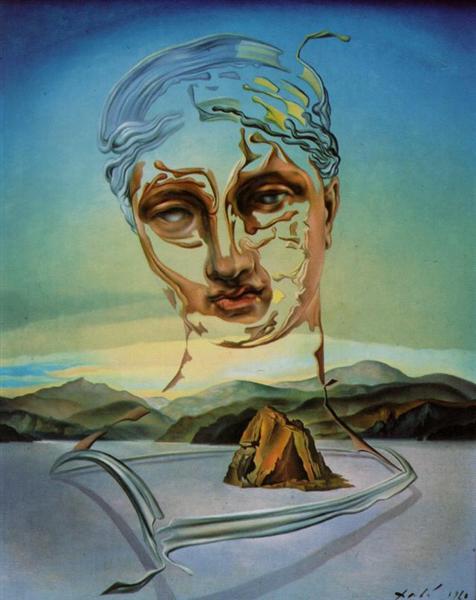
Birth of a Divinity, 1960 - Salvador Dali

  “Birth of a Divinity (1960)  


            Salvador Dali


                  ______


during the third evening of recitals, the 

program, to my surprise, starts with a 

work even earlier than the earliest 

one we’ve heard yet in this 

Schubertiade, his D 568, his Seventh


Schubert’s Piano Sonata No. 4 in 

A minor, D 537, was written when 

he was seventeen, he would’ve 

been, and was, steeped in Mozart, 

music to amuse musical coteries


but at the start of the second movement,

I heard an air I’d heard somewhere

before, it turned out to be the seed of

a magical part in one of his later

transcendental pieces


Schubert was already imbued with his 

divinity, see above, you can hear it, 

listen


R ! chard


a veritable Schubertiade, VI

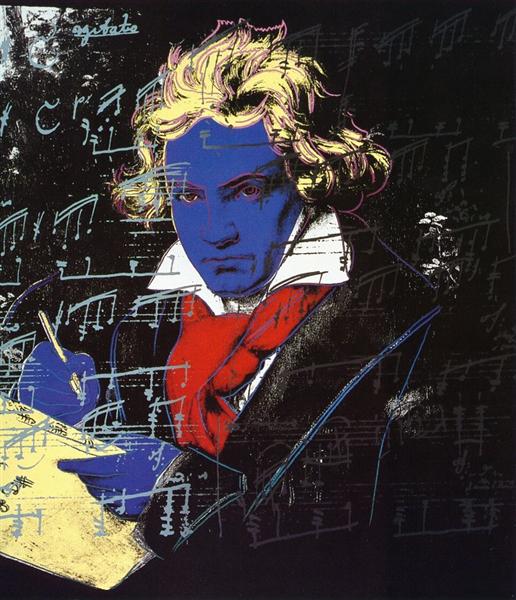
Beethoven, 1987 - Andy Warhol


     “Beethoven (1987) 


           Andy Warhol


               ________


by this time, in his Piano Sonata in A minor, 

D 845, Schubert has accumulated so much 

Beethoven that his Beethoven is beginning 

to shine through in his own compositions, 

Beethoven was a forefather, still present, 

it’s often difficult to tell one, indeed, from 

the other, even here


Beethoven, see above, punched through

Classicism – Mozart, Haydn – its artificiality,

delivering emotion, instinctively, from the

very start, from which he nearly

single-handedly delivered to the world no

less than Romanticism, like delivering the 

recalibration of time and space after 

Einstein essentially, so profound a 

cultural metaphysical reorganization


Schubert remains ever more courteous,

more beholden to the upper crust that

supports him, and that he ever wants to 

court, you can hear it, listen, there is no 

confrontation here, just, dare I say,

entertainment


Schubert was not a revolutionary


R ! chard


a veritable Schubertiade, III

Impression, sunrise, 1872 - Claude Monet


     Impression, Sunrise (1872) 


               Claude Monet


                   ________


what struck me most about Schubert’s Piano 

Sonata no. 17 in D major, his D850, was, more

than its emotional impact, its technical

wizardry, from the start Schubert dazzles with 

his prestidigitation, his manual dexterity, the

notes fly


there’s a lot of Beethoven in this composition,

working against the beat, apart from the fourth 

movement, the rondo, Schubert is being 

unequivocally Beethoven


the fourth movement is, incidentally, utter 

Mozart, you can tell from the preponderance

of trills


texture, meanwhile, overcoming melody, 

in, most notably, the third movement, is 

right out of Chopin, his Winter Winds 

for instance, an inspired combination

of both melody and texture, where is

the supremacy of either, listen, you tell 

me, do the Winds conquer the groans, 

the tribulations, of the underlying melody, 

the left hand, the low notes, the chthonic, 

the earth, or does the dexterousness of 

the right hand, the ephemeral, the 

transitory, win the day


texture will overcome melody eventually, 

as the century moves along, Impressionism 

will prioritize perspective over emotion, the 

head over the heart, Debussy, among 

others, Renoir, Monet, Pissaro, will 

dominate, see above,  but that’s another

story


meanwhile Schubert


listen


R ! chard

a veritable Schubertiade, continued

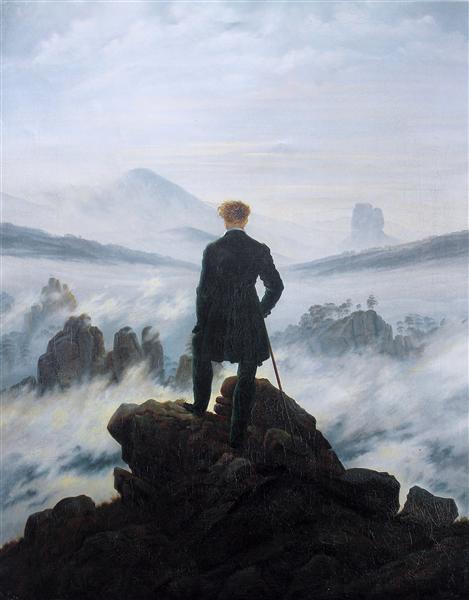
The Wanderer Above the Sea of Fog, 1818 - Caspar David Friedrich

         The Wanderer Above the Sea of Fog (1818) 


               Caspar David Friedrich


                       _____________


if I promised something more transcendental

from Schubert in my last communication,

a second piece which is programmed for the

first of my May Schubert recitals, written in 

1823, six years later than his, recently noted

D568his D784, fits the bill, by then Schubert

knew he was dying, he would’ve been 26, 

you hear it in his intention, he wasn’t any 

longer entertaining guests merely, 

assembled in the salons of the nobility, 

he was writing his testament for posterity 


listen, you can hear it, his earnestness, 

his vulnerability


enjoy


R ! chard

a veritable Schubertiade

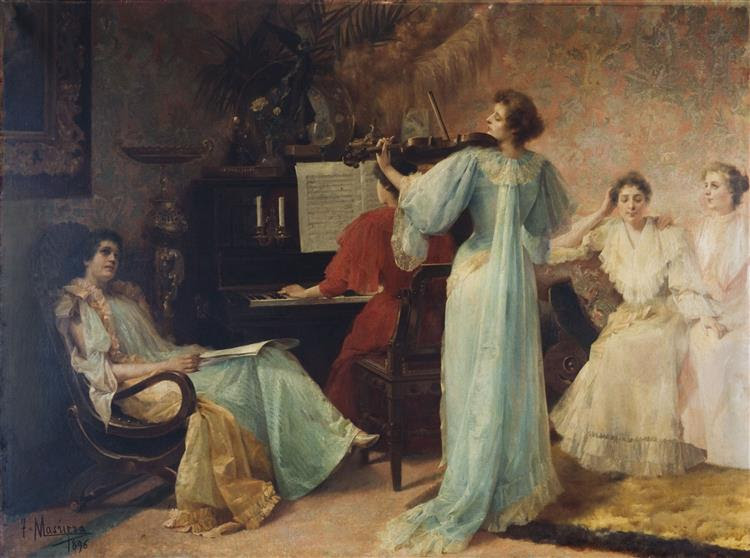
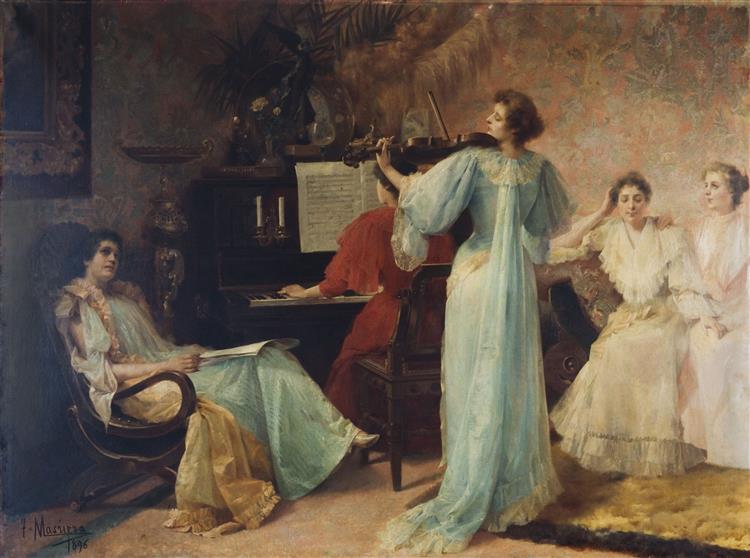
Una melodia de Schubert, c.1896 - Francesc Masriera

            Una melodia de Schubert” (c.1896)                   

                        Francesc Masriera             

                              ___________

in May, the recital society of my city is featuring

an internationally famous pianist doing several

Schubert sonatas, twelve of them, spread out 

across four evenings, a veritable Schubertiade,

I’ve got tickets for all of them


maybe you’d like to join me


I always do my research before attending any

cultural event, much like reading up on Italy, 

for instance, before going there


the program seems to be more or less

chronological, the first night featuring

earlier Schubert sonatas 


his D568, his Seventh, composed in 1817, 

is, to my mind, enchanting, but not yet 

reaching the heights of his later

transcendental productions, more of 

which later, should you stick around


Schubert always sounds a lot like Beethoven, 

but with more civility, less confrontation, 

Schubert is still chamber music, and, in this

outing, I find he sounds a lot like Mozart even, 

dexterous, delightful, but fundamentally 

frivolous


it’s the difference between dessert and food 

that will sustain you, that’ll speak to your soul, 

more about which later, should you stick 

around


meanwhile, D568, enjoy


R ! chard
November / Month of the Sonata – 18 

Una melodia de Schubert, c.1896 - Francesc Masriera

    A Melody of Schubert (c.1896) 


           Francesc Masriera


                  ________


though there are other, and quite significant, 

composers who fit into this category, 

Beethoven, Schubert, and Chopin pretty

much define, all by themselves, the 

Romantic Period


Chopin composed only two sonatas of note,

plus one more that is overlooked for being 

an early, student effort, not up to the

standard of his later ones, Chopin, rather, 

wrote mostly shorter pieces, nocturnes, 

études, preludes, polonaises, and more, 

that later became the very stuff of his 

reputation


Schubert wrote enough sonatas that he 

could be compared to Beethoven, indeed

it can be difficult to tell one from the other,

much as it can be difficult to tell Haydn 

from Mozart, products in either case of 

being both of their respective eras


when I was much younger, a guest among

a group of academics, where I’d been invited 

by the host’s wife, a co-worker, what I knew  

of Classical music, in the large sense, which 

is to say comprising all of the musical periods, 

Classicism, Romanticism, Impressionism, 

and beyond, was all self-taught


is that Beethoven, I asked the host, about 

a piece of music he’d put on


that’s Schubert, he replied, aghast, as 

though I’d just farted


I blushed, deep red, confounded


Schubert, having great admiration for 

Beethoven, took on many of the older

composer’s lessons, four movements

instead of the Classical three, for 

instance, and many of the technical 

tricks of his forebear


but there’s an essential component of

their styles that marks one from the

other, an easy way to tell them apart, 

Beethoven always composes against 

the beat, Schubert following it


listen to the first few notes of Beethoven’s 

“Pathétique”, for instance, the beats are  

erratic, confrontational, the mark of a 

revolutionary, Beethoven was brashly 

proclaiming his worth, he had something 

to prove


Schubert, who was essentially playing

for friends, just wanted to entertain

them, which he did in spades, without

bombast or bluster


listen to his Piano Sonata in A major,

D959, for example, no swagger, no 

ostentation, delivering nevertheless 

something quite, and utterly, 

enchanting, everything following, 

unobtrusively, the beat


enjoy


R ! chard

November / Month of the Sonata – 12

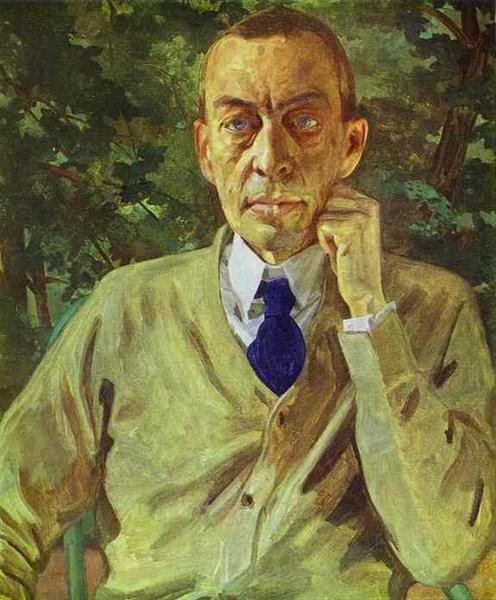
Portrait of the composer Sergei Rachmaninov, 1925 - Konstantin Somov

      Portrait of the Composer Sergei Rachmaninov (1925) 


              Konstantin Somov


                     __________


Rachmaninov, late Romantic, early

Impressionist, yanked, despite his 

modern bent, Romanticism, solidly,

into the Twentieth Century, we 

heard him in movies, and 

consequently on TV, back then, on 

long-play albums, 78s at the time, 

that were flooding the market, first 

movement on the one side, the next 

two on the other, that’s how we used 

to listen


later, we’d hear Sergeant Pepper’s 

Lonely Heart’s Club Band doing the 

same, in the late ’60s, before discs


Rachmaninov doesn’t sound like 

Chopin, Beethoven, Schubert, but

you can hear their roots, their blood 

running through his compositions


but here, in his Piano Sonata no. 2,

Opus 36, he elaborates, a sure sign

of Impressionism, intellectual rather

than emotional appeal, something 

had become tiresome after half a

century of Romantic dramatization,

how many Anna Karenina‘s can you 

take


the culture was returning to objective,

rather than emotional, Charles Dickens,

Victor Hugo, and the like, bleeding-heart,

considerations, and seeking out more 

rational answers to our psychological

stresses, consequently Freud, music

had to keep up


later, I’ll tell you a story about how 

music changes the world


meanwhile, here’s Rachmaninov’s

Piano Sonata no 2


enjoy


R ! chard

November / Month of the Sonata – 9

      Jules Delsart


           ______


at the end of the Romantic Period, 1886, and

encroaching on the upcoming Impressionistic

Era, César Frank wrote his Violin Sonata in

A major, a musical glimpse into a new age,

this is not Chopin, not Beethoven, not 

Schubert, despite obvious, if you’re 

listening, homages, references


you’ll note the atonality, musical progressions 

that seem askew, eccentric, not as harmonious 

as those earlier composers, like a neurosis 

taking over


tempo, a second essential element of music 

in the West, however changeable might it be, 

even within the individual movements, is 

recognizable


repetition, the third pillar of Western music 

is keeping us on track, bringing us back to

the original statement, to the air each 

movement presents at their several 

introductions 


Frank’s sonata was so appreciated by an

accomplished cellist friend, Jules Delsart,

that he asked if he would transcribe it for 

cello, their joint Sonata in A major for 

Cello and Piano remains to this day a 

stalwart on the cello circuit


compare, an exercise in sharpening your

aesthetic pencil, try it, enjoy


R ! chard

how to listen to music if you don’t know your Beethoven from your Bach, XII – on rhapsodies 

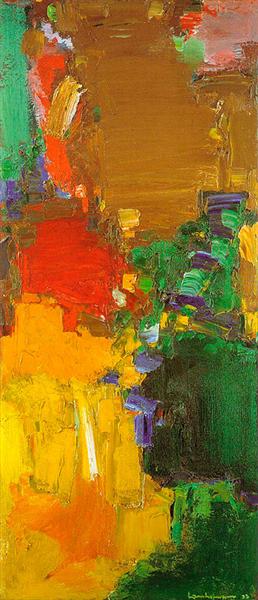
Rhapsody, 1958 - Hans Hofmann

   Rhapsody (1958) 

           Hans Hofman 

                       _____


if, in my last instalment, I compared iconic

funeral marches, let me do the same for

a couple of iconic rhapsodies, another 

musical form that came and went, that’s

come and gone, but not forgotten

what’s a rhapsody

as far as I can make out, it’s much the 

same as a fantasia, if you can remember 

what a fantasia is, a free form composition, 

but with a Romantic, which is to say a 

heartfelt, twist, more pathos, less 

technical wizardry


Gershwin wrote his Rhapsody in Blue 

in 1924, you can hear New York, Times 

Square, Broadway, from the first wail 

of the languid horn


Rachmaninov’s Rhapsody on a Theme

of Paganini, written in 1934, ten years 

later, gives you, however, Vienna, its 

Romantic Period, the traditions of, 

a century earlier, Beethoven, Schubert 


Rachmaninov is personal, introspective,

tragic, Gershwin is extroverted, social, 

fun


Rachmaninov looked back to his 

European, Old World, traditions, 

Gershwin augurs an entirely new 

voice 


listen, you can hear it 

enjoy


R ! chard