November / Month of the Sonata – 24
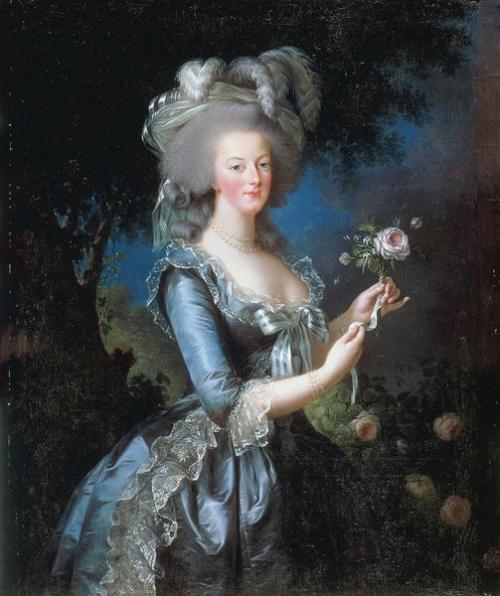
“Queen Marie Antoinette of France“ (1783)
Louise Élisabeth Vigée Le Brun
___________________
first of all, let me grievously repent an
egregious confusion I probably left
in my last diatribe, I said that the second
movement of the Opus 54, no 2 sounded
to me like a minuet, I had, through
embarrassing inattention, confused its,
however unmemorable, adagio with that
of this Opus 55, no 3, which I’d listened
to in too quick succession, driven as I
am by my thirst for epiphanies
the Opus 54, no 2 will do, but I’m not
going back for seconds, nor to the
Opus 55, no 3, though here’s where
I flaunt nevertheless Haydn, not to
mention Bach, Mozart, Beethoven,
all the way to eventually Bruckner,
Brahms, the extraordinary Richard
Wagner, passing through Schubert,
Mendelssohn, the Strausses, father
and son, and the unrelated Strauss,
Richard, another incontrovertible
giant, and I nearly left out the
unforgettable Liszt, all of them
forefathers of our present music
you might have noticed that these
are all Germanic names, obedient
to the Hapsburg empire, with
Vienna as its supreme cultural
capital, and it was that
Austro-Hungarian dynasty that
indeed nearly single-handedly
secured our Western musical
traditions
a few Italians are remembered,
from the 18th Century, Scarlatti
maybe, Boccherini, Albinoni,
but not many more
no one from France, but they were
about to have a revolution, not a
good time for creative types,
though, incidentally, Haydn was
getting Tost, to whom he was
dedicating his string quartets for
services rendered, to sell his stuff
in very Paris
then again, Marie Antoinette, I thought,
was Austrian, an even archduchess,
and would’ve loved some down-home
music at nearby Versailles
so there you are, there would’ve been
a market
the English had Handel, of course,
who was, albeit, German, getting
work where he could when you
consider his competition, he was
too solemn and plodding by half,
to my mind, for the more
effervescent, admittedly Italianate,
continentals, Italy having led the
way earlier with especially its
filigreed and unfettered operas
but here’s Haydn’s Opus 55, no 3
nevertheless, the best Europe had
to offer, socking it to them
Haydn’s having a hard time, I think,
moving from music for at court to
recital hall music, music for a much
less genteel clientele, however
socially aspiring, we still hear
minuets, and obeisances all over
the place, despite a desire to
nevertheless dazzle, impress
then again, I’m not the final word, as
my mea culpa above might express,
you’ll find what eventually turns
your own crank, floats your own
boat, as you listen
which, finally, is my greatest wish
R ! chard
 Richibi's Weblog