Richibi’s Weblog

Just another WordPress.com weblog

Tag: sarabande

English Suite No 3 in G Minor – Bach
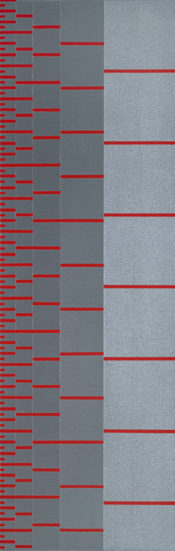
suite-fibonacci-2003.jpg

   “Suite Fibonacci (2003) 

           Charles Bezie

               ________

 
before I say much more about his Cello
Suites, let me point out that Bach has
some French Suites, some English 
Suites, on top of similarly structured 
Partitas and Toccatas, the French have 
their tout de suites, and hotels have, 
nowadays, their so named luxury 
apartments 

musical suites are sets of dance pieces, 
by the early 18th Century much stylized, 
with an introductory prélude, an allemande, 
followed by a courante, which is to say, folk 
dances, the first German, the next French, 
then a sarabande, Spanish, followed by a 
couple of galanteries, court dances, 
minuets, gavottes, bourrées, then a final 
English gigue

all of the markings are in French, which
leads me to believe that all of these 
dances must’ve originated at the court 
of Louis XlVth, the Sun King, 1638 to 
1715

but the suggestion is that Europe was 
becoming an integrated community
all of these dances were eclipsed by
the Classical Period, of Haydn and 
Mozart, apart from the minuet, which 
more or less defined, nevertheless, 
that new era

the minuet will die out by the time of
Beethoven, you’ll note, to be replaced
by the waltz, which had been 
considered much too racy until 
transformed by Chopin into a work 
of ethereal art

the Strausses, father and son, gave it,
only a little later, celebratory potency,
but that’s another story


here’s Bach’s English Suite, the 3rd
for context, the French ones are a 
little too salty, as it were, they do not 
quite conform to prescribed suite 
notionshowever might their 
propositions have been, ahem, 
sweet 

meanwhile, enjoy this one


R ! chard

Beethoven – 32 Variations In C Minor On An Original Theme, WoO 80‏

of all musical forms variations lend themselves 
best to intellectual speculation, which is to say, 
by way of concepts, words, objects of rational, 
cohesive, not nebulous, thought
it is immediately evident that a set of variations 
considers the many facets of a given subject, in 
music represented by a theme to be analyzed, 
dissected, explored and, in the best of cases, 
rendered transcendental   
this is of course also the case in any science  
it is more difficult to so investigate a waltz, a 
sarabande, a rhapsody, which speak a much 
less literal language usually, unless of course 
the verbal construct itself has been applied to 
the composition, The Carnival of the Animals“ 
or Pictures at an Exhibition“, for instance, but 
that’s putting the cart before the theoretical 
horse, unfair and unethical 
variations demand inherently cerebral 
participation, a considered evaluation, a 
nearly literal result, music finds its one-way 
ticket thereby to veritable language 
around the same time as he wrote the 
“Waldstein” Sonata, 1806, Beethoven wrote 
Theme, WoO 80, my very favourite of his 
sets of variations, courtesy here of the 
inimitable Glenn Gould 
note, in passing, the similarities between 
the two contemporary works
of the C minor Variations, however utterly
improbably, played by one Ivan Moravec
an earlier great, accompanied by immensely 
helpful annotated commentary the sum of 
which is hugely more telling than its mere 
point form parts, sharpening in the process, 
inconspicuously but highly effectively, one’s 
aesthetic pencil, pulse 
what could be more fun than that 
variations, incidentally, are a most democratic 
form, where every iteration is the equal of the 
other, given always, however, that fixed and 
intractable initial model 
an interesting interpolation, incidentally, that, 
philosophically, of course, speaking, asking,
as it does, does democracy require, rest on, 
a founding contextual blueprint, in light 
especially of the infinite number of those 
blueprints possible
is our democracy merely an arbitrary, and 
only contingent, shade, therefore, of that 
ideational abstract
you decide
psst: WoO is an acronym for Werke ohne 
          Opuszahl, or, in English, works
          without opus number, Beethoven 
          seems to have been completely 
          unconcerned with naming his 
          compositions, that he’d written the 
          music had been apparently already 
          quite enough