Richibi’s Weblog

Just another WordPress.com weblog

Tag: “Rhapsody in Blue” – George Gershwin

how to listen to music if you don’t know your Beethoven from your Bach, XIV – more rhapsodies

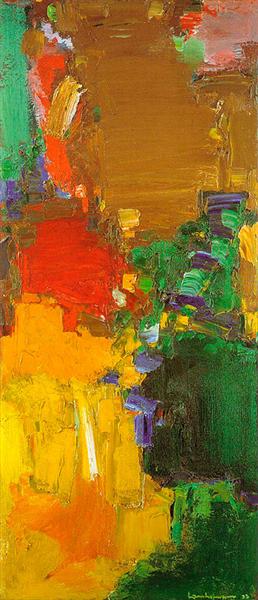
Rhapsody, 1958 - Hans Hofmann


    Rhapsody” (1958) 


         Hans Hofmann


                _______


now that you’ve heard New York in

Gerschwin’s Rhapsody in Blue, and

Vienna in Rachmaninov’s Rhapsody

on a Theme of Paganini, listen to 

Hungary, or rather its Gypsy

component, however rejected, 

reviled, at the time, but proud 

enough, resilient, to strike back 

with its infectious music, how

many times have we heard that

story before


Budapest doesn’t sound at all like 

Vienna, though they’re only mere 

blocks away, essentially, listen,

Liszt’s Hungarian Rhapsody no 2,

in C# minor, he wrote nineteen, 

you’ve probably heard this one,

it’s in our DNA


here are a couple of Spanish

rhapsodies, meanwhile, if we’re to 

follow a national agenda, Chabrier, 

a name you’ve probably never 

heard before, but not so, I assure

you, his music, his España,

Rhapsody for Orchestra, is

written in our blood, listen


Ravel wrote also a Rapsodie 

espagnole, more French than

Spanish, to my mind, steeped

in its early Twentieth Century

Impressionism,  all textures,

soundscapes, not rhythms


Ravel makes up for it, though, in his

Bolero, perhaps the most Hispanic 

piece ever of all, you tell me


both Chabrier and Ravel, incidentally, 

were French, doing what Dvořák, a 

Czech, had done, would do, for 

Americans, honour their fascinating

rhythms


Liszt, by the way, was Hungarian, his

rhapsodies were native, if profoundly

influenced by Vienna 


listen, enjoy


R ! chard

how to listen to music if you don’t know your Beethoven from your Bach, XII – on rhapsodies 
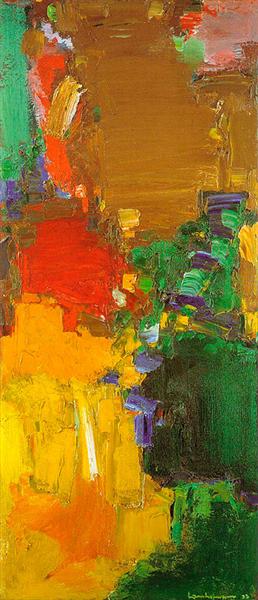
Rhapsody, 1958 - Hans Hofmann

   Rhapsody (1958) 

           Hans Hofman 

                       _____


if, in my last instalment, I compared iconic

funeral marches, let me do the same for

a couple of iconic rhapsodies, another 

musical form that came and went, that’s

come and gone, but not forgotten

what’s a rhapsody

as far as I can make out, it’s much the 

same as a fantasia, if you can remember 

what a fantasia is, a free form composition, 

but with a Romantic, which is to say a 

heartfelt, twist, more pathos, less 

technical wizardry


Gershwin wrote his Rhapsody in Blue 

in 1924, you can hear New York, Times 

Square, Broadway, from the first wail 

of the languid horn


Rachmaninov’s Rhapsody on a Theme

of Paganini, written in 1934, ten years 

later, gives you, however, Vienna, its 

Romantic Period, the traditions of, 

a century earlier, Beethoven, Schubert 


Rachmaninov is personal, introspective,

tragic, Gershwin is extroverted, social, 

fun


Rachmaninov looked back to his 

European, Old World, traditions, 

Gershwin augurs an entirely new 

voice 


listen, you can hear it 

enjoy


R ! chard   

rhapsodies – Gershwin / Rachmaninov

rhapsody-1958.jpg!Large

  “Rhapsody (1958) 


      Hans Hofmann


          _________


if a sonata is a piece of music with more

than one section, by definition a rhapsody

is not a sonata, a rhapsody has only one 

section, only one movement, all that is 

required, therefore, essentially, of a 

rhapsody, is that it be – a subjunctive 

here, incidentally, the mood of aspiration, 

high hopes, ideals – that it be, I reiterate, 

rhapsodic


in the spirit of juxtaposition, here are two

rhapsodies, the first, George Gershwin’s 

Rhapsody in Blue“, the other 

Rachmaninov’s, his Rhapsody on a 

Theme of Paganini


how are they different, you tell me


I’ll just point out that the one seems, to 

my ears, steeped still in the Romantic 

Period, the early 19th Century, despite 

its publishing date, 1934, the other

earlier, composition, 1924, sounds like 

full blown, in comparison, 20th Century

America, the future 


Old Europe, in other words, meets the 

New World, however chronologically 

counterintuitively


listen, you can hear all of it, both are,

either era, extraordinary, time is what

eventually tells


R ! chard