Richibi’s Weblog

Just another WordPress.com weblog

Tag: repetition

November / Month of the Sonata – 23

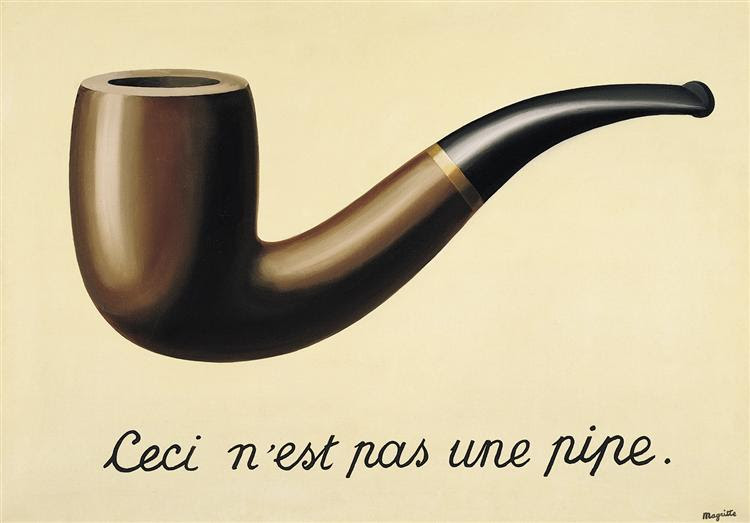
The treachery of images (This is not a pipe), 1928 - 1929 - Rene Magritte

    The treachery of images (This is not a pipe) (1928 – 1929) 


            René Magritte


                 _______


when is a sonata not a sonata, when, 

to my mind, it has less than two 

movements, but here’s Alban Berg 

doing just that in his Sonata, Opus 1


Alban Berg was a student of Arnold 

Schoenberg, the composer who did 

the most to break down the pillars

of Classical music, tempo, tonality,

and repetition, you’ll here it all here


Berg was working on a piece he 

expected would be a sonata, but 

after the first segment, he couldn’t 

find the inspiration to continue, 

Schoenberg replied that that must 

mean his work was complete, 

and Berg went along with that, 

calling it, nevertheless, a sonata, 

playing fast and loose with the

definition, poets do that, also 

painters, see above 


here’s Glenn Gould playing it, the

pianist I believe the greatest who 

ever lived, Gould admired the 

Berg, how could I argue with that


R ! chard

November / Month of the Sonata – 20

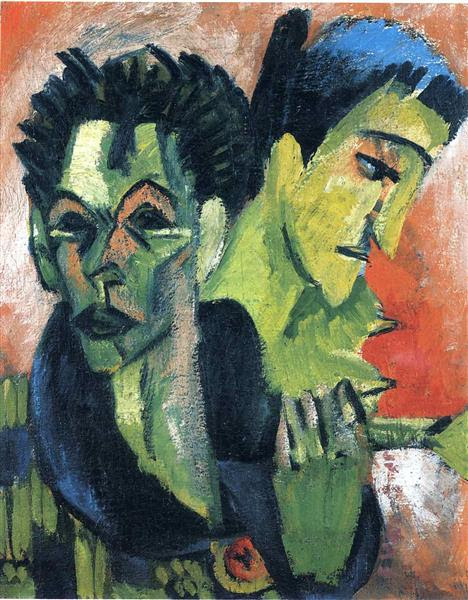
Double Self-Portrait - Ernst Ludwig Kirchner


        “Double Self-Portrait 


               Ernst Ludwig Kirchner


                           ________


Ravel’s Violin Sonata no 2, of 1927, is a 

long way from the Romantics, though I

usually settle Ravel among the 

Impressionists, this piece seems rather

to reflect the later Expressionists in art,

see above, for its virulence and eccentric 

tonalities and performance techniques 

in both the violin and the piano, the age 

had given us the First World War, and 

would soon lead to the Second


the three Classical imperatives of tonality, 

tempo, and repetition are maintained still, 

but their descendants are unruly, willful, 

bold and impervious, there are no holds 

barred here, they take no prisoners


listen


R ! chard

how to listen to music if you don’t know your Beethoven from your Bach, X

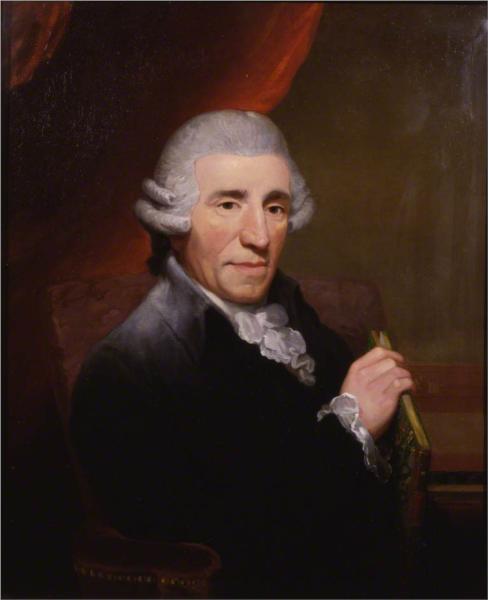
Joseph Haydn, 1791 - Thomas Hardy

        Joseph Haydn” (1791)


                 Thomas Hardy


                         _______


though I’ve focused especially, during

this introduction to Classical music,

on Mozart, a second great pillar of

that era is Haydn1732 – 1809


here is one of his 62 piano sonatas,

which expresses more than anything

you’ve heard here yet the definition

of what music was at the time, or

should be, tonality, as I’ve earlier

said, tempo and repetition were

tantamount


listen for or the rigidity of the tempo,

the consistent melliflousness of

the melody, and therefore tonality,

and the repetition of all the

component tunes


I remember going to a drum recital

once, here in Vancouver, a guy was

expressing his artistry in a formal

venue, I was sitting in a forward

row, saw him set up his music on

his music stand, and I thought,

he’s going to have to turn the

pages, which he did, a drummer


that’s all I remember of the

presentation, but that was enough,

an entire revelation


in this Haydn sonata, the pianist

turns the pages of his score, back

and forth, an interesting visual

expression of the imperative of

repetition in that era’s music,

having to return to what had

been written on the previous

page


also note that trills abound


note too in the second movement,

the adagio cantabile, the sudden

introduction of arpeggios,

transcendent, as though angels

had just appeared


which prefigures the metaphysical

aspirations of the Romantic Period

which ensued, see, for instance, 

Chopin


note also that we’re on fortepiano

here, a period instrument, a cross

between the harpsichord and the

modern instrument


thoroughly enjoy


R ! chard

Beethoven piano sonata no 7, revisited‏

let me say a few words more about Beethoven’s
piano sonata no 7, opus 10, no 3, which I left in a
blur of other sonatas in my last set of opinions, it
is a wonder, and entirely worth a second visit, it
can neatly expose the new Romantic expression
midst the still Classical impositions
 
simply stated the elements of beat, tonality, and
repetition lay out the grid of Classical musical
composition, the blue print, like a house would
have a kitchen, bedroom, bathroom, and
variations on a communal social space 
 
Beethoven adheres to all of these elements but
does so eccentrically, beat itself is moderately
altered here and there, relaxed somewhat, mostly
at the end of musical phrases, an outcome
incidentally of the piano’s hold pedal, which
allows the reverberation of any note played
beyond its being played 
 
but you can nearly identify Beethoven by the
fact that he is always off the stated beat, which
is to say that his accent is always on the wrong
syllable, off what the time signature requires, the 
template along with key notations indicated
at
the front of each set of bars of a musical text
 
this is already a significant peculiarity, and
consistent, endemic, he is fundamentally out of
synch, innately rebellious, which makes for nervy,
edgy music, bristling and electric, electrifying  
 
none of it you can sing, though the tonalities are
still entirely melodic
 
 
as far as repetition is concerned, Beethoven is still
repeating religiously, albeit with extended, and
ever so complex, elaborations, leaving you awed
ever, might as well say soulfully levitated, and 
mesmerized
  
 
the first movement, the presto, for “very fast”, takes
place on hot coals, brisk and electric
 
the second movement, the enchanted largo e mesto,
“very slowly with sadness”, is not only in marked
contrast with the first, a required condition for any
new movement, though here rendered flagrantly
extreme, it also tests the limits of effective pace,
again an innovation of the new piano, this time
coming out, despite the absolutely funereal
constraints undertaken here, instead of stultifying  
unquestionably and incontrovertibly transcendental
 
in the last movement, the menuetto (allegro), a
(jaunty) minuet, his parentheses, after an equally
exuberant third, the rondo (allegro), a (jaunty), his
parentheses again, rondo, a musical form akin to
what a sonnet would be to a poem, you can already
hear intimations even of jazz in the free and easy
tickle of the ivories, casual, debonair and apparently
improvisational, like Gene Kelly himself in dance,
toes twinkling with fresh and candid effervescence
and exhilaration  
 
now how unClassical is that    
 
 
Richard