Richibi’s Weblog

Just another WordPress.com weblog

Tag: Renoir

a veritable Schubertiade, III

Impression, sunrise, 1872 - Claude Monet


     Impression, Sunrise (1872) 


               Claude Monet


                   ________


what struck me most about Schubert’s Piano 

Sonata no. 17 in D major, his D850, was, more

than its emotional impact, its technical

wizardry, from the start Schubert dazzles with 

his prestidigitation, his manual dexterity, the

notes fly


there’s a lot of Beethoven in this composition,

working against the beat, apart from the fourth 

movement, the rondo, Schubert is being 

unequivocally Beethoven


the fourth movement is, incidentally, utter 

Mozart, you can tell from the preponderance

of trills


texture, meanwhile, overcoming melody, 

in, most notably, the third movement, is 

right out of Chopin, his Winter Winds 

for instance, an inspired combination

of both melody and texture, where is

the supremacy of either, listen, you tell 

me, do the Winds conquer the groans, 

the tribulations, of the underlying melody, 

the left hand, the low notes, the chthonic, 

the earth, or does the dexterousness of 

the right hand, the ephemeral, the 

transitory, win the day


texture will overcome melody eventually, 

as the century moves along, Impressionism 

will prioritize perspective over emotion, the 

head over the heart, Debussy, among 

others, Renoir, Monet, Pissaro, will 

dominate, see above,  but that’s another

story


meanwhile Schubert


listen


R ! chard

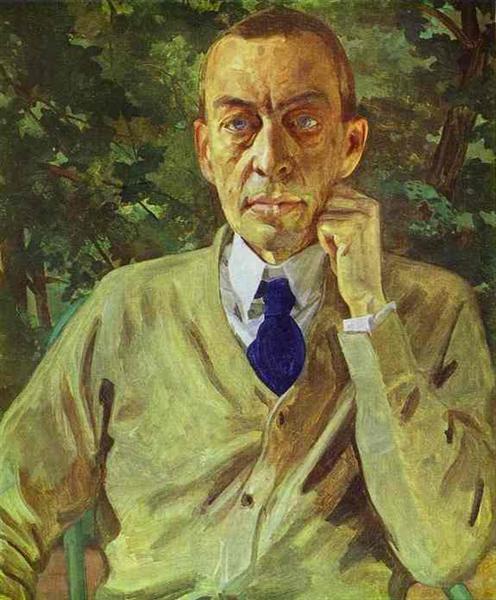
how to listen to music if you don’t know your Beethoven from your Bach, XVIII – Rachmaninov

Portrait of the composer Sergei Rachmaninov, 1925 - Konstantin Somov


     Portrait of the composer Sergei Rachmaninov


                   Konstantin Somov


                                ______


though you probably still wouldn’t be able

to tell a prelude from a hole in the wall, 

nor, admittedly, can I, unless indicated,

if you’ve listened to the pieces I’ve

recently presented, you’ve noted, even 

merely sensed, really, that the preludes 

of one composer don’t sound at all like

those of the others, Bach doesn’t sound 

like Chopin, who doesn’t sound at all   

like Debussy, the first step in telling  

your Beethoven from your Bach, as 

promised in my title


you might not even be able to tell which  

is which as you’re listening, but you can

tell they’re different, you do the same 

thing telling your Monet from your 

Renoir


Rachmaninov also wrote, like Chopin, 

and Debussy, 24 preludes, and, like 

Chopin, in every key, major and minor


but spread out through three publications, 

Opus 3, no. 2from 1892, comprising of 

only one prelude, but a scorcher, The 

Bells of Moscow, listen

a second set, Opus 23, consists of ten, 

mostly iconic, pieces, you’ve heard 

them somewhere before, therefore 

iconic


the final set comes out in 1910, 

Opus 32with thirteen preludes,

for a total of 24


you’ll marvel, even Marilyn Monroe 

famously did


enjoy 


R ! chard 

String Quintets – Mozart / Beethoven

3889-2014-2

 
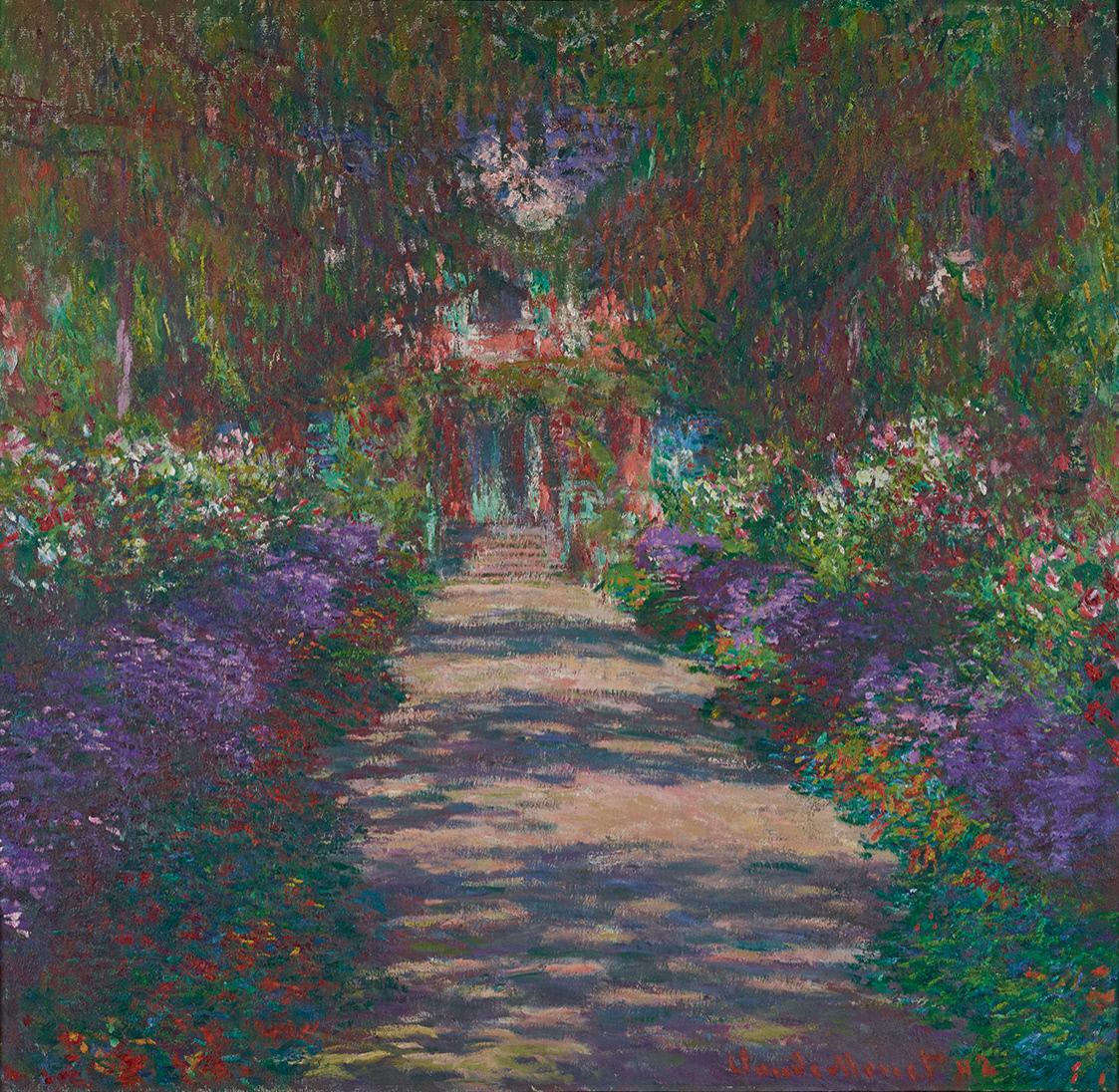
           Claude Monet
 
               ________
 
 
concerned about presenting Beethoven’s 
Opus 59, the next significant string quartets 
of the early 19th Century, too early – 
Beethoven had, incidentally, at that point no 
rivals – I preferred to establish his credentials, 
rather than to enter his next phase, equivalent 
to the move from representational art to 
Impressionism in painting, a sea change,  
people would’ve balked at the very concept   
of an alternative vision, and indeed they 
were confused
 
this sea change, I should point out, challenged 
the very notions of what not only art should be, 
but also music, and literature, indeed very life 
perspectives, philosophies
 
therefore the Romantic Period, when 
expressions of personal epiphanies began 
to crowd the new democratic environment 
after the French Revolution, 1789, all of 
which would lead to, eventually, our own 
allegiance to, at least in the West, the 
concept of human rights
 
music was already, in other wordstalking,
and with Beethoven, indeed vociferously 
 
 
still adheres to Classical conditions, 
but bursts through them emotionally
 
written only 14 years earlier, one of six
of his
 
you won’t find them, perhaps, on the 
surface, to be very different, wouldn’t 
be able to even tell them apart in a
blind pinch 
 
but juxtaposing, as I always urge, 
sharpens one’s aesthetic pencil, ask
yourself, in this case, according to 
your senses, which of the compositions 
is earlier, you’ll find your senses have 
already told you
 
everything flows from that initial 
answer, when you ask yourself why  
you think that
 
 
I’d asked my mom at Belvedere, 
Vienna, whose painting hung across 
the hall we’d just entered
 
she demurred, of course, considering 
herself not up to the challenge, despite 
several visits together we’d had among 
a wonder of other European art galleries
 
I insisted
 
she tossed off, okay, Renoir, an easy 
answer, though it turned out to be a 
Degas, or the reverse, or whatever 
 
but upon reaching the painting, of 
course, Degas, she said, knowing full 
well it was himhaving lacked only the 
pluck and the confidence 
 
who’s that, I asked, turning to another
master
 
Monet, she replied, confidently
 
and was, as I’d anticipated she would 
becorrect, she can now tell her 
Rembrandtfrom her Courbets, her
Canalettos from her Vermeers also
 
we know of a lot more than we 
think we do
 
 
R ! chard

Visconti’s Death in Venice‏

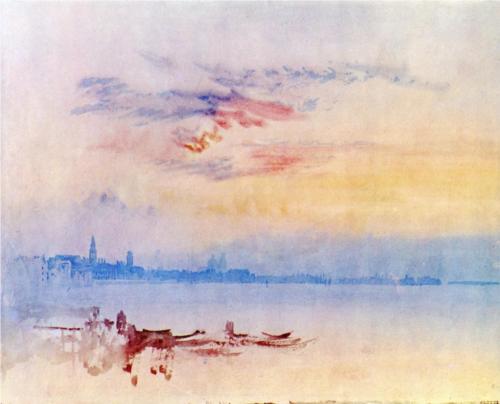
  William Turner -  "Venice Looking East from the Guidecca, Sunrise" (1819)

Venice Looking East from the Guidecca, Sunrise (1819)

William Turner

_______

Death in Venice is perhaps the most
beautiful film I’ve ever seen, just click

Visconti suffuses his masterpiece with
all the colours and textures of Monet,
Renoir, Seurat, Toulouse-Lautrec, and
a host of other Impressionists, and
settles them all upon, nearly inevitably,
the splendours of a Canaletto Venice

Dirk Bogarde has never been better,
his von Aschenbach is definitive,
Silvana Mangano is every single inch
an aristocrat, the epitome of poise,
elegance and propriety, Tadzio is
throughout the very incarnation of a
Botticelli

all is given stately motion by the art
of film and made thereby into another
equal and haunting form of poetry

enjoy, marvel

Richard

psst: Visconti even makes Mahler sound
profound

as does Leonard Bernstein, incidentally,
in the accompanying clip, who is
manifestly transported throughout his
evidently otherworldly experience,
just as you might even be, just click

ekphrasis

                                                                                                                                 ekphrasis

                                                                                                                                      poring among the possibilities the nearby university had to offer – they’re listed in a catalogue they seasonally send around – one on poetry, of course, how to make one out of a painting, stood out, how to make of something visual, a Monet, a Van Gogh, a Renoir, a poem 

ekphrasis, there’s a word for that, I thought

and ate it up

the picture I got to ekphrase, my word for that, was one of a set the teacher sent around of Kobayashis, snapshots, I’d never heard of him, her, either, Milt Kobayashi, all of them intriguing

I quickly snapped one up, letting my instinct instead of my judgment pick it out – I find it’s usually more accurate – in order to keep the ball rolling, not slow things up

a waif in especially blue, the colour also of chairs behind her – like skies in winter, I thought, when the pressure’s up and the light is pale, colours aren’t crisp but muted – making that sort of association, hoping that wouldn’t be unintelligent

rudimentary roses, wine red, spotted here and there her blue skirt, more like patches than ornamental flowers, a black top the colour of her jet black hair was cut low in a U at her neck, she leaned against a wall, itself nondescript, at the right of the picture, her left, far to that side, and in her own black shadow there splashed upon the wall, a fathomless apparently abyss, seemed to find refuge, a respite, like a womb, pushing herself and it nearly right out of the picture

her arms were crossed, but one reached for her shoulder, lightly resting there, covering inadvertently, or not, her chest, and by my inference her soul, her modesty, her bosom, whereupon, like Michelangelo’s God touched Adam, with love, light and understanding, inadvertently again or not, she touched mine

and her black, plaintive eyes were looking right back

                                                                                                                                     there’s next to nothing on the spartan walls, the table is somewhat set, but light reflected off some glasses there, and dishes, is gleaming, like in Dutch still lifes, artfully, and delightfully

“The Last Table” it’s called, though I’m not too sure what that’s about, a waitress calling it a day, a playful reference somehow to da Vinci’s “The Last Supper” maybe 

that’s what I’d have to make into a poem, ekphrase


  _____________________________________________