November / Month of the Sonata – 12
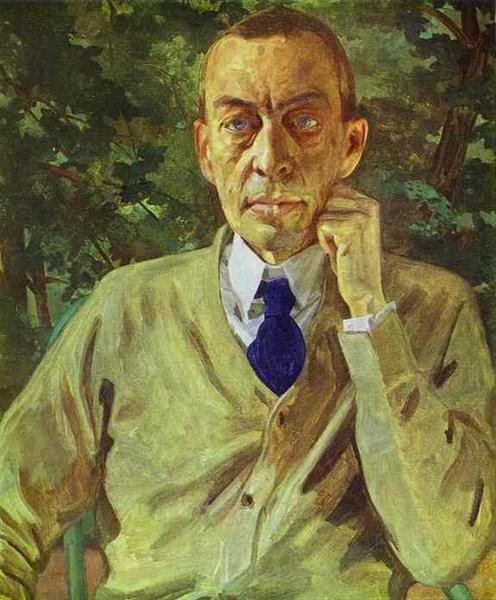
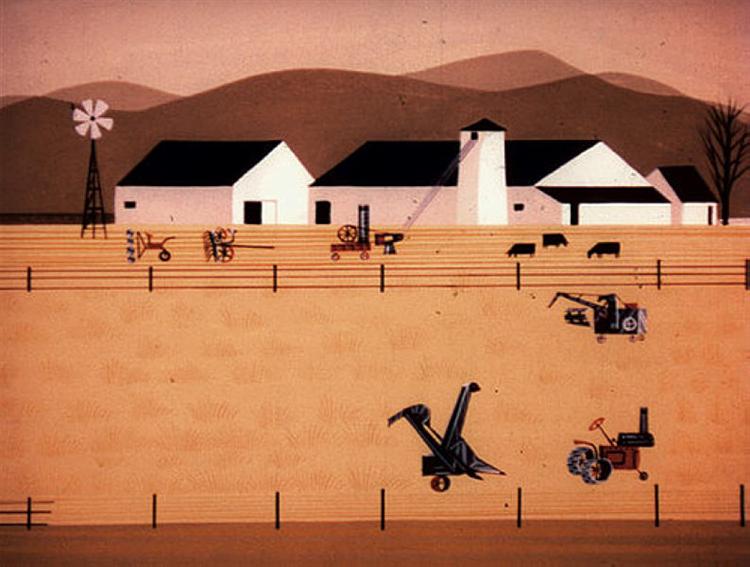
“Rhapsody of Steel“ (1959)
________
so what’s a rhapsody
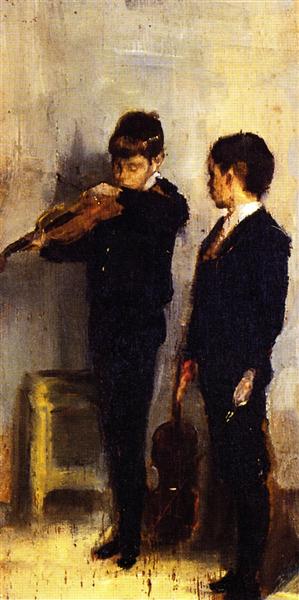
“The Violin Lesson“ (1889)
_______
to juxtapose two things for consideration,
to my mind, is the best way to sharpen
both one’s aesthetic and, therefore,
spiritual personality, here, thus, are
two contemporaneous, essentially,
violin concertos, concerti, if you like,
Paganini’s 5th, 1830, Beethoven’s
Only, 1806
let me point out that the Classical Era
is over at this point, this isn’t music
for the courts any longer, but music
as spectacle, you can hear it, it’s like
moving from Frank Sinatra‘s
nightclubs to David Bowie’s stadiums
noteworthy about these two pieces is
that the structure in each is identical,
the same lengthy introduction in the
first movement, followed by an
articulate, and eventually mesmerizing,
elaboration on the initial melody by
the soloist, with divergent, however,
intentions, Paganini starts with a
fanfare, promises histrionics, delivers
fireworks, Beethoven begins with
portent, goes instead for drama,
which is to say, your heart, as well
both their second and third movements
are essentially, then, indistinguishable
conceptually, their last movement in
either is even a rondo
the challenge in the Paganini is physical,
the glory is in the player’s technical
prowess
with Beethoven the requirements are
both physical and emotional, he
punches for the heart, which the
player must, therefore, with equally
astounding panache, incidentally,
also conquer
style, in other words, over substance,
substance over style, which is to say
“The Phantom of the Opera“, for
instance, or Cirque du Soleil,
Rachmaninov, maybe, versus
Liberace, you are the judge
history has sided, however, with
substance, Beethoven’s Violin
Concerto is everywhere, it isn’t at
all easy, conversely, to come up
with any of Paganini’s, despite
their incontestable magnificence
maybe it’s time for a Paganini
revival, they did that several years
ago for the inimitable Rossini, an
effervescent light in an otherwise
mostly dour 19th Century, listen,
with counts and countesses here
in attendance, at very, can you
believe it, Versailles, wow
R ! chard
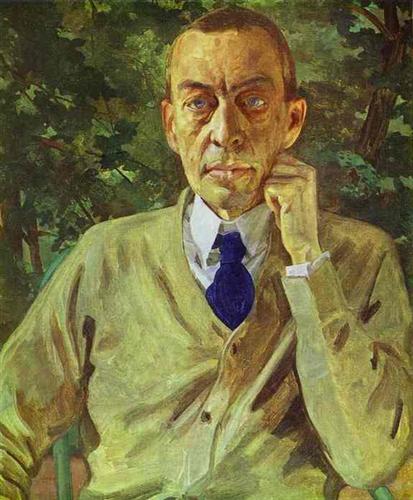
“Portrait of the Composer Sergei Rachmaninov“ (1925)
_____________
after two superb performances on
the last day, June 20, of the Round
1 competitions, I expected to close
up shop, not listen to another
deserving competitor, skipped a
trio of competent but otherwise
uninteresting contenders, and
readied to quickly go on to the
second round nominations
Dmitry Masleev, the very last
performer, wasn’t to go down,
however, without a fight, wowed
me, despite my initial sceptical air
he delivered from the beginning an
unimpeachable Bach, followed by
a “Farewell” Sonata to rival Shino
Hidaka‘s, my queen, from there it
was nowhere but up, his final
Rachmaninov dotted the i’s,
crossed the t’s, of his brilliance,
a fitting hiatus to a powerful
and significant showdown
Richard

“The Musical Contest“ (1754-5)
______
with only four contestants to go,
I already crown Shino Hidaka the
winner of the XVth Tchaikovsky
Competition, this kind of affinity
only comes around once in a
lifetime, her Bach was not only
perfect but inspired, probing,
her ensuing Chopin,
mesmerizing, the Beethoven
that followed aptly, though ever
unexpectedly, transcendental,
transcendence not ever
happening without absolute
mystical concentration, her
Tchaikovsky, an evocation
rather than a mere description
of a Russian village, her
Rachmaninov, on utter fire
Dmitry Shishkin, before her,
neither was un-brilliant, a
consummate technician,
however, rather than an outright
revelation, his spirited Bach was
a turning point for me, finally
someone who got it, his Mozart,
as frivolous and delightful as
Mozart would’ve wanted it to be,
the rest appropriately everywhere
dazzling, second, therefore, ever
so illustrious, nevertheless,
prize, bravo
neither, incidentally, milked any
of their notes, just played what
was written
Richard
psst: compare Fragonard, above, to
Mozart, a synaesthetic match,
where sight and sound are
interwoven, giving you social
intimations of the mid-18th
Century
__________
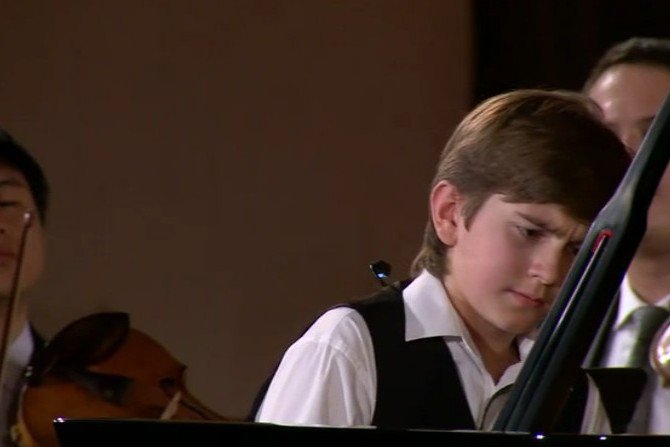
Daniel Kharitonov will be 17 in
December, I think he could win
after the usual misconceived, to
my mind, Bach, which he ends,
however, with lengthened notes
that evoke the organ instead of
the more skittish, less ceremonial
harpsichord, giving credence to
some, at least, rubato in Bach,
for Bach wrote exceedingly for
the organ, he then not only
recaptures your confidence with
an unexpectedly sparkling
“Appassionata”, not easy after
so many, then polishes off his
laurels with virtuosic Liszt,
Chopin and Rachmaninov after
having played a lovely, aptly
contemplative, “Méditation” of
Tchaikovsky
Daniel Kharitonov is going places,
indeed has gone, Carnegie Hall, for
instance, in 2013, he would’ve been
14
Richard
“Beethoven, 1987“ (1987)
______
you’ll probably have noted, if you’ve
been following the Tchaikovsky
Competition, that, unlike the
Rubinstein, the selection of works
is much more constrained, though
the mighties nevertheless
predominate
after the third day and into the
fourth, only one contestant has
started with anything other than
Bach, a Tchaikovsky
but unfortunately none of them but
one had given us a Bach worthy of
his name, then followed through
with, not surprisingly, a quite
competent Mozart, the cultural
conditions being not yet all that
different, aristocrats were looking
for their own music instead of the
church’s, secular instead of
ecclesiastical, therefore a tune
rather than an oratorio, Beethoven
and the Revolution would change
all that
afterwards a sonata of Mozart,
Haydn or Beethoven, the Classical
triumvirate, after which Tchaikovsky,
appropriately at this competition,
then études, either “-tableaux”,
“transcendentales”, or plain and
simple, by Rachmaninov, Liszt, or
Chopin, that’s it, you get to hear
the “Appassionata” or the “Grandes
études de Paganini” several times
that way, sharpening discernibly
your musical ear
one was riveting, Andrey Dubov‘s
another, Lukas Geniušas transfixed
me with his opus 2, no 3, of
Beethoven, a work I usually only
ever tolerate, sending it soaring
into the bard’s later mature, and
revelatory, period
others have been competent, even
admirable, several, however, not
ready for this trial, they’ve come
without adequate preparation for
the ball
though I’ve been watching it in
my pajamas, I should talk
Richard
a reader writes
“Hello Richard,
Recently I’ve been watching up on many dance competitions. I knew of the existence of piano competitions but never thought that they would be filmed. I must listen to the top contenders. How did you hear about this competition?”
here is my, admittedly extended, answer, with pertinent links
Richard
_____________
I haven’t missed “So You Think You
Can Dance“, Brain, for 11 years, so
we’ve probably been watching the
same “many dance competitions”
“piano competitions” aren’t much
different, just another art, judged
here by professionals throughout,
rather than entire publics
the competitions are fierce, to a
person the competitors are world
class
the music is often sublime, utterly
transcendent, though more rigorously
intellectual than popcorn – pace
Mozart – this puts some people off
much as you probably find covers of
songs you like, I go out looking for
sonatas, string quartets, concerti I
already know of and admire, I check
out the big names, Chopin, Beethoven,
Rachmaninov, see what might be up
the Internet abounds with nearly
anything you might want to find, the
only obstacle is the quality
the Van Cliburn competition, from
Houston, was dreadful, enough to
put me off it, but looking for musical
counterparts to pieces of interest, I
found the Rubinstein one in Tel
Aviv offering sterling performances
I quickly flew across the globe,
virtually, of course, speaking
the experience has been well worth
it, I heard miracles of music, haven’t
had so much fun since reading Proust,
in French of course, but you must
understand I’m an inveterate egghead,
totally chronic
this week I started Edward Gibbon’s
“The Decline and Fall of the Roman
Empire”, text and, to my delight,
audiotape, its reader is extraordinary
check out the Chopin Competition
for, up to this point anyway in my
investigation, only Chopin, but he’ll
do for a significant while, his music
is consistently breathtaking
I’ll also check out the Russian
Tchaikovsky Competition, which Van
Cliburn made famous for us in the late
50’s, by winning it, despite the rancours
of the Cold War, with a still paramount
rendition of Tchaikovsky’s own
monumental First Concerto
wow, I’ve been hooked ever since
thanks for stopping by my blog, Brain,
you’ll find, incidentally, a lot of excellent
performances highlighted there, several
of the best, in fact, from the most recent
Rubinstein Competition, none of which,
to my utter consternation, managed to
win
other recommendations follow, check
it out
I think your blog is wonderful, keep
it up
Richard
the Rachmaninov Three is also a monument
of our culture, mighty and magnificent
Andrejs Osokins makes it resplendent,
transcendent
I’d earlier berated him for being unkempt,
unprepared for his, after all, public, and
surely not gratis, performance, but here
he utterly redeems himself, he is
possessed, an instrument of the music
Andrejs Osokins could win, all bets are
therefore off
Richard
though there have been gems among
the performances presented during
Stage l of the 14th Arthur Rubinstein
International Piano Master Competition,
in Stage ll each contestant has been for
me outstanding, I’ve now seen six of
the 16 remaining contenders out of the
original 36, 20 are gone, cast away by
the 7 judges
Natalia Sokolovskaya had mightily
impressed me at Stage l with,
especially, her own “8 Variations
on a Theme of Paganini” (at 15:00
minutes on the tape), you’ll remember
Rachmaninov’s “Rhapsody“ on the
same theme, but for entire orchestra,
Sokolovskaya writes hers for piano
alone, the original theme, from
Paganini’s 24th Caprice, had been
of course for violin
at Stage ll her Rachmaninov First
Sonata (at 20:00 minutes) is
transcendent, surely definitive, this
is the one I’m going to remember
her Spanish pieces (at 10:00), a
couple of compositions by Albéniz,
are a wonderful break from the often
very abstract other works on offer,
with their immediately captivating,
beguiling, indeed seductive, rhythms
she even makes the very trite
“Reflections on Love” (at 00:00), a
condition of the competition, credible,
by spacing its interchangeable
movements, pausing between them,
letting them breathe, in order to
separate the varied “Reflections”,
instead of stringing them all together
as a continuous, rather than discrete
elements of a, considered whole, as
all the other performers have to date
reflexively done
no one has written anything pertinent
about love, musically, since Chopin,
with the exception of often enough
Rachmaninov, to presume to
significantly comment on love is, to
my mind, pretentious, calling for a
fall, this composer is no exception,
her thoughts are to be expected, love
is atonal, arhytmic, loud, soft, tender,
tempestuous, strident, placating
but everyone already knew that
Sokolovskaya gives the “Reflections”
dignity nevertheless despite their
overt pretensions
Richard
 Richibi's Weblog