Richibi’s Weblog

Just another WordPress.com weblog

Tag: Protestantism

String Quartet no 15 in A minor, opus 132 – Beethoven
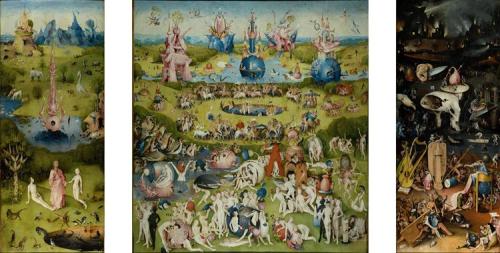
the-garden-of-earthly-delights-1515-7.jpg!Large

   “The Garden of Earthly Delights (1510 – 1515) 

          Hieronymus Bosch

               ____________

if I’ve been spending a lot of time on
Beethoven, it’s that, apart from 
besides him Napoleon, no one else 
dominates in the public imagination 
the early 19th Century, there is no 
one else of such comparable 
importance 

let me also point out that when 
Nietzsche identified his model for  
the Übermensch, Superman, it was  
not the French General, the French 
Emperor, however formidable, 
however illustrious, he named, but 
Beethoven 

Nietzsche had already understood 
that in the future, a future where the
idea of God had been put into question,
an issue which had begun irreversibly 
with the splintering of the Catholic 
supremacy, when the several 
Protestantisms, Lutheran, Calvinist
Anglican then, presented differing 
opinions of each their vehemently
defended deity, the eventual 
resolution would be inescapably up 
for metaphysical grabs, which set 
philosophers, scientists, poets in 
search of answers, which by 
definition must be as varied as 
there are voices

the outcome was the eventual 
declaration of human rights before
the court of international opinion 
as the ruling moral consideration
above the demands of any one 
faith

Nietzsche‘s pronouncement was that
a powerful opinion could therefore 
sway very populations towards its 
vision, however ultimately 
sometimes dire, Nietzsche was 
therefore blamed for predicting, 
for instance, Hitler, as though 
Nietzsche were himself responsible, 
rather than prescient 

one of his books, indeed, entitled 
Beyond Good and Evil“, illustrates
the breakdown of the traditional, 
which is to say Christian, moral
order, powerful people will take us 
where they want to, for better or 
for worse, he prophesied

therefore, note, the very present

but there is also Beethoven, the 
incandescent prophet, Charles 
Darwin, the biologist, who 
changed the way we understand 
ourselves, Sigmund Freud, who 
pushed that understanding even 
further, Albert Einstein, who gave 
us an alternate picture of the 
universe, John Lennon, who 
called upon us all to Imagine“, 
Princess Diana, who demonstrated 
what it was to be good in a world 
that was losing its compass, each 
shaping by force of personality 
our present age, their future
 
all was not, by their examples, 
lost, in other words, some of our 
leaders would be benevolent, 
verily even inspiring, despite the 
prevalence in their midst, the 
existential threat of, nefarious, 
indeed ruthless, and, too often, 
appalling, despots, a category 
too long to even begin to list

here’s, however, Beethoven doing 
again his stuff to inform the tenor
of his time, his 15th String Quartet
another forceful and foundational 
step towards the world that lay,
before him, ahead, our world, for 
better or for worse


R ! chard
mass appeal, or “Missa Solemnis”, opus 123 – Beethoven

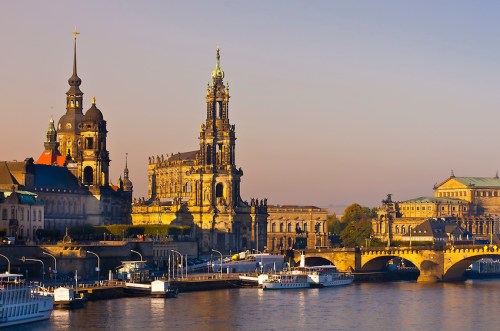
Hofkirche (Dresden Cathedral) and the Elbe River, Dresden, Saxony, Germany

    from the centre, the Hofkirche, the Dresden Cathedral, across from the 
    Augustusbrückeor Augustus Bridge, extends into the Zwinger, one  
    of three only palaces in Europe, along with Versailles and Vienna’s 
    Schönbrunndistinctly horizontally to the right, not to be confused 
  with a crook in the Cathedralan intolerable, were it so, ecclesiastical  
   gaffe, it ‘s now become one of the most significant art galleries in  
   Europe, the green rooves, to the right still, are the Semperoper‘s, the   
  black roof, nestling before it, an unforgettable Italian
  restaurant 

  before it all, majestically, the Elbe

        _______

from the very Semperoper in Dresden,
where I’ll ever remember seeing the 
worst “Barber of Seville” I’ve ever seen,
first balcony, left of centre, Figaro came 
out on a motorcycle, I ask you, it was 
downhill after that, my mom, beside 
me, was falling even asleep, we left at 
intermission, soldiered on to a 
restaurant overlooking the Elbe, Italian
if I remember, but utterly more enjoyable 
than the disappointing operatic option, 
there might even ‘ve been a moon at our 
tableside window, picturesquely 
shimmering on the river

but, hey, we both would‘ve stayed,
incontrovertibly, for this performance
Beethoven’s Missa Solemnis“, a late, 
and towering, entry, 1823, in his opus 
– second definition of that word, which 
is to sayhis entire output, all 135 
opuses, first definition there, discrete 
compositions – plus all his works 
without opus – first definition again – 
numbers, WoO

the plural of opusincidentally, can 
also be, both meanings, opera, just 
to confuse things, I use either
interchangeably, according to my 
narrative rhythm

 
missae solemnes, plural of missa 
solemnis, are a particularly Catholic
form of music, going back to the 
very Middle Ages, at which point 
religious art was all that really 
mattered, anything else was entirely
peripheral, of no consequence 

but Catholicism, and its Protestant
offshoots, which is to say, their 
common Christianity, remained 
culturally entrenched during the 
process of their slow disintegration

Nietzsche would, later, take care 
of that, but that’s another story

Beethoven, Mozart, Catholics, if, 
either, only by name, delivered 
missae solemneswhile Bach, 
Handel, both Protestant, 
delivered oratorios, with some 
intermingling

about which, later

Catholic, Protestant expression still
find, even strong, exponents at 
present, though the form is, 
essentially, outdated, our anthems 
are national, now, mostly, if even 
somewhat, that, halfheartedly, when 
notparadoxically, searchingly, 
hopefully, and maybe even
revolutionarily, again, ideological

imagine Imagine for instance, as 
suchjust click


R ! chard