Richibi’s Weblog

Just another WordPress.com weblog

Tag: Pink Floyd

String Quartet no 16 in F major, opus 135 – Beethoven
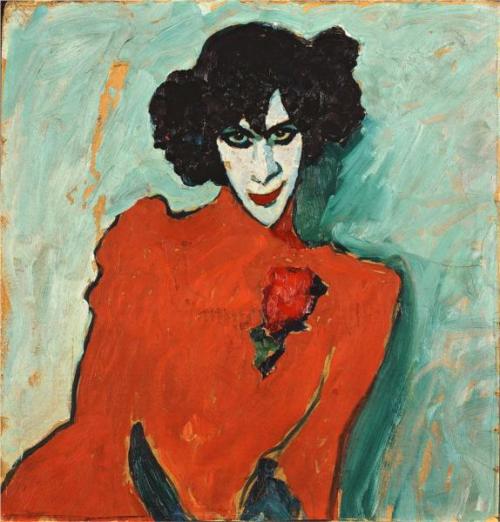
portrait-of-alexander-sakharoff-1909.jpg!Large.jpg

    “Portrait of Alexander Sakharoff (1909) 
      
            Alexej von Jawlensky

                 ______________

if you’re wondering, how could a simple 
composer have such influence on an age,
think of the impact the Beatles had on 
the 1960s, essentially defining them, 
moving them from the pop song, I Want 
to Hold Your Hand“, an updated version 
of anything by Elvis Presley, to their 
transformational Sgt. Pepper’s Lonely
Heart’s Club Band“, thirteen arias in 
search of an opera, paving the way for ,
not only concept albums, but for the 
likes of, for instance, the messianic, 
the oracular, Pink Floyd

Beethoven did much the same for the 
early 19th Century

the 16th String Quartet, his last, is,
like the 15th, in segmented pieces,
not the uninterrupted challenge for 
instrumentalists the continuous
14th is, where neither the players 
nor the audience get time to even 
breathe between movements 

but their composition is so riven 
with musical eccentricities, 
conceptual challenges, that they
are not to be dismissed, are even
epochal

the pauses, the interruptions of the 
beat, the irregular, and disconcerting
sometimes, rhythms, the stridency 
of some of the notes, pitched and
peremptory interpolations, despite 
a sensibility that still pays homage 
between the lines to the Classical 
considerations of deference, 
propriety – you can even feel the 
courtier’s hand, at times, extended 
in the dance, with ever such refined
grace, in order to accompany, to 
partner, to gently lead, his lady 

in other words, the 16th is Abbey
Road“, if I’m to continue with my 
Beatle comparison, for neither  
was the equal of their respective 
counterparts, Sgt. Pepper” ,  
Beethoven’s 14th String Quartet
both of which incontrovertibly and 
absolutely, in their time, changed 
everything, were culturally, thus, 
superior, where the others weren’t, 
didn’t, as effectively, as profoundly, 
leave so strong an imprint  

but you choose, all are extraordinary


R ! chard

psst: in order not to not add the nearly 
          irresistible digital blueprints, 
          which is to say, the not only 
          dancing but utterly illuminating 
          computer graphics, here they are,
          divided in the 16th‘s separate
          movements

             1. Allegretto
             2. Vivace
             3. Lento assai, cantante e tranquillo
             4. Der schwer gefaßte Entschluß. Grave, ma non troppo tratto 
                      (Muss es sein?)  –  Allegro (Es muss sein!) – Grave, ma 
                      non troppo tratto – Allegro

String Quartet no 14 in C-sharp Minor, opus 131 – Beethoven

musician

        “Musician 

              Zaya

                 __

                                           for Ian, who surely 
                                              benefitted from my
                                                   intransigeance


after watching performed the first movement 
of Beethoven’s 14th String Quartet at home 
with a friend, I interrupted the piece and 
instead put on the one I’d found with 
computer graphics

not from the beginning, he said

yes, from the beginning, I retorted, a mere
six or seven minutes which’ll be worth it, I
insisted, and they were

four lines of music, the top one yellow for 
the first violin, red for the second, mauve 
for the viola, and blue for the cello, which 
individually advance according to the 
length of each instrument’s notes, the 
height, meanwhile, of the lines indicate 
pitch, top ones high notes, bottom lines 
low, it’s like watching a blueprint of 
what’s happening, and mesmerizing, a 
musical score in very motion, though 
without, admittedly, the bar lines, nor 
key and time signatures, clefs neither, 
for that matter 

the music meanwhile is transcendent

Beethoven here resolves all the issues
I brought up about his two early Late
Sonatas, grab bags of fine tunes but 
without a centre, cuts on an album, 
rather than the visionary 
pronouncements of the prophet I’ve
come to expect from Beethoven

Beethoven pulls out all the stops 
for his 14th, goes from a fugue in 
the first movement, a form 
reminiscent of Bach, who’d been 
completely obliterated during the 
Classical Period, masterful dance 
rhythms then, peppered 
throughout, referencing, indeed
honouring late 18th Century court
music, a set of variations in the
fourth movementand other 
classifications I won’t touch for 
their being too technical, but 
which all illustrate Beethoven’s 
mastery of every musical 
convention until his time, then 
pushes all of it further still into 
the future with this string quartet, 
supreme among all string quartets, 
his 14th

much later, Pink Floyd would pull 
off a similar stunt, take its own 
generation’s music to comparable 
heights with an equally cultural, 
which is to say historical, impact,
the comparison is, I think,  
noteworthy and instructive

Pink Floyd, incidentally, was also 
a quartet, for even more context

note that throughout, tonality, tempo,
and repetition have been strictly, 
though, admittedly, often 
eccentrically observed, the piece has 
been arresting, even riveting, however, 
for some, disconcertingly sobut 
never not understood, never foreign, 
the music isn’t at all alienating, as 
could besay, Chinese opera for most 
of us, we’re still here in our corner of 
the planet following faithfully in the 
Western musical tradition as it thus 
then evolved

I could say all of the above as well
again, by the way, about Pink Floyd  
in their own, ahem, Time


all of that said, this other version,  
by the Alban Berg Quartet, is the 
performance that you’ll remember,
it is still incomparable, the gold
standard

enjoy


R ! chard

String Quartet no 12, E-flat major, opus 127 – Ludwig van Beethoven

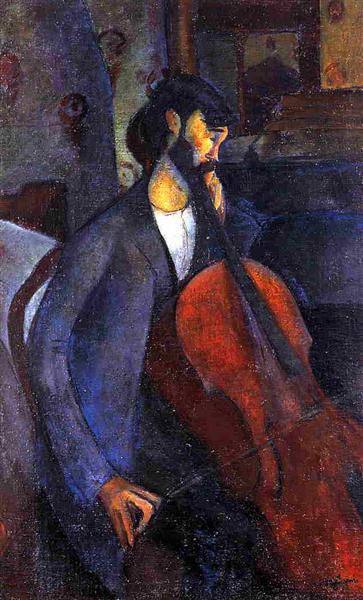
the-cellist-1909.jpg!Large

    “The Cellist (1909) 

          Amedeo Modigliani

                   _________

if I haven’t spent a lot of time with
Beethoven’s 12th String Quartet
ever, it’s that, despite being 
considered one of his “Late” 
compositions, 1825, the 
supposedly probing ones, it is 
still steeped in Classical 
traditions, rather than the 
introspective impulses of the 
“Hammerklavier”, for instance, 
most movements seem to aim
for entertainment, rather than 
for enlightenment

all movements display dance rhythms,
often 3/4 time, which is to say, three 
quarter notes to the bar – one, two, 
three, one, two, three, one, two, three, 
one, two, three, try counting them as 
you listen, a dance beat, instead of 
the probing philosophical explorations 
of his more profound “Late” pieces, 
the “Hammerklavier”, for instance

neither is the 12th especially cohesive
as a piece on its own, the movements
don’t especially relate to one another,
they’re like cuts on an album, however
satisfactory, even delightful, they’re
units in a display of abilities, the 
difference between Elvis Presley‘s  ,
however transcendent, but disparate,
ballads to, later, Pink Floyd‘s epic
metaphysical orations  


but you’ll want to watch the cellist 
here, whose enthusiasm, eagerness,
ardour are such that you might even 
want to shield your eyes on occasion, 
with splayed, even, fingers – whose 
breadth I’ll leave entirely up to your 
personal discretion – though I could 
notmyself, resist for even a moment 
the uninhibited physical expression 
of 
his thoroughly impassioned 
account 

tune in, if you dare


R ! chard

Cello Concerto no 1 in C major – Joseph Haydn

st-george-and-the-dragon.jpg!Large

     “St. George and the Dragon (c.1470) 

                Paolo Uccello

                    ________

it isn’t easy for me to leave Bach behind
whenever I start listening to him, I could 
ride his musical train forever

but the middle of the 18th Century did, put 
him aside, for about a hundred years, until 
Mendelssohn rediscovered him

Bach’s Cello Suites were themselves only 
reinstated in the 1930s by Pablo Casals,
the Classical 18th Century had considered 
Bach too fussy, his pieces, they thought, 
were technical exercises rather than 
actual entertainments, form was  
overtaking, for them, function 

there’s a wonderful book about all this,
The Cello Suites“, written by Eric Siblin, 
a Canadian journalist, which is not only 
amazingly informed and probing, but also 
beautifully written, it holds a place of 
honour on my bookshelf, along with other 
inspired, and inspiring, texts

not only was Bach set asunder, dismissed,
during the Classical Era, but all of the 
formative music also he had written, for 
cello, violin, keyboard, in other words,
the entire curriculum

which, since Bach’s reinstatement, has 
become, paradoxically, the very  
foundation for learning these instruments

imagine playing a tune with the right 
hand, then a few notes later, picking 
it up in the left hand while the right 
hand keeps on going, imagine what
that does to your fingers, never mind  
to your mind, that’s what his Two-Part
Inventions are all about, fifteen of 
them, eight in major keys, seven in
minor, consider the technical 
difficulties, intricacies, imposed 
both compositionally and upon 
the harried performer 

then Bach follows through with his 
Three-Part Inventions to top it all 
off, for the keyboard at least, and 
only for the moment – there’ll still 
be his transcendental Goldberg 
Variations” among other 
incandescent masterpieces – 
wherein one juggles three tunes at 
time, and all of them in the same 
assortment of fifteen contrasting, 
foundational, keys, the “Inventions
 – if you can do that, you’re on your 
way, one would think, to knowing 
entirely what you’re doing

but time marches on, the Classical
Era hits, Haydn takes over, not
unimpressively

the same thing happened in my 
generation to Frank Sinatra via 
the Beatles, not to mention, a little 
later, to either, with Pink Floyd

listen to Haydn’s First Cello Concerto,
note the bravura inherent in the 
composition, this is not Bach’s 
meditative music, the very Romantic 
Period is, through Classical reserve, 
expressing already its imminence, 
individual prowess is taking over 
from community, which is to say 
religious, affiliation, the same way 
the Renaissance artists, Duccio
GiottoFra AngelicoFilippo Lippi
Uccello had stood out, incidentally, 
from their brethren in the standard 
communal art schools dedicated to 
decorating the ever burgeoning 
churches sprouting out in the still
fervent European environment 

musical, though unaristocratic, 
talents, this time, were beginning, 
within German context, to flex 
their decidedly not unimpressive 
muscles, and gaining some 
significant purchase

and who wouldn’t when a Cello 
Concerto would’ve sounded like 
this, listen


R ! chard

an homage to the victims of the Titanic

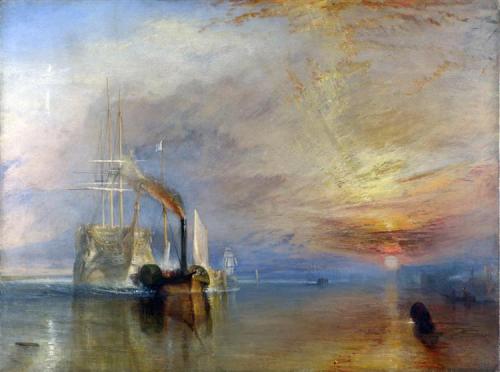
the-fighting-temeraire-tugged-to-her-last-berth-to-be-broken-up-1839.jpg!Large

  The Fighting Temeraire tugged to her last berth to be broken up (1839) 

          William Turner

                _______

while I’m on the subject of threnodies
which is to say “song[s] of lamentation
for the dead”, as I earlier statedlet me 
bring your attention to this extraordinary 
piece, an homage to the victims of the
Titanic
 
it doesn’t even have a title, much as 
Mozart and Haydn didn’t before music 
went mainstream, into public forums 
rather than merely aristocratic salons, 
and when an identifying moniker 
instead of a number became manifestly 
more practical, especially when the 
emerging Middle Classes were 
becoming the ones who were paying 
the composer’s bills, at the opera 
houses and the other sprouting 
concert venues, when some composers 
had even up to 32 sets of piano sonatas 
to remember, three and four often to 
a single set, opus number, as many as 
there are movements in a very sonata

and that’s not counting the numbered 

symphonies and string quartets of 
theirs, left to similarly calculate, 
decipher, extricate

it doesn’t have a title, I think, because
to my knowledge, it is the first of its
kind, a composition created by 
computer, for computer, an entirely 
self-contained digital work of, 
manifestly, art – I’d been waiting, 
diligently, for one – and like Beethoven, 
after the work was done, the artist(s)
just felt the title best left to the 
wordsmiths, thus – you’re welcome –  
Threnody for the Victims of the 
Titanic

sure, computers have done practical
things before, admirably, but never 
told a story, and certainly never one 
as profound as this one

these are the last moments of the 
Titanic, digitally reproduced, in real 
time, 2 hours and 40 minutes, they
are mesmerizing, you don’t want 
to miss a thing

there are no voices, apart from a 
few radio transmissions at the 
start, spotting the iceberg, calling 
out commands to beware, stop 
the engines

afterwards only silence, and the 
sound of the waves, the churning
of the engines, which have been 
restarted, sounding as rhythmic, 
incidentally, and numbing, as the 
wheels on the railroad tracks of
Steve Reich‘s Different Trains“,
another powerful threnody 

later the flash and crack of flares,
the crunch of the ship sinking  

the pervasive, however disrupted, 
silence and the inexorable passage 
of ever ticking time combine to be, 
thereafter, transfixing, meditative, 
ultimately transcendent, a fitting 
setting for a threnody 

I know of only another work to take
you to that venerable place,
Beethoven’s opus 111

and often enough Pink Floyd, for 
that matter, and the visionary 
Alan Parsons Project, of course, 
discoursing on inexorable Time 

and, now that I think of it, Elgar‘s
The Dream of Gerontius, whose 
character goes from his deathbed 
in the first act, to his afterlife in 
the second, effecting transcendence
for us by, yes, ingenious 
metaphorical proxy

but I digress

what I call Threnody for the Victims 
of the Titanic is a narrative with 
sound, not a movie, not a television
program, it has more commonality 
with a musical production than 
anything else but painting in art 
history, though its means are 
intuitively literary, ship stories go
back to The Odyssey through
Gulliver’s TravelsTreasure 
Island and to one of my very 
favourites, Ship of Fools“,
relatively recently

I could add Mutiny on the Bounty“,
Moby Dick“, “The Caine Mutiny 

in art, a precedent would’ve been set
in our collective consciousness by 
William Turner‘s celebratedThe 
Fighting Temeraire …, but I would 
mention as well Caspar David 
Friedrich‘s The Wanderer above 
the Sea of Fog for its existential
pertinence

a few literary points I’d like to stress
to back up my overt adulation, I find  
it impressive that the Classical rules
of tragedy have been maintained, 
unity of action, time, and place, 
prescriptions going back to 
Aristotle‘s Poetics in our cultural 
history, to profoundly express 
tragedy, iconic, epic, misfortune

not to mention the Classical musical
imperatives of tempo, tonality and 
repetition, none of which can be 
faulted here in this consummate 
composition

there is a no greater leveller of tempo 
than time, larghissimo here*, in the 
largest sense of that word, the 
cosmic, the inexorable pace of 
temporality in our brief heavens

a greater leveller of tonality neither  
is there than the rigorously impartial 
hum of the imperturbable Cosmos 

nor is there greater repetition than 
uniformity, however disrupted by  
however fervent ever human 
intervention, see Sisyphus, or 
Martha in “Who’s Afraid of Virginia
Woolf for iconic disrupters

R ! chard

*   Shostakovich had asked the 
     Beethoven Quartet to play the first 
     movement of his 15th String Quartet,
     “Elegy: Adagio“, so that flies 
     drop dead in mid-air, and the 
     audience start leaving the hall from 
     sheer boredom  

     well this inspired elucidation is even  
     slower than that

in recognition of Prince

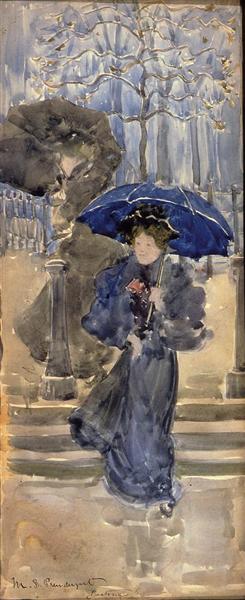
ladies-in-the-rain.jpg!Large

Ladies In The Rain (1893-1894) 
 
         Maurice Prendergast
 
                _____________
 
 
trying to find a musical representation

of me for a love recently lost, but with
whom the interaction is nevertheless
cordial, for a letter I was writing him,

cordially, and which I would sign me,

I hit upon Prince’s Purple Rain“, I never  
meant to cause you any trouble, never 
meant to cause you any pain, perfect, I 
thought, I only want to see you laughing 
in the purple rain
 
how else can one love
 
I remembered that Prince was a hero, 
an angel, a prophet, an epiphany of the 
late Twentieth Century, some voices are
indelible, incandescent, illuminating,
avatars of love
 
 
note the pace of Pink Floyd, the 
hypnotic, messianic even, tempo,  
note the elements of the prophet


Richard


from Beethoven to Pink Floyd


in juxtaposing inadvertently recently
Pink Floyd’s “Dark Side of the Moon”
with Beethoven’s String Quartet no 14
in C# minor, opus 131
, I was once again
struck by how one resembled implicitly
the other, both had achieved structurally
an operatic concert, an original musical
form for each their epoch, a piece of
instrumental music – with, even with
Beethoven eventually, voice – see his
9th Symphony for that – in the form of
opera

stay with me

songs started off as ditties, see, for
instance, in our time, She Loves You“,
the Beatles, in Classical music that’s
the equivalent of a Mozart sonata,
quick, easy to hum along with, and
spirited

then MacArthur Park came along, in
1968, with a song twice the length,
seven minutes and some, of anything
heard before, check out Jimmy Webb,
Richard Harris, and the process

that sounds a lot like Beethoven, I
thought, throw in extrapolations of
symphonic proportions and that
sounds a lot like Beethoven too,
saying, this is not just pretty, people,
it’s potentially momentous, listen

Sgt. Pepper’s Lonely Hearts Club
Band
then put several compositions
together, without breaks, to give us
the first concept album, an
uninterrupted flow of various musical
ideas held together by an, however
inexplicit, theme

or MacArthur Park“, in other words,
amplified

in 1826, it had been Beethoven’s 14th,
where all this started out, no one had
ever done this sort of thing before,
confounded so intimately contrasting
musical forms, but he’d got it from
the Christian Mass

thus Beethoven, a secular prophet

and thus, in his eminent footsteps,
Pink Floyd, solely, among
contemporary artists, addressing
God

it all seems nearly inevitable today,
but it was 1968 then, a time of, if
you’ll recall, revolution

and all of these had been, for better
or worse, once again, our rallying
cries, anthems, towards a better
world

Richard

Beethoven’s piano sonata no 29, “Hammerklavier”, revisited, as promised

upon listening to Beethoven’s 29th sonata
one doesn’t imagine its originality, having
been showered for centuries now with its
miracles and majesties, nothing would’ve
been heard like it before, so great a project,
a work of not only temporal magnitude, an
astonishing fifty minutes, but evidently of
more than just mere entertainment, a work
of philosophical, even, amplitude

Beethoven is not just trying to delight, he’s
trying to engage here, bring together, stir,
more profound human responses, evoke
thought, responsibility, compassion, a
spiritual complicity in the new
post-Revolutionary secular order, he is
establishing new metaphysical ground

the subject is existential, the audience
no longer merely aristocratic, masses
now were talking, an affluent bourgeoisie,
artists were responding to a new Romantic
Age, about rights, and what it means to be
human, both men and women, incidentally
– and I stress that newly pertinent at the time
conjunction – above and beyond those of
God, for each couldn’t both hold the
supreme, the earlier Classical, pinnacle,
the rights of Gods and, by extension,
Kings, Queens if you lived in England,
Russia

secularism was needing new oracles

see Elizabeth Barrett Browning, for
instance, for the emergence of
women

see also, of course, otherwise,
Beethoven

the difference with Beethoven is that
he achieved, ultimately, profound
wisdom, I can think of no other
comparable poet, save, of course,
Marcel Proust, both of whom proved
to be, in the same breath, philosophers,
able to stake that exalted claim, certainly
no painter, a difficult medium through
which to philosophize admittedly, to
bring logical and existential constructions
together to enunciate a transcendental
vision

then again, before Proust and Beethoven,
who’d ‘a’ thunk one could’ve transformed
words or music into very grace, mystically
transubstantiated gold, notwithstanding
the misguided alchemists

Pink Floyd did some of that in the Seventies
but retreated into historic and more personal,
less oracular, reminiscences, philosophizing
isn’t easy, see the punishment of Prometheus,
or, for that matter, John Lennon

Beethoven was completely deaf by the time
he composed the Hammerklavier“, lost in
his own isolation, like Homer, blind to,
though obviously not unaware of, his art

not lost, not unaware either, more like
having been given extrasensory, outright
extraordinary, manifestly, perception

to our utter and everlasting, both of them,
benefit

Richard

Beethoven: Sonata no. 21 in C major, op. 53 (Waldstein)‏

the “Waldstein” Sonata, no. 21 in C major, opus 53, is
one of the few compositions that Beethoven named
himself, which is to say that he dedicated it to a
friend and patron, Count Ferdinand Ernst Gabriel
von Waldstein
, if you can call that naming it

the ones with descriptive titles, the Moonlight, the
Pastorale“, The Hunt“, for instance, were mostly so
labeled by his publisher for ease of identification in
the growing market place, a more affluent merchant
class eager to take on the refinements of the nobles,
see such an instance of social mobility, however
lampooned, updated and upended, in again the
engaging and not at all unperceptive The Beverly
Hillbillies

this means that the suggestive names we’ve come
to associate with his sonatas, Moonlight”, Pastorale“,
The Hunt“, were never conceived as such by
Beethoven, his compositions were ever purely musical
inventions, or more accurately inspirations, prophetic
pronouncements of a much more oracular order,
like Prometheus Beethoven was delivering nothing
short of fire

to match music to specific visual, or even emotive,
cues, incidentally, Pictures at an Exhibition“,
The Carnival of the Animals“, for example, came
later, already a nod to Beethoven’s even indirect
propositions

that titles were given to music, rather than the more
clinical and mnemonically difficult numbers, which
is to say, not easy to remember, isn’t very different
from the evolution of popular music in the early
1960′s

the Beatles, you’ll remember, had cuts on albums
that had nothing more than their group name in
the titles, or the title of one of the album’s cuts,
“Sgt Pepper’s Lonely Hearts Club Band” came
along to change all that, we saw the birth of the
concept album, where the whole extended affair
becomes a musical metaphysics, this is no
different from the move from the music of Mozart
to that of the more expansive Beethoven, music
is no longer a ditty but an extended technical
and philosophical text, listen to Pink Floyd take
on this mantle superbly in the Seventies, the only
other body since ever to effectively challenge
Beethoven in that especially rarefied field, with
the probable exception of the sublimely expressive
Schubert perhaps, who died much too young for us
to tell, for him to have decisively dialectically proven
himself beside these erudite peers, all having,
however, found ways to have us touch beyond the
sky, the very infinite, and into the no less infinite
confines of our more private and secret selves

what they state is that creation itself, absent any
other meaning, remains potent, perhaps even
ultimately redemptive

creation as a bold and noble response to eternity,
art as affirmation

you’ll note here that the structure of this sonata
is entirely Classical, unity of tone, unity of pace,
and the eventual return of the initial melody,
essential Classical components, what has
changed is the personal bravura of the composer,
Beethoven is not playing for the aristocratic court,
but for a wider, an infinite, audience, he is
pronouncing his and, by extension, our own place
and validity in the universe, by our ability as humans
to create, to respond creatively, and even sublimely,
out of only our otherwise flailing and indeterminate
existence

it is the Romantic response to the waning belief
in God, and incidentally a profound spur to,
argument for, our present notion of inalienable
individual rights

the personal soul has taken over from the earlier
unchallenged deity, the wavering concept of God
has had a seismic fall, and all the king’s horses
and all the king’s men will never be able to put it
together undiminished again

Beethoven is showing us that future

Richard

psst: Helena Bonham Carter plays excerpts from the
Waldstein“, incidentally, in A Room with A View“,
a movie entirely worth a revisit

“The Connoiseur” – Norman Rockwell‏

The Connoiseur - Norman Rockwell

The Connoiseur (1962)

Norman Rockwell

____

serendipitously trolling Rockwells after sensing his spirit in a
poem I’d just been reading I happened upon this marvelous
piece, an homage of course to Jackson Pollock, perhaps the
most successful of the Abstract Expressionists

but lurking behind the obvious surface of this painting it was
easy to recognize also another glaring, though not as explicit
maybe, tribute, misted perhaps by the transformational
permutations of context and time, wherein a seed becomes
a tree, a caterpillar becomes a butterfly, to no less an iconic
masterpiece than Caspar David Friedrich‘s Wanderer Above
a Sea of Fog
“,
the work we just, a blog or so ago, explored

both look upon their own idea of a new horizon

and a Pop Art stab at an Abstract Expressionist through a
High Romantic is a cute trick, witty, wonderful, wise

it’s an easy step to a literary counterpart from there, Keats’
On First Looking into Chapman’s Homer nearly automatically
comes to mind, another iconic Romantic new dawn

Much have I travell’d in the realms of gold,
And many goodly states and kingdoms seen;
Round many western islands have I been
Which bards in fealty to Apollo hold.
Oft of one wide expanse had I been told
That deep-brow’d Homer ruled as his demesne;
Yet did I never breathe its pure serene
Till I heard Chapman speak out loud and bold:
Then felt I like some watcher of the skies
When a new planet swims into his ken;
Or like stout Cortez when with eagle eyes
He star’d at the Pacific—and all his men
Look’d at each other with a wild surmise—
Silent, upon a peak in Darien.

Beethoven, were I to go to music, is always, especially in his
later works, contemplating new dimensions, new worlds, he
more than any other composer is a metaphysical explorer

maybe also Pink Floyd

who’ve taken me to their own also exalted musical galaxies,
awesome commanding perspectives, transcendental heights,
to my own “wild” indeed “surmise / Silent, upon a peak in”
my version of “Darien”

Richard

psst: Chapman’s “Homer”