Just another WordPress.com weblog
Tag: Piano Concerto no 1 / opus 15 – Beethoven
__________
like with Shakespeare, some of Beethoven’s
work doesn’t reach the heights I find in their
is, to my mind, such a piece, though it’s not at
all not impressive
my complaint is that the musical motive, the
original theme, the cluster, merely, of notes
that make up the matter of the ensuing
harmonic explorations, in all of the three
movements of the Fourth, is lost in his
excessive elaborations, one is distracted by
the soloist’s dazzling showmanship rather
than by the work’s metaphysical magic, as
is conversely the case rather in Beethoven’s
sister concertos, his One, Two, Three, and
Five
most notably, the Fourth‘s slow movement,
the andante con moto, slow, but not unduly,
passes by in an instant, nearly imperceptibly,
but for the conspicuousness of its plodding
rhythm, you wonder what just happened,
what did I miss
the first movement, the allegro moderato,
or slightly slower than allegro, begins highly
unconventionally with the soloist at the helm,
setting up the conversation, as it were, the
subject of the matter
that an individual, a commoner, would’ve
dared to initiate a dialogue of purported
significance in a culture where subjects
would have known their place, like later,
for instance, a woman asserting her
position in a patriarchal society, would’ve
been shocking, and highly controversial
but Beethoven raps out a rhythm, four
quick notes followed by four quick notes
followed by the same four notes again,
ra ta ta tat, ra ta ta tat, ra ta ta tat, like
someone knocking at a door, however
plaintively, requiring attention, before the
orchestra responds, determinedly and
categorically, though the soloist will ever
remain the prime, and manifest, mover
this is not a tune, this is a statement
this is also the 18th Century’s introduction
to the Romantic Period, where individual
voices were stating their answer to the
question of the disintegration of the
aristocratic as well as the religious
ideals which had prevailed throughout
the earlier Christian centuries, when
their controlling dogmas, however still
entrenched, were being questioned,
and rejected, as evidenced by both the
constitutional dictates of the American ,
and the French Revolutions, which
were installing, codifying for their
progeny, their individual continents,
and for very history, the idea of Human,
as opposed to the traditionally assumed
Divine, Rights
secular voices would consequently
sprout in myriad profusion
throughout the ensuing 19th Century
in order to people with personalities,
as distinct from omnipotent, whether
secular or ecclesiastical, established
figures, to shape the ideologies of the
impending future, for better or for
worse
but I digress, exponentially
the third movement of the Fourth Piano
Concerto reminds me, in all its urgency,
Overture, of which I suspect it might
have been an inspiration, the work
better known to many of my generation
Lone Ranger indeed, Beethoven was
already leaving his indelible, not to
mention generative, mark on our
present, 21st Century, culture
R ! chard
___________
if you’ve listened to the first two
Beethoven piano concertos here,
you’ll find the Third to be very
similar in structure, the first
movement is an allegro, which is
to say it’s fast, and in the manner
of Beethoven, brash, tempestuous,
exhilarating, the second, slow, an
adagio, or a largo, is plaintive,
melancholy, mournful, the third,
brisk, ebullient, commanding, is
again an allegro
the form is descended from Mozart
and the Classical Period, of which
Beethoven is the tail end, but the
entrails of his pieces are entirely
upended and revolutionary
Beethoven demands your attention,
his music is no longer the backdrop
for social gatherings of the
aristocracy, but performances for
intent audiences
compare, for instance, Mozart’s
demure affair, however
impressive
there are several similarities, both
pieces are in C minor, a downcast
key traditionally, but most notably,
the intial musical motive, or idea,
at the top of either concerto, their
first few introductory notes, are
the same, you’ll recognize them
but Mozart is never in your face,
insisting upon your attention with
eccentric rhythms and jerky
musical progressions, not to
mention loud and aggressive
presents, but lulls one, rather,
into his reverie with an ever
polite discourse from a
deferential soloist, courteous
and beholden, however ever
illustrious, from the first note
to the last
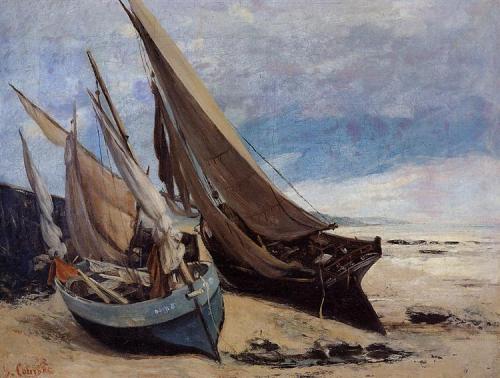
in the visual arts, it’d be like
comparing a Courbet, say, to a
Monet, it’s a question, given
their overlapping time periods,
of accent, and sentiment
you’ll need in either case, of
either, a keen ear, a keen eye
R ! chard
_________________
in order to abate my discomfort, my
consternation, after meeting up with
one of the candidates I considered
favouring in the upcoming election,
incontrovertibly, from the first few
notes, did the trick, took me out of
politics and the uncomfortable
present, into metaphysical
pertinence, and magic
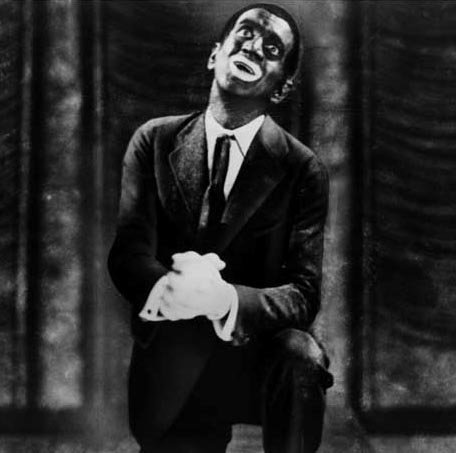
I’d referred to the issue of blackface,
a searing issue at present in the
media, I said, what about Laurence
Domingo doing the very same Moor,
not to mention Al Jolson doing,
unforgettably, “My Mammy“
but picked up that neither the
candidate, nor his mentor, standing
by his side, had any idea what I was
talking about
Placido Domingo, I said, one of The
the aspiring representative indicated
a dim recollection, his accompanist
admitted to having nebulously heard
of him, them, somewhere
OMGess, I reared, I’m talking to the
next generation, maybe even the
generation after that, who have no
recollection, no understanding of
where I come from, it was, to say
the least, unsettling, discomfitting,
sobering
there was no one at home with whom
to commiserate when I arrived,
answering machines only at the end
of every line, I resorted, therefore,
not unwisely as it turned out, to the
a lifesaver
R ! chard

 Richibi's Weblog