Richibi’s Weblog

Just another WordPress.com weblog

Tag: Ludwig Wittgenstein

Partita no 2, BWV 1004 – J.S. Bach
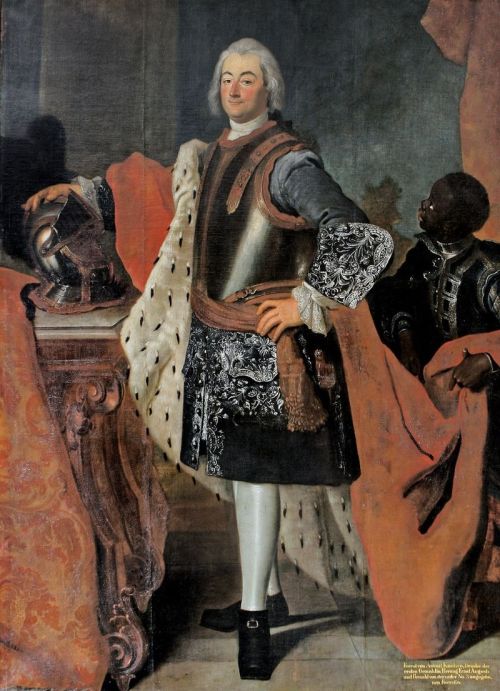
Leopold_von_Anhalt-Köthen_(1694_-_1728).jpg

         Leopold von Anhalt-Köthen

                      __________

if I haven’t spoken much about Bach
until now it’s that, although he is at 
the very start of our modern music,
having in fact set up its very alphabet,
the scale we’ve been using since, he 
is nevertheless as different from our 
own era in music as Shakespeare is 
to us in literature, both are stalwarts,
but we no longer say, for instance, 
thee or thou, nor write in iambic 
pentameter, nor do we dance 
gavottes at court, nor congregate 
at church to hear cantatas

the turning point is the Enlightenment,
also called the Age of Reason, when 
the concept of God was being 
questioned, if not even debunked, and
the mysteries of nature were being 
rationally resolved, handing authority
to knowledgeable individuals instead
of to popes

by the time of Mozart and Haydn, a
secular tone was gradually pervading 
all of the arts, devoid of any religious 
intentions, sponsors were private 
rather than clerical  

Bach had indeed been hired by a prince,
Leopold of Anhalt-Köthen, but was 
appointed court musician at his ducal 
chapel, Nikolaus l, Prince Esterházy 
wanted Haydn’s music, rather, for his 
court entertainment, and for himself 
as well, incidentally, as a fellow baryton 
player

Mozart was also employed by a prince,
but left when he wasn’t being payed 
well 

times haven’t changed much, see 
Trump, for instance

after the French Revolution, there was
not much call for religious music, 
human rights took the place of God, 
liberté, égalité, fraternité, and all that, 
not to mention the American Bill of 
Rights, and that’s the route we’ve 
been following ever since, for better 
or for worse 

but hey, we’re still reading Shakespeare,
and still listening to Bach, and loving 
both of them, some of us

here’s some more Bach for old times’
sake, his Partita no 2 for solo violin

a partita is just a series of dance suites 
– an allemande, a courante, a sarabande, 
a gigue, and a chaconne, in this case – I 
don’t think anyone other than Bach ever 
wrote some, but his are sublime

it’s kind of like my calling my own 
stuff prosetry, for whatever infinity 
that word might ever deliver, though
no one else might ever use that term
again

listen also to a transposition of its
celebrated last movement, the 
Chaconnefor left-hand piano, in 
this instance, as transposed by 
Brahms, a precursor to Ravel’s 
Concerto in G major for the Left
Hand, written for Paul  
Wittgensteinan already 
accomplished pianist – the much 
more famous philosopher, 
Ludwig‘s, brother – who’d lost his 
right hand during the First World 
War, and who’hopefully be 
inspired, by such positive 
reinforcement

art, music, poetry thrives on such 
heartfelt expressions of sympathy,
compassion, communion

art is the faith that we rely on now 
that God/dess is gone 


R ! chard
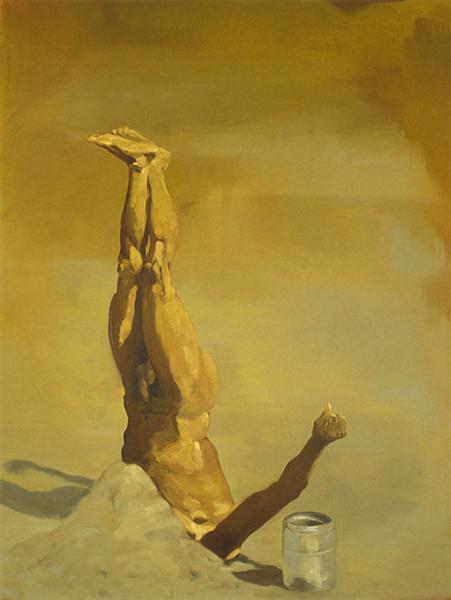
up my idiosyncrasies – Marcel Proust‏

holy-man.jpg!Large

    “Holy Man (1989)
 
       Eric Fischl
 
          ______
 
 
Marcel Proust is not an easy read, 
of literature it is surely its Everest,
not an easy climb, but from its peak
the world takes on an entirely other
order
 
an English-speaking friend has 
suggested he might try to read it 
again, but not in French this time,
I countered that that way he’d miss
the many crevices and crags, the
slippery slopes and lethal ledges, 
that give shape to the mountain, 
which the French grammar would
apply in all its intricate 
manifestations
 
part of the pleasure in reading 
Proust is the poetry, where style 
and substance coexist to create 
magic, and inspiration  
 
the sentences are long, they wind 
on for often pages, you need to be 
able to tell the subject from the verb
despite sometimes extended
intervening distances
 
but the grammar is sound throughout, 
except for in a couple of isolated
instances, grammar that would test
even a Frenchman
 
indeed Proust is where, I profess, I 
truly learned to speak French
 
there’s another mountain
 
 
the conceit is that someone rings 
the bell at their Combray cottage,
and after 3300 pages someone 
rings at the same door again
 
in between the years have passed,
they are the fruit of Proust’s 
“recherche”, search, investigation,
quest, a term that can’t be fully 
expressed as such in English, 
which doesn’t express the 
confluence of cold science and 
candle-lit spirituality expressed 
in the French word
 
in dissecting the very entrails of a 
flower, a tea cup, a crumpet, an eye, 
a brow, a lip, a gesture, a frown, a 
smile, a gait, Proust describes his 
own world, concocts it, minutely, 
meticulously, until you realize this 
can be only his perception, that 
therefore all of our interpretations 
are but our individual perceptions, 
our myriad unique worlds
 
from which one can begin to 
shape one’s own
 
later with Wittgenstein, the 
philosopher, this became known 
as phenomenology, the idea that 
we are confined for knowledge to 
our private views of the world,
wherein language plays, manifestly, 
a crucial part
 
in the beginning, if you’ll remember, 
was the word
 
curiously, in French, it is the verb, in
the beginning, implicitly suggesting 
a word of action 
 
 
Proust had been prescient as Freud
uncovering an inner world we’d always 
believed was outside us
 
at the top of his priorities Proust
chose art, personal expression,
it’s all that we can return to the 
world
 
and what else could be our purpose
 
 
Richard
 
psst: bonne lecture, Kurt