Richibi’s Weblog

Just another WordPress.com weblog

Tag: Karl Marx

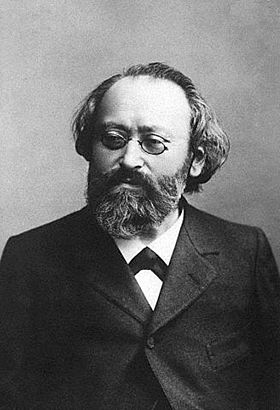
Bruch Violin Concerto in G minor‏, opus 26

Max Bruch

Max Bruch

______

still under the spell of the captivating
Akiko Suwanai, it didn’t take me long
to search out this enchantress further

as a follow-up to the perhaps tonally
discomfiting Berg I earlier highly,
nevertheless, recommended, I found
this utterly thrilling Bruch

Max Bruch, a Late Romantic, a
composer of the full flowering of the
Romantic Age, before Brahms, for
instance, Impressionism and the turn
towards social grievances rather than
the merely personal, Karl Marx, and
the rush towards isms, Capitalism,
Fascism, Communism, even indeed
Impressionism – is famous for
especially his Violin Concerto in G
minor
, his first of three, and Kol
Nidrei
, a setting for the introduction
of a Jewish service, suggesting
Bruch might’ve been Jewish, which
he wasn’t

I’ve always been indifferent to the
Kol Nidrei“, perhaps because I’m
an utterly lapsed Catholic

but the Violin Concerto is something
else

listen

Richard

psst: compare the Bruch to the Berg
for powerful historical insight
into the evolution of music in
the West

Debussy’s “Études”

 Man with a Guitar - Georges Braque
 
                    Man with a Guitar (1914)
 
                               Georges Braque 
 
                                       ______
 
 
while we’re on the subject of études, listening to 
hundred years later, 1830s to 1915, would prove
instructive, I deemed 
 
picture me deeming, August 3, 2012, my brow
just slightly pensively constricting 
 
 
if the basis of music as defined by the Classical
period depended on beat, tonality, and the repetition
of the tune, usually of both musical statements, these
apparently essential components of course would be
the first places to bear the scrutiny of probing musical
minds, seeking to find, seeking to set more expansive,
more profound dimensions to the areas of their quest,
that’s what artists do 
 
and this of course is exactly what happened starting
with Beethoven, by the time of Chopin music had
relaxed its stricter Classical rhythmic precision,
allowing great expansive gestures in the more
malleable tempi, tempos, producing the effect of
more compassion and soulful examination than
the earlier less indulgent, more disciplined code
 
the fact of having musical tapestries, sound patches,
take the place of melody, narrative, in the musical
presentation of Chopin also suggests a more
diversified, dare I say prismatic, telling, than the 
linear account of for instance Mozart‘s solitary
tuneful wanderer
 
it also evokes incidentally the vagaries of the
inconstant heart rather than its unflinching
condemnation, a repudiation of atavistic
Christian ecclesiastical intolerance 
 
 
by the time the old order was about to be extinguished,
in 1915, at the onset of the First World War, Debussy’s
Études, like Chopin 12 of them per set, had seen
social injustice – see Charles Dickens, see Émile Zola,
see Karl Marx – the improbable discoveries of science –
Darwin, Freud, Einstein – the car, the airplane,
photography were changing everything, the old
paradigms no longer applied, were irrelevant, even
harmful, in this new context, the First World War 
would prove all that 
 
in the language of music, tempo, melody, repetition
would be inevitably subverted
 
Debussy produces erratic tempi, foregoes melody for
harmonic exploration, combining incidentally the
musical patches of Chopin with the intellectually
driven investigations of Beethoven for a more
cerebral understanding of music, a music for the
head, with expert displays of pianistic skill, indeed
prestidigitation, for, along with the intellectual
rigour, spectacle  
 
is this then still music 
 
is Post-Impressionist painting still art  
 
what would 1915 have said
 
 
above is Georges Braque‘s nearly contemporary, 1914,  
 
man with a guitar, who’d a thunk it
 
 
Richard


the 50 greatest books in English

should you have been following the contest in the Globe and Mail, here’s the latest:
 
THE 50 GREATEST BOOKS, to date
 
Mark Twain, The Adventures of Huckleberry Finn
Marcel Proust, Remembrance of Things Past
Charles Darwin, On the Origin of Species
Dante Alighieri, Commedia (The Divine Comedy)
Plato, The Republic
Miguel de Cervantes, Don Quixote
James Joyce, Ulysses
Karl Marx, Das Kapital
St. Augustine, Confessions
Niccolo Machiavelli, The Prince
 
 
my recent response :
 
first of all of the first ten choices of the 50 greatest books in English only three strictly fit the bill, the others are culled from everything already from French and German to verily Ancient Greek and Latin, by way of medieval Spanish no less, and Italian
 
with this I have no cavil but for not paying proper heed to translations, translators, and their varied abilities for delivering accurate goods, both in substance and in spirit, some references should be made to preferred renditions, I would suspect Dante for instance in even competent prose would be no match at all for nearly any in thoughtful verse, and these superior options should be duly credited and recommended, otherwise where is the “English” in these “50 greatest books”
 
“Remembrance of Things Past” got me off, it is my supreme masterpiece along with “The Iliad”, it got me interested in this contest, further choices did not disinterest, and I held back scepticism
 
however having just read Plato on essentially your instigation, and found him outrageous, indeed offensive, not least of all because he actually proposes to castrate Homer, censor parts of him, to fit a cockeyed political agenda, a tyranny in fact – for where is the line between tyranny and even enlightened kingship – a tyranny he would of course administer himself
 
Plato throughout merrily essentially rambles, nearly incoherently, certainly without any real relevance to ourselves, unless you want to start a tyranny, while his audience, Thrasymachus, Glaucon and the rest, let him ramble, tyrannically, for over four hundred nearly interminable pages
 
could they be thinking, could we
 
 
and where is Homer for that matter on your list
 
to propose a list of the 50 greatest books one would have to have read a good part of the canon, or have a pool of such people, for where otherwise is the validity of the contest, you can’t even begin to make those choices without having read too many of the masters that haven’t made the list yet
 
where is of course Shakespeare in all this, where is this pinnacle of English literature, where is Dickens, where is Henry Fielding and the boisterous “Tom Jones”, the gothic Emily Brontë of “Wuthering Heights, the ethereal and unforgettable Virginia Woolf, where, closer to home, are Truman Capote, Vladimir Nabokov, with each their masterful groundbreakers, “In Cold Blood”, “Lolita”
 
I won’t even start on literary titans in other languages
 
 
the choices in English to date have been quaint, “Ulysses” belongs there, “Tom Sawyer” instead of “Huckkleberry Finn”, but with next week F. Scott Fitzgerald’s “The Great Gatsby” the choices of your panel become questionable
 
where is Somerset Maugham’s “The Razor’s Edge” then, “Of Human Bondage”, or any of his perfect short stories if you’ll first give precedence to the entertaining but not nearly as prolific, nor able, Fitzgerald
 
I suspect not read  
                                                                                

or closer to home where is “The Grapes of Wrath”, one of, just one of, John Steinbeck’s towering achievements
 
James Agee’s “Let Us Now Praise Famous Men” with Walker Evans, or his sublime “A Death in the Family”, right up there with “To Kill a Mockingbird”, Harper Lee’s triumph, where are these, could they have been read but still not trump next week’s trifle
 
where is “Gone With the Wind”, Margaret Mitchell’s magnum opus, in every sense of that first word, magnum great, magnum wonderful
 
where is the sensuous and searing “Alexandria Quartet” of Lawrence Durrell
 
more esoterically perhaps but no less deservedly where are the sublime “Diaries of Anaïs Nin”, an unparalleled account of a life lived at the very centre of cultural exchange in New York and Paris starting at the Jazz Age, moment by telling moment,  and ending in the psychedelia of the Sixties and Seventies, written with stark and consummate ablility, artistry, and frankness
 
where for that matter is Anne Frank’s diary, about which a moment of silence would rather do than my mere words to sing its highest praises
 
there are only 40 places left, please fill them thoughtfully

                                                                                                                                                                    thank you


  __________________________________