November / Month of the Sonata – 14
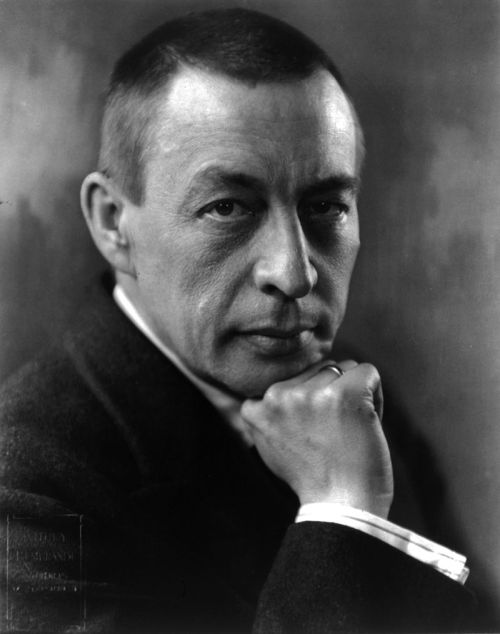
Rachmaninoff in 1921 (photographed by Kubey Rembrandt)
______________
for Barbara
a friend wrote today about memories of her
uncle, a violinist, insisting on the right
pronunciation of Rachmaninov, “with a soft
ch, as the c in cello. It drove my Dad crazy“,
she said, which led me in a response to both
his Second Piano Concerto, which she’d
specifically mentioned, and to what I
think is like comparing oracles with
oracles, his Third
it seemed a wonderful time to shed light
on some of the things I’ve been explaining
about Haydn
I spoke, even in a recent transmittal, about
the idea of extending tempi, from its
Classical four, to, through variations in a
single movement, more than four, and
found Haydn to be awkward, as he
experimented, unimpressive
listen to what Rachmaninov does, however,
in every movement here, take it from its
base through variations in tempi to leave
you reeling with emotion
the adagio, the middle movement, for
instance, starts off slowly, continues apace,
then finds itself embroiled in a whirlwind of
sentiment it finds difficult to control, before
returning, with a nearly audible sigh, to its
distressed slower, and defining, rhythm
there’s a story here, a narrative, and all the
permutations of a drama, a reckoning
watching also the performer, Cyprien Katsaris,
the soloist, and marvelling at the speed of his
fingers, I wondered, should a performer be
impeded by hir conductor, for not acquiescing
to untoward advances, for instance, a recently
significant consideration, raise the beat by one
point merely on the metronome, a novice might
be undone in a very minute, in a blur of
distraught acciaccaturas, arpeggios, and
discombobulated trills
a great player must consequently play the
piece in practice at a quicker pace to ensure
an immaculate, ever, presentation, the work
of a consummate, and immutable, artist
think about it, and watch, indeed marvel,
at this extraordinary performance
R ! chard
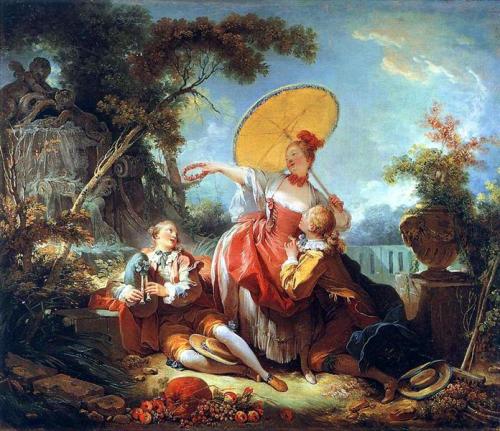
“The Musical Contest“ (c.1754 – 1755)
____________
right about this time, 1782 to 1785, Mozart
was writing his Haydn Quartets, six of
them, in the very fashion, not incidentally,
of Haydn, as a tribute to the master, the
father, the very originator of the string
quartet
here’s the first of them, a not at all
unimpressive tribute
Mozart follows the master in kind, the
number of movements, the selection
of tempi, there’s even again a minuet,
an aristocratic prerequisite, note even
the delicate, the deferential, endings,
to all, not just one, of the movements,
a trait indicative of Haydn, his courtly,
courteous reserve before any too
personalized spotlight, however
manifest his brilliance – noblesse,
in other words, oblige
Mozart follows immaculate suit
you might find it difficult to distinguish
between Mozart and Haydn, I do, the
differences are so subtle as to be
nearly, for the most part,
indistinguishable, their periods overlap,
their contexts were not at all dissimilar,
just even Vienna as their musical core
the aristocracy was still, evidently, in
charge, however henceforth briefly,
and paying the bills, and the mood
required remained respectful, polite,
unpolitical, which both composers
dutifully obliged, neither subjecting
himself to any constraints around
his higher manifest destiny, his
irresistible muse, the pursuit of
pure, and unadulterated, music
this will unfurl, see, for instance,
Shostakovich
R ! chard
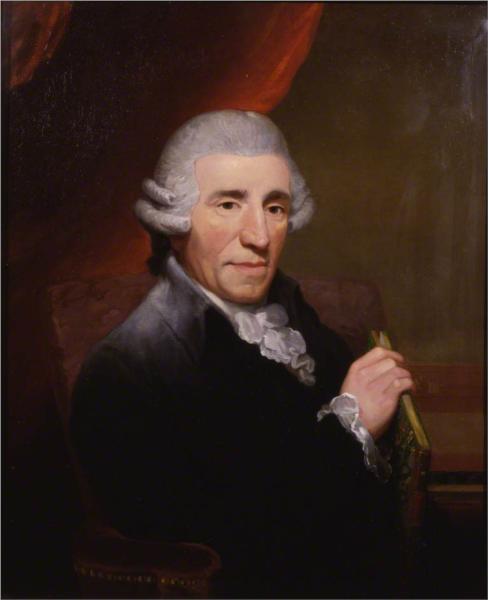
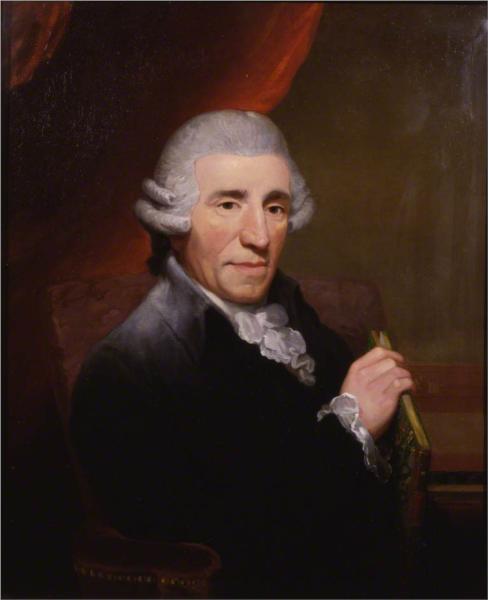
“Joseph Haydn“ (1791)
______
to not consider other musical forms of
Shostakovich would be unfair, his
symphonies are mostly propaganda,
however often, though somewhat
culturally specific, riveting
my favourite works of his, works I
consider iconic, are mostly chamber
pieces, piano solos, string quartets
a string quartet, after a symphony, is
like sitting down to dinner with four,
at the very least, acquaintances,
rather than being a guest at a party,
the conversation is more intimate,
every person plays hir part, everyone
is heeded, if even only with courtesy,
a social, a Classical, an aristocratic,
prerequisite
movements can be compared to
courses, distinct and identifiable for
their particular culinary, musical,
propriety
later variations on this reflect the
variations in social mores, where
restaurants, the modern way of
socializing, allow for disparate
choices, often superimposed,
throughout the meal for any,
every, occasion
dim sum, tapas, celebrate this, not
unhappily
but string quartets can be tricky, I
thought I’d start from the beginning,
with some Haydn, their recognized
Father, you’ll understand when you
hear this, his Opus 76, no 1, an
outstanding string quartet to live
up to
Haydn set the standard for string
quartets when the norms of Western
music were being established, Bach
had given us the alphabet, the
well-tempered clavier, Mozart, the
grammar, the structure of music,
tempo, tonality, repetition, Beethoven
gave us the literature, the poetry, the
philosophical, the transcendent
Haydn is somewhere between these
last two, but decidedly, still, the king
of the string quartet, though Beethoven
does a good job of trying to best him,
and so does Shostakovich, you’ll have
to pick
but first, let’s start with Haydn, that’ll
be already, you’ll see, or hear, enough
later, I’ll get into it
R ! chard
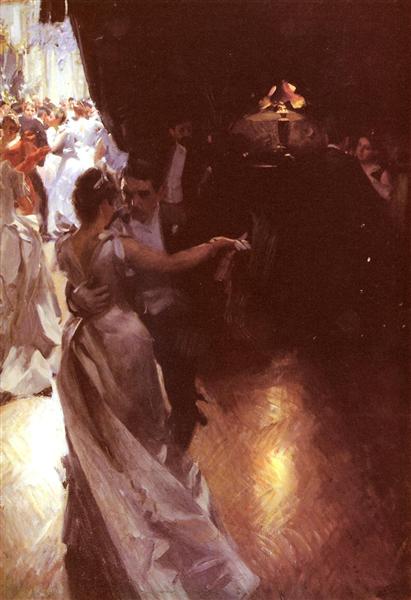
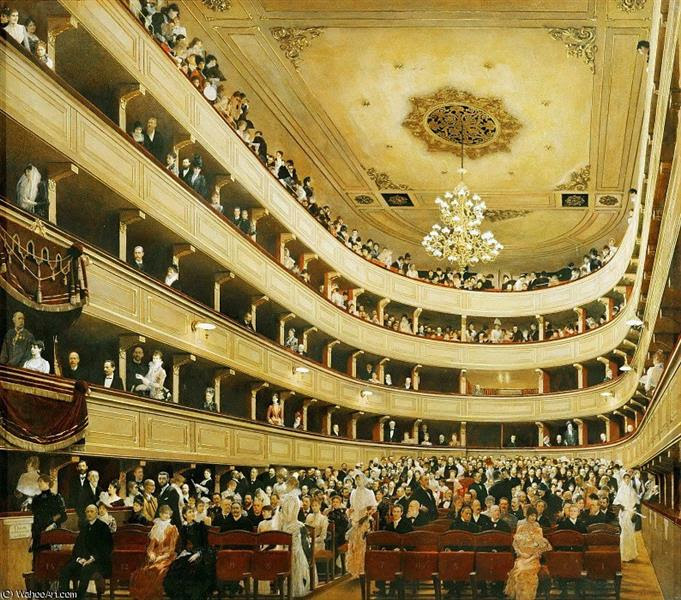
“Waltz“ (1891)
____________
had the waltz been confided to any
other but the Johann Strausses,
father and inveterate son, we may
never have distinguished it from
the polka
at the start, this amorphous new
dance was deemed shameless,
even shocking, by a scandalized,
apparently, aristocracy, used to
the more discreet, less conjugal,
minuet
some nobles, sowing wild,
irresistible oats, however, at the
festivities of their more irreverent
servants, brought the new dance
back home to their more informal,
less stuffy, entertainments, avidly,
though surely under their hats
to Belvedere, Schönbrunn, even
Schloss Esterházy, Haydn‘s
stately old stomping haunt
thus was the waltz born, whirling
indiscriminately like a polka at first,
with indefinite still, however, timing
which then was reduced to only ever
3/4 time, by the Strausses, the metre
in which this comment, coincidentally,
is written
read it aloud, you’ll want to wrap
your arms around the nearest
partner, I assure you, and whirl,
twirl, deliriously surrender
had we not had the Strausses, neither
had we had Fred Astaire, Ginger Rogers,
“Shall We Dance” from the glorious
“The King and I”, nor the irrepressible
“So You Think You Can Dance“ either
nor me, for that matter, writing in 3/4
verse, essentially, dactylic poetic metre,
about these celebrated accomplishments,
something I deem eminently worthy of
reporting
such is the impact of veritable art, I
warrant, the waltz was not inevitable
listen to Strauss Jr’s’ “Wiener Blut”,
“Viennese Blood“, or “… Spirit“
in English, for instance, for
corroborating confirmation, and
corresponding, however inadvertent,
even, inspiration
ever
R ! chard
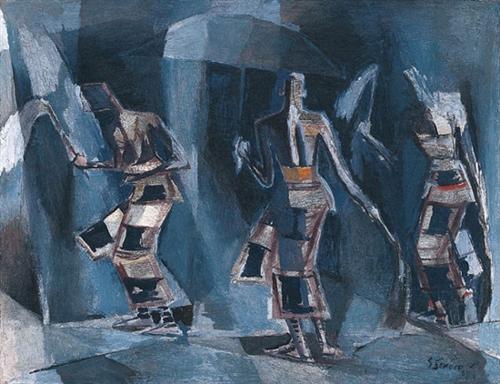
“Dancing Senegalese Figures“ (1967)
_________
ain’t no sunshine since you’ve gone,
I wrote Apollo, who’s been in Mexico
for already nearly two weeks, turned
my yearning into thereby something
groovy, listen
again I was reminded of the role of
art in our lives, to not only entertain,
inspire, but to even comfort, heal,
invigorate
note the Classical structure of the
piece, a driving and inflexible
rhythm, repetition of the theme, a
tonal melody, something you can
sing along with, Classical music’s
foundational Trinity
except for the cadenza, the solo
part, now described as a riff, but
which was already part of
concertos even by Mozart, which
is to say the late 18th Century,
listen to his 20th piano concerto
for instance, with cadenzas by no
less than Beethoven – between
11:50 and 14:15, then again between
30:05 and 31:30 on your time strip –
characteristically deep, intensely
personal and probing
the cadenza allowed the soloist in
a concerto to extrapolate, take
off in any direction singly,
sometimes written in by the
composer, but just as often not
in his cadenza, John Mayer breaks
two of the Classical imperatives,
tone, repetition, his cadenza is one
unrepeated riff, no repetition at all
but his rhythm remains unswerving,
categorical, Classical, get your cue
from the dominant drums,
irrepressible here as clockwork
for atonal similarities compare
Berg’s Violin Concerto throughout
for music, in other words, we’re still
reacting to the Classical framework
established by Haydn and Mozart,
variations on these rules are still
what we think of as music, we’re
standing on their shoulders,
working according to their
parameters, only the instruments
have changed, the guitar has taken
the place of the piano
but that’s another story
Richard
 Richibi's Weblog