Richibi’s Weblog

Just another WordPress.com weblog

Tag: Joel Schoenhals

Beethoven – piano sonata no 7, in D major, opus 10, no 3‏

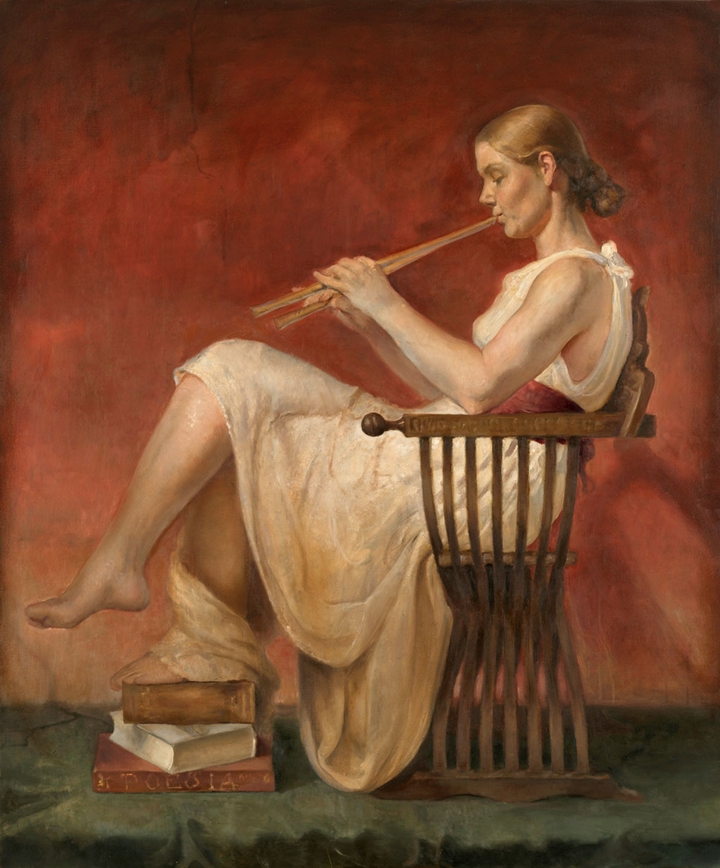
Euterpe - Apollo and the Muses - Helene Knoop 1979 - Norwegian Figurative painter - Tutt'Art@

EuterpeApollo and the Muses (2008 – 9)

Helene Knoop

________

if the piano sonata no 4 of Beethoven,
in E flat, opus 7, was academic, an
exercise, a display of technical
dexterity and some, admittedly,
even mighty, compositional verve,
it lacked, in my estimation, a centre,
a convincing motivating factor, a muse,
though ever ardent, ever entertaining,
it is ultimately arid, I think, trite, I’m
not, one is not, keen on returning to it

but in the piano sonata no 7, in D major,
opus 10, no 3
, Beethoven hits, I submit,
his stride, this sonata is enchanting

note the similarities of structure
between the two, the order of the
movements with identical, essentially,
tempo patterns, notably the middle
slow movement, in the first a largo,
con gran expressione,
slow with
great expression, in the latter, a
largo e mesta, slow with sadness,
where Beethoven plumbs, evidently,
the limits of pacing, the time lapse
between two notes, the capacity for
silence of this new instrument, the
pianoforte, of which he’ll look into
also, and even vigorously, its
capacity for volume, the crashing
introduction to his celebrated 8th,
for instance, to establish the
instrument’s new perimeters

you’ll note you can listen to the later
largo, the opus 10, no 3, forever, you
can get lost in its aural world, I can’t
think of anywhere else right now a
more profound largo

the other movements are dazzling
in their thrilling prestidigitation, all
organically sound, and, crucially,
motivationally centred, I think, this
is indeed music, magisterial music,
Beethoven’s not just kidding
anymore, he’s hitched onto his
proper inspirational deity, his own
private Euterpe, music’s muse, and
we’re in for something, from here
on, of a ride

note the cool riff closing off the last
movement, Beethoven in the guise
of Gene Kelly stepping in for a
breezy good-bye, prefiguring, of
course, XXth-Century music, and
the serendipitous extrapolations
of jazz

Richard

psst: incidentally, the headings, largo,
con gran expressione, largo e
mesta,
are entirely Romantic
musical notions, notations,
Classical composers would’ve
been too sedate, formal, courtly,
for such flagrant sentiment

Beethoven – piano sonata no 4, in E flat major, opus 7

though Beethoven’s piano sonata no 4,
in E flat major
, opus 7 has never been
one of my favourites, I’m finding this
particular renderin
g completely
enchanting

the opus 7 is, of course, early, when
you consider Beethoven reached into
the late 130s for his opuses, his opera,
not counting his, as bountiful, WoOs,
works without opus numbers

the sonata is steeped in Classical
conditions that are becoming ossified
at this point, about a decade after the
French Revolution, 1796 – 7, and that
have yet to be culturally overturned,
put to rest, you can hear it, you hear
the Classical form – formality, repetition,
congenial tonalities still – in the sonata,
brilliantly displayed by a composer
of ripe and rich imagination, but at
the service of structure rather than
the music itself, style over substance,
a student’s musical submission for a
composition exam

you’ll hear the repeat of the opening air
in the first movement more times than
you think is necessary, though the tune
be ever jaunty, never unpleasant, just
essentially trite, the second movement,
is a largo, a largo indeed, you’ll think,
about to fall asleep, even, at the wheel,
the later movements keep you
entertained in most interpretations,
not much, however, inspired, music to
pass the time, to check your watch by,
it needs what Beethoven will later
deliver in spades, miracles and
majesty, conviction

the opus 7 is long as well, nearly
interminable, I think, second only in
length to the sublime however
Hammerklavier, the 106, impudent
therefore, to my mind, if not outright
arrogant, in the mode of lesser artists,
Salieri, Clementi, for instance, who
never manage to transcend their,
however impressive, technical
expertise

but in this commanding account
maybe I’ve grown into the piece, or
maybe the performance itself is more
inspired – Joel Schoenhals finds
something that’s had me listen for
hours and hours, rapt, mesmerized

listen

Richard

psst: I needed this sonata for a course
I’m taking at Coursera, an Internet
learning site, on the Beethoven
piano sonatas
, the opus 7 is the
first one we’re looking at, this
performance
was the best one I
could find

join me