Richibi’s Weblog

Just another WordPress.com weblog

Tag: Joan Sutherland

January 30, 2018

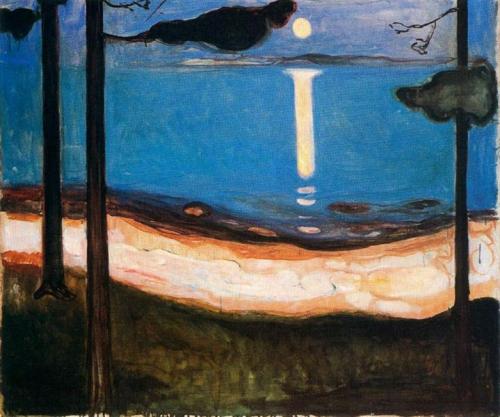
moon-light-1895.jpg!Large

        Moon Light (1895) 

               Edvard Munch

                    ________

my mom texted me this morning that
the moon would be  “BLOODY RED IN 
COLOUR….because “, she added, “earth
🌏 will be between sun and moon …last
happened 152 years ago ….moon closest
to earth 🌏

I haven’t told her yet that from my 
window I’ll be singing, as the moon  
rises above the mountains in the 
east, Casta Diva“, Norma’s song 
to the moon

chaste Goddess, she appeals, who 
bathes these sacred trees in silvery 
light, bless us with your grace, we
are not not in need of it

maybe you’ll sing along


Norma is a Druidic priestess, 
representing her community, which 
has been overtaken, and is now ruled,
by the Romans, she bears already, 
however, two children of a Roman 
military official, Pollione, who has 
fallen for her maid, Adalgisa, sparks 
fly in every direction, both personal 

and political, Adalgisa ‘ll keep the 
kids eventually, and both Norma and 
Pollione will go the pyre, the very 
height of Romantic fervour, check it
out, it’s extraordinary, with Joan 
Sutherland in this, dare I say, 
classic performance

but first of all, Casta Diva itself, by  
the inimitable Maria Callas 

and may the moon be your guide


R ! chard
“La traviata” – Guiseppe Verdi

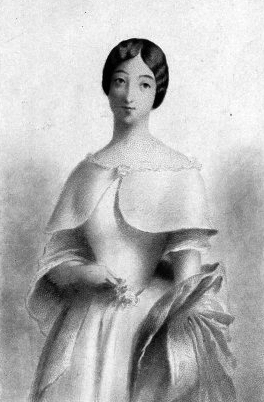
La_Dame_aux_camélias_d'après_Charles_Chaplin

             La Dame aux camélias

       Charles Chaplin (1825 – 1891)

                       _________

this version of La traviata has no
subtitles, but it should be remembered
that only a few years ago none of them
had, 
not even in opera houses

I learned to love La traviata on CD,
couldn’t 
either see the performance
then, 
now the internet supplies us,
gratis, with complete operas, from
very 
Gluck‘s to very Philip Glass
with the text 
translated throughout


a synopsis 

Violetta is a courtesan, a traviata, a
f
allen woman, who’s fallen all the way
to the top of Parisian 
society, she has
just recovered from malaise and is 
hosting a celebration, her salon 
entertains many who’ve been 
instrumental in securing her not 
unsullied reputation, it is the world 
of Marcel Proust

a new suitor arrives, Alfredo Germont, 
who pledges his love undying, she is 
eventually seduced, by his, no doubt,
impressive arias, croce e delizia, he
sings, she counters, agony and 
ecstasy, indeed

the ups and downs of love ensue,
Germont’s father objects to the match,
claiming Alfredo’s sister’s chances
at marriage would falter should her 
name, their name, be defiled, he 
convinces Violetta to leave Alfredo
for the sake of his family, whereupon 
everyone feels betrayed

Alfredo, Alfredo, she cries, di questo 
core non puoi comprendere tutto 
l’amore, Alfredo, Alfredo, you cannot 
understand fully the love I have in 
my heart, she moans, begrudges
 
but love conquers all in the end, 
though not life, as it turns out, Violetta 
succumbs to her malaise, which had 
all along been consumption, 
tuberculosis nowadays

you’ll see Spanish dancers, gypsies,
they are part of Violetta’s entertainment,
have nothing to do with the story,
otherwise the music itself tells all

the camellia, note, which you’ll see 
highlighted here and there, is a 
reference to Violetta’s inspiration,  
the novel by Alexandre Dumas, fils, 
or junior,  his La Dame aux camélias“, 
which the same author shortly 
thereafter made into an equally 
successful play, Camille” in English, 
the lady of the camellias, incidentally, 

Renée Fleming has taken over the role,
from Maria Callas in the Fifties, then 
from Joan Sutherland in the Eighties, 
she is the traviata for this generation

she is perfect, her arpeggios will 
shoot up your spine 

listen


Richard

“Casta diva” – Vincenzo Bellini‏

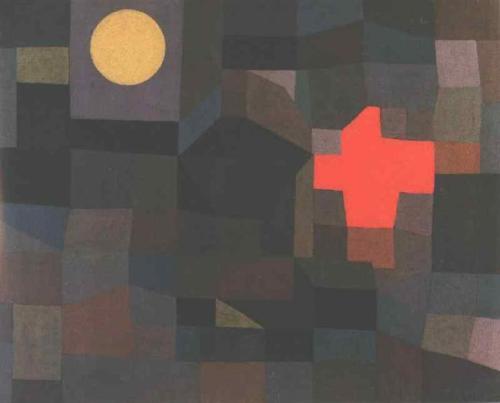
fire-full-moon-1933(1).jpg!Large

         “Fire, Full Moon (1933)
 
          Paul Klee
 
          ______


a few nights ago the moon was full,
I’d gone up to the roof, one floor up
from my apartment, to the deck there,
complete with pool, barbecue area,
lounge chairs, there was no one, just
me, it was one o’clock in the morning,
my witching hour

I’ve been going there, lately, the air 
is fresh, crisp, it’s quiet, I can relax
there after a day of whatever
 
a perfect chair looks out onto the 
entire city, the bay in the distance, 
the harboured ships, Vancouver 
Island even further during the day
 
I looked at the moon, it stared 
nakedly back at me like a spotlight, 
but clouds got in the way, bubbling,
boiling peremptorily westwards 
before her, clouds on a mission
 
she monitored their march 
imperviously, imperially, implacably,
like a goddess
 
I slunk beneath her gaze, stretched, 
surrendered, slipped into lunar 
things, love, loves, truth, beauty,
purpose, meaning, memories
 
through much of it, I closed my eyes,
aware always she was watching me,
but wrapped in my own transcendental 
reveries
 
when I returned, I stretched again, 
listened for the words, the notes, 
of “Casta diva”, Bellini‘s anthem 
to the moon
 
Norma is a Druid princess, she is
the priestess of the moon, near the
beginning of the opera she makes 
her pitch, it’s her introduction, her 
first aria, a cavatina, well done it is 
unforgettable
 
chaste goddess, she sings, casta 
diva, who casts silver light upon 
these sacred trees, turn thy lovely 
face upon us, unclouded and 
unveiled
 
restrain, o goddess, these zealous 
spirits, I prayed, shed upon earth 
that peace that reigns in heaven 
 
but I couldn’t get the notes right, 
kept slipping into other arias,
though I brought to it my entire
attention, I was, only modestly, 
therefore, there, Norma, also only
softly
 
later I found signature 
performances on the Internet,
Joan Sutherland, a classic, 
Renée Fleming in a superb 
concert performance
 
shed upon earth that peace that 
reigns in heaven, they also cry
pray
 
 
Richard
 
psst: a cavatina is a short aria


“Eugene Onegin”

years ago, when I first started paying
attention to opera, I listened to Joan
Sutherland and Luciano Pavarotti
singing “La Traviata” on my
headphones for six months solid,
Alfredo, Alfredo, I sang, di questa
core / Non puoi comprendere tutto
l’amore

now there’s “Eugene Onegin“,
Tchaikowsky’s homage to Pushkin,
the celebrated Russian poet who
wrote the national epic, turning it
into another prideful, musical this
time, monument

at first I’d been reluctant to take it on,
wary of other too ponderous Russian
productions, all heavy and lugubrious,
fraught with the trying tribulations of
too many harsh winters, I fathom

but after only a brief folkloric
interjection, too ecclesiastical a
reference for me, the story moved on
to less pompous things, an unfolding
love

Onegin is a rake, a rogue, a young
man not yet smitten, Tatyana, a
country lass but from a good manor,
hopelessly falls in love with him

he, of course, will break her heart

he will also break the heart of his
friend Lensky, when he dances an
écossaise, a grand waltz, and a
cotillion with Olga, Lensky’s
intended, and, parenthetically,
Tatyana’s sister

Olga had, injudiciously, allowed
Onegin to flirt

Lensky, offended, challenges
Onegin to a duel

in an aria that will haunt you forever,
Lensky commits himself to his fate,
be it Olga or the ineluctable hereafter,
knowing that she couldn’t either have
much loved him

you’ll cry

Kuda, kuda, you’ll also sing, kuda
vy udalilis,
like I will into surely at
least next month

I won’t tell you who wins, but it’s
tragic

and unforgettable

Richard