Just another WordPress.com weblog
Tag: Hermes / Mercury – messenger god
____
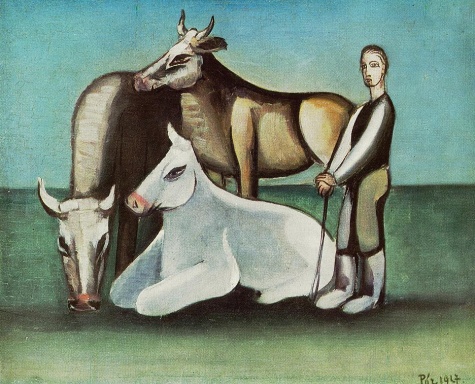
though I’d heard, indeed, of the rape of
Europa, I wasn’t aware, I’d thought, of
the details, was loathe, therefore, to
read on, in the next segment of Ovid’s
put off by such incidents in that text
as it turned out, Europa isn’t raped,
but, rather, abducted, more or less
willingly, however innocently, by
later, consensually, bear his children
who will then migrate, from their base
in Crete, to populate, to people, the
continent which we’ll come to know
as Europe, after their mum
but that’s a whole other story
meanwhile
When now the God his fury had allay’d,
And taken vengeance of the stubborn maid,
From where the bright Athenian turrets rise
He mounts aloft, and re-ascends the skies.
remember, had just transformed
Aglauros, the stubborn maid, into a
statue for having been impudent
with him, and mounts aloft now,
re-ascends the skies over Athens,
where the damsel had lived
Jove saw him enter the sublime abodes,
the sublime abodes, Olympus,
home of the gods
And, as he mix’d among the crowd of Gods,
Beckon’d him out, and drew him from the rest,
And in soft whispers thus his will exprest.
“My trusty Hermes, by whose ready aid
Thy sire’s commands are through the world convey’d.
patron of travellers, heralds, newscasters,
those who convey information
through[out] the world
Resume thy wings, exert their utmost force,
And to the walls of Sidon speed thy course;
There find a herd of heifers wand’ring o’er
The neighb’ring hill, and drive ’em to the shore.”
Thus spoke the God, concealing his intent.
an ulterior motive, a conceal[ed] …
intent
The trusty Hermes, on his message went,
And found the herd of heifers wand’ring o’er
A neighb’ring hill, and drove ’em to the shore;
mission accomplished
Where the king’s daughter, with a lovely train
Of fellow-nymphs, was sporting on the plain.
the conceal[ed] …intent is exposed,
is on the prowl
The dignity of empire laid aside,
(For love but ill agrees with kingly pride)
power, empire, will not abide being
deprived, we’ve seen ample examples
of that in our, even most recent, past
The ruler of the skies, the thund’ring God,
Who shakes the world’s foundations with a nod,
of Thunder
Among a herd of lowing heifers ran,
Frisk’d in a bull, and bellow’d o’er the plain.
Frisk’d, accoutered, dressed up as,
in the guise of, a bull
Large rowles of fat about his shoulders clung,
rowles, rolls
And from his neck the double dewlap hung.
dewlap, a looseflap of skin hanging
from the throat of some animals, or
birds, cattle, for instance, turkeys,
a wattle
His skin was whiter than the snow
that lies
Unsully’d by the breath of southern skies;
a breath of southern skies would
melt away white snow, revealing,
fatefully, ignominiously, patches
of [ ]sully’d earth
Small shining horns on his curl’d forehead stand,
As turn’d and polish’d by the work-man’s hand;
His eye-balls rowl’d, not formidably bright,
rowl’d, rolled
But gaz’d and languish’d with a gentle light.
as in doe eyes
His ev’ry look was peaceful, and exprest
The softness of the lover in the beast.
a wolf, if here a bull, in
sheep’s clothing
stay tuned
R ! chard
_______
has spotted Herse, Greek princess,
from on high, the most beautiful
among a procession of shining
virgins and, fir’d, swoops down to
earth, to th’ apartment of the royal
maid, in order to seduce her
The roof was all with polish’d iv’ry lin’d,
That richly mix’d, in clouds of tortoise shin’d.
colour, or the substance itself,
are referenced here, or maybe
even both
Three rooms, contiguous, in a range were plac’d,
contiguous, one beside the other
The midmost by the beauteous Herse grac’d;
Her virgin sisters lodg’d on either side.
Cecrops, they’d seen the child
Ericthonius, half man, half snake,
son of Minerva, who had been
given to them, into their care,
categorically not to open, but did,
to their great, to their utter, indeed
mythic, chagrin
Aglauros first th’ approaching God descry’d,
descry’d, witnessed, beheld
And, as he cross’d her chamber, ask’d his name,
And what his business was, and whence he came.
“I come,” reply’d the God, “from Heav’n, to woo
Your sister, and to make an aunt of you;
however unabashedly be he
forthright
I am the son and messenger of Jove;
My name is Mercury, my bus’ness love;
Do you, kind damsel, take a lover’s part,
And gain admittance to your sister’s heart.”
take a lover’s part, Mercury entreats,
be of help, he asks Aglauros, in this
amorous adventure, strategize a path,
gain admittance for me, to your sister’s
heart, to her serene acquiescence
She star’d him in the face with looks amaz’d,
As when she on Minerva’s secret gaz’d,
Minerva’s secret, her babe,
Ericthonius, half man, half snake,
whom Aglauros had earlier,
however treacherously, beheld
And asks a mighty treasure for her hire;
sure, says Aglauros, I’ll help, but
what will you give me in return
for my service, my hire
And, ’till he brings it, makes the God retire.
Aglauros will not assist till she
receives the mighty treasure she
requests for her hire
Minerva griev’d to see the nymph succeed;
get anything at all because of her
earlier indiscretion, disobediently
goddess’ son
And now remembring the late impious deed,
When, disobedient to her strict command,
She touch’d the chest with an unhallow’d hand;
In big-swoln sighs her inward rage express’d,
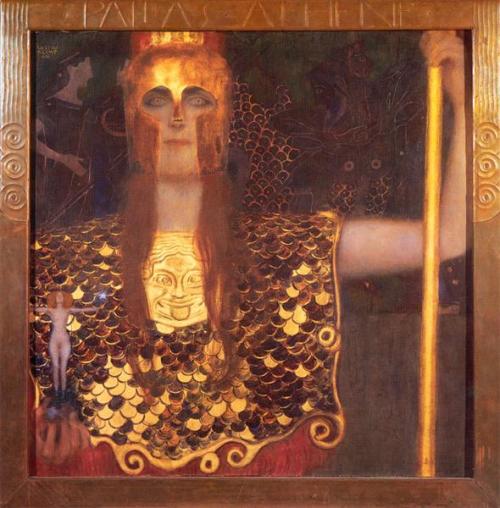
That heav’d the rising Aegis on her breast;
fashioned by the Cyclopes, brothers,
one-eyed giants, in the workplace of
Hephaestus, god of Craftsmen, Fire,
Metallurgy, it bore the Gorgoneion,
the head of Medusa, which would
turn one to stone when looked upon
Then sought out Envy in her dark abode,
Defil’d with ropy gore and clots of blood:
Shut from the winds, and from the wholesome skies,
In a deep vale the gloomy dungeon lies,
Dismal and cold, where not a beam of light
Invades the winter, or disturbs the night.
Envy, its personification, is a goddess
here, though the representative of
Envy is usually considered to be
next stop, Envy’s dark abode
stay tuned
R ! chard

 Richibi's Weblog