Richibi’s Weblog

Just another WordPress.com weblog

Tag: Heaven

“Metamorphoses” (The Giants’ War, VII) – Ovid
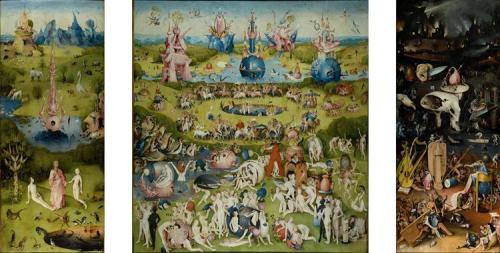
the-garden-of-earthly-delights-1515-7.jpg!Large

    The Garden of Earthly Delights (1510 – 1515) 


             Hieronymus Bosch


                  __________


              Nor from his patrimonial Heaven alone
              Is Jove content to pour his vengeance down; 


let me say something about Heaven 

here, a concept that is quite different 

from the earlier Ancient Greek and 

Roman understanding of the term, 

was it, for that matter, even a term

then, of the Ancients, that would’ve 

meant nothing other to them than 

the blue sky above, not at all an 

area reached by extraterrestrial 

transcendence


the abode of the gods and goddesses 

at the time of Ovid was Mount Olympus

and had been for centuries, much closer 

to the earth than the more ethereal home 

we imagine of the gods today, every one

of them, however professedly uniquely  

supreme, otherworldly


all gods, note, no goddesses, what’s up  

with that, I’ve long wondered


the Underworld was for the Ancients 

the dwelling place of the departed, 

somewhere deep beneath the earth, 

or at the very ends of all the seas, 

never totally beyond the very 

cosmos, as our prevailing faiths 

now uniformly preach 


the image of Heaven, Hell, and 

Purgatory for that matter, that last

a completely Catholic invention – to 

account for the salvation, however 

partial, of innocent souls deprived 

of Heaven for not having been 

christened, though not able yet, at 

so early an age, to have sinned – 

was pretty well codified by Dante

in the 14th Century in his 

masterpiece, The Divine Comedy,​ 

a daunting, but profoundly

illuminating read, which has 

shaped our impression of these 

several possible afterlives ever 

since


see above


this particular translation, however 

magisterial, but crafted after over a

thousand years of Catholic cultural 

domination, cannot avoid the impact 

of the Catholic understanding of 

Heaven


neither, now, can we, for that matter, 

intimately imbued as we are with

the binding faiths of our relatively

more recent forebears


be therefore perspicacious


              Aid from his brother of the seas he craves,
              To help him with auxiliary waves. 


later, we’ll learn that Jove’s brother 

of the seas is Neptune, god of all

aqueous things


            The watry tyrant calls his brooks and floods,
            Who rowl from mossie caves (their moist abodes); 


rowl, or roil, upset 


mossie, mossy


            And with perpetual urns his palace fill:
            To whom in brief, he thus imparts his will.


Neptune is stockpiling water, with

the help of his conforming waterways


            Small exhortation needs


no time, in other words, no need, 

to do much coaxing, much 

exhortation


                                          your pow’rs employ: 


use, put into action, or employ, 

your pow’rs


            And this bad world, so Jove requires, destroy. 


Jove, god of gods, is here commanding, 

authorizing, orchestrating    


            Let loose the reins to all your watry store:
            Bear down the damms, and open ev’ry door.


             The floods

 will inexorably follow


stay tuned


R ! chard
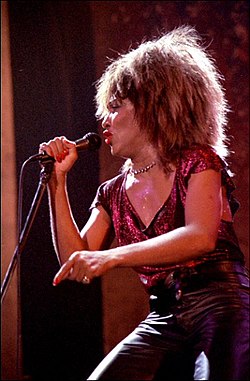


by special request, more Tina

250px-Tina_turner_21021985_01_350

  Tina Turner performing in Norway, 1985

             __________

                                                  for Norm

shortly after my most recent post, a 
friend, as avid as I am about Classical
music, but who also lived through our
own golden age of music, and throbbed 
as I did to its pounding rhythms, sent 
me this video of one of Tina’s greatest 
hits, Proud Mary

not to mention that my inbox lit up at 
the same time with equally corroborative 
applause from a host of other, apparently
also fervid, admirers


it was the best of times, it was the worst 
of times, everyone did everything with
anyone then, and was impeded only    
by hir own personal inhibitions

therefore Studio 54and even more 
glamorous Manhattan party outlets, 
the Paradise Garage, Les Mouches, 
warehouses full of carousers, and 
Bette Midler was showcasing at the
Continental Bathsif you were 
wanting a less frenzied, though not 
at all uneventful, evening, or night
  
London had it’s comparable Heaven, 
nowhere was not having its bacchanals

the era would come down crashing, 
never to be put back together again,
of course, as a soothsayer I knew 
was then prophesying, but while it 
lasted we revelled, and had Tina 
Turner, among other, as incendiary, 
oracles telling it like it was, is, listen

 
Beethoven would’ve been proud of 
Tina, incidentally, note the adherence 
to Classical conditions, tonality, tempo, 
and repetition, art is about doing your 
own stuff around those imperatives, or, 
if you can, busting through them

Tina might not have burst through, but  
she sure knew what to do with her 
perimeters, which is to say, knock them
right out of the ballpark   

wow, watch, what a woman


R ! chard

psst: thanks Norm

Beethoven’s Symphony no 6, in F major, opus 68, “Pastoral”‏

symphonies are not my preferred musical form, they are
generally too broad, grand, impersonal, they are nevertheless
the other most impactful order of presentation among musical
instruments, along with the concerto
 
a symphony is a concerto without a soloist, or it might be more
appropriate to say that a concerto is a symphony accommodating
a soloist, or soloists, in either case the musical elements remain
the same, you don’t have a symphony without movements   
 
a symphony is also of course another name for that very orchestra,
just to confuse you
 
 
despite my indifference to that particular form of entertainment 
some symphonies are nevertheless still for me impressive, some
even meaningful, poignant, several of Beethoven’s, most of the
works of the transcendental Bruckner, Brahms’ magnificent Fourth,
most others you can keep, as far as I’m concerned, I need a firm
anchoring principle, not the amorphous peregrinations of an
unbridled, often cacophonous crowd 
 
 
those that I love however have touched me deeply, Beethoven’s 
Sixth for instance, wherein through its second movement a loved
one spoke to me unmistakably from heaven, there and then made
me believe in an afterlife and angels, I remember the day clearly
and cherish still that powerful metaphysical moment  
 
 
in the “Pastoral” Beethoven apotheosizes nature, the movements
themselves, of which there are an unconventional five, are named
after rural settings, like paintings
 
     
I imagine Beethoven channeling the idyllic Classical Fragonard, or
prefiguring the bucolic and more Romantic Constable, Beethoven
straddles triumphally both epochs 
 
you will hear the birds sing, the rippling of the brook, it is as fresh
as ever springtime, as profound and expansive as itself time
 
Beethoven here speaks as clearly as actual language, and thereby
suggests that music is indeed itself an expressive tongue, earlier
it had been, though moving and undeniably evocative, essentially
an entertainment, a courtly device, though often enough sublime,
see Haydn, Mozart
 
Beethoven is not courtly, he is bold, assured, and mighty, of a new
breed of colonizers of the new and exhilarating democracy, the
French Revolution had just happened and their aristocracy was
dead and gone, indeed guillotined, a new day had dawned for
the common people, the idea of human rights
 
Beethoven spoke to these as a prophet, Moses at a secular Mount,
declaring the ideals of the Age of Reason, of which we still carry
the torch, to the multitudes and to their ensuing spawn
 
 
Klemperer at first seemed slow to me, nearly tired, but little by
little established a mesmerizing solemnity
 
by the end of the piece I’d again been touched by heaven 
 
 
Richard


the sixth and seventh circles of Purgatory

after having managed with Dante first the seven circles of lurid Hell,
then five in the much more tolerable Purgatory, I’ve reached the sixth
and seventh circles there of Lust and Gluttony, sins I have been more
particularly prone to
  
the egregious crimes of murder, fraud, treason, blasphemy, the stuff 
of very Hell, were never a concern for me, while the venial imperfections 
of pride, envy, wrath, sloth, Purgatory’s more tempered lot, would never,
surely, transcendentally confound me, I thought, should there be indeed
a Hell, a Heaven, or a Purgatory, notions incidentally that were first made
explicit by Dante himself in his “Divine Comedy“, no earlier topographical
description of the place had ever been written, later Bosch would paint his
Garden of Earthly Delights”  
 
we owe our notions of the Christian afterlife even still to Dante 
  
  
but where of course does all this fit in a universe we know to be infinite,
an idea itself, that last, that is no less awesome
 
somewhere above Olympus, the home of the Greek Gods, is where it sits,
I think, but beneath the canopy of the stars, which enclosed the earth then, 
but which dispersed, it would seem, of its own incorporeality when we’d
reached beyond  
 
  
at the terrace of Gluttony, a level that winds around the mountain,
Dante meets among emaciated shades – “shades”, he says, “that
seemed things dead twice over”, who hunger for instead of victuals
eternal life – Forese Donati, an old flame 
  
“how did you come so far so fast?”, he asks his bosom friend who’d died
only a short four years earlier  
  
“It is my Nella”, he replies, his wife
  
        “whose flooding tears so quickly brought me 
         to drink sweet wormwood in the torments. 
  
         With her devoted prayers and with her sighs,
         she plucked me from the slope where one must wait  
         and freed me from the other circles.”
   
but I think it was Dante himself who could never have consigned such a
privy buddy to anything short of Purgatory   
 
                                                                                                                                                                                                                                                    and that was the terrace of Gluttony
 
tomorrow I do Lust   
 
 
upon moving towards that terrace, the last before reaching the
circles of Paradise, an angel blinds Dante with its radiance so that
he must turn away his eyes  
 
        “And as, announcing dawn, the breeze of May
          stirs and exudes a fragrance
          filled with the scent of grass and flowers,
 
          just such a wind I felt stroking my brow  
          and I could feel the moving of his feathers,
          my senses steeped in odor of ambrosia.” **


I wish you angels, and Heaven 
 
Richard 
 
 
*    “Purgatorio“, XXIII, 85-90 
**  “Purgatorio“, XXIV, 145-150 
 
                           translations by Robert and Jean Hollander