String Quartet no 19 in C major, K465 (“Dissonance”) – Mozart
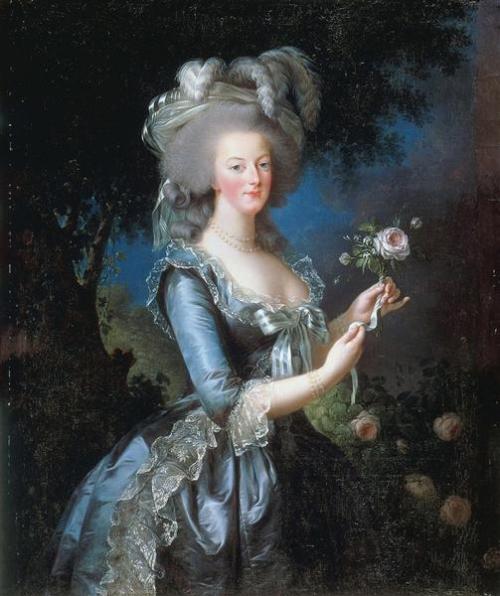
“Queen Marie Antoinette of France“ (1783)
Louise Elisabeth Vigee Le Brun
______________
if Mozart’s 19th String Quartet, the last of
his Haydn Quartets, the six he indeed
dedicated to Haydn, sounds less
deferential than one would have thought
for the period, it should be remembered
that the American Revolution had just
taken place, in 1776, the French one was
about to, in 1789, and even the more
aristocratic houses in Europe would not
have been unaffected, Mozart was young,
29, and astir with confidence and bravura,
it was 1785
Haydn had had his moment earlier, his
Opus 20, which went on to revolutionize
music if not countries, but had retreated
to a less emboldened political stance
as he grew older, while concentrating
rather on his more important muse, and
refining his ear for precise, pure music,
which is to say devoid of any but polite
sentiments, delight and lyrical
melancholy only
in Mozart’s 19th String Quartet, even the
minuet is peremptory, not something
you’d especially want to dance to,
however musically accomplished
he starts the first movement with, of all
things, an adagio, however briefly, which
could’ve been disastrous, you need to
know what you’re doing when you open
with a lament
incidentally, all the instruments in the
opening adagio are playing in different
keys, resolved when the allegro kicks
in, this is why it’s called “Dissonance”,
something in and of itself of a
rebellious act
the 19th is also twice the length of
Haydn’s nearest earlier one, his Opus 42,
expansive rather than terse, for whatever
that might mean, the point is to keep us
throughout interested, which he does,
they do
Mozart is prefiguring here, incidentally,
Beethoven, with his audacity, his
sense of an ideological mission, and
he’s mightily impressive
R ! chard
 Richibi's Weblog