Richibi’s Weblog

Just another WordPress.com weblog

Tag: Haydn

a veritable Schubertiade, X
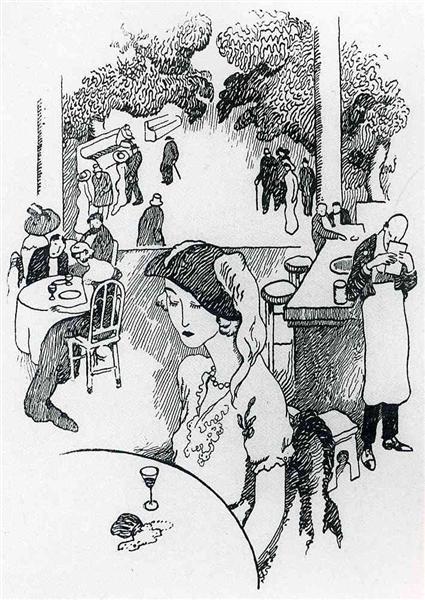
Vienna, 1914 - Thomas Hart Benton

      Vienna (1914) 


            Thomas Hart Benton


                  _____________


the three great representatives of the Romantic 

Period in music are Beethoven, Schubert, both 

linked to Vienna, see above, and Chopin, in the

other musical capital at the time, Paris


their basis is Classical, the rules set up by 

Mozart and Haydn, tonality, tempo, and 

repetition, which all of them rigorously 

obey


Schubert wrote no concertos, Chopin wrote

no symphonies, Beethoven wrote for everything,

they all, in other words, had their particular lanes


Beethoven and Schubert, however, both Viennese, 

see above, sound strikingly similar


here, in his Piano Sonata No 19 D 958 in C minor,

Schubert, at the very height of his powers,

technically, musically, aesthetically, incorporates,

miraculously, the spirits of both Beethoven, his 

predecessor, and Mozart, Beethoven’s 

predecessor, transforms them into something 

like their accumulated gift to the world, a child

of their coordination, their lineage


listen


R ! chard

a veritable Schubertiade, VI

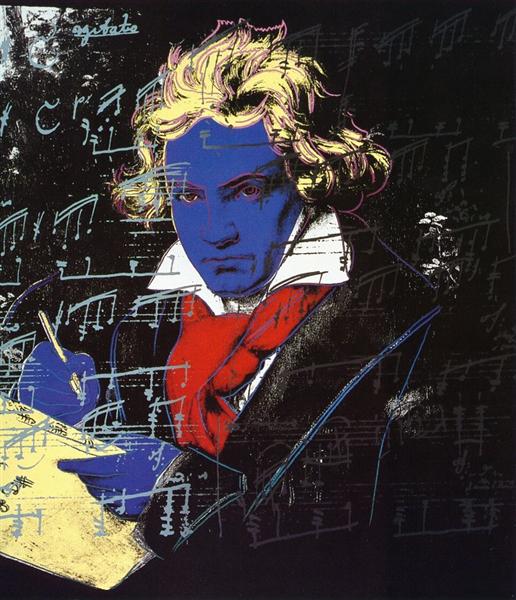
Beethoven, 1987 - Andy Warhol


     “Beethoven (1987) 


           Andy Warhol


               ________


by this time, in his Piano Sonata in A minor, 

D 845, Schubert has accumulated so much 

Beethoven that his Beethoven is beginning 

to shine through in his own compositions, 

Beethoven was a forefather, still present, 

it’s often difficult to tell one, indeed, from 

the other, even here


Beethoven, see above, punched through

Classicism – Mozart, Haydn – its artificiality,

delivering emotion, instinctively, from the

very start, from which he nearly

single-handedly delivered to the world no

less than Romanticism, like delivering the 

recalibration of time and space after 

Einstein essentially, so profound a 

cultural metaphysical reorganization


Schubert remains ever more courteous,

more beholden to the upper crust that

supports him, and that he ever wants to 

court, you can hear it, listen, there is no 

confrontation here, just, dare I say,

entertainment


Schubert was not a revolutionary


R ! chard


sonatas, continued (Messiaen – “Quartet for the End of Time”)

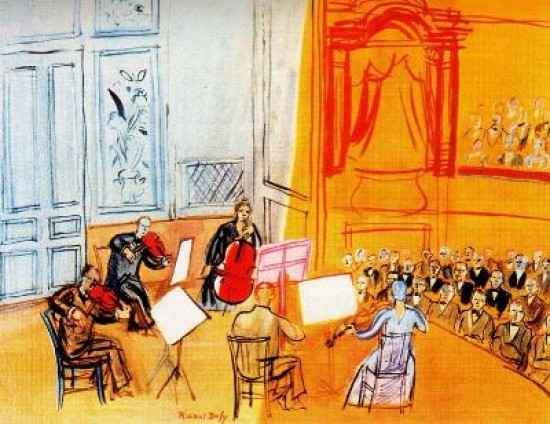
Red quartet - Raoul Dufy

    Red Quartet 


       Raoul Dufy


           _____


if a trio is a sonata written for three instruments,

a sonata, a piece of music consisting of more 

than one segment, or movement, written for 

four instruments, is called a quartet


a quartet is also what we call the group itself

of four players


quartets can play more than just quartets, they 

can also play waltzes, nocturnes, rhapsodies, 

for instance, just as trios, groups of three, can

play more than just trios 


but quartets, the form, have had a long and 

glorious history, from Mozart and Haydn, 

the Classicists, through Beethoven, an 

ardent Romantic, to the more political 

Shostakovich, enemy, for a time, of his 

repressive Soviet state, and on to 

Messiaen, who composed his own 

Quartet for the End of Time, in a Nazi 

concentration camp


let me start with the Messiaen, now that I’ve

whetted your appetite, and work our way back 

to Mozart to see where we came from, and 

how


there are seven movements in Quartet for

the End of Time, not the Classical three or

four, atonality abounds, discordant, not 

unexpectedly, progressions, repetition also 

takes its punches, not easily identifiable 

throughout, but tempo, the third pillar of 

Western music, more or less holds its 

own, keeping the tradition, however 

precariously, together, listen


it’s 1941, we’re in a concentration camp,  

Messiaen is caught between hope and 

despair, give the guy a break, he hasn’t 

many absolutes to hold onto, tempo 

might be one of them, the heartbeat,

pulse, perseverance, an actual human 

pace, a rhythmic instinct, by which 

eventually, hopefully, meaning 

transpires


hope is in one’s creativity, he says, each 

individual answer can be a tribute to

one’s own tribulations, our responses 

can be poetry, lessons rather than

invectives, epiphanies rather than

agonies, may the Force, in other words, 

be with you, in the face of even the most

trying difficulties, honour can supplant 

trials, he concludes, given grace and 

integrity


Beethoven says pretty much the same 

thing in his last piano sonata, remember,

his Opus 111listen, a not not impressive

corroboration


R ! chard

November / Month of the Sonata – 3

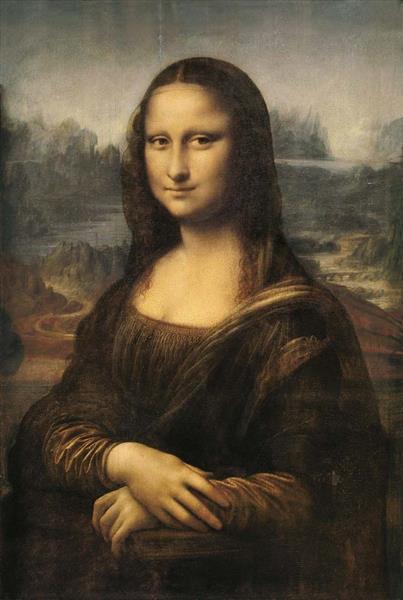
Mona Lisa, c.1503 - c.1519 - Leonardo da Vinci

  “Mona Lisa ( c.1503 – c.1519) 


      Leonardo da Vinci


             __________


the next sonata, Beethoven’s Piano Sonata 

No 8 in C minor,  Op 13, the ‘Pathétique’“, 

is one that everyone’s heard, if only ever in 

fragments, right up there with “Jingle Bells” 

in our musical repertory, in our cultural DNA,

or, for that matter, Beethoven’s, also, other 

iconic piece, the Moonlight Sonata“, the 

Mona Lisa, nearly, see above, of music 


the initial chords are peremptory, have 

resonated, echoed, reverberated, 

throughout the ages


this is not, however, the way one should 

be addressing the aristocracy, Beethoven

was speaking for the growing Middle

Classes, who, hungering for the status 

and refinement of the elite, the French

Revolution having just happened, were 

crowding the burgeoning concert and 

recital halls cashing in on that interest


the artist was now the main attraction,

where earlier the performer had been

merely decorative, the sponsored

employee of an, however benevolent, 

aristocrat, see Mozart, see Haydn


listen to Beethoven strutting, for the 

ages, his revolutionary stuff, thumbing

his nose at convention, demanding

attention


enjoy


R ! chard 


how to listen to music if you don’t know your Beethoven from your Bach, Vl

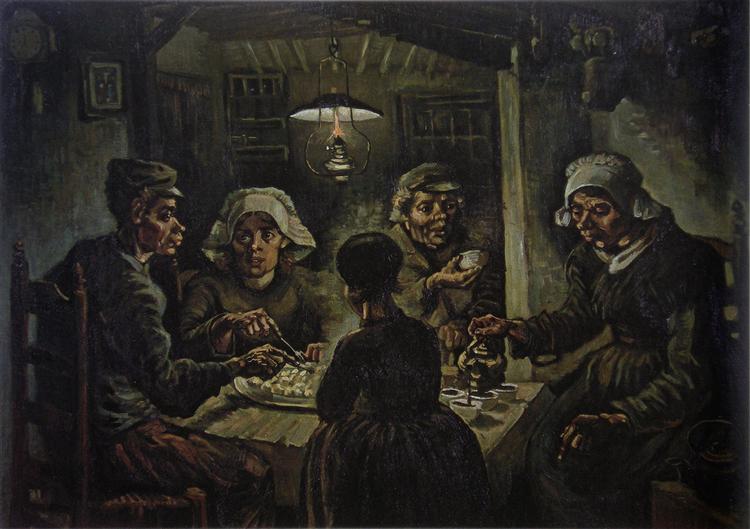
The Potato Eaters, 1885 - Vincent van Gogh

            The Potato Eaters” (1885)


                   Vincent van Gogh


                        ___________


where do you start with Chopin, he is

in our Western cultural bloodstream,

as identifiable in music as, say, van

Gogh is in painting, you don’t need 

to be interested in any kind of art to

have not been given even only a

whiff of these iconic artists


nearly anything I might present here

of Chopin you’ve probably already

heard somewhere before, if only in

bits


of van Gogh, well, he goes back in

the public imagination to at least

Vincent1971, the song, no one

doesn’t know about him, when I

heard it playing in Amsterdam at

the museum, with the first piece I

saw, The Potato Eatersdominating

the first wall, insisting on van Gogh’s

vision, his prophecy, his profound

compassion, I cried, I understood

what art is, see above


Chopin exerts a different kind of,

however equally potent, magic


Mozart might sound like Haydn,

Beethoven might sound like

Schubert, all of the Impressionists

sound like all of the Impressionists,

be they Ravel, Debussy, Satie, or

Saint-Saëns, to the untrained ear


but no one sounds like Chopin,

he’s, culturally, a North Star


here’s one of his nocturnes, the

moonlit one, in E flat major  


here’s a polonaisehere’s an étude,  

in English, a study, a finger exercise,

an iconic, here, prestidigitation


here’s an impromptu, his very,

indeed, Fantaisie-Impromptu, just

to get your categories going


consider its construction, having

some information already about

fantasias, a work of the imagination,

open to any experimentation within

the confines of one movement, with

an impromptu, something purported

to have been created on the spot,

also in one movement


the answer requires you to sharpen

your aesthetic pencil, always a

delight – an impromptu, a

spontaneous invention, a fantaisie,

a work of the imagination, how do

they differ, which part is a fantaisie,

which an impromptu, how do they

nevertheless coalesce


this exercise is the first step in

listening


enjoy


R ! chard

Piano Sonata in C# minor, opus 80 – Tchaikovsky

the-sonata-1.jpg!Large

The Sonata 

              Childe Hassam

                     ___________

                            for Sarah and Rachel, the daughters
                              of the son of a dear cousin, after a 
                                belated lunch recently, two young 
                                  girls14, 16, in bloom, as Proust 
                                    would say, who speak not only 
                                      music, but French and English,
                                        fluently, I checked – perhaps   
                                          even German, their Oma  
                                            lives with them – they also  
                                              play the flute, the piano,    
                                                and sing, what could be
                                                  I ask you, more beautiful,  
                                                   two young girls ibloom, 
                                                     indeed in very blossom   
                                        
                               or am I being too French
 
the form of the sonata had been established 
decisively during the Classical Period, out 
of the rudiments of Bach’s own such pieces
Mozart and Haydn had given the concept its 
final shape, its structure, three or four 
contrasting movements, by definition all 
entertainments

Beethoven kicked the entertainment part 
right out of the ball park, made his show 
into a veritable transcendental meditation, 
rather than to merely applaud, audiences 
gasped, were meant to be awed, as I still 
ever am by his musical speculations

but by definition as well, a sonata is a 
piece for a single instrument, therefore
inherently introspective, whether the 
player has an audience or not, soloists, 
note, play easily on their own

even an accompanied sonata, as violin
sonatas often are, for instance, or this 
one for two pianos, would lose the 
intimacy of a solo piece, for having 
someone playing, however compatibly, 
over one’s shoulder  

in other words, a piano sonata is, by
definition, a monologue, a soliloquy,
where notes tell the story that words 
would intimately, even confessionally,
in poetry, convey

the emotions that are elicited from 
a piece are as real as they would 
be from any literary alternative, 
except that they’re quickened, like 
aromas, through the senses, rather 
than through divisiveby definition 
confrontational, logic

rosemary reminds me always, for 
instance, of one of my departed 
aunts, like the taste of a madeleine 
dipped in tea opened the door for 
Proust to an entire earlier epoch, 
the seed, the subject, of his 
disquisition on Time, À la 
recherche du temps perdu“, An 
Exploration into Elapsed Time“, 
my own translation, none of the 
published proffered titles   
having rendered the subtlety  
of the shimmering original
  
rosemary, in other words, speaks,
if even only to me

listen to Tchaikovsky’s First Piano
Sonata, in C# minor, opus 80, one
of only two of his, what do you 
hear, think, feel


R ! chard
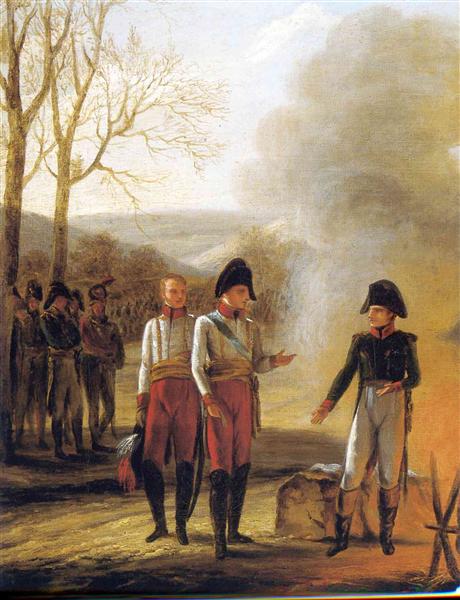
what’s up in Frankfurt – Piano Sonata in F minor, “Appassionata” – Beethoven

the-conversation-of-napoleon-and-francois-ii-1808.jpg!Large

  “The conversation of Napoleon and Francois II (1808) 

        Pierre-Paul Prud’hon

________

it’s 1804, Beethoven has entered his
Middle Period, left the more formal 
constraints of the Classical Period, 
Mozart and Haydn, behind, though
perhaps not essentially, the 
structure remains, hardwiredbut 
its spirit is entirely different, 
revolutionarily different, thanks to
Napoleon

and Beethoven is as opinionated 
as the revolutionaries, boisterous,
adamant, peremptory even, he is 
Zeus, and not undeservedly, at 
the top of Olympus’ musical 
mountain, where, incidentally, 
he still prevails, harmony’s very 
Homer

by his Opus 57, the Appassionata” 
– a name not of his own invention, 
but, however discriminately, ascribed 
later – he isn’t as metaphysical as 
Schubert is in that later poet’s D960
Beethoven is still writing descriptive 
texts, torrid novels, however 
masterfully illustrated, more than 
the philosophical stuff he’ll later 
undertake, even topping, when that
takes place, Schubert’s, ever, 
nevertheless, transcendental D960
if you can believe it

but Schubert remained a stripling, 
Beethoven, his elder, was given the 
grace to probe longer his humanity,
however might it have been equally 
cruelly benighted, and to stretch his 
speculative reach into previously 
unimagined dimensions, beyond 
the limited temporal scope of the 
surely shriven since Schubert 

all of whose wonders have defied 
the harsh indignities of time, and 
continue still to profoundly and
indelibly reverberate

listen, marvel


R ! chard

String Quartet in A Major, Opus 18, no 5 – Beethoven

adagio-1899.jpg!Large

      Adagio (1899) 
 
         Tom Roberts
 
            ________
 
 
                               for especially Kathy, who, 
                                   according to a mutual friend, 
                                       needs our prayers
 
                               please be generous 
 
 
from his Opus 18, among which there
are six, according to the Classical 
tradition, is still steeped in Classical
conditions, tonality, tempo, and 
reiteration, but is revolutionary for 
its brashness, its personal 
manifestation – hey, it says, I’m the 
Pied Piper, I’m not hiding in the 
courtly shadows any longer, my 
stage is now the concert hall, no 
more the aristocratic, however 
stately, chamber music, which has 
ceded, until now, to propriety and 
deference rather than, in a word,
genius, I’m Beethoven, Beethoven 
says, watch me
 
he doesn’t disappoint
 
written in 1801, is a very early work of
Beethoven, it’s nearly easy to confuse
him here with Haydn, with whom he’d,
incidentally, earlier studied
 
the era is still extricating itself from the 
Classical model, the Classical imperatives 
are there, tempo, tonality, and repetition 
remain rigid elements of musical 
construction in the 5th, they are nearly 
obsessive, though each movement 
imprints itself, by constant reiteration, 
on our minds, much like pop music
 
but I miss an adagio, the moral ground,
I think, of a piece of music, the place 
where your heart really takes over and 
begins to incorporate the work‘s 
humanity, I ascribe this unfortunate 
omission to Beethoven’s youthful 
exuberance, he would’ve been around 
30, and setting out, with verve and 
ambition, and he would be performing 
before general now, rather than 
aristocratic, audiences, he had a show 
to put on, not just background chamber 
music  
 
note that the second movement is a 
minuet, a sure sign of the Classical
Period, extinct in only a few further
years
 
note that the third movement, the 
andante cantabile, a leisurely walking 
pace, stepped up, rather than down, 
to a veritable clippety-clop in some 
instances, is a set of variations, to, 
incidentally, settle its theme into 
one’s very consciousness, I’ve been 
humming these movements for the 
past several days, not at all 
unprofitably
 
note also that you’ll probably soon 
be humming, too, this infectious
compositionin all its iterations, 
they are utterly captivating, after, 

still, even over two hundred years

enjoy 


R ! chard 

psst: thanks Collin, for Kathy

English Suite No 3 in G Minor – Bach

suite-fibonacci-2003.jpg

   “Suite Fibonacci (2003) 

           Charles Bezie

               ________

 
before I say much more about his Cello
Suites, let me point out that Bach has
some French Suites, some English 
Suites, on top of similarly structured 
Partitas and Toccatas, the French have 
their tout de suites, and hotels have, 
nowadays, their so named luxury 
apartments 

musical suites are sets of dance pieces, 
by the early 18th Century much stylized, 
with an introductory prélude, an allemande, 
followed by a courante, which is to say, folk 
dances, the first German, the next French, 
then a sarabande, Spanish, followed by a 
couple of galanteries, court dances, 
minuets, gavottes, bourrées, then a final 
English gigue

all of the markings are in French, which
leads me to believe that all of these 
dances must’ve originated at the court 
of Louis XlVth, the Sun King, 1638 to 
1715

but the suggestion is that Europe was 
becoming an integrated community
all of these dances were eclipsed by
the Classical Period, of Haydn and 
Mozart, apart from the minuet, which 
more or less defined, nevertheless, 
that new era

the minuet will die out by the time of
Beethoven, you’ll note, to be replaced
by the waltz, which had been 
considered much too racy until 
transformed by Chopin into a work 
of ethereal art

the Strausses, father and son, gave it,
only a little later, celebratory potency,
but that’s another story


here’s Bach’s English Suite, the 3rd
for context, the French ones are a 
little too salty, as it were, they do not 
quite conform to prescribed suite 
notionshowever might their 
propositions have been, ahem, 
sweet 

meanwhile, enjoy this one


R ! chard
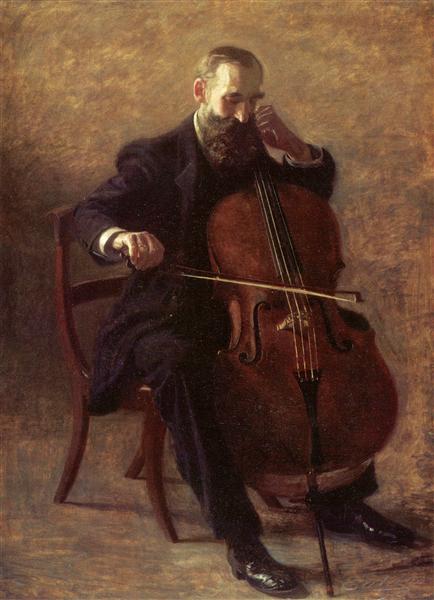
what’s up in Pyeongchang / Bach

the-cello-player-1896.jpg!Large.jpg

      “The Cello Player (1896) 

              Thomas Eakins

                   ________

though I’d considered presenting all six
of Bach’s Cello Suites – your one stop
shopping for these extraordinary 
compositions – even one only of these
masterpieces floored me each time I
individually listened  

why the Suites, cause I couldn’t follow 
up on Beethoven’s Opus 5, for cello
and piano accompaniment, without 
saying more about the cello, by then 
an instrument of some significance, 
and who could argue, it’s resonance 
thrills you in your bones, in your very 
being

Frederick ll, King of Prussiaplayed it, 
earning for him tailored compositions, 
however controversial, from both 
Mozart and Haydn, but even earlier, 
Bach had composed definitive pieces 
for it, much as he’d done for the 
harpsichord, precursor to the piano, 
students of either still go to Bach for 
their basics, their intricate, exquisite, 
technical proficiency

the cello can play one note only at a
time, which means that, like a voice, 
you’re working without harmony, 
you need to make your own, 
otherwise your performance is 
boring, no one else, as far as I know,
has ever written anything else for 
unaccompanied cello, not even 
Beethoven

I find most performers lend Bach a 
more Romantic air, torrid emotion,
excesses of volume, pauses to the 
pace, ritardandos, rallentandos, 
which aren’t appropriate to the 
more genteel Baroque period,
something I usually find 
unwelcome

but in this performance, I’m sure 
not even Bach would object

I’m offering up first the Sixth Cello
Suite, D major, played by Jian Wang
someone I’d never heard of, in a 
dazzling performance in Pyeongchang
place I’d neither ever heard of, until 
only very recently

it appears both of these new kids on 
the block ought to be on the map


R ! chard