Richibi’s Weblog

Just another WordPress.com weblog

Tag: Glenn Gould

at the XVth International Tchaikovsky Competition – Bach‏

"J.S. Bach, Wohltemp. Klav. Bd. I, No. IV. (Extrait) / (Duo de Tristesse)" -  Robert Strûbin

“J.S. Bach, Wohltemp. Klav. Bd. I, No. IV. (Extrait) / (Duo de Tristesse)” (1957)

Robert Strûbin

________

if I’ve been getting on their backs
about their Bachs at the Tchaikovsky
Competition
, it’s that they’re playing
Bach as though he were mediocre
Beethoven, it’s like asking Duke
Ellington to be Pink Floyd, it’s just
a completely different generation,
era

Bach wrote for the harpsichord, a
precursor to the piano, it could not
control the volume, nor the length
of a note, the pianoforte came
along to resolve both issues

therefore before Beethoven, who
made full use of the new invention
and worked hard the pianissimos
and the fortissimos, to degrees that
often became either inappropriate
or too authoritative, indelicate or
obnoxious if you’re not in the mood
– I remember wanting to play his so
solemn 111 at my father’s funeral,
but realized late that the first
movement was not especially in
that situation warranted, nor even
parts of the transcendental, but not
always not obstreperous, adagio –
and thumbed thus his nose at the
aristocracy, who earlier, before
the citoyens had demanded their
rights and when the world had
been considered to be of a
rational, logical order, a clock,
and as regular, would never have
tolerated such impudence

Bach and Mozart do not sway
much from strict rhythm, neither
do they alter volume much at all

so that the constant display of
heartfelt Bach and passionate
Mozart becomes cloying, and
not at all what these Classical
and Baroque masters would
have approved of

nor Beethoven, nor Chopin, for
that matter, whose strict tempo
markings didn’t include much
rubato, ritardandos, which you
could think of as milking a note,
putting velvet on your canvas,
it doesn’t work, the composition
itself unaided by bathos, pathos,
delivers, check out, of course,
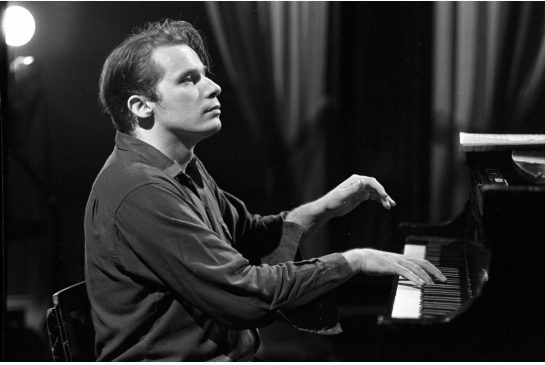
Glenn Gould

Andrei Korobeinikov sat me right
down the other night with his
arresting BWV868, thrilling,
followed by more dazzling
pyrotechnics, though he fizzled,
and fractured his Beethoven, the
very 111 I care so much for, I
couldn’t even finish, you don’t
need a velvet canvas behind the
111, neither cloying ritardandos,
just skill, nor tangles of notes,
for that matter

Richard

Glenn Gould‏

Glenn Gould

Glenn Gould

_______


if you think I can talk, listen to Glenn
Gould
tell in spades what I’ve only
ever been able to tell in clubs, or,
as we say in French, trèfles, clover,
a piece of music can say more than
just hello, great ones are oracular,
even transcendent

if ever they made a movie of my life
I want Glenn Gould to play me, even
the wonderful Colm Feore, I think,
couldn’t as effectively manage it

Richard

psst: here’s more, incandescent, Bach,
Glenn Gould playing his signature
piece
, just click

Nemo – “Ennead I” by Plotinus (17 )‏


Date: Thu, 28 Mar 2013 00:08:23 +0000
To: richibi@hotmail.com
From: comment-reply@wordpress.com
Subject: [New comment] “Ennead I” by Plotinus
 

Richard,

You wrote, ” should there, in the instance, however, be a One, an Absolute, we would not, nor can anyway ever, from our intrinsically divergent perspectives, be able to, in any meaningful way, know It”

Our opinions are not “intrinsically”, but “accidentally” divergent. If they are intrinsic, they would not be affected by changes in our circumstances. But often times our opinions are affected by external circumstances. Therefore, they are not “intrinsic”. For instance, your story about the color of the wall reminds me of a similar story of how the English chemist John Dalton discovered color blindness. He himself was color blind but never realized it until his mother (or aunt) disagreed with him on the color. Without such a defect, there would be no disagreement.

Truth cannot be a sum of opinions or even an unanimous decision of all people. Why? Because the sum of contrary opinions amount to nothing, and the sum of contradictory opinions only lead to confusion, since people are never unanimous about anything.

To use a classic Platonic analogy: If you have a serious disease and want to be healed. Will you call everyone in from the street, hold a public assembly and have them vote for a treatment of your disease? Of course not. You’ll seek out the specialist in the field and have him examine you and give you the proper diagnosis and treatment. Because he possesses the knowledge, whereas the others don’t. Even a grain of truth is worth more than a boatload of false opinions.

Having said the above, however, I agree that the truth may be multifaceted, like the color of light shining through a prism. Because our senses have their limitations, we can only see part of the spectrum, similarly, our rational faculty may also be limited, and we only see the Truth in part. This is why dialogues such as we’re having are meaningful. That we may see the rainbow, while not losing sight of our own color.

“So please your majesty
That we may wake the king: he hath slept long.”
King Lear Act IV Scene VII


oof, Nemo, again where do I start, I’ll try to
tackle merely Truth here, deconstruct It, so
that we can know what we’re even talking
about
 
what do you mean by Truth
 
 
something corresponds to what it is that
we see, hear, feel, I would think, to be
locked in my head, my spirit, a fundamental
unity, without the support of an underlying
Reality, would be horrible, a profound, and
unbearable, solitude, I don’t want any more
to even try to imagine it, though, in my
youthful invincibilty, I once did, it would
nearly drive me, sometimes, I remember, 
crazy 
 
I would try to guess what people would
say in their next breath and found that
mostly I could do it, that mostly I could
get it right, which didn’t do much for an
outside Reality
 
but, again, babies must learn to separate,
not easily, their suddenly unfamiliar world
from their initially undifferentiated senses,
their identity from what we understand to
be Reality, I’d been merely atavistically
revisiting that fundamental experience 
 
I first fell in love, incidentally, when I met
someone I wasn’t able to preempt, to my
utter fascination, at which point I was
forced to acknowledge not only Reality
but also probably a Heaven, it has
become a condition, I fall in love with
only people from other planets, or, if
you like, dimensions
  
 
so, Nemo, I am also subservient to an
ideal, or even an Ideal
 
but it, or It, is my utter fabrication, though,
manifestly, not an uninformed one
 
my Truth is that ethereal, a bedrock, 
however, of my nevertheless basically 
nebulous view of life, made out of,
indeed, thin air
 
my opinions are therefore entirely
speculative, except for my
understanding of myself
 
I think, according to Descartes, therefore
I am, and of that, of myself, I am not at
all speculative, for I think, listen   
 
 
Truth, incidentally, is a function of our
species, assuming that it is a formal
Reality is akin to placing ourselves,
as we once did, at the centre of the
Universe, we were apparently
egregiously wrong about that, it
seems to be generally now agreed,
I suspect an Absolute, or Idealized,
potential Reality, is asking for hubris,
and too often, incidentally, we get it,
see wars, torture, man’s inhumanity
to not only man
   
 
about the world which has mathematical
dimensions we are mostly in agreement,
two plus two will always equal four in our
rational construct, and Science seems to
flow pretty smoothly from that
 
therefore Truth with respect to matter I
will not question, it is the grid we are all
at least comfortable with, like speaking
the same language, despite its even
basic insufficiencies, these fairly easy
mostly to patch up with persistence
and ingenuity   
 
but Plato’s Truth, Ideal, or Absolute, is
of a more noumenal, spiritual, which is
to say, abstract, order, and as such, like
Beauty, is in the eye of the beholder,
Truth is what we think it is
 
is John Dalton wrong to have seen a
divergent colour, and who could tell
him that his blue was green, his red,
orange, when these were categorically
his impressions, dissent is a matter
merely of concensus  
 
Truth, I believe, is our accommodation,
and is no more than the sum of its
collective parts, the truths that
scientists unearth are Science, not
Truth, Reality, not Wisdom     
 
other worlds would have entirely
different conceptions of the Universe
for being other than we, us
 
we are assuming we have the answer,
Nemo, to imponderables 
 
therefore, not Philosophy, I insist,
but Art, and metaphorical rather
than categorical imperatives
 
see Beethoven for that, and / or Proust   
 
 
Richard
 
psst: according to these two excellent
          programs,
 
                  Bernard Williams on Descartes      
 
                  Bernard Williams on Descartes (cont.)
 
           two parts of an interview with an
           authority on Descartes, I could’ve
           easily been a figment of his
           imagination for sounding nearly 
           word for word, to my surprise
           and delight, very much like him
 
           though he probably wouldn’t,    
           by my calculations, therefore,
           have loved me      


“Thirty Two Short Films About Glenn Gould”‏

to my mind, one of the best films Canada has
had to offer, a study of the musical giant which
is probing, perceptive, and profoundly revealing,
and the impersonator, Colm Feore, is impeccable,
superlative, rendering the mystery of flights of
inspiration vivid and comprehensible, he is,
seamlessly and completely convincingly,
Glenn Gould     
 
Glenn Gould is of course identified with his
book-end interpretations, his first release and
the interval of not quite thirty years for him to
further appraise these epic pieces, both issues
are considered monumental, defining cultural
moments, both eclipse, have eclipsed, any
other, even celebrated, performance
 
the reference in the film’s title is to these  
Goldberg Variations, of course, composed
of thirty variations on an opening “aria”,
which is repeated as a “coda”, an ending,
a musical last word, for a total of 32
segments
 
but I submit that the place of Beethoven’s own
could not possibly have been overlooked in
the movie’s title, considering especially the
inclusion of that specific number, despite,
incidentally, the missing hyphen, an infelicitous,
I think, literary licence 
 
the Thirty Two Short Films are themselves,
not incidentally, a set of 32 filmic, note, 
variations, on the subject, in this instance, 
of the player himself, Glenn Gould
 
may his star shine bright forever    
 
 
Richard


Beethoven – 32 Variations In C Minor On An Original Theme, WoO 80‏

of all musical forms variations lend themselves 
best to intellectual speculation, which is to say, 
by way of concepts, words, objects of rational, 
cohesive, not nebulous, thought
it is immediately evident that a set of variations 
considers the many facets of a given subject, in 
music represented by a theme to be analyzed, 
dissected, explored and, in the best of cases, 
rendered transcendental   
this is of course also the case in any science  
it is more difficult to so investigate a waltz, a 
sarabande, a rhapsody, which speak a much 
less literal language usually, unless of course 
the verbal construct itself has been applied to 
the composition, The Carnival of the Animals“ 
or Pictures at an Exhibition“, for instance, but 
that’s putting the cart before the theoretical 
horse, unfair and unethical 
variations demand inherently cerebral 
participation, a considered evaluation, a 
nearly literal result, music finds its one-way 
ticket thereby to veritable language 
around the same time as he wrote the 
“Waldstein” Sonata, 1806, Beethoven wrote 
Theme, WoO 80, my very favourite of his 
sets of variations, courtesy here of the 
inimitable Glenn Gould 
note, in passing, the similarities between 
the two contemporary works
of the C minor Variations, however utterly
improbably, played by one Ivan Moravec
an earlier great, accompanied by immensely 
helpful annotated commentary the sum of 
which is hugely more telling than its mere 
point form parts, sharpening in the process, 
inconspicuously but highly effectively, one’s 
aesthetic pencil, pulse 
what could be more fun than that 
variations, incidentally, are a most democratic 
form, where every iteration is the equal of the 
other, given always, however, that fixed and 
intractable initial model 
an interesting interpolation, incidentally, that, 
philosophically, of course, speaking, asking,
as it does, does democracy require, rest on, 
a founding contextual blueprint, in light 
especially of the infinite number of those 
blueprints possible
is our democracy merely an arbitrary, and 
only contingent, shade, therefore, of that 
ideational abstract
you decide
psst: WoO is an acronym for Werke ohne 
          Opuszahl, or, in English, works
          without opus number, Beethoven 
          seems to have been completely 
          unconcerned with naming his 
          compositions, that he’d written the 
          music had been apparently already 
          quite enough  


The French Suites – Johann Sebastian

though we listen to Bach today with the utmost
admiration – even reverence in my case, I would
in fact choose Bach over any other composer to
be with were I to be sequestered somewhere
for any extended length of time, the proverbial, 
for instance, desert island – he is nevertheless
not of our era, our epoch, he is of the earlier
Baroque Period, and you can hear it in the music, 
it’s quirky, intricate, and moment by moment
interesting, though never insistent, intemperate,
subversive, nor ever fragile, overtly emotional 
   
it’s great sponsor, and therefore influence, had
been the Church, but that was changing 
 
also the piano hadn’t been invented yet
 
 
the piano allowed for resonance in a note by way
of the sustain pedal, which allowed one to actually
raise a finger from the key and it would continue to
register, sustain a harmony even were other notes
presented 
 
the soft pedal controlled volume 
the harpsichord with no sustain pedal lost its
reverberation as soon as the key was released,
therefore only other notes could replace the
otherwise silence, which meant you didn’t waste
time before the next syllable in your statement 
 
with no soft pedal there was no variation in volume,
something I especially enjoy of a quiet ruminative
evening  
 
 
Andras Schiff delivers an enchanted evening of all
the French Suites, six of them with all their several
movements
 
a suite is a set of dances, menuets, gigues, gavottes,
courantes, and my favourite, sarabandes, don’t ask,
these are all of another order where they’d never
heard of a waltz yet, and you’ll prefer that I not
go there but glancingly  
 
Glenn Gould delivers the quintessential French
Suites, I think, though in two separate instalments,
volume 1, volume 2, with only for visuals a static,
though striking, picture of him 
 
you’ll note that he uses the sustain pedal sparingly,
suggesting faithfulness to the original harpsichord,
this also sheds light on the bare bones of the
composition, illustrating starkly Bach’s technical
wizardry, the mind behind the man, he makes
clear, is nothing short of magic 
 
and that goes for all of us
 
 
Richard


the Well-Tempered Clavier

the superimposition of musical scales to facilitate
the movement from one scale to another upon a
single instrument without having to each time
tune that instrument is what is meant by
temperament, this appears to have been a
personal adjustment, though of course informed,  
according to each instrumentalist
 
you’ll note they do that still at the beginning of
any concert, to the tuning dictates of usually the
first violin, who often takes a bow to the applause
of the audience, who mistake him, I’m sure, for
the conductor then, why else so honour that first,
but not especially otherwise eminent, short string 
 
Bach formalized the process, gave it breadth and
majesty, and ultimately longevity, by composing
his Well-Tempered Clavier, a piece for adjusted
harpsichord originally, which he tuned indeed
himself, and that we hear nowadays most often
on the harpsichord’s more versatile descendant,
the piano
 
the scales we now listen to in Western music are
Bach’s tempered scales, we would find it difficult
to return to the precise, mathematically accurate 
ones, the most pure, our already skewed tonal
consensus suggests an already altered view of 
the universe not unlike the reimagined orbits of
the earth and sun at the time of Copernicus and
Galileo, all is still essentially exploratory, nothing
but mathematics is stable, we are precariously
balanced in an insubstantiated world, all no surer
ever than illusion
 
 
Scott Ross is exemplary 
 
is no better version, I think, than Glenn Gould‘s 
 
they establish here faithfully and unequivocally
our musical alphabet
 
 
Richard
 
psst: here is a version with moving pictures very
         much worth your while


art and God

a friend asks 
 
       “Hi Richard,
        Just in case you don’t think I’m listening.
        Here’s a [YOUTUBE rendering] that I think illustrates what you so aptly  explained
        in [your reply to a friend] regarding the term ‘adagio’.
        On listening to the adagio
        pieces that you referred us to, they seem to suggest a leaving or going to “God”. At least ,
        that’s the sensation they provoke in me.
        What would you say to this?
        Hugs,E.”
 
 
all art, I believe, is a conversation with God, in undertaking to
create a painting, a piece of music, a work of literature, a poem,
all entirely abstract inventions, verily defined by their lack of
any utilitarian function, but imbued with merely intellect and
heart, which is to say, soul, the artist, anyone, has only two
impulses ever as instinctual guides, beauty and truth, beauty
and truth, concepts which when given essence and flight I
associate with a living God, any at least relevant God 
 
and I believe truth and beauty, therefore art, are the closest
we’ll ever come to knowing IT
 
so yes, “the adagio pieces that [I] referred [my friend] to, [do
indeed] suggest a leaving or going to “God”.” 


what do you think
 
 
Richard 
 
psst: thanks E. 


Brahms Violin Concerto – Kyung-Wha Chung‏

if, may the gods forbid, you see one concerto only ever in
your lifetime, let it be this one, Kyung-Wha Chung does the
Brahms Violin Concerto incontrovertibly, such performances 
as this one are why composers write music, for interpreters
such as she to narrate their musical thought, to speak it
nearly verbally, indelibly, to bring it to unmistakable and 
categorical life, to transcendence then even perhaps, as in
this case, to our ineluctable, ineradicable consciousness,
and thereby then to our stars 

Kyung-Wha Chung sets the standard here to be achieved for
all artists, in my lifetime she has been the one to displace,
no one, not even the greatest, with the sole exception of
the inimitable of course Glenn Gould, has had the authority,
the brilliance, to outpace her, to outpace them, she is
Minerva, goddess of wisdom, poetry, magic, in outright
and unequivocal command, she is unquestionably and
irrevocably empress here, awesome, she is the highest
expression of music, utterly and irrevocably iridescent, 
incontestably and utterly sublime  
 
André Previn, with the Kölner Rundfunksinfonie Orchester,
the Radio Symphony Orchestra of Cologne, December, 1996,
supports ably, even admirably, he will make me eat my
earlier not especially flattering about him words 
 
watch 
  
 
Richard


some Martha Argerich‏

after Glenn Gould there was Martha Argerich, a human dynamo, not quite of this earth, her speeds are technically next to impossible, her textures nevertheless always transcendental, she is a miracle, though explosive, volcanic 

watch her arpeggiastic pyrothechnics, if you can keep up

an arpeggio is a run of notes up or down a scale, be it tonic or atonic, tuneful or dissonant, with accidentals either way, or not 

an accidental is a decorative hiccough in the music    

                                                                                                                                                                                                                                         arpeggios can be treachorous

Marha Argerich puts herself in the driver’s seat and categorically delivers 

here she does the First Tchaikowsky Piano Concerto, of it, note, one of her less celebrated performances

wow, still wow

one  would advise Emil Gilels, our earlier illustrious Tchaikowsky celebrant, to watch his back, this woman is on fire

I’m on fire 

                                                                                                                                                                                      Richard