Richibi’s Weblog

Just another WordPress.com weblog

Tag: Esterhazy

String Quartet, opus 77, no 1 – Joseph Haydn
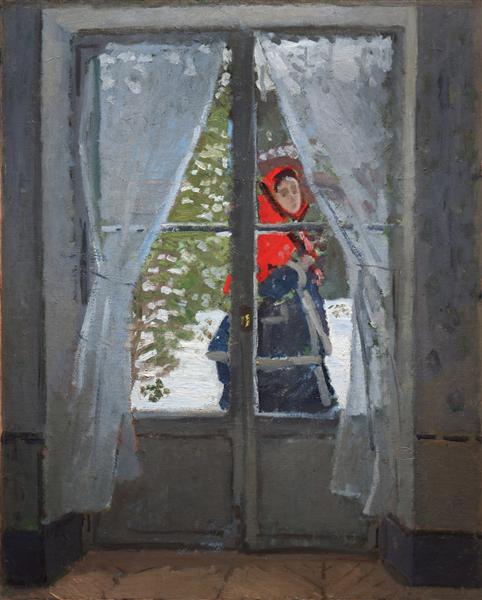
the-red-cape-madame-monet.jpg!Large.jpg

      The Red Cape (Madame Monet) (c.1870) 

              Claude Monet

                    _______

                                              for my mom

that’s a lot of Haydn, I said to my mom, 
when I saw the list of my transmittals in
her hotmail, hm, I wondered, maybe it’s 
too much

then I said, but it’s like when we’ve 
toured, for instance, our European 
art galleries, me propounding on 
the paintings, as I am wont, however 
incorrigibly, to do, but now, note, you 
can tell the difference between your 
Monets and your Klimts, however 
similar their perspectives

or like your tour guide taking you
recently through Argentina, 
highlighting spots, in the space of 
a month only, the same amount of 
time I’ve spent for the music of 
Haydn

pronounced, incidentally, I specified, 
like “hidin'” in English, not “maiden”, 
just sayin’

I gathered that she’d ‘ve sensed by 
now, if she’d been listening, which she 
said she had, mornings over her 
coffee, what a string quartet is, four
movements, different tempos, fast
at first, a joyful introduction, 
followed by a lament, then a spirited 
third movement, for countereffect, 
then a big fourth movement finish

also, the internal structure of each 
movement would’ve been internalized,
theme, a counter theme, a 
recapitulation of both, or either, all of 
it, probably unconsciously, which is 
how art fundamentally works till you
meticulously deconstruct it

the string quartet is the work of Haydn, 
the house that Haydn built, from 
peripheral aristocratic entertainment, 
like modern day artists sporting their 
wares in noisy restaurants, to the 
glamour of taking on, in concert halls, 
Europe, Brunelleschi did a similar, 
sleight-of-hand thing with his dome 
in Florence for its oracular Cathedral

remember that the string quartet lives 
on as a form, where no longer does 
the minuet, for instance, nor the 
polonaise, nor even the waltz, not to 
mention that concertos, and  
symphonies have become now  
significantly subservient to movies, 
secondary players


watch the instrumentalists here live 
out, in Haydn’s Opus 77, no 1, their 
appropriately Romantic ardour,
something not at all promoted in 
Haydn’s earlier Esterházy phase, to 
raise their bow in triumph, as they 
do at the end of most movements
is already an indicationnot at all 
appropriate for the earlier princely 
salons, that times have changed

Haydn was a prophet, but also an
elder, with an instrument to connect 
the oncoming, and turbulent, century 
to the impregnable bond of his 
period’s systems, the legitimacy of 
the autocratic, clockwork, world, 
Classicism, the Age of Reason, the 
Enlightenment, for better or for 
worse

we are left with its, however ever 
ebullient, consequences

enjoy


R ! chard

String Quartet no 1, Opus 18, no 1 – Beethoven

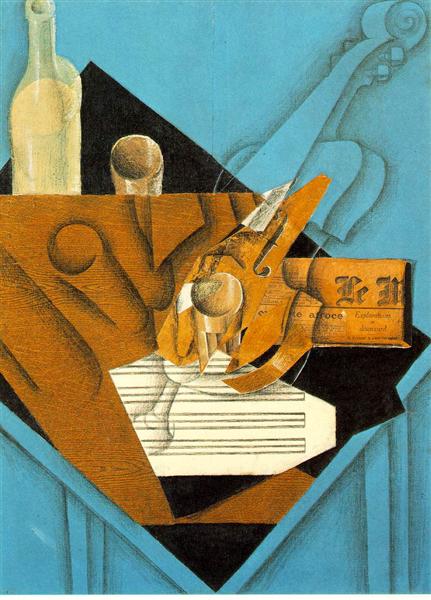
musician-s-table-1914.jpg!Large.jpg

      “Musician’s table (1914) 

            Juan Gris

                _____

Beethoven’s First String Quartet came 
out much around the same time as 
Haydn’s Opus 76, no 1among six of 
them in his set, Beethoven also had 
six in his, however junior still, first
collection, his Opus 18, Beethoven 
would’ve been going on thirty, Haydn
nearly seventy, though his spirit hadn’t
in any manner flagged, listen

but their differences are evident if you
lend a thoughtful ear 

the format is the same, four movements,
inarguably contrasting, with formal 
adherence to Classical norms, tonality,
tempo, and return, but the style is, in 
Beethoven, being overtaken by the 
substance, again inarguably

at dinner together, if I may continue my
earlier allegorical conceit, by the second
movement, Beethoven has already 
entered politics, essentially, religion, 
these four, the players, have a bone to 
pick, and their conversation gets heated, 
there’s a pause, a reconciliation, before 
the third movement, dessert, as it were, 
which is merrier initially, but later 
remains contentious, liqueurs later, in 
the final movement, are still not enough 
to allow for a comfortable exit, however 
might’ve been the serenity of the 
intoxicating sherries, cognacs

Haydn would never have done that, 
having grown up in the proprieties
of the Esterházys, his aristocratic
sponsors, courtesy would’ve been 
of their essence

Beethoven’s is a call to arms, a 
consequence of the French 
Revolution, the birth of the 
Romantic Period

you can hear it in the music


R ! chard

a cello concerto‏

Portrait of Marquise de Pompadour, 1759 by Fran?ois Boucher

               “Portrait of Marquise de Pompadour

                                 François Boucher  
 
                                     __________
 
 
Joseph Haydn, 1732 to 1809, who preceded and outlived
Mozart, 1756 to 1791, was also an older contemporary of
the more imperious Beethoven, 1770 to 1827 
 
of the three Haydn is the most pleasant, polite, courtly,
witty, elegant, congenial, the musical equivalent of, say, 
the painters Boucher or Fragonard, though with a perhaps
more restrained sensuality 
 
his audience, and indeed his sponsors, were aristocrats,
his music makes no political, emotional, ideological
demands, it is meant merely to delight, which it does
in spades 
 
one of his symphonies, the number 45, for instance, loses
instrumentalists one at a time in its final movement until
two only remain, Haydn himself and the concertmaster,
the orchestra had been wanting to go home but had been
retained by the count at his summer palace, Esterhazy,
longer than anyone expected, each one, according to
instructions in the score, was to put out the candle on
his music stand, in Vienna, incidentally, not one of
them of course was a woman, then was to leave the
shrinking stage, the not inconsiderate count let them
scurry the very next day
 
 
Mozart is more spontaneous, less academic than Haydn,
playful, unaffected, less inhibited, younger, by very
definition therefore less refined, more maybe, as a
consequence, unintentionally magical
 
Beethoven meanwhile is a quantum leap from their
Classicism, which is to say the musical groundwork
for our epoch set down by both those other
foundational pillars, into Romanticism, unleashing
upon his forebears’ firm structural, Classical, base 
his more humanist, less formalized, view of the
emotions, paving the way, for instance, blazing a
very trail for, among others, its later towering
figure, Chopin 
 
 
in 1761, Eve-Marie Caravassilis plays the cello, Patrick
Botti conducts the Concilium Musicum de Paris in the
Church of St-Catherine of Hungary in Paris, all of these
to me unknown, August 10, 2011, just last year  
 
I was not unimpressed
 
 
note the consistency throughout of the pace, and the
courtly discretion ever, in even the nimble, never 
boisterous or brash, concluding, for instance, presto
pithy, pert, but always peremptorily polite, it would
never come crashing down 
 
what Revolution, it assumes, what 1789, let’s party