Richibi’s Weblog

Just another WordPress.com weblog

Tag: Elvis Presley

String Quartet no 16 in F major, opus 135 – Beethoven
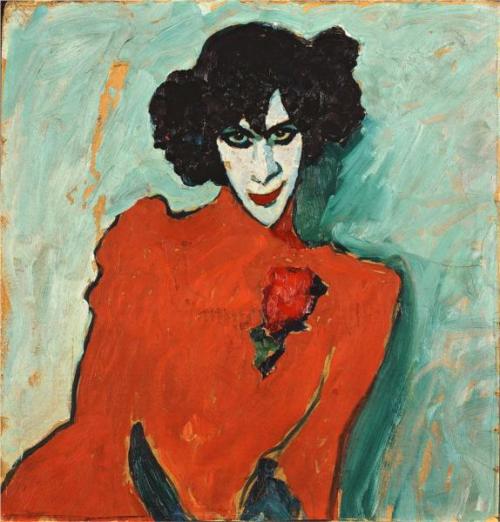
portrait-of-alexander-sakharoff-1909.jpg!Large.jpg

    “Portrait of Alexander Sakharoff (1909) 
      
            Alexej von Jawlensky

                 ______________

if you’re wondering, how could a simple 
composer have such influence on an age,
think of the impact the Beatles had on 
the 1960s, essentially defining them, 
moving them from the pop song, I Want 
to Hold Your Hand“, an updated version 
of anything by Elvis Presley, to their 
transformational Sgt. Pepper’s Lonely
Heart’s Club Band“, thirteen arias in 
search of an opera, paving the way for ,
not only concept albums, but for the 
likes of, for instance, the messianic, 
the oracular, Pink Floyd

Beethoven did much the same for the 
early 19th Century

the 16th String Quartet, his last, is,
like the 15th, in segmented pieces,
not the uninterrupted challenge for 
instrumentalists the continuous
14th is, where neither the players 
nor the audience get time to even 
breathe between movements 

but their composition is so riven 
with musical eccentricities, 
conceptual challenges, that they
are not to be dismissed, are even
epochal

the pauses, the interruptions of the 
beat, the irregular, and disconcerting
sometimes, rhythms, the stridency 
of some of the notes, pitched and
peremptory interpolations, despite 
a sensibility that still pays homage 
between the lines to the Classical 
considerations of deference, 
propriety – you can even feel the 
courtier’s hand, at times, extended 
in the dance, with ever such refined
grace, in order to accompany, to 
partner, to gently lead, his lady 

in other words, the 16th is Abbey
Road“, if I’m to continue with my 
Beatle comparison, for neither  
was the equal of their respective 
counterparts, Sgt. Pepper” ,  
Beethoven’s 14th String Quartet
both of which incontrovertibly and 
absolutely, in their time, changed 
everything, were culturally, thus, 
superior, where the others weren’t, 
didn’t, as effectively, as profoundly, 
leave so strong an imprint  

but you choose, all are extraordinary


R ! chard

psst: in order not to not add the nearly 
          irresistible digital blueprints, 
          which is to say, the not only 
          dancing but utterly illuminating 
          computer graphics, here they are,
          divided in the 16th‘s separate
          movements

             1. Allegretto
             2. Vivace
             3. Lento assai, cantante e tranquillo
             4. Der schwer gefaßte Entschluß. Grave, ma non troppo tratto 
                      (Muss es sein?)  –  Allegro (Es muss sein!) – Grave, ma 
                      non troppo tratto – Allegro
String Quartet no 12, E-flat major, opus 127 – Ludwig van Beethoven

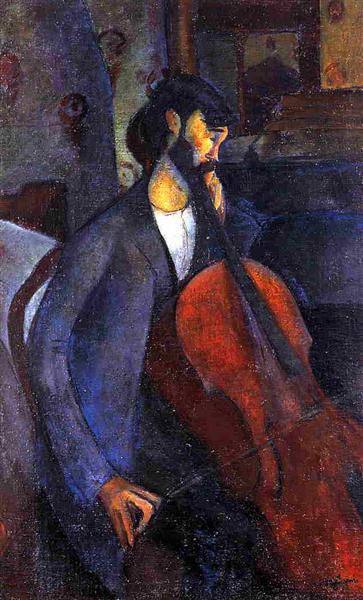
the-cellist-1909.jpg!Large

    “The Cellist (1909) 

          Amedeo Modigliani

                   _________

if I haven’t spent a lot of time with
Beethoven’s 12th String Quartet
ever, it’s that, despite being 
considered one of his “Late” 
compositions, 1825, the 
supposedly probing ones, it is 
still steeped in Classical 
traditions, rather than the 
introspective impulses of the 
“Hammerklavier”, for instance, 
most movements seem to aim
for entertainment, rather than 
for enlightenment

all movements display dance rhythms,
often 3/4 time, which is to say, three 
quarter notes to the bar – one, two, 
three, one, two, three, one, two, three, 
one, two, three, try counting them as 
you listen, a dance beat, instead of 
the probing philosophical explorations 
of his more profound “Late” pieces, 
the “Hammerklavier”, for instance

neither is the 12th especially cohesive
as a piece on its own, the movements
don’t especially relate to one another,
they’re like cuts on an album, however
satisfactory, even delightful, they’re
units in a display of abilities, the 
difference between Elvis Presley‘s  ,
however transcendent, but disparate,
ballads to, later, Pink Floyd‘s epic
metaphysical orations  


but you’ll want to watch the cellist 
here, whose enthusiasm, eagerness,
ardour are such that you might even 
want to shield your eyes on occasion, 
with splayed, even, fingers – whose 
breadth I’ll leave entirely up to your 
personal discretion – though I could 
notmyself, resist for even a moment 
the uninhibited physical expression 
of 
his thoroughly impassioned 
account 

tune in, if you dare


R ! chard

String Quartet in C major, opus 76, no 3, “Emperor” – Joseph Haydn

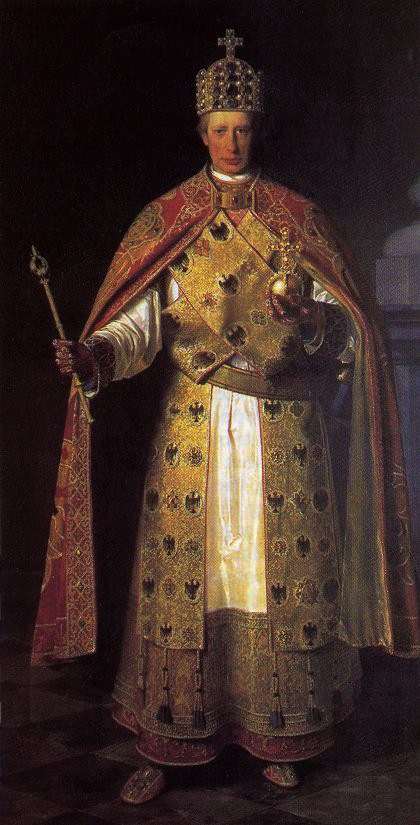
Ludwig_Streitenfeld_001.jpg

    Francis II as Holy Roman Emperor (1874)

          Ludwig Streitenfeld

               _____________

Haydn’s String Quartet, opus 76, no 3
is nicknamed the Emperor cause the 
second movement, the poco adagio;
cantabile, is a recapitulation of an 
anthem Haydn had earlier written for 
Francis ll, the Holy Roman Emperor
– not, incidentally, for Napoleon, the 
Emperor of the moment, who was to 
defeat Francis lleventually, at the 
Battle of Austerlitz, December 2, 1805, 
thereby dissolving that Holy Roman 
Empire, which had been established 
by Leo, the very Pope, lll when, on 
December 25th, 800, which is to say 
preceding Austerlitz by a thousand 
years, he crowned Charlemagne its 
Emperor 

Haydn must’ve been a monarchist


you’ll recognize that second movement
as the present day anthem of Germany

but listen to how Haydn makes it glisten, 
explicitly, with articulations and filigree 
that render it utterly irresistible

the adagio is usually the moment that
remains immutable, if the composer
is doing hir stuff, it’s the one you walk 
home singing, the faster movements,
however histrionic, are nearly a dime 
a dozen, though ever nevertheless 
often dazzling 

this adagio is utterly Romantic, though
I’m sure Haydn didn’t know what he 
was doing, cause despite their push
against the democratic surge, even 
monarchists, princes, dukes, dutiful 
composers, were finding, and voicing, 
their personal, and individual, which 
is to say, their democratic, opinions, 
however aristocratic their pedigree

artists had done a similar thing when 
their personalities began to single 
themselves out as especially gifted 
when the Renaissance was 
happening, it was now music’s hour, 
individual voices were staking their 
claim, Haydn’s manifestly superior 
based on talent and, after widespread 
economic affluence, audience appeal, 
Haydn’s commercial boots were made 
for walking, and he filled them both
magnificently and incontrovertibly

the poco adagio; cantabile is not 
courtly music, it reaches for not
merely elegance, but the heart,
we’ve entered another 
transformational generation, 
something like the revolution 
that triggered change in the 
cultural upheaval of the1960s 

our first step then was the Beatles, 
theirs was Haydn, or rather Elvis
Presley shoring up the Beatles, 
Beethoven was more aptly John,
Paul, George and Ringo 


but watch the rapture on the players’ 
faces, Francis ll would’ve been 
appalled, much like parents in my 
generation facing the pill, drugs, 
unorthodox sexual couplings, and, 
of course, raucous and unruly rock 

music

today, under the spell of the 
Romantic Period, and encouraged
by that very Sexual Revolution, the
Calidore String Quartet’s Elysium
their evident blissemotionally 
manifest, and utterly arresting, sells 
tickets, for better orhopefully not, 
for worse

but you call the shots, to decorum or 
not to decorum, that is the question

watch, wonder, listen 


R ! chard